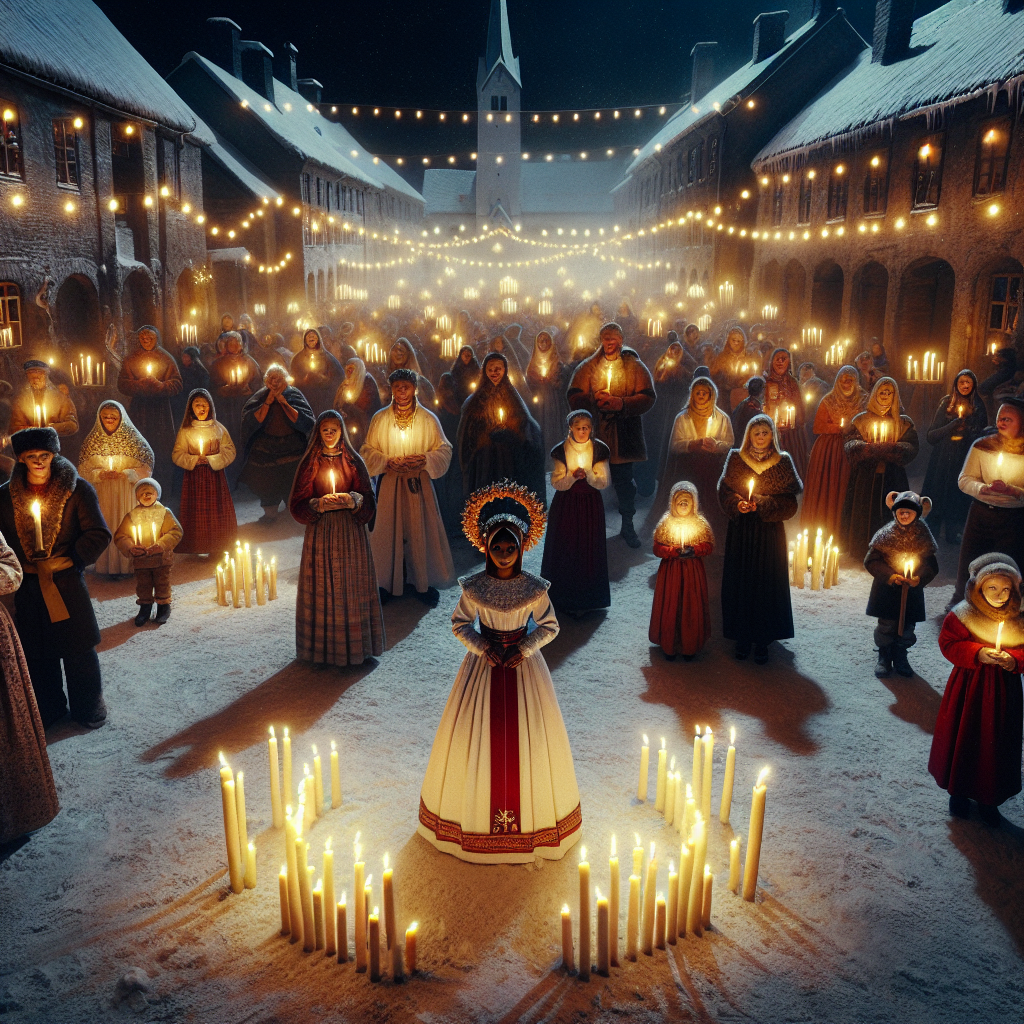
In the heart of Scandinavia, amidst the frosty bite of mid-December, a remarkable celebration rooted in tradition and suffused with light takes place—St. Lucia’s Day. This event, marked on December 13, heralds the beginning of the Christmas season and stands as a beacon of warmth and brightness in the cold, dark days of winter. To fully appreciate the essence of St. Lucia’s Day, it’s essential to delve into its historical background, cultural significance, and contemporary practices.
Introduction
St. Lucia’s Day, also known as the Feast of Saint Lucy, is widely celebrated in Sweden, Norway, and parts of Finland. The tradition dates back to the martyred Saint Lucy of Syracuse, who was known for her steadfast faith and dedication to helping the poor and persecuted Christians. According to legend, she would secretly bring food to these individuals, using a wreath of candles on her head to light her way and keep her hands free. This imagery is unmistakably central to the modern celebrations of St. Lucia’s Day.
The celebration seamlessly merges pre-Christian winter solstice customs with Christian traditions, creating a unique Scandinavian festivity. St. Lucia’s Day heralds the return of longer daylight hours, making it a symbol of hope and renewal. It’s a day bathed in candlelight, song, and heartfelt family gatherings, setting the stage for Christmas.
Understanding the significance of St. Lucia’s Day requires a look at the historical and cultural tapestry of Scandinavia. As you meander through the snowy alleys lined with Christmas markets and hear the harmonious strains of Lucia songs, you can feel the spirit of unity and resilience that this celebration fosters. It’s more than just a day on the calendar; it’s an embodiment of light in darkness and communal strength.
The Legend and History of St. Lucy
Saint Lucy, or Santa Lucia, was a young Christian martyr from Syracuse in present-day Italy. Born in 283 AD, Lucy vowed to live a life of piety and chastity. According to historical accounts, she dedicated her life to serving Christ and aiding those in need. Her martyrdom occurred in 304 AD during the Diocletianic Persecution, and over time, Lucy became a revered figure, embodying purity, charity, and steadfast faith.
Lucy’s association with light is deeply symbolic. Even her name, derived from the Latin word “lux,” which means “light,” speaks to her role as a beacon of hope and illumination. Legends proliferate about her miraculous deeds, including one where her eyes were gouged out and subsequently restored, solidifying her status as the patron saint of blindness and eye ailments.
The Scandinavian adaptation of Lucy’s story aligns with prehistoric and pagan celebrations of the winter solstice—commemorating the rebirth of the sun and the promise of returning daylight. The dark winters of Scandinavia made the light-centric symbolism of Lucy particularly resonant. As Christianity spread across Europe, the pre-existing customs were harmonized with Christian observances, culminating in the rich tapestry of traditions we see today on St. Lucia’s Day.
Modern Celebrations and Traditions
In contemporary Scandinavia, St. Lucia’s Day is an amalgamation of community activities, school events, and family traditions. A highlight of the celebrations is the Lucia procession, where a young girl is chosen to represent Lucia. Adorned in a flowing white gown, a red sash, and a wreath crowning lit candles, the Lucia leads a group of similarly dressed attendants, often singing traditional songs such as “Sankta Lucia.”
The procession commences at daybreak, infusing the cold, dark mornings with warmth and light. Schools, churches, and public spaces participate, ensuring that the spirit of St. Lucia envelops every corner of society. It’s common for these Lucias to visit hospitals, retirement homes, and other community centers, spreading joy and light to those who need it most.
Accompanying the Lucia processions are various culinary traditions. The scent of freshly baked saffron buns, known as “lussekatter,” permeates the air. These golden-hued treats, often shaped into intricate forms, are shared among families and communities. Gingerbread cookies and spiced wine, known as “glögg,” are other festive staples that complement the celebrations.

The Cultural Impact of St. Lucia’s Day
St. Lucia’s Day is more than a festive occasion; it is a cultural pillar that reinforces Scandinavian values of community, hope, and resilience. The celebration underscores the importance of light during the darkest period of the year, both literally and metaphorically. In countries where winter can be engulfing and isolating, St. Lucia’s Day acts as a collective reaffirmation of togetherness and positivity.
In Sweden, the day holds substantial media attention, with national television broadcasting Lucia processions from churches and public institutions. The event brings a sense of unity, uniting citizens in a shared, cherished tradition. In Norway, the day is marked with a similar fervor, emphasizing children’s participation and the transmission of tradition to future generations.
Moreover, St. Lucia’s Day transcends religious boundaries, appealing to both secular and Christian communities. It has become a quintessential part of the Scandinavian heritage, embodying an inclusive celebration that everyone can partake in, regardless of their religious affiliations.
Celebrations in Sweden, Norway, and Finland
Each Scandinavian country brings its unique flavor to St. Lucia’s Day. In Sweden, cities and towns select their own Lucia, often followed by public votes and grand ceremonies. The national Lucia, chosen through a country-wide competition, participates in numerous events, spreading the festival’s joy across the nation.
In Norway, the celebration is deeply rooted within school systems. Children dress up and perform Lucia songs, with each school often hosting its own Lucia procession. It is a special occasion that fosters a sense of pride and continuity among younger generations.
Finland’s celebration is intriguing due to its blend of both Swedish and Finnish cultural elements. Particularly within the Swedish-speaking minority, St. Lucia’s Day is a vibrant event. In Helsinki, the Lucia is crowned in a grand ceremony at the Lutheran Cathedral and leads a procession through the city’s streets, imbuing the capital with festive cheer.
How St. Lucia’s Day Inspires Global Celebrations of Light
St. Lucia’s Day, with its profound symbolism and joyous traditions, stands as a compelling example of light-themed celebrations worldwide. Many cultures hold festivals centered around the symbolism of light conquering darkness—Diwali in India, Hanukkah in Judaism, and Lantern Festivals in various Asian countries, to name a few.
Such celebrations tap into universal themes of hope, renewal, and community—values that resonate across cultural and geographical boundaries. St. Lucia’s Day, while uniquely Scandinavian, shares these global elements, creating a tapestry of light that inspires and connects people around the world.
In a global society characterized by diversity and cultural exchange, St. Lucia’s Day represents the potential for shared human experiences. The celebration’s emphasis on kindness, community service, and bringing light to others serves as a universal message that transcends regional confines, advocating for a more interconnected and compassionate world.
Conclusion
St. Lucia’s Day is an enduring testament to the power of tradition and the human spirit. Rooted in history and teeming with cultural significance, the celebration offers a blueprint for facing the darkest times with hope, unity, and light. As the candles on the Lucia wreath burn brightly, they remind us of St. Lucy’s enduring legacy and the broader, universal quest for light.
While St. Lucia’s Day is a distinctly Scandinavian celebration, its themes resonate universally, making it a powerful symbol in the tapestry of global traditions. It’s a reminder that even in the depths of winter, the light will return, and that together, we can illuminate the darkest nights.
For those looking to experience the warmth and communal spirit of Scandinavia during the coldest month, St. Lucia’s Day offers an invitation to partake in a luminous and heartfelt celebration. Whether enjoyed in the candlelit streets of Sweden, the spirited schools of Norway, or the vibrant processions in Finland, the essence of St. Lucia’s Day lies in its message of light, hope, and togetherness—a message that shines brightly around the world.