

Flamenco, a profound and expressive art form from Spain, is much more than a dance. It’s a cultural phenomenon that encompasses singing, guitar playing, dance, and rhythmic accompaniments. Originating from the Andalusian region, Flamenco has become a symbol of Spanish culture, known for its emotional intensity, proud carriage, deep song, and rhythmic stomping. This article delves into the history, styles, and cultural significance of Flamenco, offering an insightful exploration of this passionate dance.
The Origins of Flamenco
Early Influences and Development
Flamenco’s roots are as complex and varied as the dance itself. Emerging in the late 18th century in Andalusia, Flamenco is believed to have been influenced by various cultures, including the Romani, Moorish, and Jewish traditions. These cultures, each with their unique musical and dance traditions, blended with the local Andalusian folk music and dance, creating the foundation for what would evolve into Flamenco.
The Gitano (Romani) Influence
The Romani people, often referred to as Gitanos in Spain, played a crucial role in the development of Flamenco. They added elements of their own music and dance traditions, which were characterized by intense emotion and expressive movements. The pain and struggle experienced by the Romani community significantly shaped the themes of Flamenco, often revolving around themes of love, loss, and societal struggles.
Elements of Flamenco
Cante: The Soul of Flamenco
Cante, or the song, is considered the very soul of Flamenco. It is characterized by its deep, emotional intensity and is often sung in Andalusian dialect. The lyrics of Flamenco songs (letras) typically express a range of emotions, from sadness and despair to joy and celebration. There are various forms of cante, such as ‘cante jondo’ (deep song), known for its profound emotion, and ‘cante chico’ (light song), which is more upbeat and playful.
Baile: The Flamenco Dance
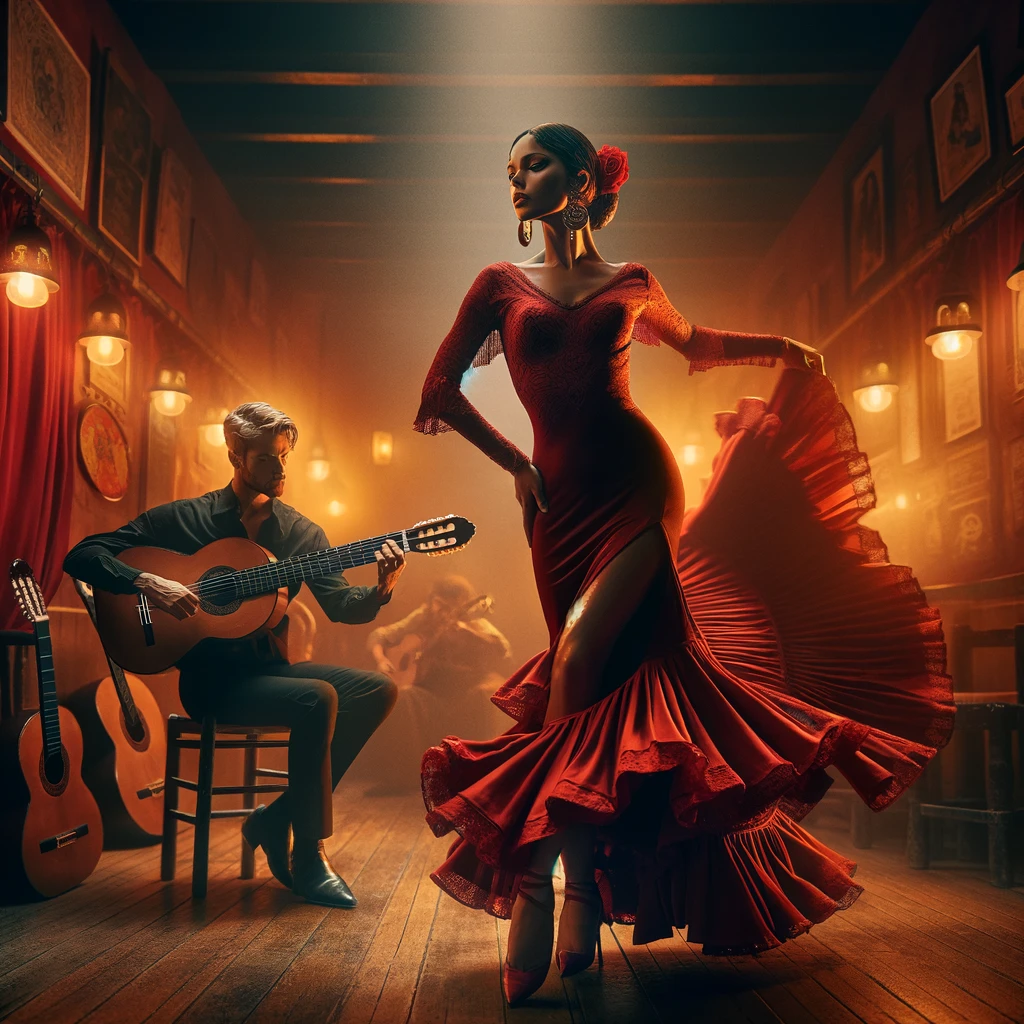
Flamenco dance (baile) is a highly expressive form, known for its passionate and intricate movements. Dancers use their bodies to express the deepest emotions conveyed in the song, often improvising movements to reflect the feelings of the cante. The dance is marked by firm, graceful arm movements, fierce footwork with rhythmic stomping, and a proud, upright carriage.
Toque: The Art of Flamenco Guitar
The Flamenco guitar (toque) provides the musical foundation for both the cante and baile. Flamenco guitar playing is distinguished by its rapid, complex finger movements, producing a rhythmically compelling and harmonically rich sound. The guitar not only accompanies the singers and dancers but also serves as a solo instrument, showcasing the guitarist’s virtuosity.
Palmas and Jaleo: Rhythmic Elements
Palmas (handclapping) and Jaleo (vocalizations) are essential rhythmic elements in Flamenco. They provide a percussive accompaniment to the music, helping to maintain the rhythm and enhance the overall performance. Participants surrounding the performers often contribute to the palmas and jaleo, creating a lively and interactive atmosphere.
Flamenco Styles and Forms
Palos: The Different Styles of Flamenco
Flamenco is divided into numerous styles, known as palos. These palos vary in rhythm, mode, and subject matter. Some of the most famous palos include Soleares, one of the oldest and most fundamental forms, known for its solemn, introspective mood; Alegrias, which are lively and joyous; and Bulerias, fast-paced and often used as a finale to Flamenco performances.
Regional Variations
Flamenco styles also vary regionally. For instance, the Flamenco of Seville is known for its elegance and restraint, while the Flamenco from Jerez is more rustic and earthy. These regional styles add to the richness and diversity of Flamenco, making it a dance that is both universal and deeply personal.
Flamenco Today
Flamenco in Modern Culture
In contemporary times, Flamenco has gained international recognition and has evolved to include new influences, such as jazz and salsa. This fusion has led to a new generation of Flamenco artists who are pushing the boundaries of the art form while still respecting its rich traditions.
Flamenco’s Cultural Significance
Flamenco is not only an art form but also a way of life for many in Spain. It embodies the spirit of the Spanish people, reflecting their joys, sorrows, and struggles. In 2010, UNESCO declared Flamenco one of the Masterpieces of the Oral and Intangible Heritage of Humanity, recognizing its cultural significance.
Flamenco’s Influence on Global Music and Dance
The Global Spread of Flamenco
The allure of Flamenco has transcended Spanish borders, influencing various forms of music and dance around the world. The intense emotion and dynamic movements of Flamenco have inspired artists across genres, from classical to contemporary. In countries like Japan and the United States, there are thriving Flamenco communities, with schools and performances dedicated to this art form. This global spread has not only expanded Flamenco’s audience but also introduced new interpretations and styles, contributing to its ongoing evolution.
Fusion with Other Dance Forms
The fusion of Flamenco with other dance forms has led to exciting new styles. Flamenco’s footwork and expressive arm movements have been incorporated into ballet and contemporary dance, creating a unique blend that enhances the storytelling aspect of dance. Similarly, the rhythmic complexity of Flamenco music has influenced jazz musicians, leading to collaborations that blend the improvisational nature of both genres.
Specific Flamenco Artists and Their Contributions
Pioneers of Flamenco
The history of Flamenco is rich with influential artists who have shaped the art form. One of the most legendary figures is Carmen Amaya (1913–1963), known for her fiery and passionate dance style. She broke gender barriers in Flamenco, performing steps traditionally reserved for men and bringing a new level of intensity to the dance. Another pivotal figure is Paco de Lucía (1947–2014), a virtuoso guitarist who revolutionized Flamenco music with his innovative techniques and fusion of other musical styles.
Contemporary Flamenco Artists
Contemporary Flamenco artists continue to push the boundaries of the art form. Dancers like Sara Baras and Rocío Molina are known for their technical prowess and modern interpretations of Flamenco, integrating elements from other dance forms and themes. Guitarists like Vicente Amigo and Tomatito have followed in the footsteps of Paco de Lucía, blending traditional Flamenco with other musical genres and creating a new sound that respects the roots while looking to the future.
The Future of Flamenco
Evolution and Adaptation
As with any living art form, Flamenco continues to evolve. The integration of modern musical influences and the fusion with other dance forms suggest a future where Flamenco remains vibrant and relevant. This evolution is a testament to the adaptability and resilience of Flamenco, ensuring that it continues to resonate with new generations.
Preserving Tradition While Embracing Change
The challenge for Flamenco in the future will be to balance the preservation of its traditional elements with the inevitable changes that come with global influence. This balance is crucial for maintaining the soul of Flamenco while allowing it to grow and thrive in a changing world. Educational initiatives, festivals, and workshops play a significant role in this, ensuring that the traditional aspects of Flamenco are passed down while encouraging innovation and creativity.
Conclusion
Flamenco, with its deep roots and expansive reach, remains a dynamic and captivating art form. Its ability to convey profound human emotions through music and dance has not only made it a cornerstone of Spanish culture but also a beloved art form worldwide. As Flamenco continues to evolve, it will undoubtedly keep inspiring and moving audiences with its passion and intensity, maintaining its place as a vibrant and vital expression of the human spirit.


