The world is a rich tapestry of cultures, each with its own distinctive traditions and festivals that mark important occasions in their history and spirituality. Islamic culture is no exception, and among its most significant celebrations is Eid al-Fitr. Often referred to as the Festival of Breaking the Fast, Eid al-Fitr is a vibrant and meaningful holiday that marks the conclusion of Ramadan, a month of fasting, prayer, and reflection. This article will delve into the intricacies of Eid al-Fitr, exploring its historical roots, cultural practices, social impact, and spiritual significance in Islamic communities around the world.
Introduction
Eid al-Fitr, an Arabic term translating to “Festival of Breaking the Fast,” is one of the major holidays celebrated by Muslims globally. The festival marks the end of Ramadan, the Islamic holy month of fasting, introspection, and prayer. Observed with immense enthusiasm and reverence, Eid al-Fitr is not merely a day of feasting but carries immense spiritual and social significance. It is celebrated on the first day of Shawwal, the tenth month of the Islamic lunar calendar. The origins of Eid al-Fitr date back to the time of Prophet Muhammad in the 7th century. Tradition holds that Prophet Muhammad established the holiday after his migration from Mecca to Medina. Since then, Eid al-Fitr has been a time for Muslims to express gratitude to Allah for the strength to complete the month-long fast and engage in acts of charity, family gatherings, and communal prayers. During Ramadan, Muslims abstain from eating, drinking, and other physical needs during daylight hours. This practice, known as Sawm, is one of the Five Pillars of Islam and is intended to foster self-discipline, self-purification, and empathy for the less fortunate. The conclusion of this rigorous spiritual journey is marked by Eid al-Fitr, which is filled with joyous celebrations, delicious feasts, and significant religious rituals.
Historical Roots of Eid al-Fitr
Tracing the history of Eid al-Fitr reveals how this festival has evolved and retained its essential role in Muslim communities. The holiday’s inception is attributed to Prophet Muhammad, who established two annual holidays: Eid al-Fitr and Eid al-Adha. The latter commemorates the willingness of Ibrahim (Abraham) to sacrifice his son as an act of obedience to God. When Prophet Muhammad arrived in Medina, he observed the local residents celebrating two unique days with merriment and play. Prophet Muhammad proclaimed that Allah had fixed two alternative days of festivity: Eid al-Fitr and Eid al-Adha. Since then, Eid al-Fitr has been celebrated at the end of Ramadan. Eid al-Fitr’s history is underpinned by profound spiritual significance. It was designed to cultivate brotherhood, rectify socio-economic disparities, and foster unity within the ummah (community of Muslims). The festival reflects a deep sense of gratitude, righteousness, and complemented by the generous spirit of giving and sharing. Over the years, as Islam spread across different regions, Eid al-Fitr integrated local customs and flavors, yet it retained its core principles. Despite geographic and cultural differences, the universal aspect of Eid al-Fitr is its role as a communal observance that promotes fellowship and collective worship, transcending individual differences.
Cultural Practices and Traditions
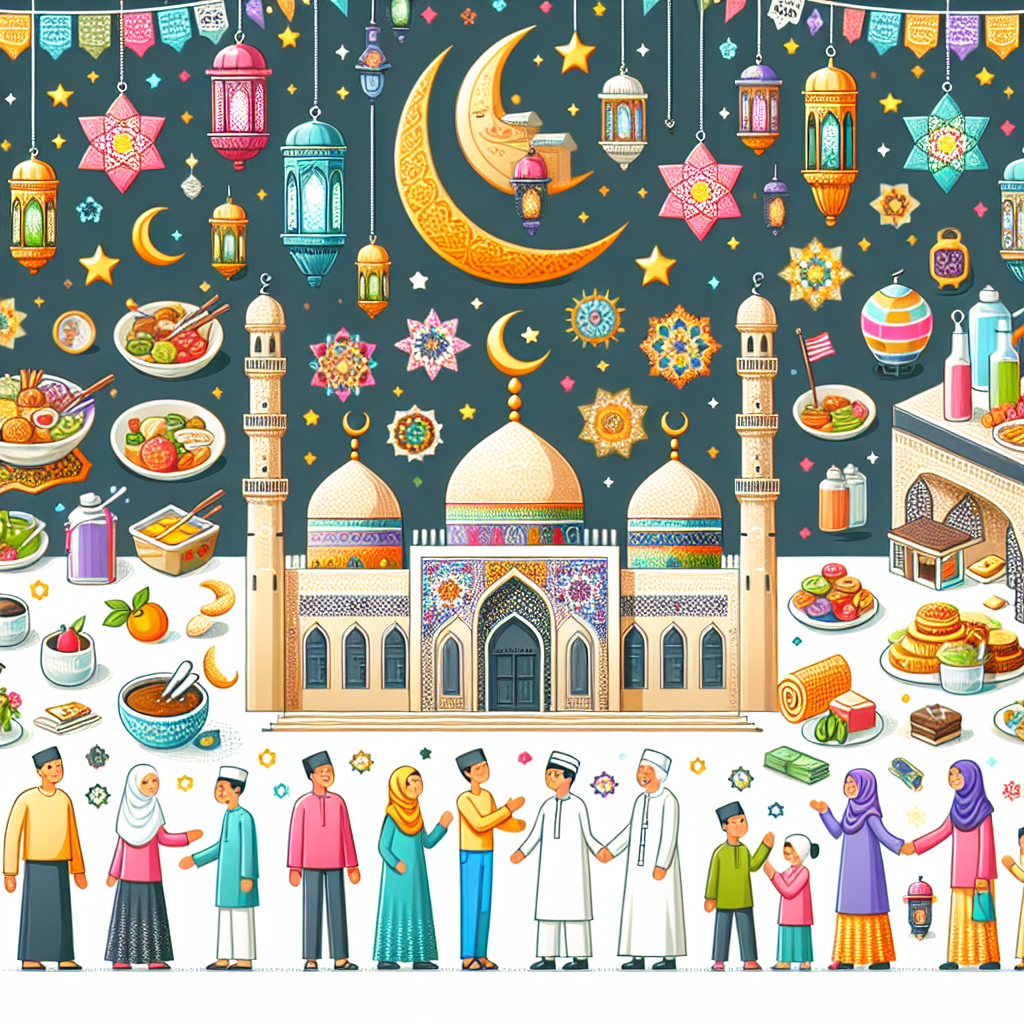
Eid al-Fitr is celebrated with a variety of cultural practices and traditions across the Muslim world, each reflecting local customs and societal values. Nevertheless, certain rites and activities are universally observed by Muslims during this festive period. One of the cornerstones of Eid al-Fitr celebrations is the special prayer called Salat al-Eid, which is performed in congregation, usually in open fields or large halls. This prayer consists of two units of prayer (rak’ahs), followed by a sermon (khutbah) that underscores the themes of mutual respect, community, and gratitude. Another significant tradition is the giving of Zakat al-Fitr, a form of charity given to the needy and poor to ensure all can partake in the joy of Eid. Family and community gatherings are integral to the Eid al-Fitr celebrations. Homes are often cleaned, decorated, and prepped to host relatives and friends. Lavish meals, brimming with traditional foods and sweets, are prepared. Popular dishes might include biryani, kebabs, and special sweets like baklava and kheer. These meals are enjoyed together as a symbol of unity and togetherness. Traditional attire is another hallmark of Eid. People often dress in their best clothes, sometimes purchasing new outfits specifically for the occasion. Wearing new or fine clothing signifies purity, renewal, and festivity. The emphasis on looking good for Eid is not rooted in vanity but in respect for the holy event and the community.

Social Impact of Eid al-Fitr
Eid al-Fitr’s implications extend beyond religious observance, influencing various facets of social life in Muslim communities. The festival engenders a sense of solidarity and reinforces social bonds through communal activities and shared experiences. One of the key social elements of Eid al-Fitr is the practice of charity. In addition to Zakat al-Fitr, Muslims are encouraged to engage in other forms of giving, helping to reduce economic inequalities and fostering a caring society. This charitable aspect is strongly aligned with the values taught during Ramadan, emphasizing empathy and social responsibility. Eid al-Fitr also contributes to communal harmony by bringing people together irrespective of their backgrounds. In many places, open house events are held where Muslims invite friends, neighbors, and non-Muslims to join in the celebrations. This promotes cultural exchange, mutual understanding, and fosters peaceful co-existence among diverse communities. Additionally, Eid serves as an economic stimulus in many regions. Shopping for new clothes, gifts, decorations, and special foods drives significant business activity. Markets often see a surge in sales in the days leading up to Eid, benefiting local merchants and artisans. This economic activity underscores the interconnectedness of social celebrations and economic wellbeing.
Spiritual Significance
While the social aspects of Eid al-Fitr are apparent and widely celebrated, the spiritual significance of this festival is profound and deeply cherished within the Muslim faith. The essence of Eid al-Fitr lies in its spiritual messages of gratitude, reflection, and renewal. The culmination of Ramadan with Eid marks a period of intense devotion and self-restraint. Through fasting, Muslims gain compassion for the hungry and poor, heighten their spiritual awareness, and strengthen their faith. Eid al-Fitr is a moment of expressing gratitude to Allah for providing the strength and patience to complete Ramadan. The concept of forgiveness and making amends is another spiritual pillar of Eid al-Fitr. Muslims seek forgiveness from Allah and from each other for any wrongs committed. This practice promotes a culture of forgiveness, peace, and spiritual harmony within families and communities. Eid al-Fitr also symbolizes a fresh start. Having spent a month in worship and self-discipline, Muslims view Eid as an opportunity to renew their spiritual commitment, carry forward the virtues cultivated during Ramadan, and build a closer relationship with Allah. The joyous nature of Eid reflects the inner happiness and peace that come from fulfilling one’s religious duties.
Global Variations of Eid Celebrations
The global Muslim community, or ummah, is incredibly diverse, and this diversity is beautifully reflected in the various ways Eid al-Fitr is celebrated around the world. While the core principles remain consistent, regional customs add unique flavors to the festivities. In the Arab world, particularly in countries like Saudi Arabia, Egypt, and the UAE, Eid celebrations often start with a special prayer in large mosques or public spaces, followed by community feasts featuring dates, sweets, and traditional dishes. In South Asia, countries like India, Pakistan, and Bangladesh, families gather to cook elaborate meals incorporating regional flavors, exchange gifts, and children receive Eidi—a token of money given by elders. In Turkey, Eid is known as “Ramazan Bayramı” or “Şeker Bayramı” (Sugar Festival), highlighting the importance of sweets in the celebration. Turkish traditions include visiting loved ones, making pilgrimage trips to ancestral graves, and eating a plethora of desserts like Turkish delight and baklava. In Indonesia, the largest Muslim-majority country, Eid is called “Lebaran,” and it involves a week-long holiday where people travel back to their hometowns to reunite with family, a practice known as “Mudik.” Even in non-Muslim majority countries, Eid al-Fitr holds significant importance. In the United States and Europe, Muslim communities gather in local mosques, rent out halls for communal meals, and participate in cultural fairs. These celebrations not only strengthen community ties but also promote cultural understanding and integration within broader society. Ultimately, while the expressions of Eid al-Fitr may differ, the underlying themes of gratitude, charity, community, and faith resonate universally. This cross-cultural celebration underscores the unity and shared values within the Muslim ummah.
Conclusion
Eid al-Fitr is more than a festival; it is a time of spiritual reflection, community bonding, and cultural richness. As we have explored, the significance of this event in Islamic cultures transcends mere festivity. It is deeply rooted in religious history, marked by universal practices of charity, communal prayers, and joyous celebrations that unite Muslims across the globe. The festival not only concludes the holy month of Ramadan but also reinforces the pillars of faith, charity, and empathy that define the Muslim ethos. It stands as a testament to the collective spirit and the power of unity in Islam. Whether through the lens of ancient traditions or modern practices, the essence of Eid al-Fitr remains unchanged—a time for gratitude, renewal, and rejoicing. In today’s diverse and interconnected world, understanding such cultural celebrations fosters greater empathy and respect among different communities. Eid al-Fitr serves as a reminder of the values we share as human beings—compassion, generosity, and the continuous quest for a harmonious and just society. As Muslims around the world gather to mark the end of Ramadan with Eid al-Fitr, the importance of this festival echoes through their prayers, the joy of shared meals, and the smiles exchanged. It is a celebration of faith fulfilled, a period of communal upliftment, and a reaffirmation of the values that bind us together.