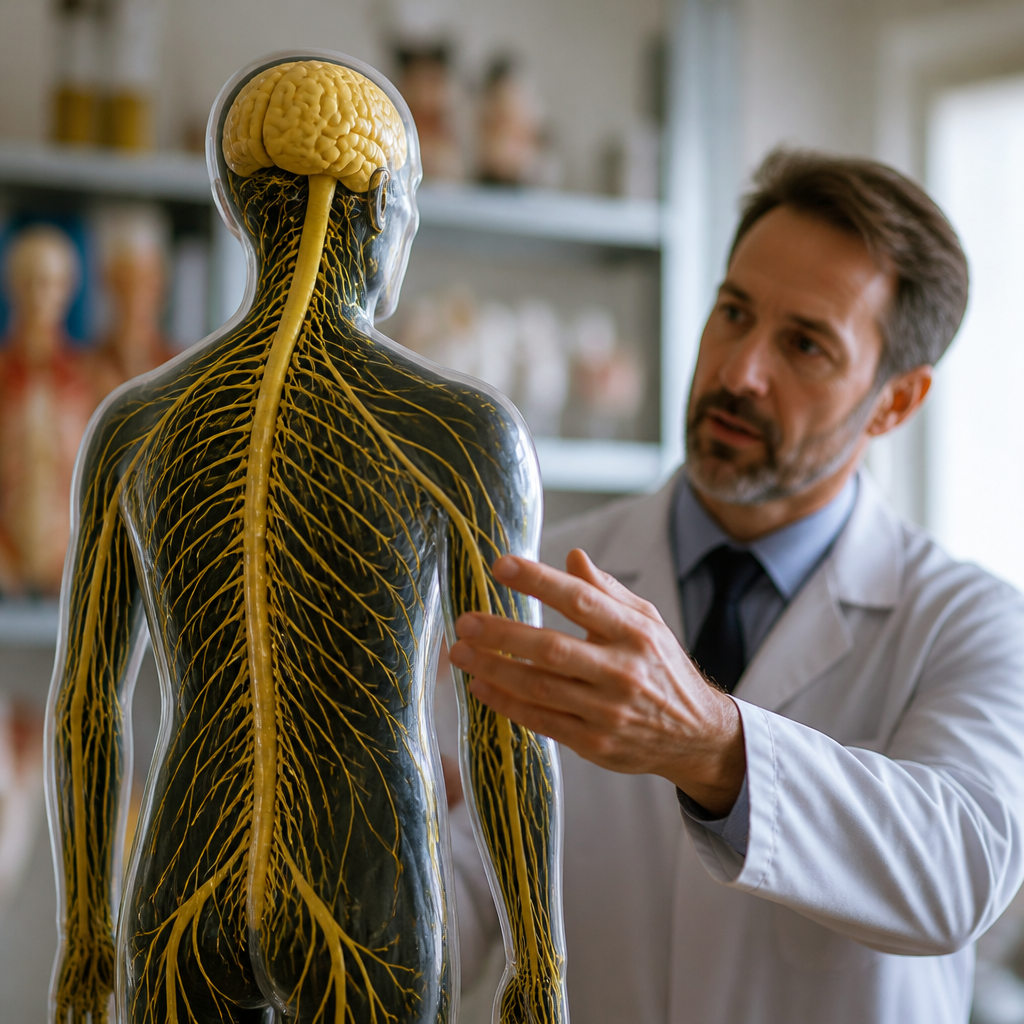
The central vs. peripheral nervous system comparison sits at the core of AP Psychology because nearly every behavior, sensation, thought, and emotion depends on how these two divisions communicate. In simple terms, the central nervous system, or CNS, includes the brain and spinal cord, while the peripheral nervous system, or PNS, includes all the nerves that extend from the CNS to the rest of the body. Students often memorize those definitions quickly, but the real value comes from understanding function: the CNS processes and coordinates information, and the PNS gathers sensory input and carries motor commands. That partnership explains why you pull your hand from a hot stove, why stress changes heart rate, and why damage to one tract or nerve can alter behavior in predictable ways.
Within the biological bases of behavior, the nervous system is the master communication network. Neurons transmit electrochemical signals, glial cells support and protect them, and specialized structures divide labor across sensation, movement, cognition, and autonomic control. In classroom practice, I have found that students grasp this topic best when they connect anatomy to daily actions. Reading a sentence, reacting to a loud sound, recalling a memory, and feeling anxious before an exam all rely on signals moving between peripheral receptors, spinal pathways, and brain regions. This hub article covers that full map, so it can anchor deeper study of neurons, neurotransmitters, brain structures, endocrine interaction, and consciousness.
The distinction also matters because psychologists and physicians use it to explain disorders and treatment. Multiple sclerosis primarily affects myelin in the CNS, while Guillain-Barré syndrome targets the PNS. A spinal cord injury interrupts central pathways, but carpal tunnel syndrome compresses a peripheral nerve. These are not trivial labels; they predict symptoms, recovery patterns, and intervention strategies. Standard references such as the National Institute of Neurological Disorders and Stroke and major anatomy texts consistently organize neurological function around this split because it is the most practical framework for understanding behavior biologically. For AP Psychology, mastering central vs. peripheral nervous system functions gives students a durable scaffold for the entire unit.
Before moving into details, it helps to define a few key terms. Afferent pathways carry sensory information toward the CNS. Efferent pathways carry commands away from the CNS to muscles and glands. The somatic nervous system handles voluntary skeletal muscle control and conscious sensory input. The autonomic nervous system regulates involuntary functions such as heart rate, digestion, and pupil dilation, and it divides into sympathetic and parasympathetic branches. Reflexes are rapid, automatic responses often coordinated at the spinal level before the brain fully interprets the event. Once those terms are clear, the functional comparison between the CNS and PNS becomes much easier to remember and apply.
What the Central Nervous System Does
The central nervous system serves as the body’s control and integration center. The brain interprets incoming sensory data, creates perceptions, stores memories, plans actions, and regulates emotion. The spinal cord acts as both a relay pathway and a processing center for some reflexes. When I teach this division, I describe the CNS as the system that makes meaning out of incoming signals and decides what response is appropriate. If you touch ice, receptors in the skin fire first, but the cold sensation becomes conscious only when the brain processes those signals in sensory regions of the cerebral cortex.
Different CNS structures specialize in different jobs. The brainstem controls essential life functions such as breathing, heart rate, and arousal. The cerebellum coordinates balance, timing, and fine motor movement. The thalamus routes most sensory information to appropriate cortical areas. The hypothalamus links nervous and endocrine regulation, helping govern hunger, thirst, body temperature, circadian rhythms, and stress responses. The cerebral cortex supports language, decision-making, problem-solving, and voluntary movement. In AP Psychology, this matters because behavior is never produced by one structure in isolation. Instead, networks distributed across the CNS coordinate perception, motivation, and action.
The spinal cord deserves special attention because students often reduce it to a cable, when it is more dynamic than that. It contains ascending tracts that bring sensory information to the brain and descending tracts that carry motor instructions to the body. It also mediates reflex arcs. In the classic withdrawal reflex, sensory neurons detect pain, interneurons in the spinal cord process the signal quickly, and motor neurons trigger muscles to pull the hand away before full conscious awareness occurs. The brain is informed immediately after, but the spinal cord’s local processing speeds protection. That example neatly shows how central processing can occur at more than one level.
What the Peripheral Nervous System Does
The peripheral nervous system includes cranial nerves, spinal nerves, and sensory receptors outside the brain and spinal cord. Its job is to connect the CNS with the limbs, organs, glands, and sense organs. If the CNS is the command center, the PNS is the communication network that keeps the center informed and carries out its decisions. Without the PNS, the brain could not receive information about light, sound, pressure, temperature, or tissue damage, and it could not send instructions that let you walk, speak, blink, or digest food.
The PNS divides first into sensory and motor functions. Sensory, or afferent, neurons carry information from receptors to the CNS. Motor, or efferent, neurons carry commands from the CNS to effectors such as muscles and glands. The motor division then separates into the somatic nervous system and autonomic nervous system. Somatic pathways let you consciously move skeletal muscles, as when you raise your hand in class. Autonomic pathways regulate smooth muscle, cardiac muscle, and glands automatically, as when your heart speeds up during a surprise or your stomach increases activity after a meal.
The autonomic branch is especially important in psychology because it links bodily states with emotion, stress, and motivation. The sympathetic division mobilizes energy for action: heart rate increases, bronchi dilate, pupils widen, and digestion slows. The parasympathetic division promotes restoration: heart rate decreases, digestion increases, and the body returns to baseline. A third component, the enteric nervous system, embedded in the gastrointestinal tract, independently manages many digestive processes while still interacting with central and autonomic systems. These divisions explain why emotions are felt physically and why chronic stress can affect sleep, appetite, and immune function.
| Division | Main Structures | Primary Function | Example |
|---|---|---|---|
| Central nervous system | Brain and spinal cord | Processes information and coordinates responses | Interprets pain and plans movement away from danger |
| Peripheral sensory pathways | Sensory receptors and afferent nerves | Carry incoming signals to the CNS | Skin receptors send heat information from a stove |
| Peripheral somatic motor pathways | Motor nerves to skeletal muscles | Control voluntary movement | Arm muscles contract to move the hand |
| Peripheral autonomic pathways | Sympathetic and parasympathetic nerves | Regulate involuntary organs and glands | Heart rate rises during fear, then slows during recovery |
How the CNS and PNS Work Together in Behavior
The clearest way to compare central vs. peripheral nervous system functions is to follow a behavior from stimulus to response. Imagine hearing your name called in a crowded room. Sound waves stimulate hair cells in the inner ear, and peripheral sensory neurons carry the signal toward the CNS. Brainstem nuclei and the thalamus relay the information, auditory cortex helps identify the sound, and association areas determine that it is your name. The CNS then selects a response, perhaps turning your head. Descending motor commands travel through the spinal cord and peripheral somatic nerves to neck muscles, producing movement. In a few hundred milliseconds, sensation, recognition, decision, and action are integrated.
This same pattern applies to emotional reactions. Consider seeing a snake while hiking. Visual input enters through peripheral receptors, travels centrally for processing, and rapidly engages networks involving the thalamus, visual cortex, amygdala, hypothalamus, and brainstem. At the same time, autonomic peripheral pathways increase heart rate and prepare muscles for action. Whether the final behavior is a jump backward, a freeze response, or calm reappraisal depends on central interpretation shaped by learning and context. If it turns out to be a stick, cortical processing can dampen the initial autonomic surge. That is a practical demonstration of top-down control within the nervous system.
Reflexes show another type of partnership. In the patellar reflex, tapping the tendon stretches muscle spindles, sensory neurons carry the message to the spinal cord, and a motor response follows almost immediately, extending the leg. The brain is notified, but direct spinal processing makes the reaction fast. Clinicians test such reflexes because they reveal whether peripheral sensory neurons, spinal circuits, and motor pathways are intact. In other words, a simple knee tap can provide functional evidence about both the peripheral and central nervous system. Psychology students benefit from these examples because they ground abstract terminology in visible behavior.
Major Disorders and Why the Difference Matters
Understanding where a problem occurs often explains the symptoms. In CNS disorders, deficits may involve cognition, language, coordination, sensation, or widespread motor control because the brain and spinal cord integrate many functions. Stroke is a classic example. When blood flow is interrupted in a cerebral artery, neurons in the affected area lose oxygen and can die within minutes. Depending on the location, a person may develop aphasia, paralysis on one side, visual neglect, or impaired judgment. Multiple sclerosis is another central disorder; immune attack on CNS myelin disrupts signal conduction, leading to fatigue, weakness, visual problems, numbness, and balance difficulties.
PNS disorders usually follow the distribution of specific nerves or peripheral roots. In carpal tunnel syndrome, compression of the median nerve causes numbness, tingling, weakness, and pain in characteristic parts of the hand. In Bell’s palsy, dysfunction of the facial nerve causes sudden weakness on one side of the face. In diabetic peripheral neuropathy, chronically elevated blood glucose damages nerves, often beginning in the feet with burning, reduced sensation, or pain. Guillain-Barré syndrome, an acute autoimmune attack on peripheral nerves, can progress from weakness to serious paralysis but may improve with treatment and time because peripheral nerves have greater regenerative capacity than most CNS pathways.
That last point is one of the most tested distinctions. The PNS can regenerate damaged axons more effectively because Schwann cells support regrowth, although recovery is still limited by injury severity and distance. The CNS has much poorer regenerative ability, partly because oligodendrocytes and the post-injury environment inhibit regrowth. This is why spinal cord injury often causes long-term deficits, while some peripheral nerve injuries can partially recover. For biological bases of behavior, the broader lesson is that structure predicts function, and function predicts the behavioral consequences of damage. Once students understand that logic, many neurological case studies become much easier to analyze.
How This Topic Connects to the Rest of Biological Bases of Behavior
This hub topic connects directly to every major concept in the unit. Neurons are the signaling cells that make CNS and PNS communication possible through action potentials and synaptic transmission. Glial cells maintain homeostasis, form myelin, and support repair differently in the CNS and PNS. Neurotransmitters such as dopamine, serotonin, acetylcholine, GABA, and norepinephrine influence movement, mood, attention, learning, and autonomic activity. Endocrine glands work with the nervous system, especially through hypothalamic control, to coordinate slower chemical signaling with rapid neural responses. Sleep, stress, sensation, motivation, and emotion all emerge from these interacting systems rather than from isolated parts.
For AP Psychology review, use the central vs. peripheral nervous system as an organizing map. Place brain structures, spinal reflexes, autonomic responses, and sensory pathways onto that map. Ask a simple question for every concept: Is this primarily processing and integration, or input and output? Once that distinction is automatic, exam questions become clearer and essay explanations become stronger. The main benefit of mastering this comparison is that it turns a long list of facts into one coherent framework for behavior. Continue by reviewing neurons, neurotransmitters, major brain regions, and the endocrine system, and connect each back to the CNS-PNS partnership.
Frequently Asked Questions
What is the difference between the central nervous system and the peripheral nervous system?
The central nervous system, or CNS, consists of the brain and spinal cord. It serves as the body’s main processing and control center. This is where incoming information is interpreted, decisions are made, memories are stored, and many responses are coordinated. In AP Psychology, the CNS is especially important because it helps explain how thoughts, emotions, learning, and behavior are organized at the highest level.
The peripheral nervous system, or PNS, includes all the nerves that branch out from the brain and spinal cord to the rest of the body. Its main role is communication. It carries sensory information from the body to the CNS and sends motor commands from the CNS back out to muscles and glands. In other words, if the CNS is the command center, the PNS is the communication network that allows the command center to receive updates and send instructions.
The most useful way to compare them is by function rather than definition alone. The CNS interprets and coordinates, while the PNS connects and delivers. They are not separate systems working independently. Instead, they operate as an integrated partnership. Every time you touch a hot surface, hear your name, solve a math problem, or feel nervous before a test, the PNS is helping relay information and the CNS is helping process and direct the response.
How do the central and peripheral nervous systems work together during everyday behavior?
The CNS and PNS are constantly interacting, even during the simplest actions. Imagine that you pick up a cold glass of water. Sensory receptors in your skin detect temperature and pressure. Those signals travel through peripheral nerves to the spinal cord and brain. The CNS then interprets the sensation, compares it with past experience, and may direct a response, such as tightening your grip or deciding to take a sip. That response travels back through the PNS to the muscles involved.
This same pattern applies to complex psychological processes as well. During a stressful moment, the PNS may carry signals related to increased heart rate, sweating, and muscle tension. The CNS interprets those signals in the context of the situation, helps generate emotional awareness, and may trigger additional physical reactions. In learning and memory, sensory information first arrives through the PNS, but the CNS is responsible for organizing that information, attaching meaning to it, and storing it for later use.
One reason this comparison matters so much in AP Psychology is that behavior is rarely just mental or just physical. Most experiences involve a loop of sensation, interpretation, and response. The PNS gathers and transmits data, while the CNS evaluates and coordinates action. Together, they make adaptive behavior possible. Without the PNS, the CNS would have no direct access to the outside world or the body’s condition. Without the CNS, the PNS would carry signals but could not interpret their meaning in a sophisticated way.
What are the main functions of the spinal cord in the central nervous system?
The spinal cord is part of the CNS, and its role goes far beyond simply being a cable between the brain and the body. One major function is signal transmission. It carries sensory information upward from the peripheral nerves to the brain and carries motor commands downward from the brain to the body. This two-way pathway is essential for movement, sensation, and coordinated behavior.
The spinal cord also plays a key role in reflexes. A reflex is a rapid, automatic response to a stimulus, such as quickly pulling your hand away from something painful. In many reflexes, the spinal cord can process the information and initiate a response before the brain becomes fully involved. This helps protect the body by reducing reaction time. From a psychological perspective, reflexes show that not all behavior requires conscious thought, even though the brain may become aware of the event shortly after it happens.
In a broader sense, the spinal cord helps integrate communication between the CNS and PNS. Damage to the spinal cord can interfere with movement, sensation, and autonomic functions below the site of injury because the pathways between the brain and peripheral nerves are disrupted. That makes the spinal cord a powerful example of how central and peripheral systems depend on each other. The CNS may generate intentions and interpretations, but those functions can only affect the body when pathways remain intact.
How is the peripheral nervous system divided, and why does that matter in psychology?
The PNS is commonly divided into the somatic nervous system and the autonomic nervous system. The somatic nervous system is responsible for voluntary movement and for carrying sensory information from the skin, muscles, and joints to the CNS. When you choose to raise your hand in class, walk across a room, or type a response, the somatic system is involved. It helps link conscious decisions with skeletal muscle movement.
The autonomic nervous system controls involuntary functions such as heart rate, digestion, breathing rate, and gland activity. It operates largely outside conscious awareness and is highly relevant in psychology because it is deeply involved in emotional and stress responses. The autonomic system is usually divided into the sympathetic and parasympathetic branches. The sympathetic division prepares the body for action, often called the fight-or-flight response, while the parasympathetic division helps calm the body and restore normal functioning after a stressful event.
This matters in psychology because many emotional experiences involve bodily changes regulated by the autonomic nervous system. Anxiety, fear, excitement, and calmness all have physical components. Understanding the PNS helps students see that emotions are not just thoughts in the brain. They also involve measurable physiological responses throughout the body. The CNS interprets situations and generates meaning, but the PNS helps express that meaning through bodily reactions. This is one reason the CNS-PNS comparison is so foundational in studying behavior and mental processes.
Why is understanding the central vs. peripheral nervous system important for AP Psychology exams and real-world learning?
Understanding the CNS and PNS is important for AP Psychology because it creates a framework for many other topics in the course. Sensation and perception, consciousness, emotion, motivation, stress, health, cognition, and behavior all rely on nervous system communication. Students who only memorize that the CNS is the brain and spinal cord and the PNS is everything else often miss the deeper point: psychology depends on understanding how information moves through the body and how the brain interprets that information.
On exams, students may be asked to apply these ideas rather than simply define them. For example, a question might describe a person reacting to a loud noise, feeling pain after an injury, or experiencing a racing heart during public speaking. To answer correctly, students must identify which parts of the nervous system are carrying sensory input, processing the event, and directing the response. That requires functional understanding, not just vocabulary recall.
In real-world learning, this distinction also helps explain how humans adapt to their environment. The PNS allows the body to detect changes both inside and outside the organism, while the CNS interprets those changes and coordinates responses that support survival, goal-directed behavior, and emotional regulation. When students understand this relationship, they gain a stronger foundation for topics ranging from reflexes and stress responses to mental disorders and brain injuries. It turns a memorized definition into a practical model of how behavior actually works.