The sympathetic and parasympathetic nervous systems shape nearly every moment of daily life, from the jolt you feel when a car swerves toward your lane to the calm that settles in after a full meal. In AP Psychology, these two divisions of the autonomic nervous system are central to the biological bases of behavior because they connect brain processes, hormones, organs, emotion, attention, learning, stress, and recovery. Students often memorize them as “fight or flight” versus “rest and digest,” but that shortcut is only the starting point. In practice, these systems continuously adjust heart rate, breathing, pupil size, digestion, sweating, blood pressure, and sexual response to match changing demands. Understanding how they work makes it easier to explain behavior in concrete biological terms, which is exactly what this subtopic requires.
The autonomic nervous system is part of the peripheral nervous system, which carries information between the central nervous system and the body. Within it, the sympathetic division mobilizes energy for action, while the parasympathetic division conserves energy and supports maintenance functions. Both are regulated by brain structures including the hypothalamus, brainstem, and limbic system, and both communicate through neurons and neurotransmitters. In classroom terms, this topic sits beside sensation, motivation, emotion, sleep, stress, and health psychology because autonomic activation influences all of them. I have found that students grasp the material faster when they stop treating the systems as opposites that take turns and start seeing them as coordinated partners that can be active in different degrees at the same time.
This hub article covers the biological bases of behavior through the lens of sympathetic versus parasympathetic function. It defines the core terms, explains the pathways, links them to the endocrine system and the stress response, and gives everyday examples that make abstract physiology easier to remember. It also highlights why this distinction matters outside exams: the same mechanisms that help someone react in an emergency also affect test anxiety, athletic performance, digestion under stress, panic symptoms, sleep quality, and recovery after conflict. Once you can map bodily changes onto these systems, many behaviors that seem purely psychological begin to look more understandable, measurable, and biologically grounded.
What the Sympathetic and Parasympathetic Systems Actually Do
The sympathetic nervous system prepares the body for vigorous action. When the brain detects challenge, uncertainty, pain, or threat, sympathetic pathways increase heart rate and contractility, dilate the bronchi, widen the pupils, redirect blood flow toward skeletal muscles, reduce digestive activity, and trigger sweating. These changes improve the odds of quick response. The parasympathetic nervous system does the opposite in broad functional terms: it slows heart rate, stimulates digestion, supports salivation and intestinal motility, narrows pupils, and promotes restoration. The main parasympathetic nerve is the vagus nerve, which carries signals between the brain and major organs, especially the heart, lungs, and digestive tract.
In AP Psychology, it helps to connect these effects to neurotransmission. Most preganglionic neurons in both divisions release acetylcholine. Many postganglionic sympathetic neurons release norepinephrine at target organs, while most postganglionic parasympathetic neurons release acetylcholine. This difference matters because receptor types determine organ response. For example, sympathetic stimulation of beta-adrenergic receptors can increase heart rate, while parasympathetic stimulation of muscarinic receptors can slow it. The adrenal medulla adds another layer by releasing epinephrine and norepinephrine into the bloodstream during sympathetic activation, extending and amplifying the body’s alerting response beyond direct nerve signaling.
These systems are not simply on and off. Baseline autonomic tone shifts throughout the day depending on posture, caffeine intake, ambient temperature, emotional state, illness, fitness, and sleep. Standing up quickly raises sympathetic output to maintain blood pressure. Deep, slow breathing can increase parasympathetic influence on heart rate. Public speaking may create a mixed state: dry mouth and sweating from sympathetic arousal, but enough parasympathetic function to keep basic digestion and breathing running. This dynamic balance is why two people can face the same situation and show different bodily reactions. Biology sets constraints, but experience, conditioning, and context shape how autonomic patterns unfold.
Everyday Examples Students Can Recognize Immediately
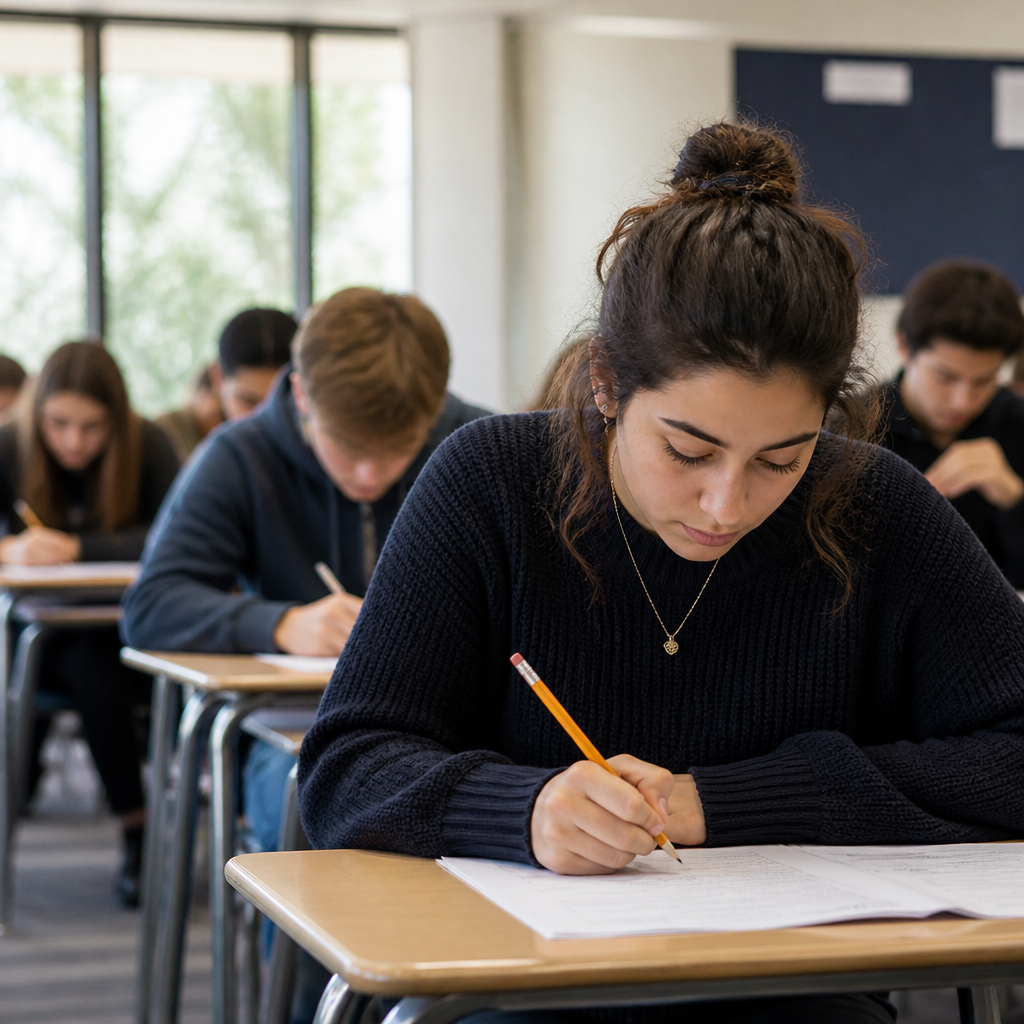
Everyday examples make the distinction memorable because the body’s responses are observable. If you hear your phone ring at 2 a.m. and assume bad news, your sympathetic system may increase heart rate before you even check the screen. If you are stuck in traffic and a horn blasts beside you, your shoulders tense, breathing becomes shallower, and sweating may increase. Before a timed exam, many students notice cold hands, a churning stomach, and a racing pulse, all common signs of sympathetic activation. After the test ends and you realize you did fine, your breathing deepens, your heart rate falls, and hunger returns as parasympathetic activity rises.
Food provides another clear comparison. During a relaxed dinner with friends, parasympathetic activity supports salivation, stomach secretions, and intestinal movement. That is one reason people often feel hunger and digest food better when calm. In contrast, eating just before an intense interview can feel difficult because sympathetic activation suppresses digestive processes. Athletes experience the same shift. Before a sprint, sympathetic arousal sharpens focus and mobilizes glucose. After the event, parasympathetic recovery helps bring heart rate down and supports return to baseline. In sexual physiology, parasympathetic activity is strongly involved in arousal, while sympathetic activity plays a major role in orgasm, illustrating that neither system is “good” or “bad.”
| Situation | Likely Dominant Response | Common Body Changes |
|---|---|---|
| Near-miss while driving | Sympathetic | Rapid heartbeat, dilated pupils, sweating, tense muscles |
| Quiet meal after work | Parasympathetic | Salivation, slower pulse, active digestion, relaxed breathing |
| Before class presentation | Sympathetic | Dry mouth, shaky hands, faster breathing, alert attention |
| Yoga cooldown or meditation | Parasympathetic | Lower heart rate, calmer breathing, reduced muscle tension |
| Cold call from an unknown number late at night | Sympathetic | Startle response, vigilance, temporary digestive slowdown |
These examples matter because AP Psychology asks students to explain behavior using biology rather than intuition. “I felt nervous” is descriptive, but “sympathetic activation increased arousal before performance” is explanatory. The same logic applies to health. Chronic overactivation can contribute to headaches, sleep disruption, elevated blood pressure, and gastrointestinal discomfort. Strong parasympathetic recovery, by contrast, is associated with better regulation after stress. When students connect ordinary experiences to autonomic physiology, they build a durable framework that supports later topics such as stress, emotion, motivation, and coping.
How the Brain Coordinates Autonomic Responses
The cerebral cortex, limbic system, hypothalamus, and brainstem all contribute to autonomic control. The amygdala is especially important for detecting emotional salience, particularly fear-related cues. When it interprets a stimulus as threatening, it can influence the hypothalamus, which acts as a major control center linking the nervous system and endocrine system. The hypothalamus then coordinates autonomic outputs and can initiate hormonal responses through the pituitary gland. The brainstem regulates essential functions such as breathing, heart rate, and reflexive cardiovascular adjustments. In practical terms, your body can begin responding to a possible threat before conscious reasoning has fully evaluated it.
This coordination helps explain why bodily responses can feel automatic. If a student sees a classmate making a strange face during an exam, the body may tense before the student knows whether anything is wrong. Top-down and bottom-up processing both matter. Thoughts can increase arousal, as when catastrophizing about a grade raises heart rate. Bodily states can also shape emotional interpretation, which connects to classic theories of emotion such as James-Lange and Schachter-Singer. Although those theories differ, both are relevant because autonomic changes are part of how emotional experiences are constructed, perceived, and labeled in context.
Conditioning also influences autonomic responding. A person who has had a panic attack in a crowded train station may later show sympathetic activation merely upon entering a station, even when no objective danger is present. Through classical conditioning, a neutral place becomes associated with bodily alarm. Operant processes can maintain this pattern if avoidance reduces discomfort in the short term. These examples show why the biological bases of behavior cannot be separated from learning. The autonomic nervous system supplies the physical machinery, but experience teaches the brain when to trigger it, how strongly, and in response to which cues.
Stress, Hormones, and the Biological Bases of Behavior
To understand the biological bases of behavior comprehensively, students need to connect the autonomic nervous system with the endocrine system. The sympathetic response is fast because nerves transmit signals in milliseconds. A related hormonal pathway, often called the HPA axis, is slower and longer lasting. In stress, the hypothalamus signals the pituitary, which signals the adrenal cortex to release cortisol. Cortisol helps mobilize energy and alters immune, metabolic, and cognitive processes. This means an acute stressor can begin with sympathetic activation and then transition into a broader hormonal state if the challenge continues. The two systems interact rather than operate in isolation.
Everyday life offers many examples. A student surprised by a fire alarm experiences immediate sympathetic changes: faster pulse, wider pupils, and heightened alertness. If that student then spends hours worrying about an unresolved emergency, cortisol may remain elevated, affecting appetite, concentration, mood, and sleep. In the short term, these responses can be adaptive. They prioritize survival and performance. The problem arises when the stress response stays activated too long or too often. Chronic stress is associated with hypertension, reduced sleep quality, memory problems, and increased vulnerability to anxiety and depression. Biological preparedness becomes biological wear and tear.
This is why recovery is as important as activation. After stress ends, parasympathetic processes help restore equilibrium. Heart rate slows, digestion resumes, and the body reallocates resources from emergency readiness to repair and maintenance. Researchers often study this through measures such as heart rate variability, especially respiratory sinus arrhythmia, which reflects how flexibly the heart responds to parasympathetic input. Higher vagal regulation is generally linked with better emotional regulation and resilience, though context matters. In plain terms, a healthy nervous system is not one that stays calm all the time. It is one that can activate when needed and recover efficiently afterward.
Why This Topic Matters Across AP Psychology
Sympathetic versus parasympathetic function is a hub concept because it links multiple units in AP Psychology. In sensation and perception, pupil dilation affects visual intake. In attention, arousal can sharpen focus up to a point, consistent with the Yerkes-Dodson law, but excessive sympathetic activation can impair performance. In emotion, bodily arousal contributes to how feelings are experienced and interpreted. In learning, conditioned fear responses demonstrate how autonomic patterns become associated with cues. In health and motivation, hunger, sexual behavior, sleep, stress regulation, and substance effects all involve autonomic mechanisms. Few biological concepts connect to as many observable behaviors.
It also matters for evaluating claims critically. Students often encounter oversimplified statements such as “stress is always bad” or “the parasympathetic system means being relaxed.” Both are incomplete. Short-term sympathetic arousal can improve reaction time and performance. Parasympathetic dominance is not always helpful either; for example, excessive vagal responses can contribute to fainting in some people under pain or emotional distress. Caffeine, nicotine, stimulants, antidepressants, beta blockers, sleep deprivation, hydration status, and aerobic fitness can all alter autonomic responses. Good psychological explanation requires nuance: behavior emerges from interacting neural, hormonal, cognitive, and environmental factors.
For students using this page as a sub-pillar hub, the practical takeaway is clear. Start every related topic by asking three questions: what bodily systems are involved, what brain structures are coordinating them, and what function does the response serve in context? That approach works for fear, reward, addiction, aggression, attachment, test anxiety, and stress disorders. It turns memorized vocabulary into a usable framework. If you want to master the biological bases of behavior, keep returning to sympathetic and parasympathetic balance. Learn the mechanisms, notice the everyday examples in your own life, and use that lens to connect the rest of psychology with confidence.
Frequently Asked Questions
1. What is the difference between the sympathetic and parasympathetic nervous systems in everyday life?
The sympathetic and parasympathetic nervous systems are the two main branches of the autonomic nervous system, which controls many body functions you do not consciously direct, such as heart rate, breathing, digestion, pupil size, and gland activity. In simple terms, the sympathetic nervous system prepares the body for action, while the parasympathetic nervous system helps the body conserve energy, recover, and maintain routine functions. That is why students often remember them as “fight or flight” versus “rest and digest.”
In everyday life, the sympathetic system turns on when you face a challenge, a threat, or even a high-pressure situation. For example, if a car suddenly swerves into your lane, you may feel your heart pound, your breathing speed up, your muscles tense, and your attention narrow instantly. That is your sympathetic nervous system helping you react quickly. It can also activate during non-dangerous events, such as public speaking, taking a test, hearing your phone ring with unexpected news, or rushing to catch a bus.
By contrast, the parasympathetic nervous system becomes more active when the body is safe enough to return to balance. After the stressful driving moment passes, your heart rate gradually slows, your breathing eases, and your body shifts out of emergency mode. After eating a full meal, the parasympathetic system supports digestion, nutrient absorption, and energy storage. It is also active during restful routines like reading quietly, relaxing after exercise, and getting ready for sleep. In AP Psychology, understanding these systems matters because they show how biology shapes emotion, attention, stress responses, and recovery in real time.
2. Why is the sympathetic nervous system called “fight or flight,” and what are some real-world examples?
The phrase “fight or flight” refers to the body’s rapid-response system for dealing with danger or intense challenge. When the sympathetic nervous system is activated, it sends signals that help the body prioritize immediate survival or fast action. Stress hormones such as epinephrine, often called adrenaline, support this process by increasing alertness and preparing major organs and muscles to respond. Blood flow shifts toward skeletal muscles, heart rate rises, breathing passages open wider, and digestion slows because it is not the body’s top priority in a crisis.
Real-world examples are everywhere. If you hear footsteps behind you late at night and suddenly become hyperaware of your surroundings, that is a sympathetic response. If a teacher announces a surprise quiz and you immediately feel a rush of nerves, sweaty palms, and sharper focus, that also involves sympathetic activation. Athletes often feel this before a game starts. So do performers just before walking on stage and drivers who slam on the brakes to avoid a collision. In each case, the body is mobilizing resources quickly.
It is important to note that “fight or flight” does not always mean literal fighting or running away. Sometimes it shows up as freezing briefly, becoming intensely focused, speaking faster, or feeling a knot in your stomach before an important moment. In modern life, sympathetic activation often responds to psychological stressors as much as physical threats. That is one reason this system is so important in psychology: it helps explain how the brain and body work together during fear, pressure, performance, and acute stress.
3. What does the parasympathetic nervous system do after stress or after eating?
The parasympathetic nervous system helps the body return to a calmer, more sustainable state after stress and supports routine maintenance functions that keep the body healthy over time. Its effects are often summarized as “rest and digest,” but that phrase only captures part of its job. The parasympathetic system slows heart rate, promotes digestion, supports gland activity, encourages nutrient processing, and helps the body recover from physical or emotional strain. It plays a major role in restoration, energy conservation, and long-term regulation.
After a stressful event, this system acts like a biological brake. Once the danger has passed, parasympathetic activity helps lower arousal so the body does not stay stuck in high-alert mode. You may notice your breathing become slower and deeper, your muscles begin to unclench, and your thoughts become less urgent. This shift is essential. Without it, the body would remain in a costly state of activation that can wear down attention, mood, sleep, and physical health.
After eating, parasympathetic activation is especially important. Blood flow and energy are directed toward the digestive system, helping the stomach and intestines do their work more effectively. That is why many people feel calmer, heavier, or sleepier after a satisfying meal. The body is moving away from action and toward processing, storing, and restoring. In daily life, the parasympathetic system also supports calm social connection, relaxation before bed, and recovery after workouts or emotionally intense experiences. In AP Psychology, this matters because recovery is not just the absence of stress; it is an active biological process.
4. How do these two systems work together rather than simply oppose each other?
Although the sympathetic and parasympathetic nervous systems are often taught as opposites, they are better understood as complementary systems that help the body adapt to changing circumstances. They do not operate like an on-off switch where one is always fully active and the other is fully inactive. Instead, they continuously adjust their levels of influence depending on what the body needs at a given moment. This dynamic balance helps explain why human behavior and bodily responses are flexible rather than rigid.
For example, imagine you are sitting calmly at home reading. Parasympathetic influence may be relatively stronger because you are safe and relaxed. Then your smoke alarm suddenly goes off. Sympathetic activity rises quickly, your attention shifts, and your body prepares to act. Once you discover it is only burnt toast and the situation is under control, parasympathetic activity gradually helps settle you down again. The body has not switched identities; it has adjusted priorities based on context.
This back-and-forth coordination is essential in everyday functioning. During exercise, sympathetic activity helps increase heart rate and blood flow to muscles, but after the workout, parasympathetic activity helps bring the body back toward baseline. During a stressful exam, sympathetic arousal may sharpen alertness, but too much can interfere with concentration, which is why recovery afterward matters. In psychology, this partnership is important because it shows that healthy functioning depends not only on activation, but also on the ability to regulate and recover. Adaptation is the key idea: the autonomic nervous system helps the body meet demands and then restore balance.
5. Why do AP Psychology students need to understand sympathetic and parasympathetic responses beyond memorizing definitions?
AP Psychology students need to understand these systems at a deeper level because they connect directly to major course themes, including the biological bases of behavior, emotion, motivation, stress, health, attention, learning, and memory. Memorizing “fight or flight” and “rest and digest” is a useful starting point, but it is not enough for applying the concepts to real scenarios. Exams, class discussions, and written responses often require students to explain how bodily arousal influences thoughts, feelings, and actions in specific contexts.
For instance, if a question describes a student panicking before an exam, you should be able to identify signs of sympathetic activation such as increased heart rate, sweaty palms, tense muscles, and narrowed attention. If the scenario then describes the student calming down afterward, feeling hungry, and relaxing once the test is over, that shift reflects parasympathetic activity. Understanding this sequence helps students explain not just what happened in the body, but why the person’s behavior and mental state changed over time.
This deeper understanding also helps students make connections across units. Stress responses link to endocrine activity and hormones. Heightened arousal can affect perception, decision-making, and memory formation. Recovery patterns can influence sleep, emotional regulation, and long-term health. In everyday terms, these systems help explain why people feel jittery before giving a presentation, why they may lose their appetite under pressure, why they feel drained after a stressful event, and why calm routines support learning and well-being. In short, mastering these concepts gives students a clearer picture of how the brain and body work together to shape behavior moment by moment.