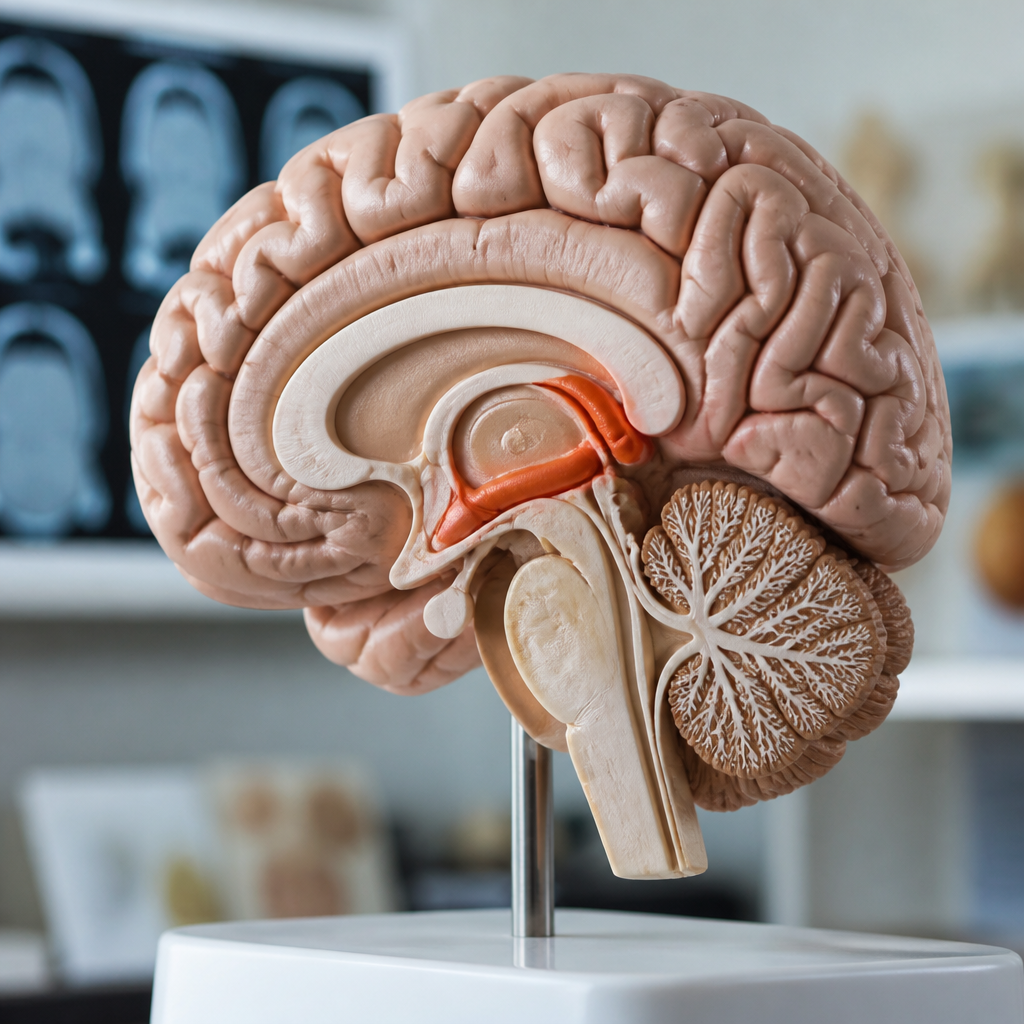
The hippocampus is the brain structure most closely associated with forming new memories, linking experiences to places, and supporting the learning processes that let facts and events become lasting knowledge. In AP Psychology, understanding what the hippocampus does matters because it sits at the center of the biological bases of behavior, connecting brain anatomy, neural communication, memory systems, emotion, and the effects of injury or disease. The term hippocampus refers to a curved structure in the medial temporal lobe, one in each hemisphere, named for its seahorse-like shape. Although people often describe it as the brain’s memory center, that phrase is incomplete. In practice, the hippocampus does not store every memory forever. Instead, it helps encode, organize, and consolidate many kinds of explicit memories, especially episodic memories about personal experiences and spatial memories used for navigation.
When I teach this topic, the biggest confusion students have is separating memory formation from memory storage. The hippocampus is essential for turning short-term experience into a stable long-term record, but older, well-consolidated memories are distributed across cortical networks. That distinction explains why a person with hippocampal damage may remember childhood events yet struggle to form new memories after an injury. It also shows why the hippocampus belongs in a broader conversation about biological behavior. To explain learning clearly, you have to connect neurons, neurotransmitters, sleep, stress hormones, and related brain structures such as the amygdala, hypothalamus, thalamus, and cerebral cortex. This article serves as a hub for that full unit, using the hippocampus as the anchor concept.
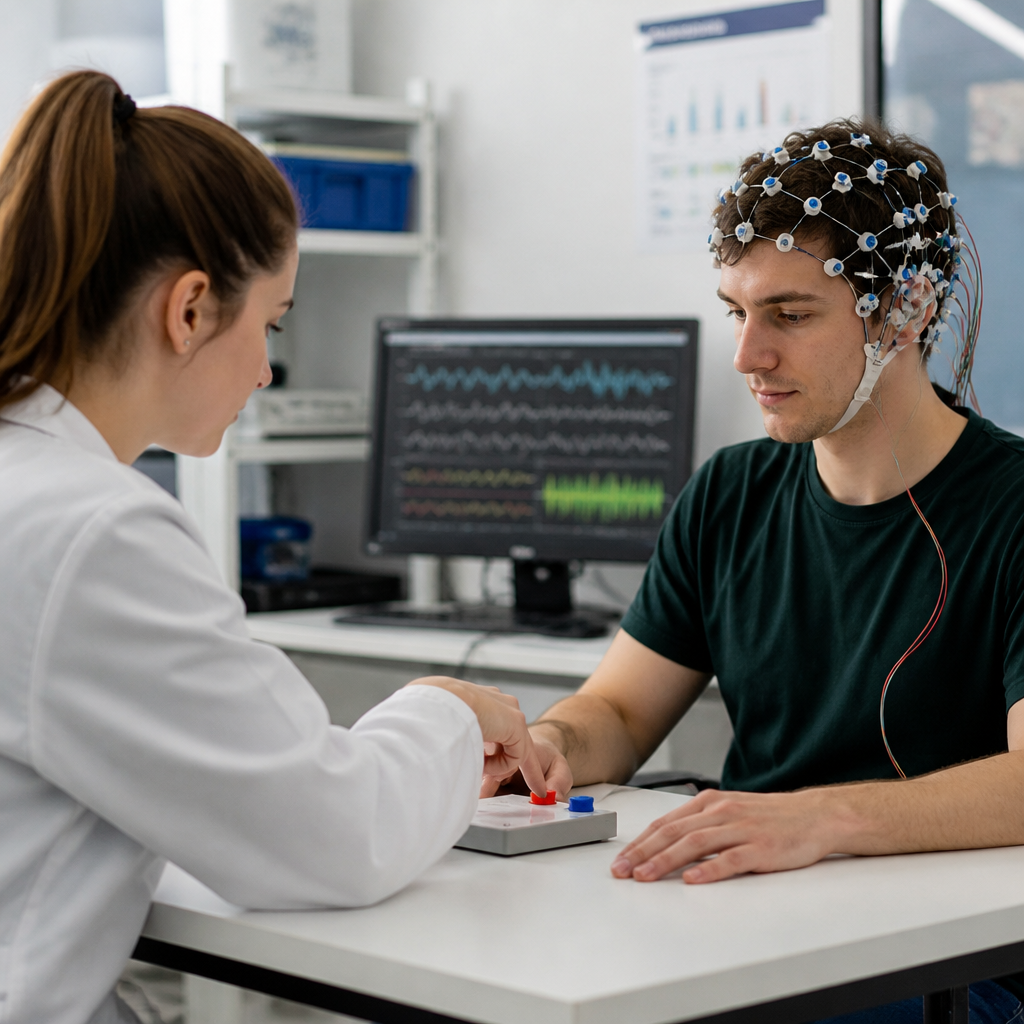
At a basic level, the hippocampus helps answer three questions the brain constantly faces: What happened, where did it happen, and when should this information be saved? Researchers know this from lesion studies, brain imaging, single-cell recording, and famous clinical cases including patient H.M., whose medial temporal lobe surgery produced profound anterograde amnesia. His case showed that people can keep working memory and some procedural learning while losing the ability to create new declarative memories. That finding transformed psychology and neuroscience. It demonstrated that memory is not a single ability and that different brain systems support different kinds of learning. For AP Psychology, this idea links directly to consciousness, cognition, sensation, development, and health.
The hippocampus also matters beyond exams because its function affects daily life. Studying for a test, remembering directions, recognizing a classroom, recalling yesterday’s conversation, and connecting a smell with a past event all rely in part on hippocampal processing. Changes in hippocampal function are also seen in Alzheimer’s disease, major depression, chronic stress exposure, traumatic brain injury, epilepsy, and post-traumatic stress symptoms. Understanding this structure helps students see how biology shapes behavior without reducing behavior to a single organ. Memory and learning emerge from systems, but the hippocampus is one of the system’s most important coordinators.
Where the hippocampus is and how it fits into the brain
The hippocampus lies deep within the medial temporal lobe, adjacent to structures that process emotion, sensory association, and memory. Each hemisphere contains a hippocampus, and each works within a circuit that includes the entorhinal cortex, parahippocampal region, amygdala, thalamus, and parts of the prefrontal cortex. Sensory information from across the cortex converges through these pathways, allowing the hippocampus to bind separate details into a coherent memory trace. If you remember a birthday dinner, for example, visual details of the restaurant, the sound of voices, the smell of food, and the emotional tone of the event are initially processed in different cortical areas. The hippocampus helps connect them into one retrievable episode.
In AP Psychology terms, this placement matters because it illustrates localization of function without implying isolation of function. The hippocampus has a specialized role, but it depends on communication with other regions. The amygdala can strengthen memory for emotionally significant events. The prefrontal cortex supports attention, organization, and retrieval strategies. The thalamus relays information, while the hypothalamus influences hormonal states that affect encoding. This integrated view is the most accurate way to study biological behavior. Students who memorize the hippocampus as “memory” alone usually miss the larger principle that behavior arises from networks.
What the hippocampus does in memory formation
The hippocampus is crucial for encoding new declarative memories, especially episodic and semantic information that can later be consciously recalled. Declarative memory includes facts, concepts, and autobiographical events. When you learn a vocabulary term, remember the date of an experiment, or recall where you left your keys, hippocampal circuits are involved in building that memory. The process begins with attention and meaningful processing, continues through encoding, and is stabilized through consolidation. Consolidation refers to the gradual strengthening of a memory over time, particularly during sleep and repeated retrieval.
A key concept is that the hippocampus acts like an index. Rather than holding every sensory detail permanently inside itself, it links the distributed cortical elements of an experience so they can later be reactivated together. Over time, repeated replay makes cortical networks more independent, which is why remote memories may survive some hippocampal damage. This indexing model fits decades of evidence from neuropsychology and imaging studies. It also helps explain why studying in spaced sessions works better than cramming: each review strengthens the pathways involved in consolidation and retrieval.
The hippocampus is especially important for episodic memory, memory for personally experienced events situated in time and place. If a student remembers where they sat during an exam review, who was speaking, and how anxious they felt, that is episodic memory. Semantic memory, such as knowing that the hippocampus supports memory formation, also depends on medial temporal lobe structures during initial learning. By contrast, procedural memory for habits and motor skills relies more on the basal ganglia, cerebellum, and motor systems. Someone with hippocampal injury may still improve at mirror tracing or sequence learning without remembering the training sessions. This separation is one of the clearest demonstrations that learning is not unitary.
How the hippocampus supports learning and spatial navigation
The hippocampus does more than file experiences; it builds internal maps that support navigation and context learning. Research on place cells, first identified by John O’Keefe, showed that specific hippocampal neurons fire when an animal is in a particular location. Related work on grid cells in the entorhinal cortex, associated with May-Britt and Edvard Moser, revealed a broader positioning system that helps the brain track space. Together, these findings explain why the hippocampus is central to knowing where you are, how to return to a destination, and how environments become familiar through experience.
Spatial memory is not a narrow laboratory concept. In daily life, it helps you find your parked car, navigate a school hallway, or remember that your notebook is on the second shelf beside the window. In class, I often tell students to think of the hippocampus as a context builder. It not only stores the fact that something happened, but also the setting in which it happened. That contextual coding is why studying material in varied, meaningful settings can improve transfer, while learning in a shallow or distracted state often produces weak recall.
| Memory or learning type | Main function | Primary brain systems | Example |
|---|---|---|---|
| Episodic memory | Personal events in time and place | Hippocampus and medial temporal lobe | Remembering your first day of class |
| Semantic memory | Facts and general knowledge | Hippocampus during encoding, cortex for long-term storage | Knowing what neurotransmitters do |
| Procedural memory | Skills and habits | Basal ganglia, cerebellum, motor cortex | Riding a bicycle |
| Spatial memory | Locations and navigation | Hippocampus, entorhinal cortex | Finding your locker without thinking |
| Working memory | Temporary mental holding and manipulation | Prefrontal cortex and distributed networks | Keeping a phone number in mind briefly |
The hippocampus also supports relational learning, the ability to connect separate pieces of information. For AP Psychology, this is essential because learning is often about forming associations, comparing concepts, and placing facts into frameworks. A student who links classical conditioning, synaptic plasticity, and dopamine signaling is building relational knowledge. The hippocampus helps create those connections, making later retrieval more flexible and useful than rote memorization alone.
Why damage to the hippocampus changes behavior
Damage to the hippocampus often causes anterograde amnesia, the inability to form new long-term declarative memories after the injury. This does not usually erase intelligence, personality, language, or short-term attention completely. That selective impairment is exactly why hippocampal cases are so instructive. The best-known example, H.M., underwent bilateral medial temporal lobe surgery in 1953 to reduce severe epilepsy. Afterward, his seizures improved, but he could no longer form normal new declarative memories. He could hold information briefly and learn some motor tasks, yet he repeatedly failed to remember having practiced them. His case established a functional distinction between explicit memory and procedural learning that still appears in every serious psychology curriculum.
Hippocampal dysfunction also appears in Alzheimer’s disease, where early degeneration commonly affects medial temporal structures, contributing to disorientation and recent memory loss. In temporal lobe epilepsy, seizures can disrupt encoding and retrieval. After traumatic brain injury, reduced oxygen, inflammation, or direct tissue damage can impair hippocampal circuits. Chronic alcohol misuse can damage memory systems indirectly through nutritional deficiency and neurotoxicity. These examples matter because they show that memory problems are biological, not simply motivational. They also remind students that a symptom such as forgetfulness can have multiple neurological causes.
Neurotransmitters, stress, sleep, and plasticity
The hippocampus depends on healthy neural signaling. Long-term potentiation, a durable strengthening of synaptic connections after repeated activation, is one of the best-studied mechanisms underlying learning. It has been examined extensively in hippocampal tissue, where glutamate receptors, especially NMDA and AMPA receptors, play central roles. When students ask how experience changes the brain, long-term potentiation is the clearest biological answer. Repeated firing changes synaptic efficiency, making future activation more likely. Learning, in other words, leaves a physical trace.
Stress changes that process. Short bursts of arousal can sharpen attention and improve memory for important events, especially when the amygdala tags them as emotionally significant. Chronic stress is different. Prolonged exposure to glucocorticoids such as cortisol is associated with poorer hippocampal function, weaker memory performance, and in some studies reduced hippocampal volume. Sleep is equally important because consolidation is strengthened during sleep, especially when the brain replays recent experiences. Students who trade sleep for extra cramming usually impair the very consolidation they need. Exercise, adequate sleep, spaced retrieval, and meaningful rehearsal support hippocampal learning better than passive rereading.
The hippocampus as a hub for biological bases of behavior
As a hub topic for biological bases of behavior, the hippocampus connects nearly every major concept students must master. It links neurons and synapses to measurable behavior. It demonstrates localization of function while reinforcing the role of distributed processing. It provides concrete examples for neuroplasticity, neurotransmission, lesion methods, brain imaging, and the interaction between cognition and emotion. It also anchors related topics students should study next: the nervous system, endocrine responses, brain structure, sleep and dreaming, sensation and perception, consciousness, language, development, and psychological disorders.
The most useful takeaway is precise: the hippocampus helps form and organize new declarative and spatial memories, supports contextual and relational learning, and works with wider brain networks to consolidate experience into durable knowledge. If you are building your AP Psychology foundation, use the hippocampus as your entry point into the whole biology unit. Review the connected brain structures, compare memory systems, and practice applying each concept to real cases. That approach makes biological bases of behavior easier to understand and much easier to remember.
Frequently Asked Questions
1. What does the hippocampus do in memory formation?
The hippocampus plays a central role in forming new memories, especially memories for facts, experiences, and events. Rather than acting like a permanent storage site for everything you remember, it works more like a processing and organizing hub. When you encounter new information, the hippocampus helps encode it, meaning it helps transform that experience into a memory trace the brain can use later. This is especially important for declarative memories, which include episodic memories about personal experiences and semantic memories about facts and knowledge.
One of the hippocampus’s most important jobs is binding together different parts of an experience. For example, if you remember attending a lecture, the hippocampus helps connect the place, the time, the people there, and what was said into one coherent memory. Without that linking function, experiences would be much harder to store and later retrieve as complete events. In AP Psychology, this matters because it shows how memory is not located in just one simple “box” in the brain. Instead, the hippocampus coordinates with other brain regions to help new learning become stable and meaningful.
2. How is the hippocampus connected to learning?
The hippocampus supports learning by helping the brain take in new information and organize it into forms that can be remembered and used later. Learning and memory are tightly connected, and the hippocampus sits at the intersection of both. When students learn vocabulary, historical facts, or concepts in psychology, the hippocampus helps encode and consolidate that information so it can move from short-term processing toward longer-term retention.
This brain structure is especially important when learning involves relationships, context, or sequences. It helps you understand not just isolated facts, but how ideas connect to one another. For example, it allows someone to remember that a certain concept was discussed in a particular chapter, in a certain class, or alongside another idea. That contextual learning is one reason the hippocampus is so important in education and in real-life problem-solving. From an AP Psychology perspective, understanding the hippocampus helps explain why biologically based brain systems are essential to higher mental functions such as studying, recalling information on tests, and building lasting knowledge.
3. Does the hippocampus help with spatial memory and navigation?
Yes, the hippocampus is strongly involved in spatial memory, which is the ability to remember locations, layouts, and how to move through environments. This is one of its best-known functions beyond general memory formation. It helps people remember where objects are, how places are arranged, and how to navigate from one location to another. That is why the hippocampus is often described as helping create a kind of internal map of the world.
For example, when you remember the route from your home to school, recognize where your classroom is in a building, or recall where you parked your car, the hippocampus is contributing to that process. It links experiences to places, making memory more than just a collection of disconnected facts. In psychology, this function is important because it shows that memory is deeply tied to context. Spatial memory also helps explain why damage to the hippocampus can make it difficult for someone to learn new environments or navigate familiar ones. This reinforces the idea that the hippocampus supports both where experiences happen and how those experiences are remembered.
4. What happens if the hippocampus is damaged?
Damage to the hippocampus can cause major problems with forming new memories, a condition often associated with anterograde amnesia. A person with hippocampal damage may still remember many events from the distant past and may still be able to carry on a conversation in the moment, but they often struggle to create lasting new memories of recent experiences. In practical terms, they may meet someone and forget them shortly afterward, or they may not remember something they learned earlier in the day.
Hippocampal damage can also affect spatial memory and the ability to connect events to context. Depending on the cause and severity, a person may have trouble navigating new environments or remembering where something happened. This kind of damage can result from traumatic brain injury, lack of oxygen, stroke, infections, or neurodegenerative diseases such as Alzheimer’s disease. In AP Psychology, this is especially important because it provides clear evidence that specific brain structures have identifiable cognitive functions. Studying hippocampal damage helps students understand the biological bases of behavior and shows how memory systems can be disrupted when key neural structures are injured.
5. Why is the hippocampus important in AP Psychology?
The hippocampus is important in AP Psychology because it connects several major course themes at once. It is a key example of how brain anatomy influences behavior, how neural systems support cognition, and how biology shapes memory and learning. When students study the hippocampus, they are not just memorizing a brain part; they are learning how a specific structure contributes to encoding memories, linking experiences to context, and supporting the long-term learning process.
It also serves as a bridge between different topics commonly tested in AP Psychology, including cognition, sensation and perception, biological psychology, consciousness, development, and psychological disorders. The hippocampus works closely with other parts of the brain, including areas involved in emotion and decision-making, which helps explain why memories can be influenced by stress, significance, and experience. Because it is also affected in conditions such as Alzheimer’s disease and other memory disorders, the hippocampus gives students a concrete way to connect brain science with real-world behavior. In short, understanding what the hippocampus does helps make the broader study of psychology more integrated, evidence-based, and easier to apply.