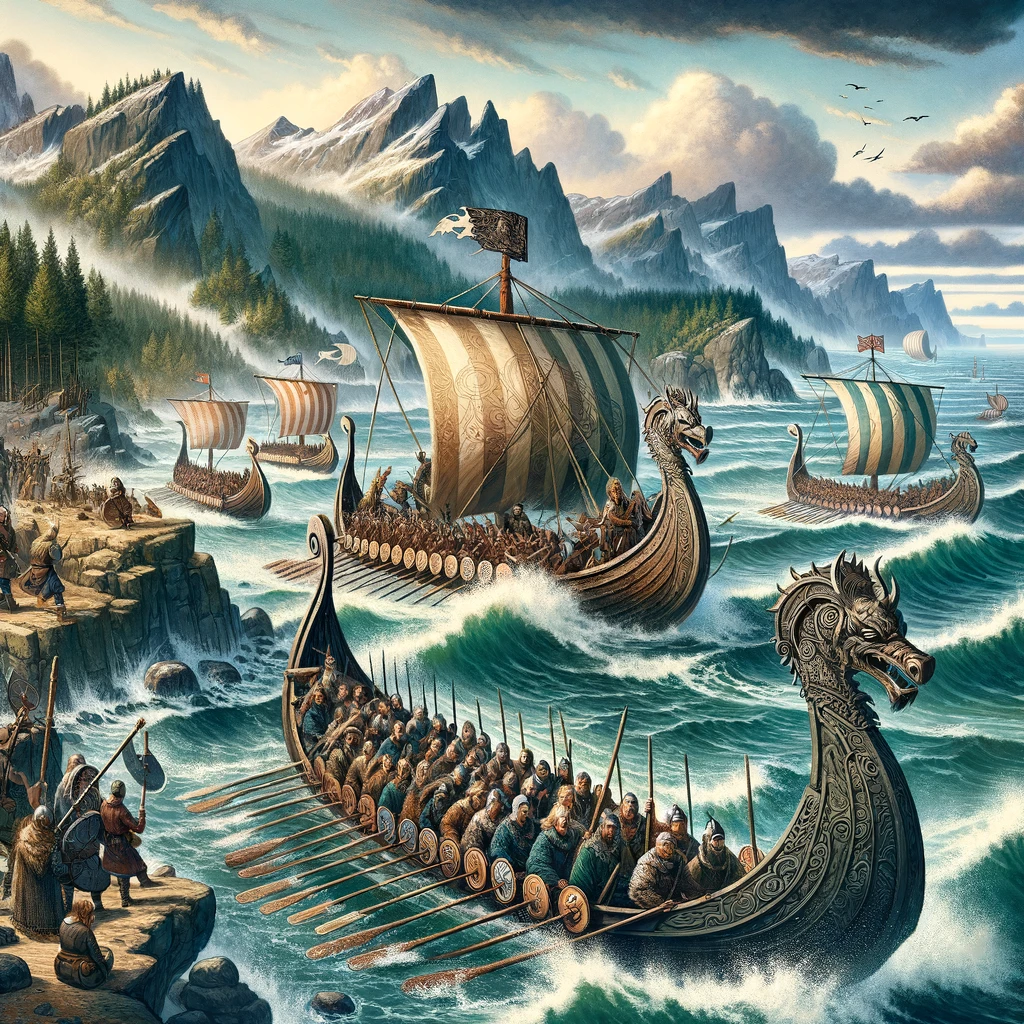
The Vikings, often remembered for their fearsome raids and pioneering voyages, were also skilled traders whose mercantile networks spanned vast portions of the globe. From around 793 AD, starting with raids on the British Isles, to their far-reaching travels to the shores of North America, the Vikings engaged in complex trade activities that not only enriched their societies but also facilitated cultural exchanges across continents.
The Origins of Viking Trade
Viking trade began as an extension of their need for resources and wealth. Scandinavia, rich in timber, iron, and fur, provided a strong base for these seafaring people. However, certain luxuries like silver, silk, and spices were not readily available in their homeland. This scarcity drove the Vikings to travel far and wide, initially to raid and plunder, but increasingly to trade and settle.
Key Trade Routes
1. The Eastern Routes: The Vikings navigated eastward through the rivers of Russia to the wealthy Byzantine Empire and the Islamic Caliphates. They traveled these routes with boats that could easily transition between seas and rivers, allowing them to trade Scandinavian furs, slaves, and amber for silver, silk, and other luxury goods. The city of Novgorod became a crucial hub in this eastern network, serving as a gateway to the rich markets of the East.
2. The Western Routes: To the west, the Vikings ventured to the British Isles, Frankish territories, and beyond. They established significant settlements, like Dublin, which emerged as important trading centers where goods from Scandinavia were exchanged for local products and crafts. The Vikings also reached the Iberian Peninsula, where they traded with Islamic merchants, obtaining items that were rare back home.
3. The Northern Routes: The northern routes took the Vikings to the remote Arctic regions of Europe. They reached the coasts of modern-day Finland and even the White Sea. These routes were primarily for obtaining walrus ivory, furs, and falcons, which were highly valued in the European markets.
4. The Route to the New World: Perhaps the most striking of their voyages were those that led them to Greenland and eventually to North America, which they called Vinland. These journeys were initially driven by the search for new lands to settle but also opened up new avenues for trade with indigenous peoples, exchanging timber and iron tools for furs and leather.
Trade Goods and Commerce
The Viking trade was diverse, involving commodities that were often luxurious and exotic for their time. Apart from the commonly traded furs and slaves, Vikings dealt in finely crafted items like jewelry, weapons, and even ships. Their craftsmanship in items such as combs, buckles, and swords was highly esteemed and sought after in various markets they reached.
Impacts of Viking Trade
1. Cultural Exchange: Trade routes were conduits of culture, technology, and ideas. The Vikings adopted many foreign elements into their culture, including religious ideas, artistic styles, and even coinage systems, which were then spread across their trading and raiding routes.
2. Economic Development: The influx of wealth from trade contributed to the development of robust Viking economies. It also led to the establishment of urban centers in Scandinavia, like Birka and Hedeby, which were pivotal in the broader economic network of medieval Europe.
3. Political Influence: As the Vikings settled in new areas, they often became part of the local aristocracy or established their own ruling classes, as seen in Normandy and the British Isles. Their political influence reshaped the regions they integrated with, often laying the groundwork for future nation-states.
Legacy
The legacy of Viking trade is evident in the archaeological records that reveal a mosaic of cultural interactions across Europe and beyond. The reach and impact of their trade underscore the Vikings’ adaptability and their role in shaping medieval history. While often overshadowed by their reputation as raiders, their contributions to the economic and cultural landscapes of their time remain a testament to their complex society.
The Viking era, marked by their far-reaching trade, was more than just a period of warriors and conquests. It was a dynamic time of interaction and exchange that connected disparate parts of the world in ways that resonate to this day. From Scandinavia to the shores of the New World, the Vikings left an indelible mark on the history of trade and cultural exchange, highlighting a lesser-known aspect of their storied past.

The Mechanics of Viking Trading
Viking trade was facilitated by their advanced seafaring technology, which allowed them to navigate vast distances across treacherous waters. The iconic longships, with their shallow drafts, were perfectly designed for both deep-sea voyaging and river navigation, enabling Vikings to reach distant markets inaccessible to many of their contemporaries.
Shipbuilding Techniques
The construction of these ships was a marvel of the era. Using overlapping planks of wood (a technique known as clinker building), they created flexible, yet sturdy, vessels that could withstand the rough northern seas. These ships were not only functional but also beautifully adorned with intricate carvings that reflected their makers’ craftsmanship and aesthetic sensibility.
Trading Posts and Towns
Along their trade routes, the Vikings established numerous trading posts and towns, which played critical roles in the maintenance and expansion of their trade networks. These included not only well-known centers like York in England and Dublin in Ireland but also less famous yet equally important sites like Kaupang in Norway and Hedeby in Denmark. These towns were bustling centers of commerce where goods from across the known world were exchanged.
Viking Traders and Their Practices
Viking traders were skilled negotiators known for their ability to strike deals across cultural divides. They adapted their trading practices to fit the local customs of the regions they entered, often adopting new languages and currency systems. This adaptability was key to their success as traders and facilitated their integration into local economies.
Barter System
The Vikings primarily engaged in a barter system, exchanging goods directly rather than using a standardized monetary system. However, in certain regions, they adopted the use of coins, especially in dealings with the Byzantine Empire and Islamic traders, where coinage was a more established medium of exchange.
Integration into Local Economies
As they settled in new territories, Vikings often integrated into local economies, not just as traders but also as producers. In places like Ireland and northern England, they introduced new agricultural practices and crafts, significantly impacting local production and trade dynamics. This integration helped to forge lasting economic ties that influenced regional economies long after the Viking Age had ended.
Challenges in Viking Trade
Despite their successes, Viking traders faced numerous challenges. These included navigating political complexities in foreign territories, dealing with piracy and competition from other trading groups, and overcoming natural barriers like harsh weather conditions and unpredictable seas.
Diplomacy and Conflict
Their ventures often required a delicate balance of diplomacy and, at times, force to secure trading rights and protect their interests. Conflicts with local rulers were common, but so were alliances, some of which led to significant political and familial ties across borders.
Conclusion: A Legacy of Connectivity
The Viking trade networks were more than mere channels for commerce; they were lifelines that connected diverse cultures, facilitated the spread of ideas and technologies, and helped shape the medieval world. Their legacy is seen not just in the goods they traded or the towns they founded but in the deep-seated connections they established across Europe and beyond. This complex web of interactions contributed significantly to the cultural and economic development of Europe during the Middle Ages, underscoring the Vikings’ role as one of the great connectors of their time.
The Viking Age stands as a testament to their remarkable adaptability and their profound impact on the world stage, not just through conquest, but through commerce and cultural exchange that reshaped the landscapes they touched.