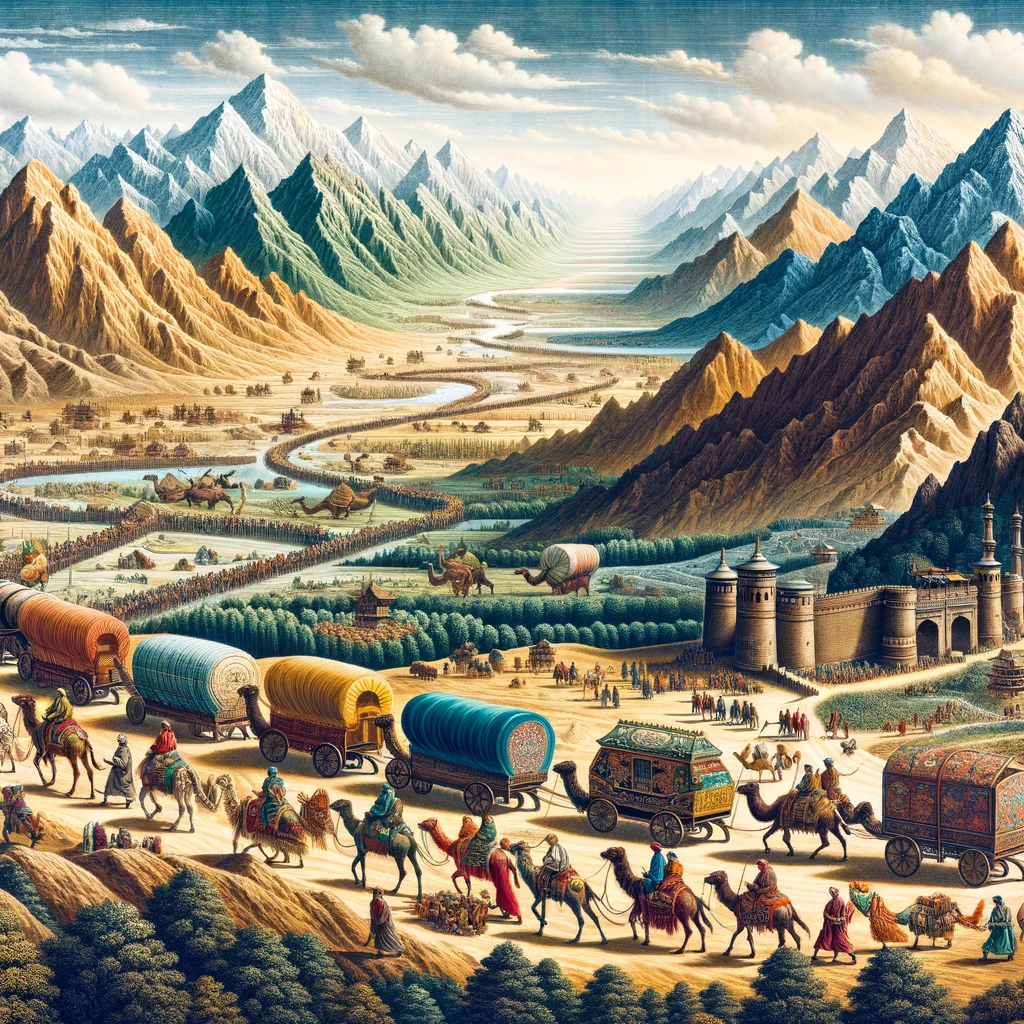
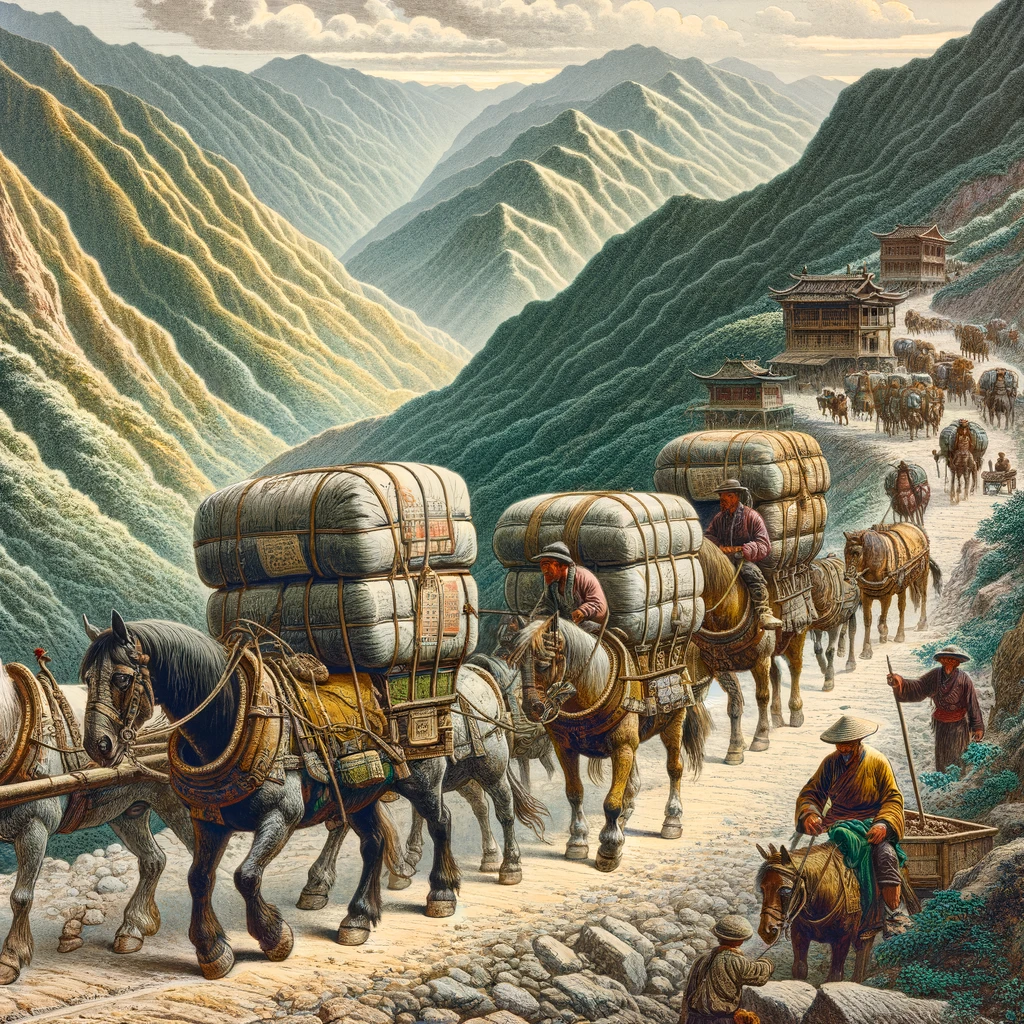
The Tea Horse Road, an ancient network of paths winding through the mountains of China, is more than just a route on a map. It tells a story of cultural exchange, economic development, and the challenging yet rewarding life of those who once traveled it. Unlike the more famous Silk Road, the Tea Horse Road, known in Chinese as Chama Gudao, was primarily focused on the exchange of tea from China’s southern provinces for horses from Tibet and Central Asia.
Origins and Historical Context
The Tea Horse Road originated during the Tang Dynasty (618-907 AD), but it reached its peak during the Song Dynasty (960-1279 AD). This was a time when demand for strong warhorses in China was high, and the vast tea-growing regions of Yunnan and Sichuan offered the perfect commodity for trade. The exchange wasn’t just beneficial economically; it was a necessity for the survival of empires and the establishment of stable borders.
The Route and Its Challenges
Spanning thousands of miles, the Tea Horse Road traversed rugged terrains, including the formidable Himalayas. The primary route started in the tea-producing areas of Sichuan and Yunnan, snaking through the Tibetan Plateau, and reaching as far as Bengal in modern-day India and beyond. Traders faced numerous hardships: steep paths, unpredictable weather, and the constant threat of bandit attacks. Despite these challenges, the cultural and material exchanges along the road flourished.
Cultural Impact and Exchange
The movement of goods like tea, salt, and silk led to a profound cultural exchange. Ideas, religious beliefs, and technological innovations traveled along with the caravans. Buddhism, in particular, spread widely through these interactions, with monasteries and temples built along the route to support the spiritual needs of travelers.
The Tea and Horse Exchange
The barter system that operated on the Tea Horse Road was unique. Tea bricks, compressed for easier transport, served as currency. In Tibet, tea became a staple, vital for nutrition and used in various ceremonies. Meanwhile, Chinese armies relied heavily on Tibetan horses, which were smaller yet remarkably sturdy and well-adapted to the mountainous terrain.
Economic Implications
The economic impact of the Tea Horse Road is undeniable. It helped stabilize regions and supported the livelihoods of countless families involved in the trade. Towns along the route grew into prosperous trading posts. Markets were vibrant with the exchange of local and exotic goods, fostering a thriving economy that impacted China’s development significantly.
Decline and Legacy
The importance of the Tea Horse Road declined with the advent of modern transportation and military technologies in the 20th century. However, its legacy persists. Today, the route is recognized not only for its historical significance but also for its role in shaping the cultures and economies of the regions it touched.
Modern Rediscovery and Tourism
In recent years, there has been a resurgence of interest in the Tea Horse Road. Efforts to preserve and promote this ancient route are underway, turning it into a significant cultural and historical tourism destination. Parts of the route are now popular trekking paths, offering adventurers a glimpse into the past through breathtaking landscapes and enduring traditions.
Conclusion
The Tea Horse Road remains a testament to the enduring spirit of the ancient traders and the unbreakable bonds formed through centuries of exchange. As we explore this ancient path, we not only uncover the rich tapestry of history woven along its length but also understand the profound impacts such ancient routes had on connecting diverse cultures.
Further Exploration
For those intrigued by the history of the Tea Horse Road, several resources are available for further exploration. Museums, historical texts, and modern-day travelogues offer insights into this fascinating aspect of world history, ensuring that the legacy of China’s ancient trade path continues to inspire and educate.

The Role of Communities Along the Tea Horse Road
The communities that lived along the Tea Horse Road played a crucial role in its operation and sustainability. These communities, comprising diverse ethnic groups such as the Naxi, Yi, Tibetan, and Han Chinese, were not only the backbone of trade but also the custodians of the route’s rich cultural heritage. They provided essential services such as inns, stables, and markets, ensuring that the traders and their caravans could travel as safely as possible.
Preservation of Traditional Skills
One of the most remarkable aspects of the Tea Horse Road is the preservation of traditional skills and crafts. Throughout the route, local artisans continue to practice ancient crafts, including tea processing, metalwork, and textile weaving, much as their ancestors did. These traditions are not only a link to the past but also a critical part of the local economy, providing livelihoods and sustaining communities.
Environmental Impact
The Tea Horse Road also had a significant environmental impact. The constant movement of caravans and the development of infrastructure around trading posts led to changes in the landscape. However, it also fostered an early form of environmental management. Communities learned to live in harmony with their surroundings, utilizing resources sustainably to support the long-term viability of the trade route.
The Tea Horse Road in Literature and Art
The influence of the Tea Horse Road extended into literature and art, capturing the imagination of poets, painters, and storytellers. These cultural artifacts provide a window into the past, depicting the rugged beauty of the landscape and the vibrant life along the route. They also reflect the hardships and triumphs of the traders and their caravans, offering a deeper understanding of the human experience connected to this ancient path.
Educational Initiatives and Research
In recent years, educational initiatives have focused on the Tea Horse Road, with universities and cultural institutions conducting research and offering courses on its history and impact. These programs aim to educate new generations about the significance of the route, not only in terms of historical trade but also in the context of cultural interaction and exchange.
Global Connections
The global significance of the Tea Horse Road cannot be overstated. It was a precursor to the modern globalized world, demonstrating how interconnected different regions can be. The route facilitated not only trade but also the exchange of ideas, helping to shape philosophical, religious, and cultural dialogues across continents.
The Future of the Tea Horse Road
Looking to the future, there is a growing emphasis on preserving the Tea Horse Road as a cultural heritage site. Initiatives aim to maintain the physical path and the intangible cultural heritage that accompanies it. There is also interest in developing sustainable tourism, which respects the historical significance and supports local economies without harming the environment or the local way of life.
Conclusion
The Tea Horse Road is more than just a historical curiosity; it is a vibrant part of the cultural fabric of China and the regions it connected. Its story is one of endurance, cultural exchange, and economic innovation. As we continue to explore and preserve this ancient route, we ensure that future generations can learn from and be inspired by this pivotal chapter in human history.
Reference Section
For further detailed study and exploration, here are some suggested resources:
- The Ancient Tea Horse Road by Michael Freeman – This book provides a comprehensive look at the history and cultural significance of the Tea Horse Road.
- Tea Horse Road: China’s Ancient Trade Road to Tibet by Selena Ahmed and Michael Freeman – This work explores the ecological and cultural landscapes of the Tea Horse Road.
- Museums and cultural centers along the route – Many local museums along the Tea Horse Road offer exhibitions and information about the history of the trade route.
- Academic papers and journals – Numerous academic institutions publish research on various aspects of the Tea Horse Road, available through scholarly databases and libraries.