The Trans-Saharan trade routes, a web of sandy paths traversing the formidable Sahara Desert, were not just conduits for commodities like gold and salt, but also for the exchange of ideas and cultures that shaped the civilizations around them. This article explores the significance of these ancient pathways, highlighting how they facilitated not only economic transactions but also cultural and intellectual interactions across continents.
The Geographic and Economic Backdrop
The Sahara Desert, often portrayed as a vast, lifeless expanse, has been anything but barren when it comes to the human spirit and ingenuity. Covering most of North Africa, this desert was a natural barrier that separated the Mediterranean civilizations of the north from the Sub-Saharan African kingdoms. Despite its harsh conditions, the Sahara was crossed by traders, travelers, and explorers who ventured between these regions.
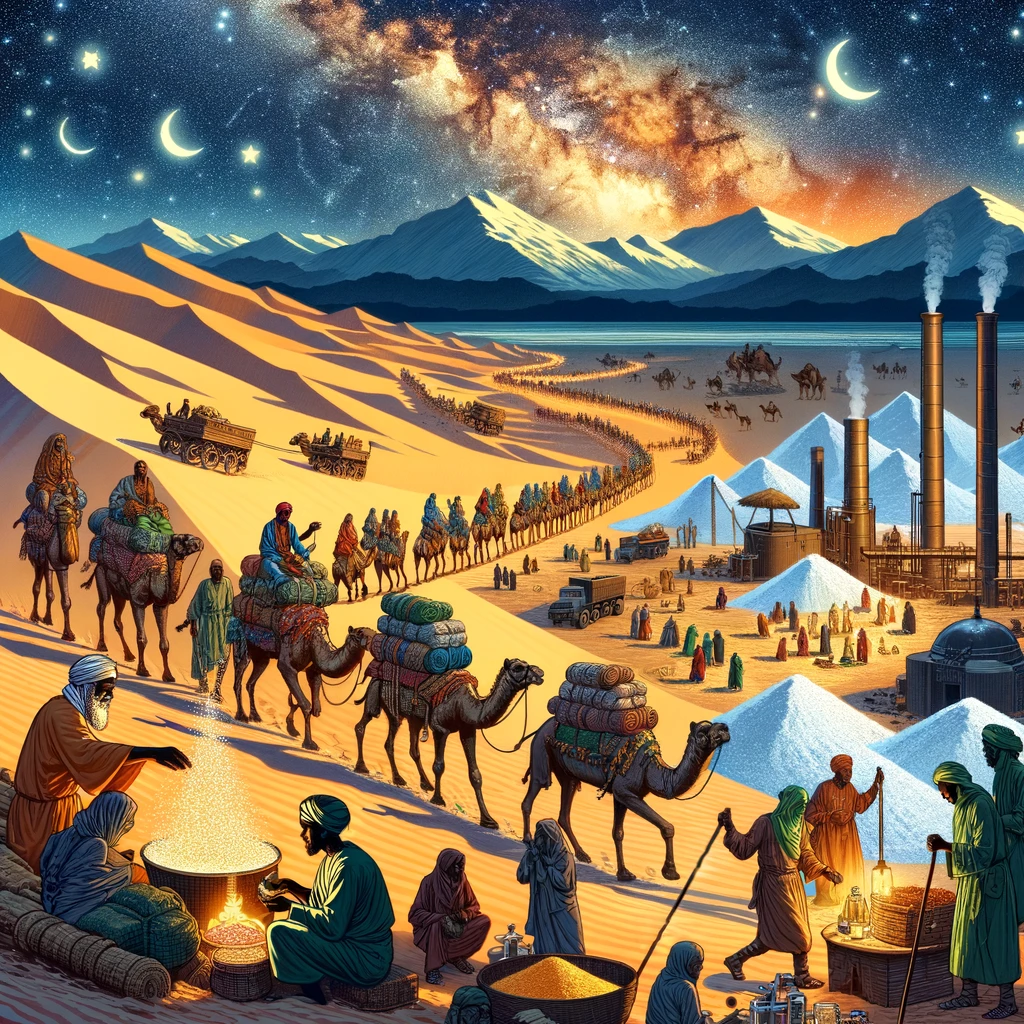
The main commodities that fueled the trans-Saharan trade were as valuable as they were essential. Gold, mined from the rich fields of West Africa, particularly in the Ghana Empire, Mali, and later Songhai, was in high demand in Europe, the Middle East, and Asia. Salt, crucial for preserving food and maintaining the health of both people and livestock, was another key product, often brought south from the mines in the Sahara itself.
The Role of Camels
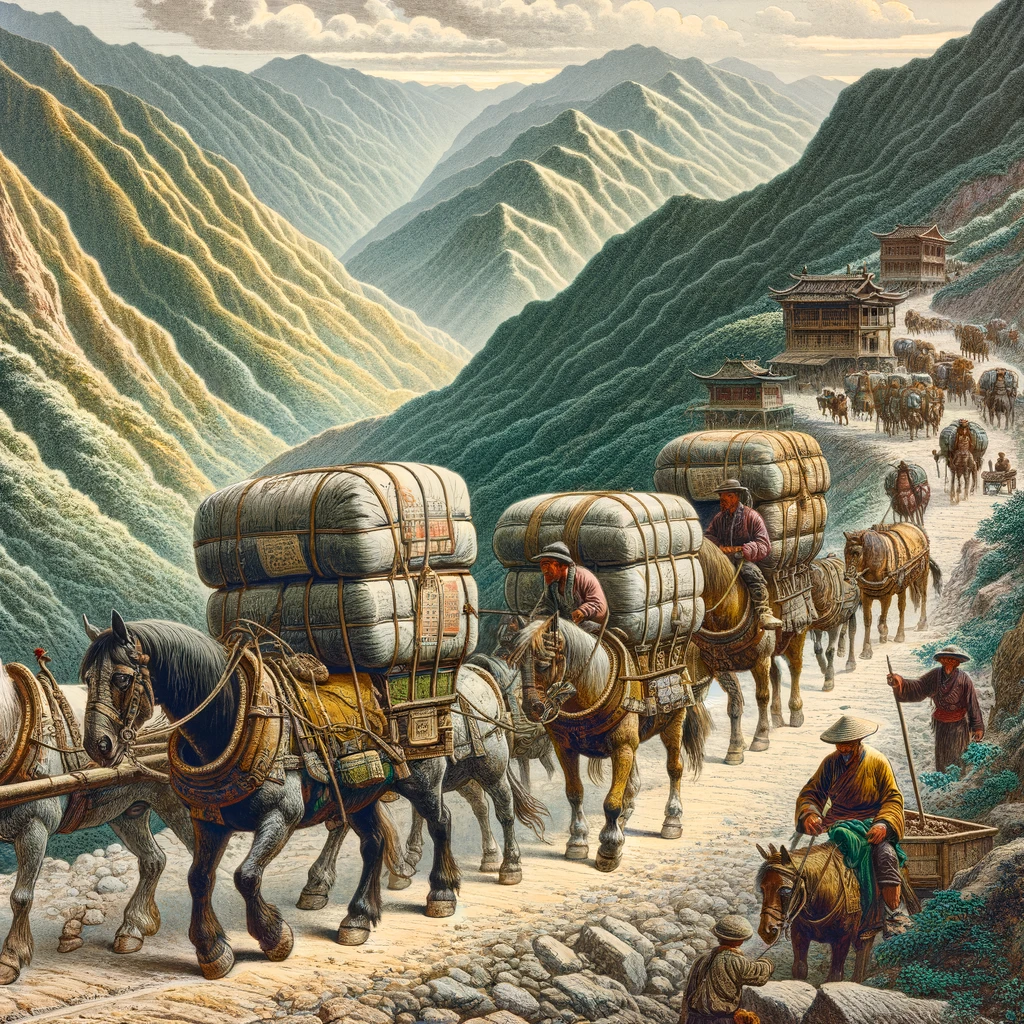
The introduction of camels, often referred to as the ‘ships of the desert,’ around the 3rd century AD, revolutionized trade across the Sahara. These resilient animals could travel long distances without water, carrying large loads of goods, which made trans-Saharan trade more feasible and profitable. Camel caravans facilitated the efficient movement of goods across the desert, making cities like Timbuktu, Gao, and Sijilmasa bustling centers of trade and culture.
Cultural Exchange and the Spread of Ideas
The trade routes were more than just economic lifelines; they were channels for the exchange of ideas, technology, religion, and culture. As traders and travelers moved across the continent, they brought with them their beliefs, practices, and knowledge, which then blended with local cultures.
Islam, for instance, spread across North Africa through these routes. Traders and Islamic scholars traveled into Sub-Saharan Africa, introducing the religion peacefully through trade and intermarriage. This religious transformation was integral to the development of the region’s historical kingdoms, influencing their governance, legal systems, and educational frameworks.
Impact on Local Economies and Societies
The wealth generated by the trans-Saharan trade had a profound impact on the local economies and the social structures of the African empires. Gold and salt trade brought immense wealth to the ruling classes, enabling the construction of elaborate palaces and mosques, and the sponsorship of high culture that attracted poets, scholars, and artists from across the Islamic world.
Cities along the trade routes, like Timbuktu, became renowned as centers of learning and culture, housing great universities and libraries. The University of Sankore in Timbuktu, for instance, was a famous center of Islamic learning and scholarship during the 15th and 16th centuries.
Challenges and Decline
The prosperity of the trans-Saharan trade routes did not come without challenges. The harsh desert environment, the threat of banditry, and the complex politics of the region posed constant risks to traders and travelers. Additionally, the rise of European maritime trade routes in the 15th and 16th centuries began to divert the flow of gold and other African commodities away from the Sahara, leading to a gradual decline in the economic importance of these routes.
Legacy of the Trans-Saharan Trade
Despite their decline, the legacy of the trans-Saharan trade routes continues to resonate today. They were instrumental in shaping the historical and cultural landscapes of North and West Africa and played a crucial role in the broader economic and cultural exchanges between East and West.
The routes remind us of the interconnectedness of human societies and the profound ways in which trade can influence civilizations far beyond the mere exchange of commodities. Today, they stand as a testament to human resilience and adaptability, echoing stories of a time when gold, salt, and tales of distant lands traversed the vast desert under the relentless sun.

The Strategic Importance of Trade Hubs
Within the network of trade across the Sahara, certain cities emerged as pivotal hubs due to their strategic locations and resources. Cities like Timbuktu in Mali and Kano in Nigeria served not only as trade centers but also as melting pots of culture. These cities managed to harness the economic power of the trade routes to build societies that were incredibly advanced in terms of governance, culture, and technology for their time.
Timbuktu, in particular, is renowned for its historical role as an intellectual and spiritual capital. At its zenith, it was home to some of the most prestigious academic institutions of the Islamic world, including the Sankore Madrasah. Scholars from various parts of the world came to Timbuktu to gain and share knowledge. The city was also a repository of thousands of manuscripts that covered a wide range of subjects, from science to theology, highlighting the high level of scholarly activity facilitated by the wealth of the trade routes.
The Diversity of Goods and Cultural Artifacts
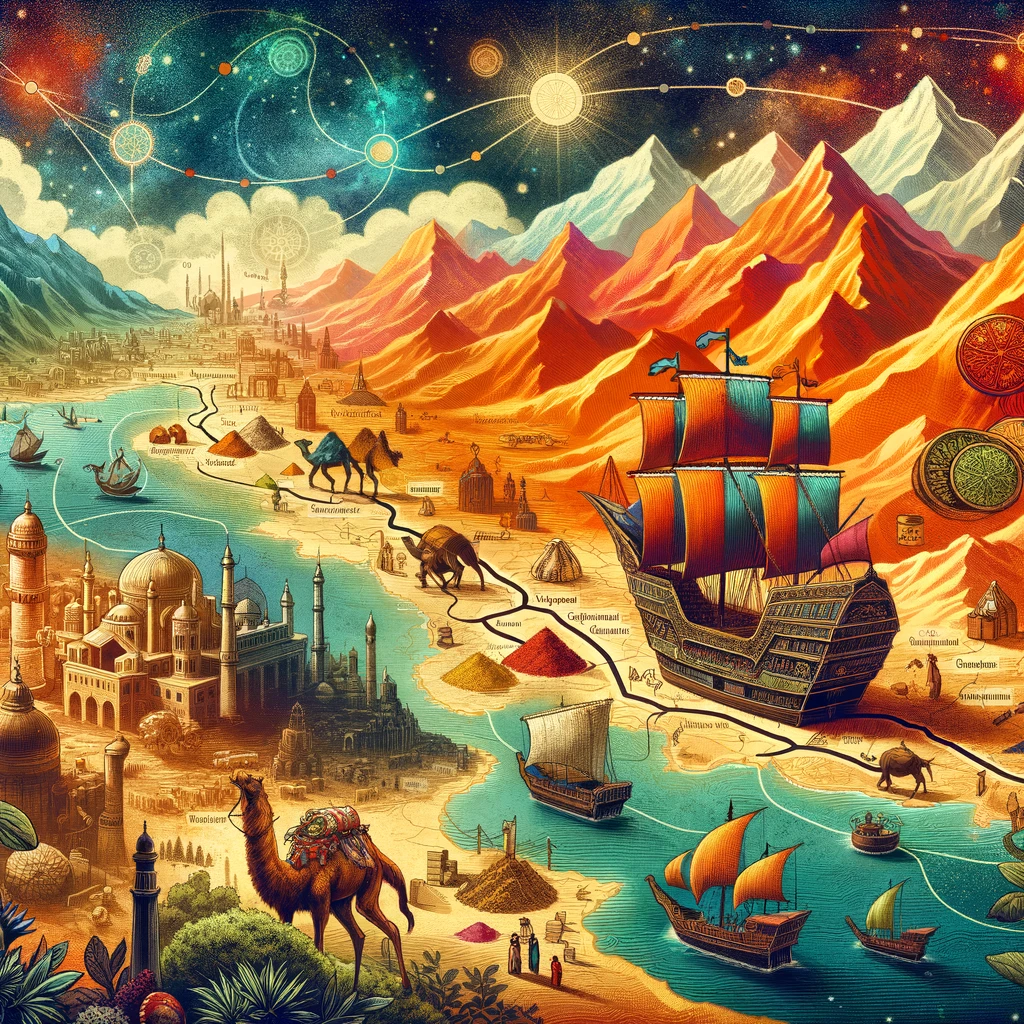
While gold and salt were the primary goods traded along the trans-Saharan routes, they were by no means the only products that found their way across the desert. Ivory, slaves, leather goods, cloth, and spices were also traded extensively. This diversity in trade goods led to a concomitant diversity in cultural exchange, contributing to a rich tapestry of cultural artifacts that blended African, Arab, and European influences.
Artifacts such as intricate gold jewelry from West Africa, fine textiles from North Africa, and carved ivory from Central Africa found their way into markets as distant as Istanbul and Venice. This not only enriched the material culture of these regions but also allowed for a greater appreciation and understanding of distant cultures among the populations of these trade hubs.
The Role of Trade in Political Power
The wealth generated by the trans-Saharan trade also played a crucial role in shaping the political landscape of the region. Control over trade routes allowed kingdoms to flourish and exert influence over large territories. For instance, the Mali Empire, which reached its height under the rule of Mansa Musa, is famed not just for its wealth but also for its significant administrative achievements and its role in promoting Islam and education.
Mansa Musa’s pilgrimage to Mecca in 1324 is a particularly telling example of how trade wealth could be leveraged to gain political power and religious prestige. His journey through Cairo, laden with gold, left such an impression that it significantly enhanced the reputation of his empire across the known world, drawing traders, scholars, and political allies.
Environmental and Technological Challenges
Navigating the Sahara was fraught with environmental challenges that traders had to overcome. Seasonal winds, sandstorms, and the relentless sun made travel perilous. The traders’ ability to use stars for navigation, their knowledge of the desert’s geography, and their innovations in caravan logistics were crucial for the success of the trade routes.
Technological innovations such as the development of saddles and the domestication of the camel dramatically increased the volume and efficiency of trade. These innovations allowed traders to establish and maintain long-distance trade routes despite the geographical and environmental hardships.
Conclusion
The trans-Saharan trade routes were more than just conduits for commerce. They were vital arteries that carried the lifeblood of culture, technology, and political ideas across a continent. The gold, salt, and stories that flowed across the Sahara enriched not just the material lives of those they touched but also their cultural and intellectual existence.
Today, while the physical routes may no longer buzz with camel caravans laden with gold and salt, the legacy of these routes endures. They remind us of the transformative power of trade and the enduring human spirit to connect, adapt, and thrive even in the most challenging environments.
References
- The Sahara: History, Trade, and Culture.
- The Impact of the Camel on Trade in the Sahara.
- The Legacy of Timbuktu: Scholars and Learning.
- Economic and Cultural Impacts of Trans-Saharan Trade.
- The Introduction and Spread of Islam in North Africa.