Skip to content

SOCIALSTUDIESHELP.COM

Learn Social Studies and American History

  • American History Lessons
  • American History Topics
  • AP Government and Politics
  • Economics
  • Resources
    • Blog
    • Practice Exams
    • AP Psychology: Understanding the Science of the Mind and Behavior
    • World History
    • Geography and Human Geography
    • Comparative Government & International Relations
    • Most Popular Searches
  • Toggle search form

The COVID-19 Pandemic – A Global Cultural Shift

Posted on By admin

The COVID-19 pandemic, an unprecedented global event, has indelibly altered the cultural landscape of our world. From the early months of 2020, as the virus spread with alarming speed, the world plunged into a new reality. Countries closed their borders, economies slowed to near halts, and billions of people adapted to life under various forms of restriction. Despite the disruption, or perhaps because of it, the pandemic has acted as a catalyst for profound cultural shifts. It has redefined societal norms, influenced communication patterns, and prompted re-evaluations of personal and collective priorities. This comprehensive analysis explores the multiple facets of these cultural transformations, emphasizing the significant impact on social behaviors, technology use, work and education paradigms, and global interconnectedness. Join us as we unpack how COVID-19 has ushered in a new era of cultural evolution.

Social Behaviors and Norms

Before COVID-19, socializing in many cultures revolved around physical presence and close interactions. Gathering in large crowds, greeting with handshakes or hugs, and sharing meals were commonplace. However, the pandemic necessitated social distancing measures that have fundamentally altered these interactions. Mask-wearing, once rare outside medical settings, became a common cultural practice. Touchless greetings, such as the elbow bump, replaced handshakes, and even family gatherings went virtual. The pandemic has accelerated a shift towards more individualistic behaviors in some societies while simultaneously fostering a sense of collective responsibility in others. These changes in social conduct highlight a broader cultural adaptation to prioritize health and safety, and they may persist long after the pandemic subsides. People’s comfort with personal space and caution toward physical contact are likely to remain as new cultural norms.

The Rise of Digital Communication

As lockdowns and travel bans separated people physically, digital communication became the linchpin of maintaining both personal and professional relationships. Video conferencing platforms like Zoom, Microsoft Teams, and Google Meet experienced exponential growth. Virtual social events, from weddings to happy hours, became not just necessary but normalized. This widespread adaptation to digital communication tools has significantly influenced cultural dynamics. For instance, remote work culture has gained prominence, redefining the traditional workplace and encouraging work-life balance. Furthermore, the normalization of virtual interactions has expanded access to global conversations, enabling cultural exchanges that were previously confined to physical travel. The pervasive use of digital platforms has also raised questions about digital etiquette and the implications of a screen-dominated world on mental health and human interactions.
Impact on Work and Education

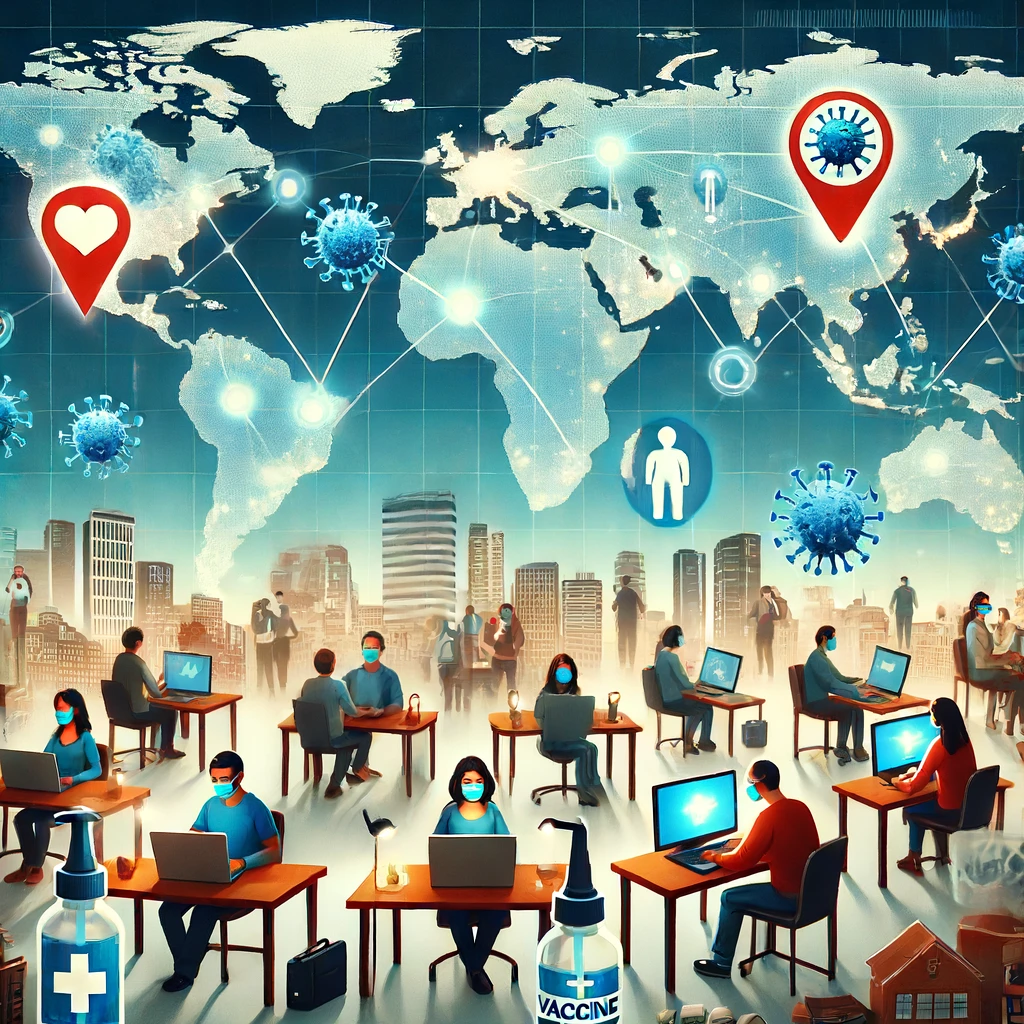
COVID-19 catalyzed perhaps the most significant shifts in the domains of work and education. Businesses and educational institutions transitioned to remote operations almost overnight, leading to a rapid embrace of digital tools and platforms. This shift has had a profound cultural impact, altering perceptions of productivity and learning. In the workplace, remote work has challenged traditional office norms, leading to more flexible work arrangements and a reevaluation of work-life balance. Companies are increasingly adopting hybrid models, blending in-office and remote work to offer flexibility. In education, the shift has prompted ongoing debates about the effectiveness and accessibility of online learning. While some students thrived in virtual classrooms, others faced challenges due to lack of resources or support. The cultural impact of these changes is profound, influencing future trends in how we approach both work and education.

Health and Wellness Prioritization

The pandemic has broadly reshaped attitudes towards health and wellness. With the virus highlighting vulnerabilities and inequities in healthcare systems worldwide, there has been a cultural shift towards prioritizing both physical and mental health. Public health campaigns, community wellness initiatives, and personal health monitoring have gained significant traction. Practices such as mindfulness, yoga, and mental health therapy have seen increased acceptance and integration into daily routines. The widespread acknowledgment of mental health as an essential component of overall well-being represents a substantial cultural shift from pre-pandemic times when it often carried a stigma. Additionally, fitness routines adapted to the constraints of lockdown, leading to a rise in home workouts and digital fitness platforms. This heightened focus on health and wellness is creating lasting cultural change as people adopt more holistic approaches to personal well-being.

Global Interconnectedness and Cultural Exchange

While the pandemic has physically isolated nations and individuals, it has paradoxically emphasized global interconnectedness. The shared experience of battling a common adversary has fostered a sense of global solidarity. Cultural exchanges, facilitated by digital platforms, have increased as communities worldwide seek connection and support. Virtual events, international collaborations, and global dialogues have soared, transcending geographical barriers. The cultural impact is also evident in creative expressions, with art, literature, and film reflecting pandemic-related themes and contributing to a collective narrative. The pandemic has thus reinforced the notion of a global community, prompting reevaluations of nationalism and emphasizing the importance of international cooperation. This cultural shift towards increased interconnectedness is likely to influence future global interactions, encouraging more empathy, support, and collaboration across cultures.

Conclusion

The COVID-19 pandemic has undeniably brought about a global cultural shift, influencing social behaviors, communication, work and education paradigms, health attitudes, and perceptions of global connectivity. These changes, born out of necessity, have prompted societies to adapt in ways that may have long-lasting effects. As we navigate a post-pandemic world, the cultural transformations observed during this period will likely persist, shaping future norms and values. The pandemic has served as a powerful reminder of our global interconnectedness and the need for collective resilience. By understanding and embracing these cultural shifts, we can better prepare for future challenges and promote a more inclusive, healthy, and connected world. The lessons learned during this period of upheaval will undoubtedly inform how we continue to evolve culturally in the face of new realities.
Major World Events

Post navigation

Previous Post: The Digital Revolution: Impact on Communication and Culture
Next Post: The Renaissance – Cultural Movement That Shaped Europe

Related Posts

The Arab Spring: Political Upheaval and Cultural Renaissance Major World Events
The End of Apartheid – A New Cultural Era for South Africa Major World Events
The Industrial Revolution – Transforming Societies and Cultures Global Events and Trends
The Space Race: Technological Advancement and Cultural Impact Global Events and Trends
The American Revolution – Birth of a Nation and Democratic Ideals Global Events and Trends
How World Wars Shaped National Boundaries and Cultures Major World Events
  • World History
  • Timeline of US History: Major Events from 1492 to Present
  • Glossary of Government Terms: 50 AP Gov Concepts Explained in Plain English
  • Top 10 Most Common Social Studies Exam Terms (and What They Mean)
  • Research Paper Outline Example (Template for High School & AP Research)

Navigation

  • Economics
    • Agricultural Price Supports
    • Agriculture in the United States
    • Bank Deregulation and the S&L Crisis
    • Banking and the Federal Reserve System
    • Basic Economic Concepts
    • Budgeting
    • Business Cycle
    • Business Organizations
    • Perspectives on Business Structures
    • Circular Flow Model
    • Collective Bargaining
    • Comparative Economic Systems
    • Different Types of Banks
    • Economic Growth
    • Economic Indicators
    • Economics Final Exam Review
    • Economics Links
    • Elasticity
    • Federal and State Budgeting
    • Federal Spending and National Debt
    • Free Enterprise
    • Governments Role in the Economy
    • History of Labor Unions
    • Government Protection of the Consumer
    • Income Inequality
    • Inflation
  • History Topics
    • “Robber Barons” or “Captains of Industry”
    • The 18th & 19th Amendments: Prohibition & Women’s Suffrage Explored
    • 19th Amendment – Womens Suffrrage
    • African American Reformers
    • African American Reform in the Progressive Era
    • America – Divided at Birth
    • America’s Role in WWII: Decisive Influence in War’s Outcome
    • Spanish American War: How it Forged America’s Global Dominance
    • Andrew Carnegie – Gospel of Wealth
    • Effectiveness of U.S. Antitrust Laws in Protecting Competition
    • Articles of Confederation
    • Justifications & Impacts: Policies Toward Native Americans
    • Understanding the Bill of Rights’ Protections
    • US Campaigns and Elections: Democracy’s Backbone
    • Causes of the Great Depression
    • Opposition & Responses to the New Deal: Roosevelt’s Strategy
    • Checks and Balances
    • Effectiveness of the Civil Rights Movement in U.S. Social Change
    • What Caused the Beginning of the Civil War?
    • Colonization and Mercantilism
    • Constitutional Convention
    • Constitutional Flexibility
    • Containment Policy: America’s Tactics Against Communism
    • Cooling the Cold War: From Peaceful Coexistence to Detente
    • Cooling Off: Peaceful Coexistence to Detente
    • Declaration of Independence
    • Democracy in the colonies
    • Dropping of the Atomic Bomb
    • Early Domestic Policies
    • Washington & Jefferson’s Impactful Foreign Policies
    • Reconstruction’s Impact on Freedmen’s Lives
    • Effect of Lincoln’ Death on Reconstruction
    • Effects of the Great Depression
    • Electoral College
    • Enlightenment Thinkers
    • Events Leading Up To The Revolution
    • French and Indian War
    • Government Relationship with Unions
    • How a bill becomes a law.
    • Immigration – Why they came
    • Improvement in the cities – Progressive Era
    • American Influence in Asia during the 1800s
    • John Quincy Adams and Andrew Jackson
  • History Lessons
    • Cold War Genesis: A Detailed Analysis
    • The End of the Cold War
    • FDR’s New Deal
    • Foundation of Democracy
    • The Presidency of Andrew Jackson
    • JFK versus LBJ
    • The Presidency of John Adams
    • Judicial Branch
    • Immigration in the U.S
    • Legislative Branch
    • Madison – War of 1812
    • Monopolies & Trusts: Exploring American Businesses’ Quest to Curb Competition
    • The Presidency of James Monroe
    • Judicial Review and Supreme Court Cases
    • Justification for Imperialism
    • Korematsu V. United States
    • Origins of Legalized Segregation in the South
    • Management vs Unions: Responses to Unionization in the Industrial Revolution
    • Westward Expansion: Manifest Destiny’s Impact
    • McCarthyism Explained: Politics, Fear, and Cold War Context
    • The New Deal’s Impact on Minorities in 1930s America
    • Monopolies
    • Monroe Presidency
    • New Technologies – Industrialization
    • WWI and Civil Liberties: Striking the Balance in Wartime
  • Gov & Politics
    • Elections and Campaigns – Week 9 Notes
    • Interest Groups in American Politics: A Historical Review
    • Interest Groups – Text Notes – Week Seven
    • Lecture Notes – American Political System
    • Lecture Notes – Congress – Week 11
    • Lecture Notes – Economic Policy
    • Lecture Notes – Federalism
    • Lecture Notes – The Judiciary – Week 13
    • Notes – The Bureaucracy
    • Lecture Notes – Political Culture in America
    • Political Participation
    • Political Participation – Text Notes – Week Six
    • Political Parties – Week 8 – Text Notes
  • World Cultures
    • Asian Cultures
    • African Cultures
    • European Cultures
    • Middle Eastern Cultures
    • North American Cultures
    • Oceania and Pacific Cultures
    • South American Cultures
  • Global Trends
  • Important Events
  • Social Studies Weekly
  • Cultural Celebrations
    • Ancient Civilizations
    • Architectural Wonders
    • Celebrating Hispanic Heritage
    • Celebrating Women
    • Celebrating World Heritage Sites
    • Clothing and Fashion
    • Culinary Traditions
    • Cultural Impact of Language
    • Environmental Practices
    • Festivals
    • Global Art and Artists
    • Global Music and Dance
  • Economics
    • Behavioral Economics
    • Development Economics
    • Econometrics and Quantitative Methods
    • Economic Development
    • Economic Geography
    • Economic History
    • Economic Policy
    • Economic Sociology
    • Economics of Education
    • Environmental Economics
    • Financial Economics
    • Health Economics
    • History of Economic Thought
    • International Economics
    • Labor Economics
    • Macroeconomics
    • Microeconomics
  • Important Figures in History
    • Artists and Writers
    • Cultural Icons
    • Groundbreaking Scientists
    • Human Rights Champions
    • Intellectual Giants
    • Leaders in Social Change
    • Mythology and Legends
    • Political and Military Strategists
    • Political Pioneers
    • Revolutionary Leaders
    • Scientific Trailblazers
    • Explorers and Innovators
  • Global Events and Trends
  • Regional and National Events
  • World Cultures
    • Asian Cultures
    • African Cultures
    • European Cultures
    • Middle Eastern Cultures
    • North American Cultures
    • Oceania and Pacific Cultures
    • South American Cultures
  • Privacy Policy

Copyright © 2025 SOCIALSTUDIESHELP.COM. Powered by AI Writer DIYSEO.AI. Download on WordPress.

Powered by PressBook Grid Blogs theme