The Industrial Revolution, a period of profound socioeconomic and cultural change, began in the late 18th century and continued into the 19th century. Originating in Britain, it soon spread to other parts of the world, fundamentally altering the way societies lived and worked. The Revolution brought about unprecedented advancements in technology and manufacturing. However, it was more than just a series of technological innovations; it reshaped the very fabric of society, influencing everything from daily life to economic structures, cultural norms, and the global distribution of power.
Before the Industrial Revolution, economies were largely agrarian and people lived in rural areas. Work was manual and labor-intensive, reliant on human or animal power. The advent of mechanized production and factory systems transformed this reality. People began flocking to urban centers, and the rise of industries created new social classes and economic opportunities. Alongside these changes, the Industrial Revolution also heralded significant environmental impacts and new cultural realities.
As we delve deeper into the cultural impact of the Industrial Revolution, it’s essential to understand how technological advances intertwined with societal shifts. The resulting transformations in culture were sweeping, affecting arts, literature, lifestyles, and social dynamics. This article explores the vast and varied impacts of the Industrial Revolution, offering a comprehensive view of how this pivotal period in history redefined world cultures.
Economic Transformation and New Social Structures
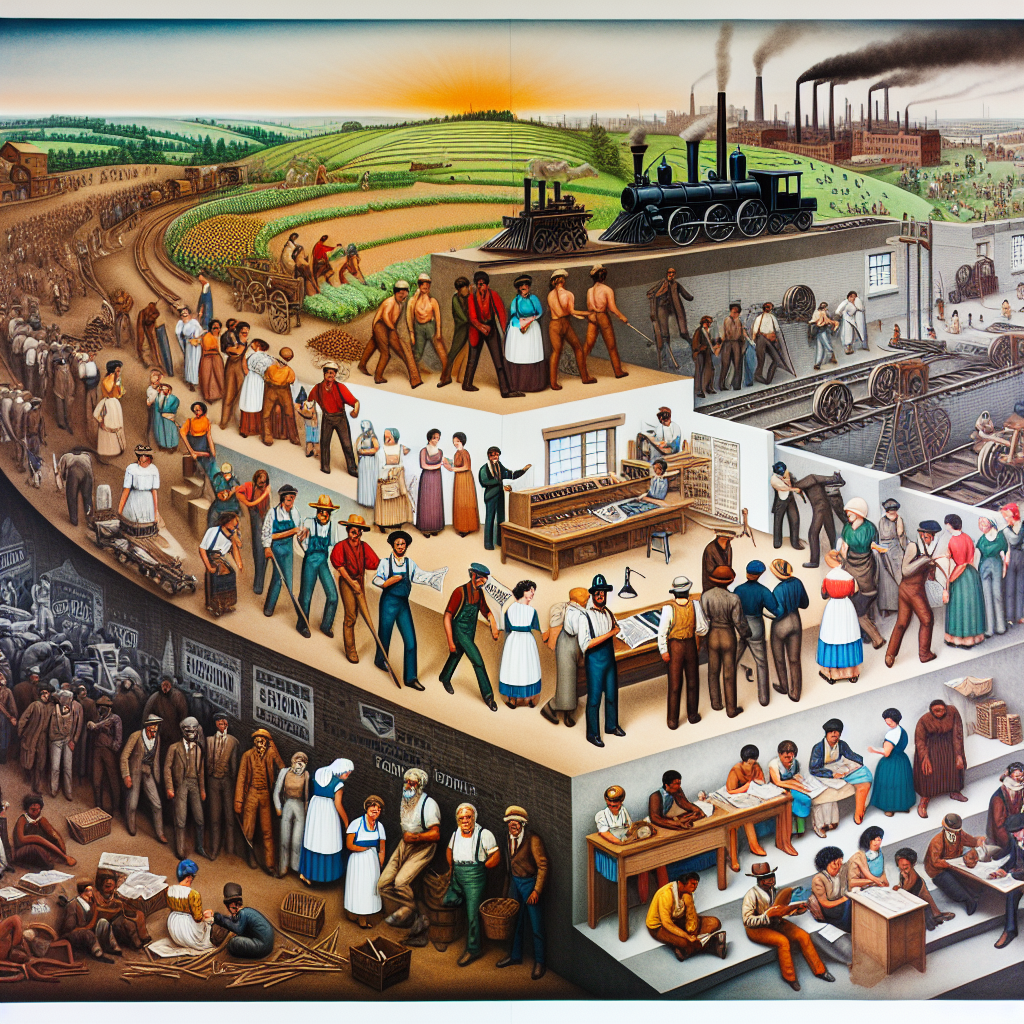
The Industrial Revolution marked a shift from agrarian-based economies to industrialized and urban economies. One of the most striking changes was the rise of factories, which became central to production. This mechanization allowed for mass production of goods, making products cheaper and more accessible to a wider population. As industries grew, they required a large workforce, leading to a massive migration of people from rural areas to urban centers.
This migration spurred the growth of cities, transforming them into economic powerhouses. The demand for labor led to the creation of numerous jobs, albeit often in harsh conditions. Nonetheless, the employment opportunities available in factories and mines were a draw for many seeking improved livelihoods. This urbanization catalyzed the development of a new social class structure: the capitalists or industrialists who owned the means of production, and the working class or proletariat, who worked in factories and mines.
The disparity between these classes was stark. While industrialists accumulated vast wealth, the working class often endured long hours, low wages, and poor working conditions. This economic inequality eventually led to social unrest and the formation of labor unions. These movements fought for better wages, shorter workdays, and improved working conditions, laying the groundwork for the modern labor rights movement. In essence, the Industrial Revolution not only transformed economies but also reshaped societal hierarchies and relations.
Cultural Impact on Daily Life
The cultural landscape of everyday life underwent significant transformation during the Industrial Revolution. The shift from rural to urban living fundamentally altered people’s daily routines and social interactions. Urbanization led to the creation of new communities, with housing developments springing up around factories and industrial hubs. These new living arrangements fostered a different way of life compared to the communal and family-oriented rural settings.
With the proliferation of factories, the concept of time management became deeply ingrained in everyday lives. The factory whistle, rather than the rooster or church bell, started dictating the pace of life. People’s schedules became more rigid, structured around work hours rather than agricultural cycles. This newfound regularity and discipline influenced broader cultural norms, promoting punctuality and a work ethic centered on efficiency.
Leisure activities also evolved. With the rise of disposable incomes (albeit modest for the working class), people had more opportunities to pursue entertainment and hobbies. Theaters, music halls, and later, cinemas became popular, reflecting a burgeoning cultural scene. Additionally, sports and physical activities saw increased participation, often as a form of escape or communal engagement amidst urban living’s pressures.

Advancement in Education and Science
The Industrial Revolution brought about significant advancements in education and scientific thought. Prior to this period, education was largely the privilege of the wealthy, but the need for a literate workforce led to the establishment of public education systems. Governments and industrialists alike recognized that an educated populace was critical to furthering economic growth and maintaining competitive advantages.
The burgeoning industries required not just manual laborers but also skilled professionals who could read, write, and engage in basic arithmetic. This necessity spurred initiatives to build schools and provide basic education to children, laying the foundation for the modern public school system. In time, higher education also saw expansions, with the creation of technical schools and universities focused on engineering and sciences.
The scientific advancements of the era were profound. The period saw notable inventions and discoveries that further fueled industrial progress, including the development of the steam engine, advances in metallurgy, and innovations in chemistry and physics. The synergy between science and industry became a hallmark of the era, leading to a culture that celebrated innovation, exploration, and progress.
Art and Literature Reflections
Art and literature during the Industrial Revolution vividly encapsulated the complexities and dualities of the era. On one hand, the movement brought forth Romanticism, where artists and writers sought to capture the beauty of nature and the emotions stirred by the environmental and societal disruptions caused by industrialization. Romantic literature often emphasized the sublime, the awe-inspiring beauty and terror of the natural world, as a counterpoint to the industrial landscapes.
Conversely, the era also gave rise to Realism in art and literature. Realist artists and writers depicted the lives of ordinary people with unvarnished truth, highlighting the harsh realities of industrial life. Works like Charles Dickens’ “Hard Times” and paintings by artists like Gustave Courbet portrayed the struggles of the working class, the squalid conditions in which they lived, and the vast social inequalities of the time.
Moreover, this period saw the emergence of social commentary through art and literature, with creators using their platforms to critique industrial society and advocate for social reform. This dual cultural expression—Romanticism and Realism—provided a rich and nuanced view of the Industrial Revolution’s multifaceted impact on society and individuals.
Global Implications and Cultural Exchange
The Industrial Revolution’s impact was not confined to the societies where it originated. It spurred global changes, affecting cultures and economies worldwide. Nations that industrialized rapidly gained significant economic and military power, allowing them to exert influence on a global scale. This shift led to the expansion of colonial empires, as industrialized countries sought new markets and resources to fuel their continued growth.
Colonialism, however, had profound impacts on the cultures of subjugated regions. Indigenous practices, traditions, and economies were often disrupted to make way for industrial exploitation and economic integration into the world market. While some regions saw the introduction of new technologies and infrastructure, these advances frequently came at a high cultural and social cost for the colonized peoples.
Simultaneously, the period also fostered an unprecedented exchange of ideas, goods, and practices. Cultures interacted and influenced one another more intensely than ever before. This cross-cultural exchange led to the blending and sometimes clashing of traditions, creating new cultural dynamics. The industrial era laid the groundwork for our modern globalized world, characterized by both cultural diffusion and cultural tension.
Conclusion
The Industrial Revolution was an epochal event that reshaped societies and cultures fundamentally. It initiated a transition from agrarian economies to industrialized, urban societies, fostering economic transformations and creating new social structures. This period saw significant changes in daily life, education, science, art, and literature, reflecting the complexities and dualities of an era marked by progress and hardship.
As we reflect on the Industrial Revolution’s legacy, it is clear that it set the stage for the modern world, introducing both advancements and challenges. The era’s cultural impacts were vast, influencing lifestyles, social norms, and global interactions. While it brought about wealth and development for some, it also highlighted vast inequalities and fostered social unrest.
Understanding the cultural impact of the Industrial Revolution allows us to appreciate the historical context of our contemporary world. It underscores the interconnectivity of technological progress and societal change and prompts us to consider the multifaceted consequences of rapid industrial and technological advancements. As we navigate the 21st century, reflecting on the lessons of the Industrial Revolution can provide valuable insights into managing current and future transformations.