As autumn leaves paint the landscape in hues of red and gold, families across the United States prepare for one of the most cherished holidays of the year—Thanksgiving. This annual celebration, held on the fourth Thursday of November, is a time for gratitude, family reunions, and feasting. But beyond the mouth-watering aroma of turkey and the sweetness of pumpkin pie, lies a rich tapestry of history and cultural significance that has shaped Thanksgiving into the holiday we know today. This article delves into the origins of Thanksgiving, its historical journey, and its evolving cultural importance.
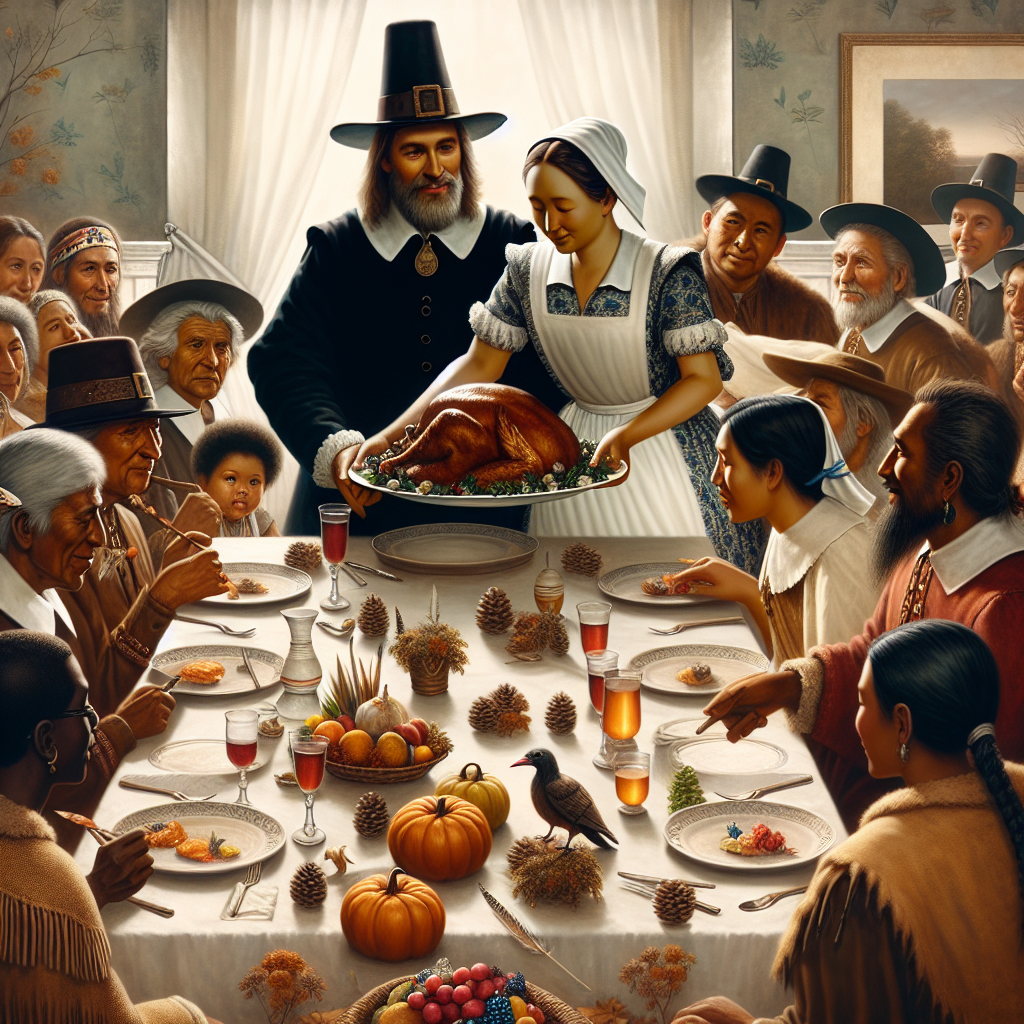
The origins of Thanksgiving can be traced back to the early 17th century, when the Pilgrims, a group of English settlers, held a feast to celebrate their first successful harvest in the New World. This event, often referred to as the “First Thanksgiving,” took place in 1621 in Plymouth, present-day Massachusetts, and was attended by the Pilgrims and the Wampanoag people who had helped them survive their first winter. The feast became a symbol of cooperation and harmony between the settlers and Native Americans, and though it was not initially considered a national holiday, it laid the foundation for the tradition we uphold today.
While the details of this original feast are often romanticized, Thanksgiving gradually took on greater significance in American culture. In 1863, amid the turmoil of the Civil War, President Abraham Lincoln proclaimed Thanksgiving a national holiday, setting a precedent for its annual celebration.
Yet, Thanksgiving is more than just a historical event. It is a reflection of American values such as gratitude, generosity, and community. In recent decades, the holiday has also become a time for discussing and acknowledging the complex and often painful history of the interactions between European settlers and Native Americans. This evolving understanding highlights the need for inclusivity and respect for all cultures and traditions, making Thanksgiving a multifaceted and deeply meaningful celebration.
Historical Background of Thanksgiving
To truly appreciate Thanksgiving, it’s essential to understand its historical context. The Pilgrims who embarked on the Mayflower in 1620 were religious separatists seeking freedom from the Church of England. After a perilous journey and a harsh first winter in the New World, they forged an essential alliance with the Wampanoag people. This alliance was crucial for their survival and success in establishing a new colony.
The harvest feast of 1621, which has since been immortalized in American folklore, was a three-day event that included 53 Pilgrims and 90 Native Americans. Contrary to modern Thanksgiving meals, the menu likely featured venison, fowl, fish, and native crops like corn, beans, and squash. This feast was a way for the Pilgrims to give thanks for the assistance they had received from the Wampanoag and to celebrate their successful harvest.
Despite its significance, the 1621 feast was not immediately recognized as a recurring event. In fact, it wasn’t until the 19th century that Thanksgiving began to resemble the organized holiday we celebrate today. Various colonies and states would hold similar festivities, but there was no consensus on the date or manner of the celebration.
It was Sarah Josepha Hale, a prominent writer and editor, who tirelessly campaigned for Thanksgiving to become a national holiday. Her efforts culminated in President Abraham Lincoln’s proclamation in 1863, which established Thanksgiving as a national day of “Thanksgiving and Praise.” Lincoln’s intention was to foster national unity during the Civil War, a time of great division and hardship.
Cultural Significance of Thanksgiving
Thanksgiving has evolved beyond its historical roots to become a national tradition brimming with cultural significance. At its core, the holiday embodies fundamental American values, such as gratitude, family, and community. It is a day when families gather, often traveling great distances, to share a meal and express thanks for their blessings.
The traditional Thanksgiving meal, with its iconic dishes of roast turkey, stuffing, cranberry sauce, and pumpkin pie, has become a hallmark of the holiday. While the specific foods may vary by region and family traditions, the essence of sharing a bountiful meal remains constant. Beyond the meal, Thanksgiving has also become synonymous with various cultural practices and traditions. The Macy’s Thanksgiving Day Parade, first held in 1924, is a quintessential part of the holiday, drawing millions of viewers worldwide. The parade’s grand floats, marching bands, and giant balloons have made it an integral part of the American Thanksgiving experience.
Football is another beloved tradition associated with Thanksgiving. Watching football games, often involving the Dallas Cowboys and Detroit Lions, has become a staple activity for many families on Thanksgiving Day. The combination of food, family, and football creates a uniquely American holiday atmosphere.
However, Thanksgiving’s cultural significance extends beyond these popular traditions. In recent years, there has been a growing awareness of the holiday’s historical complexities, particularly regarding the experiences of Native Americans. Many Native American communities and supporters observe the National Day of Mourning on Thanksgiving, acknowledging the injustices and hardships endured by indigenous peoples as a result of European colonization.
Modern Celebrations and Adaptations
Today, Thanksgiving is celebrated in diverse ways across the United States, reflecting the nation’s rich cultural mosaic. While the traditional elements of the holiday remain prominent, modern celebrations have adapted to fit the lifestyles and values of contemporary American society.
One notable trend is the Friendsgiving celebration, where friends gather for a Thanksgiving meal, often in addition to or instead of the traditional family gathering. Friendsgiving has become particularly popular among younger generations and those living far from family, offering a way to celebrate gratitude and community with chosen family and friends. Another modern adaptation of Thanksgiving involves incorporating diverse culinary traditions into the holiday meal. Given the United States’ multicultural makeup, it is not uncommon to see Thanksgiving tables featuring dishes from various ethnic cuisines. From tamales to sushi, these additions reflect the dynamic cultural landscape of the country and add a unique twist to the traditional Thanksgiving feast.
Moreover, there is a growing emphasis on giving back during Thanksgiving. Many people participate in charitable activities, such as volunteering at soup kitchens, donating to food banks, or organizing community meals for those in need. This focus on generosity and service underscores the holiday’s core values of gratitude and compassion.
Despite these modern adaptations, the essence of Thanksgiving remains rooted in the concept of giving thanks and fostering connections with loved ones. Whether through traditional family gatherings, Friendsgiving celebrations, or acts of kindness, the spirit of Thanksgiving continues to evolve while maintaining its foundational principles.
Global Influence and Comparisons
While Thanksgiving is primarily associated with the United States, its influence extends beyond American borders, inspiring similar celebrations in other countries. Canada, for instance, observes its own Thanksgiving on the second Monday of October. Although Canadian Thanksgiving shares many similarities with its American counterpart, including the focus on gratitude and feasting, it has its unique history linked to harvest festivals and the arrival of explorer Martin Frobisher in Newfoundland in the 16th century.
In recent years, the global proliferation of American culture has led to the adoption of Thanksgiving-like celebrations in various parts of the world. Some countries have embraced the concept of giving thanks and gathering with loved ones, even if they do not celebrate Thanksgiving on the same scale or date as in the United States. In Japan, for instance, Labor Thanksgiving Day, celebrated on November 23, combines traditional harvest festival customs with modern practices of appreciating labor and human rights.
In other countries, expatriates and multicultural communities have introduced Thanksgiving traditions, creating a blend of cultural practices that enrich the holiday experience. These adaptations vary, but they often emphasize the universal themes of gratitude, family, and community.
Through these global influences and comparisons, Thanksgiving highlights the shared human values of thankfulness and connection, transcending cultural and geographical boundaries. Such celebrations underscore the importance of acknowledging our blessings and fostering unity, regardless of where we are in the world.
Conclusion:
Thanksgiving is more than just a historical event or a day of feasting; it is a reflection of American values and an evolving tradition that fosters gratitude, unity, and compassion. From its origins in the 17th century to its modern-day celebrations, Thanksgiving has grown to encompass a rich tapestry of cultural practices and meanings.
As we gather around the table to share a meal and express gratitude, it is important to remember the historical complexities and diverse perspectives that shape this holiday. By acknowledging both the joys and challenges of our shared history, we can create a more inclusive and meaningful celebration that honors all aspects of the Thanksgiving tradition.
In doing so, we not only preserve the spirit of Thanksgiving but also contribute to a broader understanding of our cultural heritage and the values that unite us all. As we continue to adapt and celebrate Thanksgiving in various ways, the essence of giving thanks and fostering connections with one another remains a timeless and universal tradition.