Nollywood, Nigeria’s booming film industry, stands as a beacon of African cinema, revolutionizing not just the continent’s storytelling but also having a global cultural impact. This article dives into the history, evolution, and cultural significance of Nollywood, showcasing how it has reshaped African narratives and influenced the global film industry.
The Origins and Growth of Nollywood
The term ‘Nollywood’ was coined by New York Times journalist Norimitsu Onishi in 2002. It started as an industry with low-budget productions and has evolved into a global phenomenon. Initially, Nollywood movies often focused on themes like family, relationships, and the supernatural, with a strong depiction of Nigerian culture, languages, and storytelling. The industry’s growth has been phenomenal, making it one of the largest film industries in the world.
Cultural Impact and Storytelling
One of Nollywood’s most significant contributions has been its challenge to stereotypes about Africa. For years, media portrayals of Africa were often negative, focusing on poverty, disease, and conflict. Nollywood has countered these images by presenting diverse, multifaceted African experiences, highlighting the continent’s beauty and cultural richness.
The industry is also noted for promoting African languages and cultures. Many films are produced in local languages such as Yoruba, Igbo, and Hausa, which has helped preserve these languages and promote their use among younger generations. Traditional customs and practices are often showcased, helping to preserve Nigerian culture.
Economic Contributions and Challenges
Nollywood has created numerous job opportunities, employing thousands of people in various roles, from actors to production crew. It has also boosted the Nigerian economy and contributed to economic development in other African countries. However, the industry faces significant challenges, including piracy and a lack of government support and adequate funding, which hinders its further growth and development.
Global Recognition and Challenges
In recent times, films like “Lion Heart,” “King of Boys,” and “Chief Daddy” have gained international recognition, illustrating the industry’s global reach. The blend of languages and the portrayal of Nigerian life and values in Nollywood films have captivated audiences worldwide.
However, despite its success, Nollywood still contends with issues like piracy, affecting revenue and growth. Additionally, the lack of funding and infrastructure remains a significant obstacle.
Nollywood’s Global Influence and Talent Export
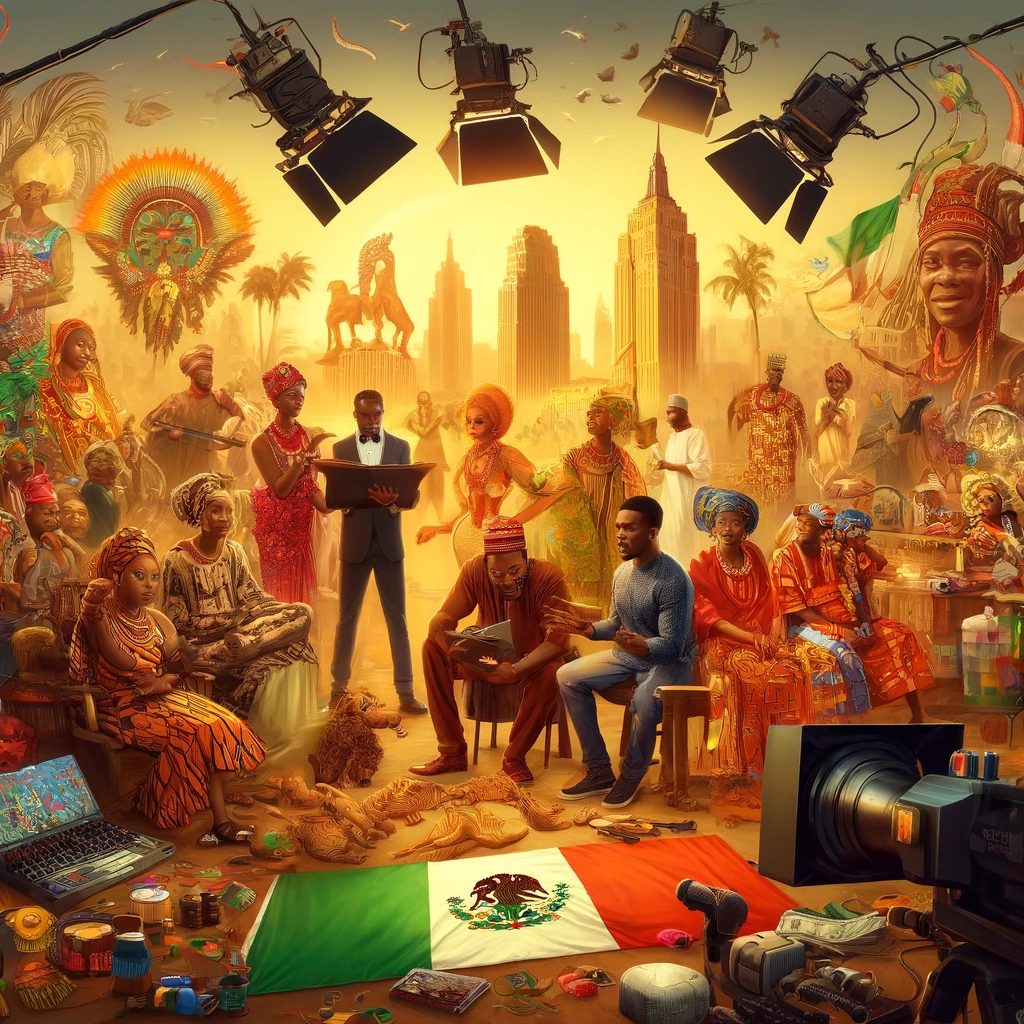
Nollywood’s influence extends far beyond Nigeria’s borders, contributing significantly to the global film landscape. Its unique storytelling style and cultural representation have captivated audiences worldwide, contributing to the diversification of the global film industry, traditionally dominated by Hollywood and Bollywood.
Talent on the Global Stage
Nigerian Nollywood has been a launchpad for many talented actors and actresses, some of whom have gained international acclaim and transitioned into Hollywood and other international productions. This talent export not only showcases the skills and diversity of African artists but also contributes to a richer global cultural tapestry in cinema.
Fashion and Style: A Cultural Export
Nollywood films are also notable for their portrayal of fashion and style. Actors and actresses in these films often display a keen sense of fashion, which ranges from traditional attire to contemporary clothing. This representation has influenced fashion trends not only in Nigeria but across the globe, further extending Nollywood’s cultural impact.
Bridging Cultural Gaps
A pivotal aspect of Nollywood’s cultural significance is its role in bridging gaps between African countries and the rest of the world. Through its films, Nollywood offers global audiences insights into the diverse social, economic, and cultural landscapes of Nigeria and, by extension, Africa. This cultural exchange fosters understanding and appreciation of African cultures worldwide.
Societal Reflections and Themes
Nollywood films often reflect societal issues, addressing themes like family dynamics, love, community, and the realities of ordinary Nigerians. These themes resonate deeply with audiences, both within and outside Africa, as they reflect universal human experiences.
Navigating Challenges and Looking Forward
Despite its monumental growth, Nollywood continues to navigate challenges such as piracy and limited funding. These issues, while significant, have not dampened the industry’s spirit or slowed its pace of innovation and creativity. Looking forward, Nollywood stands at the cusp of further expansion, with potential for even greater impact on world cinema and culture.
Conclusion
The story of Nollywood is one of triumph against odds, creativity, and cultural expression. Its rise from humble beginnings to a globally recognized film industry is not just a success story for Nigeria but a source of pride for the entire African continent. As it continues to evolve and influence global cinema and culture, Nollywood reaffirms the power of storytelling and the universal appeal of authentic cultural narratives.
Nollywood’s journey from a local industry to a global powerhouse is a testament to the enduring power of storytelling and the universal appeal of human experiences, transcending cultural and geographical boundaries. The industry’s potential for future growth and its ability to continue shaping global perceptions of Africa and its culture remain bright and promising.