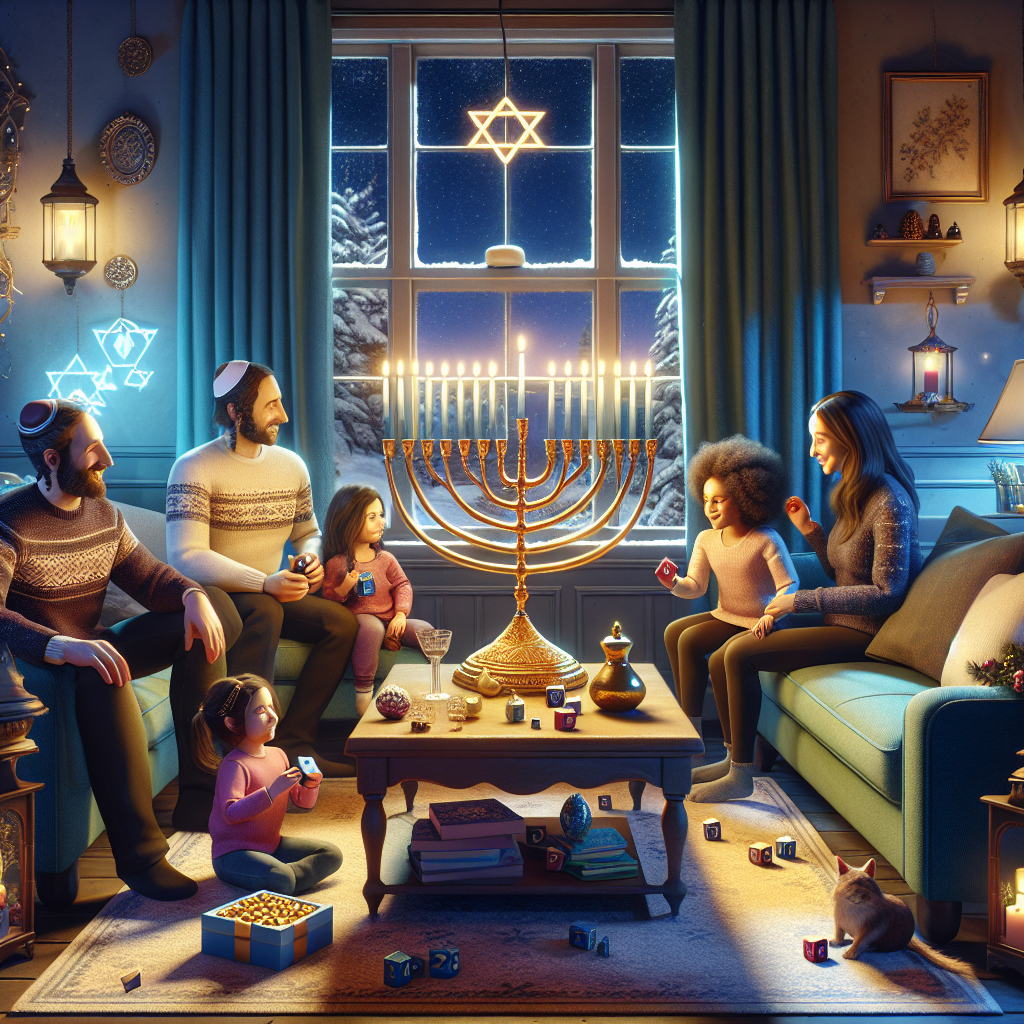
Hanukkah, also known as the Festival of Lights, is one of the most beloved and widely celebrated holidays within the Jewish community. Spanning eight days, Hanukkah commemorates the rededication of the Second Temple in Jerusalem during the second century BCE, following the Maccabean Revolt. This festival is deeply rooted in Jewish history and culture, featuring rich traditions, such as lighting the menorah, playing dreidel, and enjoying special foods like latkes and sufganiyot. But beyond the rituals and festivities, Hanukkah embodies themes of perseverance, faith, and the triumph of light over darkness.
Though not considered one of the most significant religious holidays in Judaism, Hanukkah has become particularly prominent in the modern era. Celebrated in the heart of winter, this festival brings warmth and light to Jewish households worldwide. It serves as a reminder of the miracles that supposedly occurred during the rededication of the Second Temple when a small amount of oil, enough for just one day, miraculously lasted for eight. This article delves into the history, traditions, and contemporary significance of Hanukkah, providing an in-depth look at how this festival enriches Jewish culture and unites communities around the globe.
The Historical Background of Hanukkah
Hanukkah’s origins can be traced back to a turbulent period in Jewish history marked by oppression and rebellion. In 164 BCE, the Seleucid Empire, led by King Antiochus IV Epiphanes, sought to impose Hellenistic culture and religious practices upon the Jewish people, leading to widespread persecution. Antiochus’s decrees outlawed Jewish rites and religious observances, which fueled unrest and resistance among the Jewish population.
The Maccabean Revolt, led by Judah Maccabee and his brothers, was a response to this oppression. The Maccabees, a small group of Jewish rebels, achieved a surprising and significant victory over the far more powerful Seleucid forces. Following their triumph, the Maccabees returned to Jerusalem to reclaim and rededicate the desecrated Second Temple. The process of purification and rededication of the temple culminated in what we now know as Hanukkah.
The rededication involved rekindling the temple’s menorah, the sacred candelabrum, with a very limited supply of consecrated oil. According to the Talmud, the small amount of oil, sufficient for just one day, miraculously burned for eight days and nights, providing enough time to prepare a fresh supply of consecrated oil. This miraculous event is the cornerstone of the Hanukkah celebration, symbolizing divine intervention and the enduring strength of Jewish faith and identity.
The Menorah: Symbol of Hanukkah
Central to Hanukkah’s observance is the menorah, a nine-branched candelabrum also known as the Hanukkiyah. Tradition dictates that one candle is lit each night of Hanukkah, progressing from one to eight, with a central candle called the “shamash” used to light the others. The act of lighting the menorah is accompanied by blessings and prayers, serving as a daily reminder of the miracle of the oil and the spiritual lessons of Hanukkah.
Each night, families gather to light the menorah, placing it in a visible location such as a window to share the light with the world. This practice reinforces the themes of illumination and the spread of divine light, symbolizing hope, freedom, and resilience in the face of adversity. The menorah has become a powerful emblem of Jewish culture and identity, connecting contemporary Jews with their historical and religious heritage.
The ritual of lighting the menorah is both a communal and personal act, fostering a sense of connection within Jewish families and communities. The prayers recited during this time emphasize themes of thanksgiving, dedication, and the miraculous nature of Hanukkah, embedding these timeless values into the fabric of Jewish observance and identity.

Traditions and Customs of Hanukkah
Hanukkah is rich with traditions that bring together families and communities to celebrate and reflect on their shared heritage. One of the most well-known customs is the game of dreidel, a spinning top inscribed with Hebrew letters that represent the phrase “Nes Gadol Haya Sham” – “A great miracle happened there.” Playing dreidel is a delightful way for both children and adults to engage with the holiday, often involving small wagers of chocolate coins, nuts, or other treats.
Another key aspect of Hanukkah traditions is the culinary delights associated with the festival. Foods fried in oil, such as latkes (potato pancakes) and sufganiyot (jelly-filled doughnuts), are enjoyed to commemorate the miracle of the oil. These festive dishes are not only delicious but also serve as a tangible reminder of the Hanukkah story and its significance.
Gift-giving has also become a modern Hanukkah tradition, particularly in communities influenced by the Christmas season. While historically not a part of Hanukkah, exchanging presents has become a way to enhance the festive spirit and bring joy to children and families during this special time of year.
Contemporary Significance of Hanukkah
In today’s world, Hanukkah holds a multifaceted significance for Jewish individuals and communities. Beyond its historical and religious foundations, the festival serves as a time to celebrate Jewish identity and promote cultural continuity. For many Jews, Hanukkah is an opportunity to reconnect with their roots, reinforce communal bonds, and pass traditions on to future generations.
The themes of Hanukkah resonate strongly in contemporary society. The festival’s focus on light triumphing over darkness, and resilience in the face of adversity, are timeless and universal messages that inspire people across different cultures and backgrounds. These themes highlight the broader human experience, encouraging reflection on the struggles and triumphs that define our collective history.
Hanukkah also provides a platform for interfaith and intercultural dialogue, fostering greater understanding and appreciation between Jewish and non-Jewish communities. Public menorah lightings, educational programs, and cultural events held during Hanukkah contribute to a broader awareness of Jewish traditions and enhance cross-cultural respect and cooperation.
Celebrating Hanukkah Around the World
While Hanukkah’s core traditions remain consistent, the ways in which the festival is celebrated can vary significantly across different regions and cultures. Jewish communities around the world infuse local customs and flavors into their Hanukkah observances, creating a rich tapestry of multicultural expressions of the holiday.
In Israel, Hanukkah is a particularly vibrant and public celebration. Cities are adorned with lights and decorations, and menorah lightings take place in prominent public spaces. Schools and workplaces often close for parts of the holiday, allowing families to fully participate in the festive activities. Special events, such as concerts and theater performances, are held to mark the occasion, and the holiday’s historic and cultural significance is emphasized in educational contexts.
In North America, Hanukkah has become a well-recognized festival, with public menorah lightings, community gatherings, and cultural events playing a significant role. Jewish families in the diaspora often blend traditional Hanukkah customs with regional holiday practices, resulting in a unique and dynamic celebration that reflects their diverse heritage.
Conclusion
Hanukkah, the Jewish Festival of Lights, continues to be a profoundly meaningful and joyous celebration for Jews around the world. Rooted in historical events and enriched by centuries of tradition, Hanukkah embodies themes of resilience, faith, and the triumph of light over darkness. This festival not only honors the past but also inspires present and future generations to uphold their cultural and religious identity.
From lighting the menorah and savoring special foods to engaging in communal activities and educational endeavors, Hanukkah offers a diverse array of ways to celebrate and reflect. Its contemporary resonance, encompassing universal themes and promoting intercultural understanding, underscores the importance of Hanukkah in the modern world.
Whether observed in the heart of Jerusalem or in Jewish communities across the globe, Hanukkah serves as a powerful testament to the enduring spirit of the Jewish people. As we light the candles and share the stories and traditions of Hanukkah, we connect with our heritage, our community, and the broader human experience, celebrating the light that guides us and the miracles that inspire us.