The history of economic thought is a fascinating chronicle of ideas and paradigms that have shaped the way societies manage resources, wealth, and relations of production. Among these paradigms, Marxist political economy stands as one of the most compelling analyses, providing deep insights into the mechanisms of capitalism and offering a vision for a socialist future. Originating from the works of Karl Marx and Friedrich Engels in the 19th century, Marxist economic theory delves into the intricacies of capitalist production, class struggles, and the potential for revolutionary change.
Marxist economics distinguishes itself from other economic theories by its focus on the dialectical and historical materialist explanation of societal development. At its core, it is concerned with the relationships between different classes in society – primarily the bourgeoisie (owners of the means of production) and the proletariat (working class). Marxist theory argues that capitalism is inherently exploitative, as the bourgeoisie extract surplus value from the labor of the proletariat, leading to widespread inequality and social tensions.
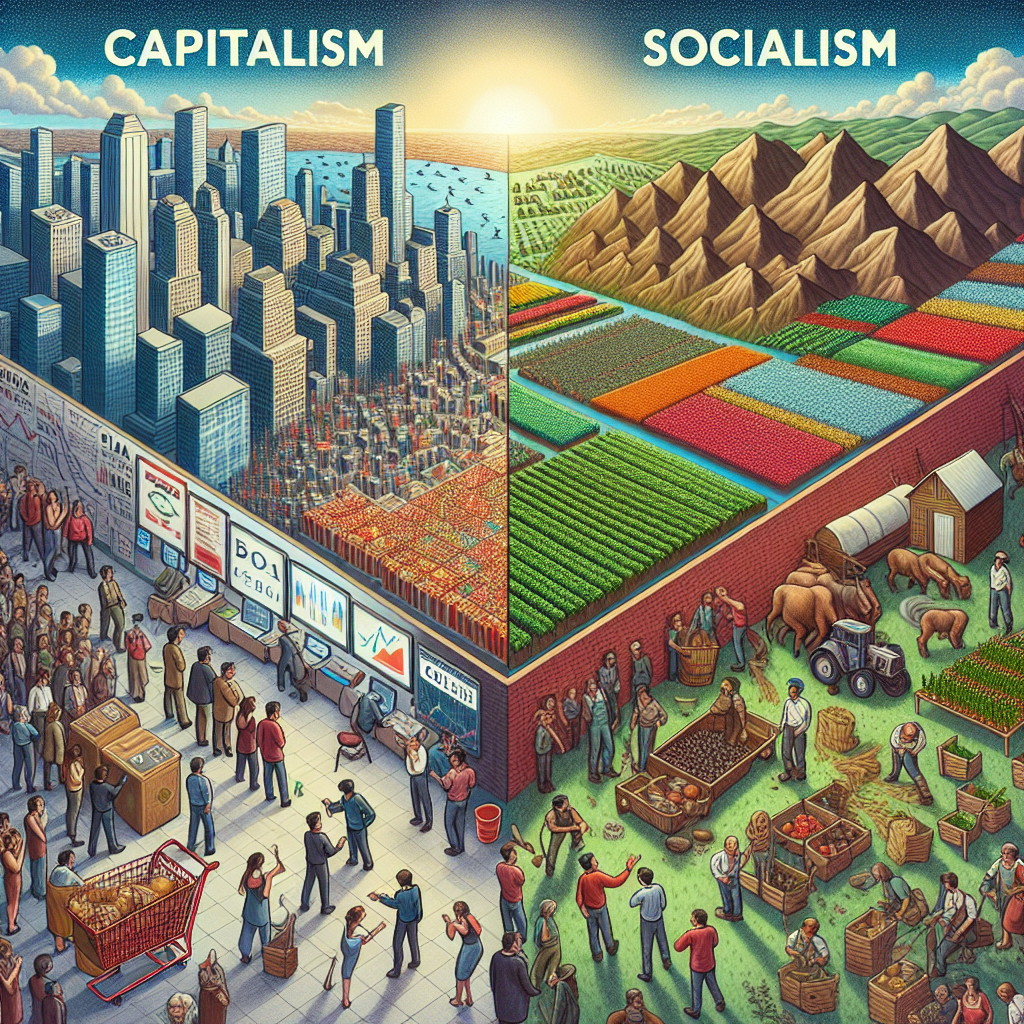
Understanding Marxist political economy necessitates a grasp of several key concepts, such as surplus value, commodity fetishism, alienation, and the role of the state in capitalist society. These concepts not only explain the operational mechanics of capitalism but also provide a critical framework for envisaging a socialist transformation. In the Marxist perspective, socialism is seen as a stage where class distinctions are abolished, and the means of production are collectively owned and democratically managed by the workers.
This article provides a comprehensive examination of Marxist political economy, exploring its analysis of capitalism, its critique of commodity production, and its vision for a socialist future.
Marx’s Analysis of Capitalism
Karl Marx’s analysis of capitalism is rooted in his study of political economy, particularly the works of Adam Smith and David Ricardo. Marx critically engaged with their theories, developing his own critique of the capitalist mode of production. Central to this analysis is the concept of ‘commodity,’ which Marx defines as an object that satisfies human wants and is produced for exchange.
Marx asserts that the capitalist economy is fundamentally driven by the production and exchange of commodities. Unlike pre-capitalist economies, where goods were typically produced for direct use, capitalism is characterized by the production of goods for profit. This process, according to Marx, leads to the ‘fetishism of commodities,’ where social relationships between producers are obscured by market transactions. Commodities appear to have intrinsic value, independent of the labor that produces them, masking the exploitation inherent in the production process.
The concept of surplus value is central to Marx’s critique of capitalism. Surplus value represents the difference between the value produced by labor and the wages paid to laborers. In Marx’s view, capitalists extract surplus value from workers, who only receive a fraction of the value they generate. This exploitation is the source of profit in a capitalist economy and the driver of wealth accumulation for the bourgeoisie.
Furthermore, Marx explores the dynamics of capitalist accumulation and its tendency towards crises. He argues that competition among capitalists leads to the concentration and centralization of capital, resulting in economic disparities and instability. Periodic crises of overproduction, where goods cannot be sold at a profit, lead to economic downturns and social upheavals, demonstrating the unsustainable nature of capitalism.
Alienation in Capitalist Society
A significant aspect of Marxist theory is the concept of alienation, which describes the estrangement of workers from their labor, products, and fellow beings within a capitalist system. Marx contends that capitalism alienates workers in four distinct ways:
First, workers are alienated from the products of their labor. In a capitalist society, the goods produced by workers become the property of the capitalists, who sell them for profit. Workers have no control over the commodities they create and often cannot afford to buy them.
Second, workers are alienated from the production process itself. Under capitalism, labor is often repetitive, monotonous, and dictated by the demands of profitability rather than the fulfillment of human potential. This results in dehumanization, as workers become mere cogs in the machinery of production.
Third, workers are alienated from their ‘species-being.’ According to Marx, labor is a fundamental aspect of human nature, a means through which individuals express their creativity and connect with others. Capitalism stifles this potential by imposing external control over the labor process and prioritizing efficiency over human development.
Finally, workers are alienated from each other. The competitive nature of capitalist society fosters antagonism and isolation among individuals, preventing genuine camaraderie and collective solidarity. This fragmentation of social bonds benefits the ruling class by hindering unified resistance against exploitation.
Alienation, therefore, is a pervasive feature of capitalist life, contributing to the psychological and social malaise experienced by workers. Overcoming alienation is essential for realizing a just and equitable society, a key aim of Marxist socialism.
The State and Capitalism
Marxist political economy also offers a critical analysis of the state and its role in capitalist society. Contrary to liberal theories that portray the state as a neutral arbiter, Marxists argue that the state functions primarily to maintain the dominance of the bourgeoisie.
In Marx’s view, the state is an instrument of class rule, designed to protect the interests of the ruling class and sustain the conditions necessary for capital accumulation. This is evident in various state activities, such as the enforcement of property rights, the regulation of labor, and the provision of legal and institutional frameworks that facilitate capitalist enterprise.
However, the state is not monolithic; it is a site of class struggle. While it predominantly serves the interests of capital, the state may also implement reforms in response to worker’s movements and social pressure. These reforms, however, are typically limited and do not fundamentally alter the structures of capitalist exploitation.
Marxists assert that achieving socialism requires transcending the capitalist state. This entails a revolutionary transformation where the working class seizes state power and reconstitutes it to serve the interests of the masses. The eventual goal is the abolition of the state as an instrument of class oppression, leading to a stateless, classless society where the means of production are collectively owned.
Thus, understanding the state’s role in capitalist society is crucial for grasping the challenges and strategies associated with socialist transformation.
Transition from Capitalism to Socialism
Marxist theory posits that the transition from capitalism to socialism is a historical necessity, driven by the contradictions inherent in capitalism itself. According to Marx, capitalism’s propensity for exploitation, inequality, and crises creates the conditions for its eventual overthrow.
The revolutionary process envisioned by Marx involves the proletariat, organized as a class, rising against the bourgeoisie to seize political power. The establishment of a proletarian state, often referred to as the ‘dictatorship of the proletariat,’ is seen as a transitional phase. During this period, the working class consolidates its control, suppresses counter-revolutionary forces, and begins to reorganize society along socialist principles.
Key aspects of this transition include the abolition of private property in the means of production, the establishment of collective ownership, and the democratic management of production by the workers. These changes aim to eliminate exploitation and ensure that the fruits of labor are equitably distributed.
Over time, the socialist state would dismantle hierarchies and inequalities, ultimately paving the way for a classless, stateless society – communism. In this envisioned future, the development of productive forces and the end of scarcity would allow humans to freely contribute to and benefit from social wealth, realizing their full potential.
Marxists recognize that the path to socialism is fraught with challenges and requires a sustained struggle against entrenched capitalist interests. Nonetheless, they argue that historical material conditions and human agency will ultimately propel society towards a socialist future.
Contemporary Relevance of Marxist Political Economy
While Marxist political economy originated in the 19th century, its analysis remains relevant to contemporary issues. The global financial crisis of 2007-2008, for instance, underscored many of Marx’s insights about the instability and contradictions of capitalism. The crisis highlighted the destructive effects of speculative finance, the concentration of wealth, and the impact of austerity measures on the working class.
In addition, growing economic inequality, labor exploitation, and environmental degradation are pressing concerns that Marxist theory addresses. The rise of multinational corporations, the gig economy, and the precarious nature of work echo many of Marx’s criticisms of capitalist production and its impact on workers’ lives.
Furthermore, movements advocating for social and economic justice, such as those combating wage theft, championing workers’ rights, and promoting sustainable development, often draw on Marxist ideas. These movements seek to challenge the power structures that perpetuate inequality and advocate for more equitable and democratic alternatives.
Marxist political economy also offers valuable insights for analyzing global capitalism. The dynamics of imperialism, the exploitation of developing countries, and the uneven development of the global economy can all be examined through a Marxist lens. This perspective helps to understand how wealth and power are distributed on a global scale and the ways in which capitalism shapes international relations.
Thus, the enduring relevance of Marxist political economy lies in its ability to provide a critical framework for understanding and challenging the complexities of contemporary capitalist society.
Conclusion
Marxist political economy offers a profound and thorough analysis of capitalism, elucidating the exploitative nature of the system and the social relations it engenders. By focusing on key concepts such as surplus value, alienation, and the role of the state, Marxist theory provides a critical lens through which to examine the mechanisms of capitalist production and its impact on society.
Furthermore, Marxist political economy envisions a transformative path towards socialism – a society characterized by collective ownership, democratic control of production, and the elimination of class distinctions. This vision remains a potent source of inspiration for those seeking to address the inequalities and injustices perpetuated by capitalism.
Although the transition to socialism entails significant challenges, Marxist theory argues that the inherent contradictions of capitalism will ultimately drive this transformative process. The contemporary relevance of Marxist ideas is evident in ongoing struggles for economic and social justice, and in the critical analysis of global capitalism.
In conclusion, Marxist political economy remains a vital and dynamic field of study, offering both an incisive critique of capitalism and a compelling vision for a more equitable and just society. Its insights and analyses continue to resonate with those committed to understanding and transforming the world we live in.