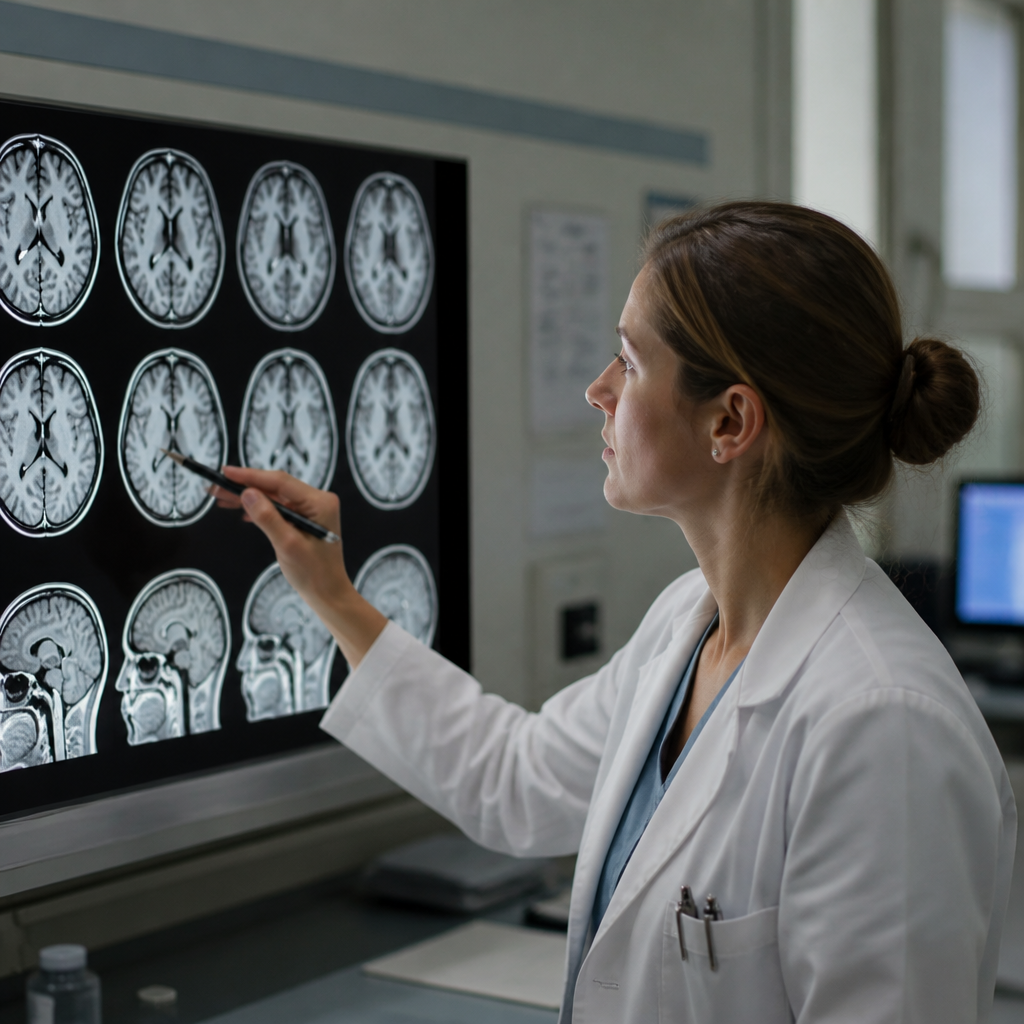
Lesion studies in psychology show what happens when specific brain tissue is damaged, and that simple idea has shaped modern understanding of the biological bases of behavior. In psychology, a lesion is any area of injured, destroyed, or functionally disrupted tissue, whether caused by stroke, traumatic brain injury, tumors, infection, surgery, or targeted laboratory methods. When researchers compare the abilities a person had before damage, the functions lost afterward, and the exact location of the injury, they can infer which neural systems support language, memory, emotion, sensation, movement, and decision-making. This approach matters because AP Psychology students are expected to connect behavior to the nervous system, and lesion evidence remains one of the clearest bridges between brain structure and mental function. It also sits at the center of the broader biological story: neurons communicate through electrochemical signals, brain regions form specialized but interconnected networks, the endocrine system modulates behavior through hormones, and genetics and experience shape how those networks develop. In practice, I have found that students grasp the entire biological bases unit faster once they understand lesion logic. A damaged occipital lobe disrupting vision, a hippocampal lesion impairing new memory formation, or injury to Broca’s area affecting speech production makes abstract neuroanatomy concrete. Lesion studies also complement brain imaging, split-brain research, psychopharmacology, and behavioral genetics. Imaging can show activation, but lesion evidence tests necessity: if damage to a structure reliably removes a function, that structure is not just active during the task, it is required for normal performance. At the same time, lesion findings must be interpreted carefully because brains are plastic, injuries often affect multiple systems, and complex behaviors rarely reside in one neat spot.
As a hub topic for biological bases of behavior, lesion studies tie together key concepts students repeatedly encounter. They illuminate localization of function, hemispheric specialization, neural plasticity, sensory and motor pathways, limbic system roles, and the difference between cortical and subcortical control. They also raise foundational questions psychologists ask: Which behaviors are modular, and which are distributed across networks? How do genes, neurotransmitters, and hormones influence vulnerable circuits? Why can two patients with similar injuries show different outcomes? Understanding lesion studies therefore does more than explain famous cases. It provides a method for reasoning about the brain, one that has influenced neurology, neuropsychology, cognitive science, rehabilitation medicine, and even legal standards for assessing impairment. For students building a strong AP Psychology framework, this article connects the essential structures and processes of the nervous system with the evidence psychologists use to link biology and behavior.
How lesion studies work and why psychologists rely on them
Lesion studies are based on a straightforward comparison: identify damaged tissue, measure what changed, and rule out alternative explanations. In human neuropsychology, this usually means combining neurological examination with structural imaging such as MRI or CT, then administering standardized cognitive tests. A patient may complete measures of attention, executive function, language, spatial processing, memory, emotion recognition, and motor skill. The resulting pattern, called a neuropsychological profile, helps isolate which systems have been disrupted. In animal research, lesions can be created more selectively through aspiration, neurotoxic methods, or reversible inactivation, allowing stronger causal conclusions. Across both settings, the core logic is the same: damage reveals function by showing what breaks when a part of the system fails.
Psychologists rely on lesion evidence because it addresses a question that correlational methods cannot fully answer. Functional MRI might show that the amygdala becomes active during fear processing, but lesion evidence shows whether an intact amygdala is necessary for normal fear recognition or conditioning. Similarly, an EEG pattern may accompany memory retrieval, but hippocampal damage demonstrates whether the system needed for forming new declarative memories remains intact. In clinics, this reasoning guides diagnosis and treatment planning. In classrooms, it helps students move from memorizing brain parts to understanding evidence-based functions.
Classic lesion cases that changed psychology
Several landmark cases became foundations of psychology because they linked a specific lesion to a clear behavioral change. Paul Broca’s nineteenth-century patient Louis Victor Leborgne, known as “Tan,” could understand language reasonably well but struggled to produce fluent speech. After death, Broca identified damage in the left inferior frontal gyrus, now called Broca’s area. This case supported left-hemisphere specialization for language and showed that speech production depends on identifiable cortical tissue. Soon after, Carl Wernicke described patients with the opposite pattern: fluent but often nonsensical speech and poor comprehension, associated with lesions in the posterior superior temporal gyrus of the left hemisphere. Together, these cases established that language contains separable processes and is supported by an interconnected network rather than a single language center.
Another pivotal case is Phineas Gage, the railroad foreman who survived an 1848 accident in which an iron tamping rod passed through his frontal lobes. Reports indicate that after the injury his personality, judgment, and impulse control changed markedly. Although later retellings often exaggerated the story, the case remains important because it linked frontal lobe damage to executive control, planning, and social behavior. In the twentieth century, patient H.M., later identified as Henry Molaison, underwent bilateral medial temporal lobe surgery that included the hippocampus to reduce severe epilepsy. The operation succeeded in decreasing seizures but left him with profound anterograde amnesia. He could not form normal new explicit memories, although some procedural learning remained intact. That dissociation transformed memory research by distinguishing declarative memory systems from skill learning.
What lesion studies reveal about major brain regions
Lesion evidence maps core psychological functions onto major neural systems. Damage to the occipital lobes commonly impairs visual processing, from basic field deficits to visual agnosia, in which a person can see but cannot identify objects normally. Parietal lobe lesions can disrupt spatial attention and body awareness; right parietal damage is especially associated with hemispatial neglect, where patients ignore stimuli on the left side of space. Temporal lobe lesions often affect auditory processing, object recognition, and memory. Frontal lobe lesions can impair planning, inhibition, working memory, emotional regulation, and flexible problem solving. These findings explain why AP Psychology emphasizes the cerebral cortex not as one general thinking mass but as a set of specialized areas coordinating through networks.
Subcortical lesions are equally revealing. Thalamic damage can alter sensory relay and consciousness. Hypothalamic lesions affect hunger, thirst, temperature regulation, and hormone-linked behavior through the pituitary. Amygdala damage may blunt fear responses or impair recognition of emotional expressions, although effects depend on laterality and extent of injury. Cerebellar lesions interfere with balance, timing, motor coordination, and increasingly recognized cognitive functions such as sequencing and prediction. Brainstem lesions can disrupt arousal, breathing, and basic survival functions, underscoring the hierarchy from vital automatic control to higher cognition. Taken together, lesion studies show that behavior emerges from layered systems, not isolated traits.
Biological bases of behavior: the broader hub context
To understand why lesion studies matter, students need the broader biological framework. Neurons communicate through action potentials and synaptic transmission. Neurotransmitters such as dopamine, serotonin, acetylcholine, GABA, glutamate, and norepinephrine influence movement, reward, mood, learning, inhibition, and arousal. The peripheral nervous system carries signals to and from the central nervous system, while the autonomic nervous system regulates sympathetic and parasympathetic responses. The endocrine system adds slower but powerful hormonal control through glands including the pituitary, adrenal glands, thyroid, pancreas, ovaries, and testes. Lesion findings often make these systems easier to remember because damage reveals what each circuit contributes to behavior.
For example, Parkinson’s disease is primarily associated with degeneration of dopamine-producing neurons in the substantia nigra rather than a focal cortical lesion, yet the behavioral pattern still illustrates the biological bases unit: movement depends on basal ganglia circuits modulated by dopamine. Likewise, damage to the hypothalamus can alter motivated behaviors, while pituitary disruption affects downstream hormonal regulation. Sensation and perception also become clearer through lesion logic. Primary visual cortex damage impairs conscious visual processing; somatosensory cortex lesions alter touch and body maps; motor cortex lesions impair voluntary movement. Biological psychology is easiest to master when students see these systems as interacting layers of causation.
| Brain area or system | Common effect of lesion or damage | Psychological concept clarified |
|---|---|---|
| Broca’s area | Nonfluent speech production difficulties | Language localization |
| Wernicke’s area | Impaired language comprehension | Language processing networks |
| Hippocampus | Severe new explicit memory formation problems | Memory systems |
| Amygdala | Altered fear processing and emotion recognition | Emotion circuitry |
| Right parietal lobe | Left-side neglect | Spatial attention |
| Prefrontal cortex | Poor judgment, inhibition, planning | Executive function |
Strengths, limits, and modern applications of lesion research
The strongest contribution of lesion studies is causal inference. If injury to a region consistently disrupts a function, psychologists can say that the region is necessary for normal performance. That is why lesion findings remain foundational even in the age of fMRI, PET, diffusion imaging, and machine-learning analyses of brain data. Lesion-symptom mapping now uses voxel-based methods to compare many patients statistically, improving precision beyond single case reports. Neurosurgeons also use temporary disruption methods, such as direct cortical stimulation during awake surgery, to protect language and motor areas while removing tumors. In rehabilitation settings, clinicians use lesion location to predict likely deficits and target therapy.
Still, lesion studies have important limitations. Real injuries are rarely neat. A stroke may cut off blood supply to multiple adjacent areas and white matter pathways, making it hard to isolate one function. Swelling, medication effects, fatigue, and premorbid differences can change test results. The brain is plastic, so children and some adults can reorganize functions after damage, especially with early intervention. Moreover, many behaviors are distributed across networks. Memory is not “stored” only in the hippocampus, and emotion is not “located” only in the amygdala. Good interpretation therefore avoids crude one-to-one claims. The best modern view is that lesion studies identify critical nodes within larger circuits. For students and educators, that balanced perspective prevents oversimplification while preserving the method’s explanatory power.
Why lesion studies remain essential for AP Psychology
For AP Psychology, lesion studies are more than historical anecdotes. They provide the evidence behind core topics students are tested on: localization of function, split-brain findings, plasticity, the roles of major brain structures, and the relationship between biology and behavior. They also train students to think like psychologists by asking how claims are supported. When a textbook says the hippocampus is involved in memory or the frontal lobes in judgment, lesion research helps explain why those statements are credible. This article should serve as a hub for deeper study of neurons and neurotransmitters, nervous and endocrine systems, brain imaging, sensation and perception, states of consciousness, learning, memory, emotion, motivation, and psychological disorders with biological components.
The main lesson is clear: lesion studies reveal the brain by showing what capacities depend on intact neural tissue. From Broca and Wernicke to H.M. and contemporary stroke research, damaged circuits have exposed how language, memory, attention, emotion, and control are organized. Just as important, they show that the brain works through connected systems shaped by chemistry, development, and experience. If you are studying the biological bases of behavior, use lesion studies as your anchor. They turn brain anatomy into evidence, and evidence into understanding. Review the major regions, connect each to behavior, and then explore the related subtopics that build a complete psychology framework.
Frequently Asked Questions
What are lesion studies in psychology, and why are they so important?
Lesion studies in psychology examine what happens when a specific area of the brain is damaged or disrupted and then link that damage to changes in behavior, thought, emotion, language, memory, or movement. A lesion can result from many causes, including stroke, traumatic brain injury, tumors, infection, neurosurgery, or carefully controlled laboratory techniques in animal research. The basic logic is straightforward: if a person loses a particular ability after damage to a particular brain region, that region likely plays a role in that ability.
These studies have been foundational to modern neuroscience and psychology because they provide some of the clearest evidence that the brain is functionally organized. In other words, different brain areas contribute differently to behavior. Classic findings from lesion research helped establish that speech production, language comprehension, memory formation, visual processing, and voluntary movement are not distributed randomly throughout the brain. Instead, they depend on interconnected neural systems, with some regions playing especially critical roles.
Lesion studies are also important because they move psychological science beyond abstract theory. Rather than only observing behavior from the outside, researchers can connect mental functions to physical brain structures. This has influenced everything from cognitive psychology and neuropsychology to clinical diagnosis and rehabilitation. Even today, lesion studies remain valuable because they help answer a question that brain imaging alone often cannot: not just where activity occurs, but which brain regions are actually necessary for a function.
How do psychologists and neuroscientists use lesion studies to learn what different parts of the brain do?
Researchers use lesion studies by comparing patterns of brain damage with patterns of lost or preserved function. They often begin by identifying the exact location and extent of a lesion using neurological exams and brain imaging tools such as MRI or CT scans. Then they assess the individual’s abilities through structured tests of language, memory, attention, perception, decision-making, emotional regulation, motor control, or other cognitive functions. By linking the damaged area to the observed difficulties, scientists can infer which neural systems are involved.
One especially useful approach is to compare multiple patients with similar injuries. If several people with damage in the same region struggle with the same task, that strengthens the case that the region contributes to that function. Researchers also look for double dissociations, which are particularly powerful in cognitive psychology. For example, if one patient with damage in area A can understand language but cannot produce fluent speech, while another with damage in area B can speak fluently but cannot understand language, that suggests those abilities rely on partially distinct systems.
Lesion studies are most informative when researchers combine them with careful behavioral measurement and modern imaging methods. They do not just ask whether a person can or cannot do something; they analyze the exact kind of error being made, the conditions under which performance breaks down, and which abilities remain intact. This level of detail helps scientists build more precise models of brain function. Rather than treating brain areas as isolated “centers,” contemporary lesion research often reveals networks, showing how damage in one node can disrupt a larger system that supports complex behavior.
What are some famous examples of lesion studies in psychology?
Some of the most famous lesion cases in psychology and neuroscience have shaped entire fields. One well-known example is Paul Broca’s patient, often called “Tan,” who had severe difficulty producing speech but could understand much of what was said to him. After his death, Broca found damage in the left frontal lobe, leading to the identification of what became known as Broca’s area, a region strongly associated with speech production. This was a major step in showing that language functions could be localized in the brain.
Another landmark case involved Carl Wernicke’s work with patients who could speak fluently but produced language that lacked clear meaning and had major difficulty understanding speech. These patients had damage in a different left-hemisphere region, now known as Wernicke’s area. Together, Broca’s and Wernicke’s findings provided early evidence that language is not a single, undivided ability but is supported by different brain regions responsible for different components of language processing.
Perhaps the most famous lesion case overall is Phineas Gage, a railroad worker who survived a severe brain injury after an iron tamping rod passed through his skull. Reports suggested major changes in his personality, impulse control, and social behavior after damage to the frontal lobes. Although later retellings sometimes oversimplified his case, it remains historically important because it highlighted the role of the frontal cortex in planning, self-regulation, and personality-related behavior.
Another essential case is patient H.M., who underwent surgical removal of parts of the medial temporal lobes to treat epilepsy. Afterward, he developed profound anterograde amnesia, meaning he could not form new long-term declarative memories, even though many other abilities remained relatively intact. His case showed that memory is not a single process and helped distinguish short-term memory, long-term memory, and different types of learning. These cases remain central because they demonstrate how lesion studies can reveal the structure of mental functions by showing what is selectively impaired when particular brain systems are damaged.
What are the strengths and limitations of lesion studies in psychology?
One of the greatest strengths of lesion studies is that they can provide evidence about necessity. If damage to a specific brain region consistently disrupts a function, that suggests the region is necessary for normal performance of that function. This makes lesion research especially valuable in contrast to correlational methods such as functional brain imaging, which may show that an area is active during a task but cannot always prove that the area is essential. Lesion studies therefore help establish causal links between brain structures and behavior.
Another strength is clinical relevance. Lesion studies are directly tied to real neurological conditions, so they inform diagnosis, prognosis, and rehabilitation. They also capture brain function in a way that reflects natural human behavior, not only artificial laboratory tasks. In addition, when lesions produce selective impairments, they can reveal the internal organization of complex abilities. For example, a person may lose the ability to recognize faces while retaining general vision, or may struggle with word production while preserving comprehension. These patterns help researchers break broad functions into more specific components.
At the same time, lesion studies have important limitations. Real-world brain damage is rarely neat or isolated. Lesions can vary greatly in size, depth, and cause, and they may affect multiple regions or the connections between them. The brain can also reorganize after injury, especially over time, which means observed behavior may reflect both damage and compensation. Another challenge is that each patient is unique, making it difficult to generalize from a single case without larger comparisons.
There is also the issue of interpretation. If a lesion disrupts a behavior, that does not always mean the damaged region alone “contains” that function. It may be part of a broader network, or the deficit may arise because communication among regions has been interrupted. For this reason, modern researchers usually interpret lesion data alongside imaging, cognitive testing, and computational models. Lesion studies are powerful, but they are most informative when used as part of a broader scientific toolkit rather than as the only source of evidence.
Are lesion studies still used today, and what do they contribute to modern brain science?
Yes, lesion studies are still actively used today and remain highly valuable in both psychology and neuroscience. While modern brain imaging techniques such as fMRI, PET, diffusion imaging, and high-resolution structural MRI have transformed the field, lesion research continues to offer something uniquely important: insight into which brain areas and networks are required for a function, not merely associated with it. That distinction is crucial when scientists want to understand causation rather than simple correlation.
Contemporary lesion research is much more advanced than the early case-study approach. Scientists now use detailed neuropsychological testing, precise lesion mapping, and statistical methods that compare lesion locations across many patients. Techniques such as voxel-based lesion-symptom mapping allow researchers to examine how damage to specific brain areas relates to particular deficits across groups of individuals. This makes conclusions more rigorous and less dependent on a single famous patient. Researchers can also combine lesion data with connectomics to study how damage to white matter pathways and large-scale brain networks affects cognition and behavior.
These studies contribute to modern brain science in several ways. They refine theories of language, memory, attention, executive function, emotion, and social cognition. They help clinicians predict likely difficulties after stroke or brain injury and guide rehabilitation planning. They also improve neurosurgical decision-making by identifying regions and pathways that should be preserved whenever possible. In experimental settings, temporary “virtual lesions” created through techniques like transcranial magnetic stimulation can also complement traditional lesion methods by briefly disrupting activity in targeted regions to test their role in behavior.
In short, lesion studies remain central because they answer one of the most important questions in psychology: what parts of the brain are truly necessary for specific mental functions? Even in the era of advanced imaging and computational neuroscience, that question is still best addressed, at least in part, through the logic of lesion research.