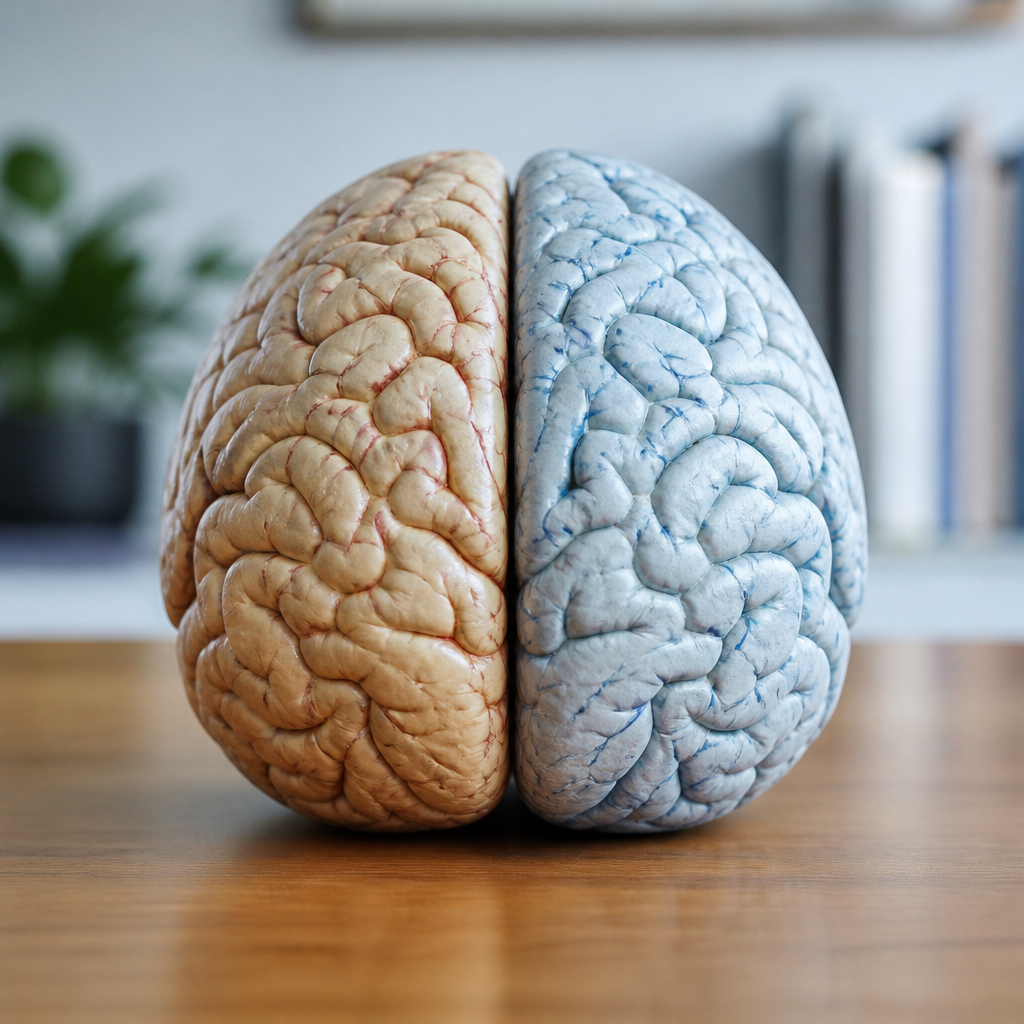
Brain lateralization is the tendency for some mental and neural functions to be handled more by one cerebral hemisphere than the other, and it is one of the most tested ideas in biological psychology. In AP Psychology, biological bases of behavior refers to how the brain, nervous system, endocrine system, genes, and evolutionary pressures shape thought, emotion, and action. A strong hub article on this topic must connect structure to function: neurons transmit signals, brain regions specialize, hormones modulate behavior, and hemispheres coordinate rather than compete. In my experience teaching and writing about introductory neuroscience, students often arrive with a catchy but misleading belief that people are either “left-brained” or “right-brained.” The research says something more interesting. Certain abilities, especially language in most right-handed people, show reliable hemispheric dominance. Yet nearly every real behavior, from reading a sentence to catching a ball, depends on networks spanning both sides of the brain. Understanding lateralization matters because it helps explain stroke symptoms, language disorders, handedness, split-brain findings, and the limits of popular self-help claims.
The human brain is divided into two cerebral hemispheres connected primarily by the corpus callosum, a thick bundle of millions of axons that allows rapid interhemispheric communication. Each hemisphere includes frontal, parietal, temporal, and occipital lobes, and each receives sensory input from, and controls movement on, the opposite side of the body for many pathways. That contralateral organization is foundational in biological bases of behavior. If the left motor cortex is damaged, weakness often appears on the right side. If the right parietal lobe is injured, a person may neglect the left side of space. Lateralization does not mean one half works alone; it means the workload is distributed unevenly. The same principle appears across the broader AP Psychology unit. The autonomic nervous system has sympathetic and parasympathetic branches with different functions, endocrine glands release hormones with distinct effects, and genes influence development in patterned ways. Brain lateralization fits this larger theme of specialization within an integrated system.
What brain lateralization means in neuroscience
In neuroscience, lateralization means statistically greater involvement of one hemisphere in a function, not exclusive ownership. Language offers the classic example. In about 90 to 95 percent of right-handed adults, speech production and grammar rely heavily on left-hemisphere networks that include Broca’s area in the inferior frontal gyrus and Wernicke’s area in the posterior temporal region. Damage there can produce expressive or receptive aphasia. By contrast, prosody, face processing, and some aspects of spatial attention lean more to the right hemisphere. Researchers demonstrate these asymmetries through lesion studies, functional MRI, electroencephalography, the Wada test, and split-brain research. Across methods, the pattern is consistent: the hemispheres show biases, but normal cognition emerges from coordinated circuits. This matters for AP Psychology because it models a core scientific habit: move beyond labels and ask which mechanism, pathway, and brain region are actually involved.
Lateralization also develops over time. Prenatal gene expression, neural migration, and early sensory experience all shape asymmetry. Handedness correlates with some lateralized functions, but not perfectly. Most left-handed people still show left-dominant language, though the proportion of bilateral or right-dominant language is higher than in right-handers. Sex differences are often overstated; large imaging studies generally find more overlap than difference. Age, learning, and injury can alter how lateralized a function appears because the brain is plastic. After a childhood stroke, for example, language can reorganize more effectively than it usually can after an adult stroke. When I explain this to students, I stress a rule that prevents many errors on exams and in life: asymmetry is real, but variability is also real. Good psychology avoids turning an average pattern into a rigid type.
Landmark evidence: split-brain, aphasia, and imaging studies
The most famous evidence for lateralization came from split-brain research led by Roger Sperry and Michael Gazzaniga. To reduce severe epilepsy, some patients underwent commissurotomy, cutting the corpus callosum to limit seizure spread. These patients functioned surprisingly well in daily life, yet laboratory tests revealed striking dissociations. When information was presented to the left visual field, which projects first to the right hemisphere, a patient often could not verbally name the object because speech was usually left-lateralized. However, the patient could point to or select the object with the left hand, controlled largely by the right hemisphere. Those findings showed both specialization and independence. They also highlighted why the corpus callosum is so important: without fast transfer between hemispheres, each side can process information that the other cannot easily report.
Aphasia research provided earlier and equally important evidence. In the nineteenth century, Paul Broca described patients who understood language reasonably well but struggled to produce fluent speech after damage to the left frontal lobe. Carl Wernicke later described patients with the opposite pattern: fluent but often nonsensical speech and poor comprehension after left temporal damage. Modern neurolinguistics shows that language depends on broader distributed networks, including the arcuate fasciculus and temporal-parietal regions, but the leftward bias remains one of the clearest examples of functional asymmetry. Imaging studies sharpened the picture. fMRI and PET scans show stronger left activation for syntax, phonological decoding, and literal word processing in many tasks, while the right hemisphere contributes more to discourse context, metaphor interpretation, emotional tone, and broad semantic integration. The evidence is not a cartoon; it is a map of probabilities across tasks.
Everyday examples of hemispheric specialization
Everyday behavior makes lateralization easier to understand when examples are concrete. Reading aloud a new word engages left-lateralized systems for phonology and articulation, but understanding sarcasm in the same sentence depends more on right-hemisphere processing of intonation and social context. Navigating a crowded parking lot draws on right parietal networks involved in spatial attention, while following spoken directions relies heavily on left temporal language systems. Recognizing a friend’s face in a busy hallway often leans on right fusiform and temporal contributions to face perception, whereas retrieving that person’s name recruits left-lateralized language networks. Musicians provide another example. Fine sequencing for playing scales may involve left-hemisphere motor planning advantages, while global melodic contour and timbre judgments often recruit stronger right-hemisphere participation. In real life, these systems operate together so quickly that people experience one seamless act rather than separate hemispheric jobs.
Clinical cases show these patterns vividly. A person with right parietal damage may eat food from only the right side of the plate because of hemispatial neglect, not because vision is absent but because attention to the left side is impaired. Someone with left-hemisphere stroke may know what they want to say yet produce halting speech with missing function words. In education, these examples help students connect anatomy to behavior more effectively than memorizing lobe names in isolation. They also connect lateralization to sensation and perception, consciousness, and cognition, all of which belong under biological bases of behavior.
| Function | Typical stronger hemisphere | Plain-language example | Important nuance |
|---|---|---|---|
| Speech production and grammar | Left | Forming a sentence in conversation | Right hemisphere still supports prosody and context |
| Spatial attention | Right | Monitoring traffic from both sides when crossing a street | Left hemisphere contributes, but right damage often causes more severe neglect |
| Face processing | Right | Recognizing a friend quickly in a crowd | Names and verbal labels depend more on left language systems |
| Emotional prosody | Right | Hearing irritation in someone’s voice | Emotion generation and regulation involve both hemispheres and deeper structures |
| Motor sequencing for language-related action | Left | Coordinating mouth movements to pronounce a new term | Motor control remains bilateral and task dependent |
How lateralization connects to the full biological bases of behavior unit
Brain lateralization is only one piece of biological bases of behavior, so a hub article should show how it links to the rest of the system. Start with neurons. Neurons communicate through action potentials and neurotransmitters such as glutamate, GABA, dopamine, serotonin, and acetylcholine. These chemical signals support the circuits that become lateralized through development and learning. Glial cells maintain, insulate, and protect those circuits. Move to the nervous system. The central nervous system includes brain and spinal cord; the peripheral nervous system includes somatic and autonomic branches. Sensory pathways often cross, which is why each hemisphere processes much of the opposite side of the body. Then add endocrine influences. Cortisol can change attention and memory under stress, and sex hormones influence brain development, although not in simplistic one-to-one ways. Finally, include genetics and evolution. Genes help pattern asymmetry, and evolutionary pressures likely favored specialized processing because division of labor can increase efficiency.
This broader frame also clarifies what lateralization cannot explain by itself. Personality, intelligence, and mental illness do not sort neatly by hemisphere. Depression, schizophrenia, attention-deficit/hyperactivity disorder, and autism involve distributed brain networks, developmental timing, and environmental factors. Some studies report atypical asymmetries in certain conditions, but those findings are not simple diagnostic rules. The most accurate AP Psychology takeaway is that behavior emerges from interactions among neural structures, neurotransmission, hormones, genes, and experience. Lateralization is significant because it shows organized specialization inside that larger web. It is not a shortcut around the complexity of behavior.
Common myths and what the evidence actually supports
The biggest myth is that people are either left-brained logical thinkers or right-brained creative thinkers. No credible neuroscience supports that personality sorting. Creativity depends on executive control, memory, emotion, and associative processing across both hemispheres. Logical reasoning also uses distributed networks, including bilateral frontal and parietal regions. A second myth is that the hemispheres are mirror images with equal abilities except for style. They are structurally similar but not functionally identical; language lateralization and spatial attention asymmetries are robust. A third myth is that one hemisphere is dominant in the sense of being better overall. Dominance in neuroscience means stronger involvement in a specific function, not superiority. A fourth myth is that handedness directly reveals your thinking style. Handedness correlates only loosely with cognitive lateralization and says little about personality or talent.
Another misunderstanding is that lateralization is fixed and absolute. It is better described as dynamic specialization within constraints. Training can change recruitment patterns; bilingualism can alter language organization; and recovery after injury often depends on compensation by surrounding or opposite-hemisphere regions. Even classic findings have limits. For example, the right hemisphere can understand many words and concepts in split-brain patients, but its expressive language capacity is usually restricted. Good interpretation requires careful wording, and AP exam questions often reward that precision. Say “typically more lateralized to the left” rather than “only located in the left.” That phrasing matches the evidence and avoids overstating old textbook diagrams.
Why this topic matters for students, clinicians, and everyday decisions
For students, brain lateralization is a gateway concept because it turns abstract anatomy into memorable cause-and-effect relationships. It helps explain why stroke symptoms vary by lesion site, why language disorders can be selective, and why scientific claims must be tested against data instead of slogans. For clinicians, lateralization guides assessment, neurosurgery planning, and rehabilitation. Surgeons mapping language before removing a tumor need to know whether critical functions are left-dominant, bilateral, or reorganized. Speech-language pathologists and neuropsychologists use lateralized symptom patterns to design therapy. For everyday decision-making, the main benefit is intellectual accuracy. Understanding how specialization really works makes people less vulnerable to pseudoscientific products that promise to “activate your right brain” or “balance both hemispheres” without evidence.
The core lesson from biological bases of behavior is integration. The brain is specialized, connected, plastic, chemical, electrical, embodied, and shaped by development. Brain lateralization captures all of those truths in one topic. The two hemispheres do not wage a contest for your personality; they collaborate through densely connected networks, with some tasks weighted more to one side than the other. Split-brain studies, aphasia cases, lesion research, and modern imaging all support that conclusion. Everyday examples, from reading and speaking to recognizing faces and navigating space, make the pattern visible. The myths fall away when the evidence is stated clearly: asymmetry exists, but whole behavior depends on both hemispheres working together. If you are building your AP Psychology understanding of biological bases of behavior, use this article as your starting hub, then keep tracing the links among neurons, brain systems, hormones, genes, and behavior in your next review session.
Frequently Asked Questions
What is brain lateralization, and why does it matter in psychology?
Brain lateralization refers to the tendency for certain mental processes and neural functions to be handled more strongly by one cerebral hemisphere than the other. In simple terms, the left and right sides of the brain are not perfectly identical in what they do best. This does not mean one side works alone while the other sits idle. Instead, it means that some tasks show a pattern of greater involvement in one hemisphere, even though both hemispheres usually cooperate through the corpus callosum and other neural pathways.
In psychology, brain lateralization matters because it helps explain how structure connects to function. Biological psychology asks how physical systems such as neurons, brain regions, neurotransmitters, genes, and evolution shape behavior and mental life. Lateralization fits directly into that big idea. Neurons transmit electrical and chemical signals, specialized cortical areas process those signals, and the two hemispheres contribute differently depending on the task. For example, in many people, language production and grammar are more strongly associated with the left hemisphere, while aspects of spatial attention and some forms of face processing are more strongly associated with the right.
This concept is important because it shows that behavior is not random or abstract; it reflects organized biological systems. When students learn about lateralization, they begin to see how the brain’s anatomy supports memory, perception, movement, speech, emotion, and decision-making. It also helps explain why injuries to different sides of the brain can produce different symptoms. A stroke in the left hemisphere may disrupt speech more dramatically, while damage in the right hemisphere may affect spatial awareness or attention in distinct ways. That makes lateralization one of the clearest examples of how brain organization influences everyday human experience.
What kind of evidence supports the idea that the brain’s hemispheres have specialized functions?
The evidence for brain lateralization comes from several major lines of research, which is one reason it remains one of the best-tested ideas in biological psychology. One classic source of evidence is lesion research. When specific brain areas are damaged, psychologists and neurologists can observe which abilities are impaired. For instance, damage to left-hemisphere language areas such as Broca’s area or Wernicke’s area often leads to major language difficulties, strongly suggesting that language functions are lateralized in many individuals.
Another important source of evidence comes from split-brain studies. In some patients with severe epilepsy, the corpus callosum was surgically severed to reduce seizure spread. This created a rare opportunity to study how each hemisphere operates when communication between them is limited. Researchers such as Roger Sperry and Michael Gazzaniga found that the two hemispheres could process information differently. For example, information presented to the right visual field, which projects to the left hemisphere, could often be named verbally with ease. Information presented to the left visual field, which projects to the right hemisphere, was harder to name verbally in many split-brain patients, suggesting left-hemisphere language dominance.
Modern brain imaging has added even more support. Techniques such as fMRI, PET scans, and EEG allow researchers to observe the living brain during tasks involving language, emotion, attention, music, movement, and perception. These methods have repeatedly shown that some functions produce stronger activation patterns in one hemisphere than the other. At the same time, imaging also reveals an equally important truth: most complex tasks involve distributed networks across both hemispheres. That is why current understanding emphasizes relative specialization rather than strict separation.
Behavioral research also contributes evidence. Studies of handedness, dichotic listening, visual field presentation, and motor control show measurable asymmetries in performance. Developmental and comparative research broadens the picture further by suggesting that lateralization is not uniquely human and may offer evolutionary advantages, such as faster processing and more efficient division of labor in the nervous system. Taken together, lesion studies, split-brain experiments, imaging findings, and behavioral data all point to the same conclusion: hemispheric specialization is real, but it is nuanced.
What are some everyday examples of brain lateralization?
Everyday examples of brain lateralization are often subtle, but they are all around us. Language is one of the most familiar. In many people, especially right-handed individuals, the left hemisphere plays a stronger role in speech production, grammar, and word retrieval. When you speak in a conversation, read a sentence, or search for the right word during an exam, left-hemisphere systems are often especially involved. That said, the right hemisphere still contributes, particularly to context, tone, and the emotional rhythm of speech.
Spatial processing provides another common example. The right hemisphere is often more involved in judging location, orientation, and broader spatial relationships. When you navigate a crowded hallway, park a car, assemble furniture, or mentally rotate an object, right-hemisphere networks may contribute strongly. The right hemisphere also plays a major role in attending to space, which is why damage there can sometimes produce severe neglect of the left side of the environment.
Face recognition and emotional expression can also show lateralized patterns. Many studies suggest that the right hemisphere is especially important for recognizing faces and interpreting nonverbal cues such as facial expressions, tone of voice, and emotional nuance. In daily life, this matters when you quickly sense that a friend is upset even before they say anything, or when you identify someone across a room from a brief glimpse of their face.
Motor control offers another practical example because each hemisphere controls the opposite side of the body. The left hemisphere primarily controls movements on the right side, and the right hemisphere primarily controls movements on the left side. This contralateral organization becomes obvious in handedness and coordinated actions. A right-handed person may rely heavily on left-hemisphere motor systems for fine motor sequencing during writing, typing, or using utensils.
Even so, it is important not to exaggerate these examples. Real-world activities such as driving, studying, playing sports, or having a conversation are not “left-brain only” or “right-brain only.” They rely on communication among many brain regions and both hemispheres. Everyday lateralization is best understood as a pattern of relative strengths within an integrated system, not as a rigid split between two separate minds.
Is the popular idea of being “left-brained” or “right-brained” actually true?
Not in the way popular culture usually presents it. The common claim that people are either “left-brained” logical thinkers or “right-brained” creative thinkers is an oversimplification and, in many cases, a myth. While it is true that some functions tend to be more lateralized than others, personality, intelligence, creativity, and learning style do not divide neatly by hemisphere. There is no strong scientific basis for sorting people into simple categories based on supposed hemisphere dominance.
One reason this myth persists is that it starts with a real scientific concept. Researchers really have shown that language is often more left-lateralized and some spatial or holistic processes are often more right-lateralized. But from there, pop psychology often makes an invalid leap, claiming that an organized accountant must be “left-brained” or a painter must be “right-brained.” In reality, creative work often requires planning, sequencing, language, motor control, emotion, memory, and visual imagination, which draw on networks across the entire brain.
Neuroscience supports a much more balanced view. Brain imaging shows that complex thinking depends on distributed circuits rather than one hemisphere acting alone. Writing poetry, solving a math problem, composing music, debating a topic, or designing a science experiment all recruit multiple regions across both hemispheres. The brain is deeply interconnected, and the corpus callosum helps coordinate that cooperation constantly.
So the best way to understand the “left-brain/right-brain” idea is this: hemispheric specialization exists, but the personality stereotype does not hold up well scientifically. You may have certain cognitive strengths, but they are not proof that one hemisphere defines who you are. For students in psychology, this is a useful reminder that accurate science often sits between two extremes: the brain is neither perfectly symmetrical in function nor neatly divided into two opposing personalities.
How does brain lateralization connect to the biological bases of behavior in AP Psychology?
Brain lateralization is a strong example of the biological bases of behavior because it shows how physical brain organization shapes mental processes and actions. In AP Psychology, this topic belongs within the broader study of how the nervous system, endocrine system, genetics, neural communication, and evolution influence behavior. Lateralization helps bring those abstract ideas to life by showing that the brain is not just one general-purpose organ; it is a coordinated system in which specific regions and hemispheres often make distinct contributions.
At the most basic level, neurons communicate through action potentials and neurotransmitters. Those signals travel through pathways that connect sensory systems, motor systems, and cortical areas. As information moves through the brain, different structures process different aspects of experience. Lateralization adds another layer to that organization by showing that the two hemispheres are not identical in function. This means behavior can be understood as the result of specialized but interconnected neural circuits.
It also connects directly to major AP Psychology themes such as localization of function, plasticity, and the effects of brain damage. Localization asks which brain areas are linked to which functions; lateralization refines that by asking whether one hemisphere contributes