The study of economic systems is not merely modern; it stretches back across millennia, uncovering profound insights from ancient civilizations. These early societies laid the foundational stones of economic thought that have profoundly influenced subsequent economic theories and practices. By exploring the economic philosophies of ancient civilizations such as Mesopotamia, Egypt, India, China, Greece, and Rome, we can appreciate the diverse approaches to resource management, trade, and commerce that have shaped our current economic landscape. As we delve into the economic principles that guided these societies, we also gain a deeper understanding of the evolving nature of economic thought and its lasting impact on the world today.
The significance of economic thought in ancient civilizations goes beyond resource distribution; it encompasses cultural values, societal organization, and technological advancements. Each civilization developed unique systems to manage resources, trade with neighboring regions, and create economic stability. The ancient world’s vast span of ideologies highlights how these early systems influenced later economic practices and theoretical frameworks. Their timeless wisdom continues to offer lessons on sustainability, cooperation, and innovation as we tackle modern economic challenges. By studying these ancient contributions, we gain not only historical knowledge but also a perspective on how ancient economic structures can inform contemporary decision-making.
Mesopotamia: Cradle of Economic Innovation
Mesopotamia, often referred to as the “Cradle of Civilization,” introduced significant economic innovations that laid the groundwork for modern economic systems. Situated between the Tigris and Euphrates rivers, this fertile crescent fostered the growth of agriculture, leading to surplus production—key to economic development. The emergence of surplus agriculture facilitated trade, specialization of labor, and complex societies.
Mainly driven by the innovation of cuneiform, one of the earliest writing systems, Mesopotamians could record transactions, taxes, and laws, essential for complex economic administration. This form of record-keeping marked a vital shift from barter economies to more sophisticated systems with currency and standards of exchange. The Code of Hammurabi, one of the earliest comprehensive legal codes, outlined regulations for trade, contracts, and property rights, emphasizing fairness and accountability in economic transactions.
Moreover, Mesopotamia’s urban centers were bustling trade hubs due to their strategic location. The economy flourished as these cities engaged in extensive trade networks, exchanging textiles, grain, and metals with regions stretching to Egypt and the Indus Valley. Through these trade networks and the domestication of goods, Mesopotamian economic ideas, especially around trade and contracts, spread and influenced other budding civilizations.
Egypt: Economic Stability Through Centralized Control
The ancient Egyptian civilization is renowned for its remarkable achievements in engineering, art, and governance, with centralized economic control as a central component. Unlike Mesopotamia’s city-states, Egypt’s economy was largely shaped by the pharaoh’s authority, who commanded vast resources to manage the economy.
Essential to Egypt’s economy was the Nile River, which permitted the construction of intricate irrigation systems, boosting agricultural output and providing a means for stable economic growth. Hieroglyphic records demonstrate that Egypt’s economy was heavily state-controlled, with officials overseeing the production of goods, tax collection, and distribution of surplus food to avoid famine.
The granaries of Egypt served both as reserve banks and welfare systems, maintaining societal stability by redistributing resources during years of poor harvest. This approach to economic management brought about an era of prosperity, encouraging monumental projects like the construction of the Pyramids through taxes collected from agricultural yields.
Trade was also essential, with Egyptian merchants exchanging luxury goods like gold, linen, and papyrus with neighboring lands. This international trade network not only enriched Egypt but also cemented its influence, as far-reaching as it was visible, on the cultural and economic practices of the ancient world.
India: Diverse Economies and Philosophical Insights
Ancient India, with its multitude of kingdoms and empires, offers a kaleidoscope of economic thoughts and practices. Economic theory from this region was intricately linked with cultural and philosophical teachings and was characterized by its diversity.
The Indian subcontinent was a major trade artery, especially in the Silk Road trade. Ancient texts, like the Arthashastra by Kautilya, detail sophisticated economic principles akin to modern economic thought. The Arthashastra covers statecraft, economic policy, market regulation, and fiscal responsibilities, underscoring the strategic use of economic resources to sustain power and legitimacy.
The caste system significantly influenced economic roles, stipulating specialized duties that supported social order and economic productivity. This division of labor encouraged skills development within trades, creating a comprehensive guild system that regulated quality and prices, foreshadowing modern trade associations’ functionalities.
Additionally, India’s economic history includes vast trade networks, stretching from Rome to China. Rich in resources like spices, textiles, and gemstones, India’s contributions facilitated cross-cultural exchanges, introducing key economic concepts like loans, interest, and complex agricultural techniques to other civilizations, fostering global economic advancement.
China: Harmonizing Economics with Philosophy
The economic systems in ancient China were deeply interwoven with philosophical doctrines, particularly Confucianism and Daoism, which promoted balance, societal harmony, and ethical governance. This confluence of philosophy and economics directed China’s profound contributions to economic thought.
China witnessed several dynastic changes, each bringing economic innovations and reforms. The feudal Zhou Dynasty established the “well-field system,” which sought to balance land ownership with communal responsibility and welfare of the people. This concept of shared responsibility would later prelude collective farming principles.
Important economic advancements included the standardization of currency under Emperor Qin Shi Huang, which streamlined trade across the vast empire by eliminating regional monetary systems. This simplification enhanced trade efficiencies and internal commerce, encouraging economic expansion.
Confucian ideals emphasized agrarian economies as the backbone of a strong state, contributing to agrarian reform policies that promoted technological innovations in rice cultivation, irrigation, and metallurgy. The Silk Road, a major trade relation, was not just vital for economic prosperity but served as a channel for exporting Chinese philosophical and economic thought to the broader world.
Greece: Philosophical Foundations of Economic Theory
Ancient Greece’s contribution to economic thought was profoundly philosophical, exploring the nature of value, wealth, and economic justice. As a cradle of democratic ideas, Greek economic theory blended philosophical discourse with practical applications.
The works of Plato and Aristotle are cornerstone texts in economic philosophy. Plato’s “Republic” discusses the roles of citizens in achieving economic fairness within a just society, while Aristotle’s “Politics” and “Nicomachean Ethics” analyze the functions of household management, wealth acquisition, and economic utility.
Trade in ancient Greece facilitated the expansion of economic ideas. The Mediterranean Sea allowed Greek city-states like Athens and Sparta to conduct extensive trade, promoting economic diversity. These traders were among the earliest to deal with currency exchange and credit, elements critical to modern economies.
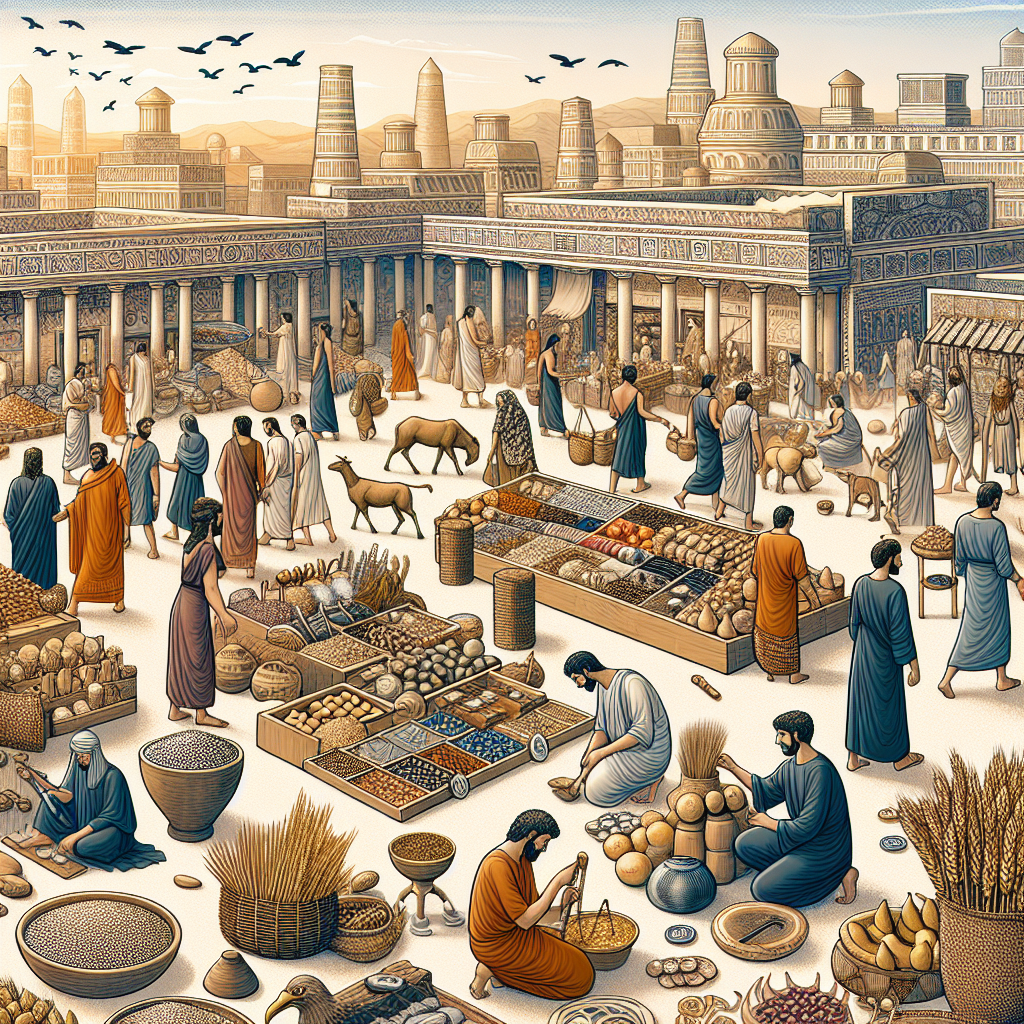
The agora, the central public space, was symbolic in Greek economics, signifying the intersection of commerce, politics, and social interaction. Through economic activities conducted in these spaces, Greek philosophers critically examined the impacts of economy on societal ethics and governance, hypotheses that resonate within modern economic discussions today.
Rome: Legal Structures and Economic Administration
Ancient Rome’s economic contributions are anchored in legal and administrative structures that regulated trade, contracts, and property rights. Rome’s complex legal system laid the basis for modern economic and contractual laws.
Rome’s economy was diverse and expansive, driven by agriculture, mining, and extensive trade networks. The Roman currency was standardized across the empire, facilitating trade and commerce by providing a reliable medium of exchange. This economic cohesion underpinned the vast geographical expanse and political unity of the Roman Empire.
Roman law codified economic interactions, enabling secure contractual and property rights, thus fostering an environment of economic certainty and stability. This extensive legal framework influenced modern concepts of business law and economic regulation.
The heritage of Roman roadways and maritime ventures underscores their commitment to infrastructural development, an economic catalyst enabling efficient movement of goods and troops, thereby sustaining Rome’s economic vitality and military prowess. Rome’s administrative innovations in tax collection and resource allocation echo in today’s governmental economic policies.
Conclusion
Exploring the economic thought of ancient civilizations reveals a rich tapestry of innovations and ideas that have shaped human societies through time. Ancient economic systems were more than rudimentary responses to survival; they embodied complex reflections on governance, morality, and societal well-being.
The legacies of these early civilizations, from the structured legal systems of Rome, the philosophical inquiries of Greece, to the advanced agricultural techniques of China, continue to inform modern economic principles. Understanding these historical contributions enables us to appreciate how deeply intertwined economic thought is with the cultural and historical contexts within which it evolves.
As we face contemporary economic challenges, reflecting on ancient wisdom offers perspective and potentially untapped solutions. The harmonious relationships these civilizations sought between economic systems and human values remain poignant lessons as we advance global economic policies.
Ultimately, the economic innovations of ancient civilizations have not only influenced subsequent eras but have also opened dialogues on how we build and maintain equitable, sustainable economies today. Their enduring influence reminds us that economic thought, like history itself, is an evolving narrative shaped by human insight and cultural heritage.