
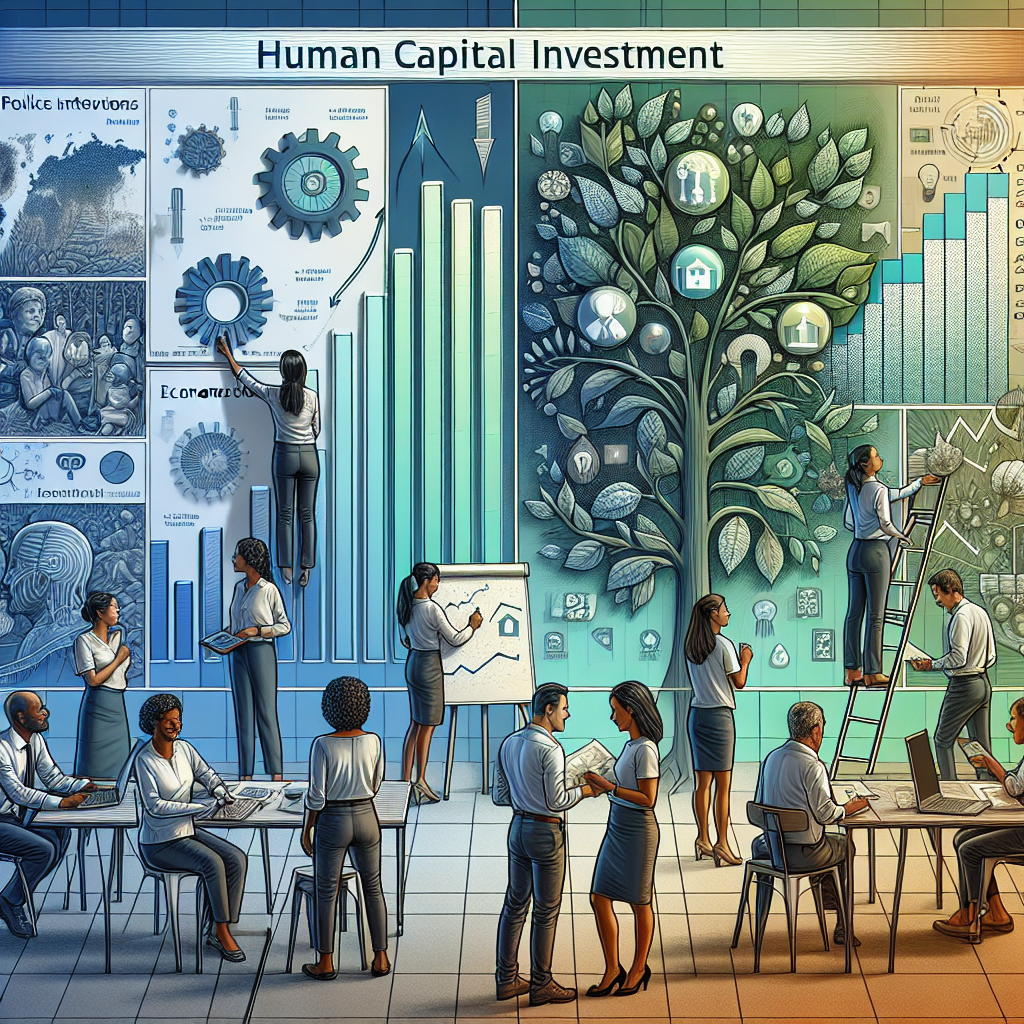
When we discuss labor economics, one powerful concept inevitably surfaces: human capital investment. This term, while technical, boils down to a relatively straightforward idea. It refers to the investments individuals and societies make to improve economic productivity and societal well-being. These investments often encompass education, training, skills development, health, and other forms of learning. At its core, investing in human capital means enhancing the workforce’s capabilities and, by extension, its productivity and economic output.
Human capital investment is not merely an academic concept. It represents a real-world strategy with tangible impacts on economies and individual livelihoods. From national education policies to company-specific training programs, investments into the development of human capital are embedded in various activities of life. These initiatives are designed to cultivate advanced skills, boost economic productivity, and foster innovation. Yet, this investment is not without its challenges and intricacies, which can be influenced by a wide range of factors, including economic conditions, educational structures, social norms, and policy decisions.
In this article, we will unravel the multifaceted nature of human capital investment. We will explore the significant economic returns that derive from these investments and the strategic policy interventions that can enhance these returns further. Whether you are a student, policymaker, or merely a curious mind, understanding the dynamics of human capital investment will provide valuable insights into the mechanics of modern economies and how they prosper.
Economic Returns of Human Capital Investment
Perhaps one of the most compelling reasons to invest in human capital is the economic return it tends to generate. Studies consistently show a strong correlation between levels of education and economic growth. According to the World Bank, each additional year of schooling raises an individual’s earnings by approximately 10%, a phenomenon often referred to as the ‘returns to education’. This increase doesn’t just benefit the individual; it has a ripple effect across the economy by boosting overall productivity and fostering an environment conducive to innovation and economic expansion.
The effects are not limited to formal education. Vocational training and other forms of skill development also play a crucial role. In fact, businesses that invest in employee development often see a marked increase in productivity and morale. The Organisation for Economic Co-operation and Development (OECD) notes that firms training their employees regularly observe improved operational efficiency and significant economic gains. The message is clear: investing in the workforce yields substantial returns.
However, these returns are not automatic. They depend on a myriad of factors, including the quality of the education and training programs, the relevance of the skills acquired to the labor market’s demands, and the overall economic environment. For instance, a well-developed education system can become a powerhouse for national economic growth, whereas a poorly structured one might lead to underemployment and skill mismatches.
Quality vs. Quantity in Education
One significant debate in the realm of human capital investment is the balance between quality and quantity in education. The difference between merely increasing access to education and enhancing the quality of educational outcomes is critical. While expanding access ensures more people can benefit from learning opportunities, quality ensures that the education system effectively equips individuals with the skills needed in today’s economy.
Quality education is often characterized by competent teachers, relevant curriculum, adequate infrastructure, and supportive learning environments. According to research by the United Nations Educational, Scientific and Cultural Organization (UNESCO), high-quality education significantly influences a country’s economic performance. Better cognitive skills and higher learning achievements translate into a more competent and innovative workforce, leading to better job prospects and higher productivity levels.
On the other hand, simply increasing the number of years spent in education without addressing quality issues may not yield the desired economic benefits. For example, students might graduate without the necessary skills to thrive in the job market or face education systems where the curriculum is outdated and disconnected from practical needs. Therefore, policymakers and educational institutions must focus not only on enrolling more students but also on enhancing the quality and relevance of education to maximize economic returns.
Policy Interventions in Human Capital Investment
Given the substantial economic returns from human capital investment, it is imperative for governments and organizations to implement effective policy interventions. Such policies can range from funding educational institutions to providing incentives for continuous professional development. A nationwide commitment to improving human capital starts with robust and well-funded education systems that prioritize quality and accessibility.
Investing in early childhood education is one such strategic move. Research has shown that the early years are critical for cognitive development. By ensuring access to quality primary education, policymakers can lay a strong foundation for lifelong learning. Scholarships, grants, and financial aid programs are also crucial in making higher education and vocational training accessible to disadvantaged groups, helping create a more equitable society and diversified workforce.
Another effective intervention is the promotion of lifelong learning. In a rapidly changing economy, skills can quickly become outdated. Encouraging individuals to engage in continuous professional development and offering support for mid-career reskilling ensures that the workforce remains adaptable and competitive. Governments can facilitate this through tax incentives for businesses that provide employee training and by funding public training programs.
The Role of Technology in Human Capital Development
Technology has dramatically transformed how we invest in human capital. With the advent of digital learning platforms, online courses, and virtual classrooms, education and skills development have become more accessible than ever. These tools are especially beneficial for reaching remote or underserved populations who might otherwise lack access to quality learning resources.
Digital technology also allows for more personalized learning experiences. Adaptive learning technologies use data to tailor educational content to individual learning styles and paces. This personalization can improve learning outcomes by addressing learners’ specific needs and identifying gaps in their knowledge and skills. Furthermore, massive open online courses (MOOCs) and other digital platforms offer opportunities for workforce development on an unprecedented scale.
The integration of technology in education and training systems poses both opportunities and challenges. While technology can make learning more efficient and inclusive, access to these digital tools can be uneven, often influenced by socioeconomic factors. Policymakers must therefore ensure that investments in digital education tools are complemented by efforts to bridge the digital divide, ensuring equitable access to technology across all segments of society.
Global Perspectives on Human Capital Investment
Human capital investment strategies and their outcomes can vary significantly across different countries and regions. Developed nations often have established systems and significant resources to invest in high-quality education and training programs. These countries typically enjoy higher levels of productivity and innovation due, in large part, to their investments in human capital.
Emerging economies, while sometimes constrained by limited resources, are increasingly recognizing the need to build robust human capital infrastructure. Countries like South Korea and Singapore, for example, have achieved remarkable economic growth by prioritizing education and skills development. Their policies provide valuable lessons in how strategic human capital investment can drive national prosperity.
On the other hand, low-income countries face substantial challenges in human capital development, including inadequate funding, lack of trained teachers, and poor infrastructure. International organizations, such as the World Bank and United Nations, play a critical role in supporting human capital development in these regions through financial aid, expertise, and global partnerships. For sustained economic growth, it is essential for these countries to continue prioritizing human capital investment despite their challenges.
Conclusion
Human capital investment is a cornerstone of economic development and societal well-being. Its benefits manifest across various dimensions, from individual earnings to national productivity and innovation. By prioritizing quality in education and training, implementing supportive policy interventions, embracing technological advancements, and learning from global best practices, societies can maximize the returns on their human capital investments.
The future of economies increasingly hinges on the knowledge, skills, and health of their workforces. Hence, it is imperative for both public and private sectors to work collaboratively in nurturing and developing human capital. The challenges are multifaceted, but the potential rewards—in terms of economic growth, innovation, and improved quality of life—make these efforts invaluable.
Ultimately, the journey of human capital investment is ongoing. As economies evolve and new challenges arise, so too must our strategies and approaches to investing in people. By ensuring that these investments are equitable, inclusive, and forward-looking, we can build a more prosperous and resilient world for future generations.


