Australia’s Aboriginal peoples possess one of the oldest living cultures in the world, with a history that spans over 60,000 years. This article delves into the profound depths of Aboriginal cultures in Australia, exploring their ancient origins, diverse communities, spiritual beliefs, artistic expressions, and the ongoing impact of colonialism. It aims to shed light on the richness and complexity of these cultures, which are integral to Australia’s national identity.
The Origins and Migration
The Dreamtime
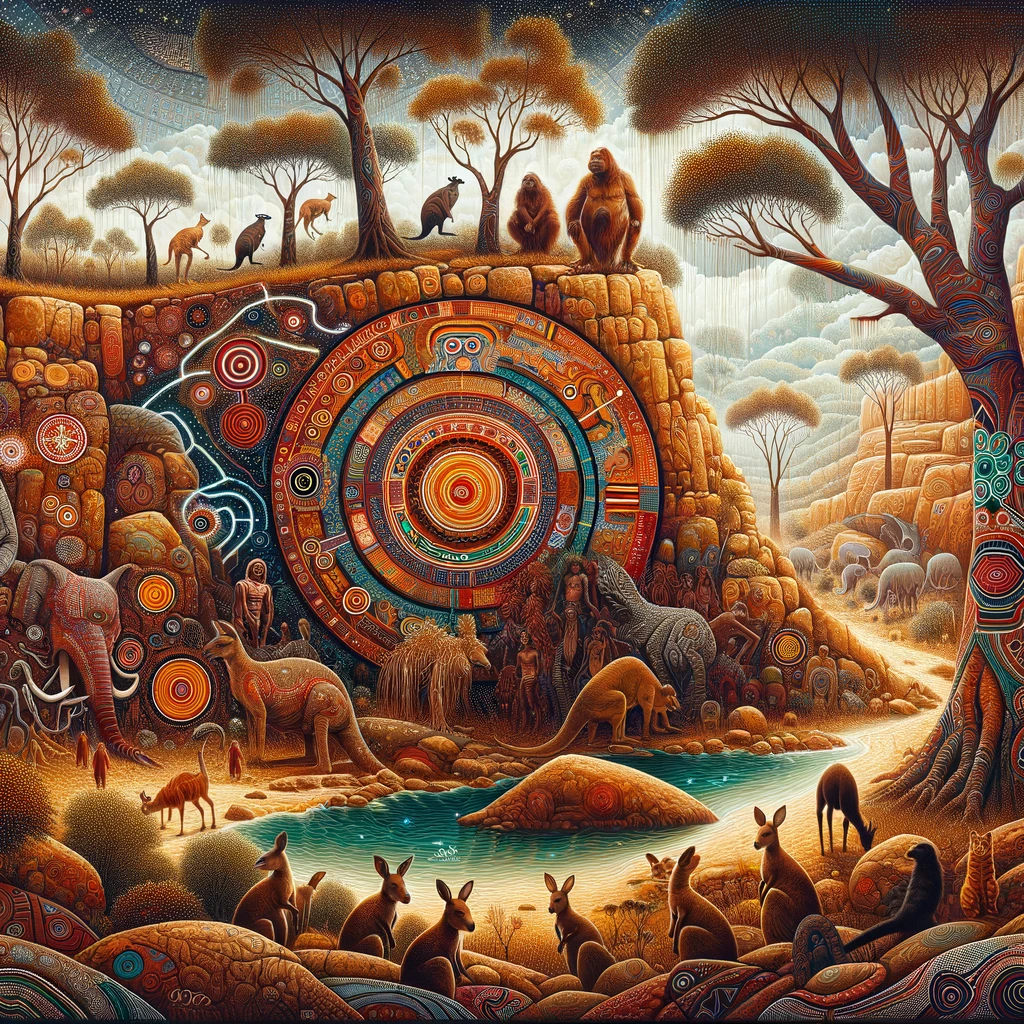
At the heart of Aboriginal culture lies the Dreamtime, a complex network of stories, ceremonies, and laws that explain the origins of the Earth, its creatures, and the people themselves. These stories, passed down through generations, are not just tales but are central to understanding the Aboriginal worldview where the spiritual, natural, and moral realms are inseparably intertwined.
Early Migration and Settlement
Archaeological evidence suggests that the ancestors of today’s Aboriginal peoples arrived in Australia around 65,000 years ago. This makes them the world’s oldest continuous civilization, predating both the ancient cultures of Mesopotamia and Egypt. They migrated from Asia during the Pleistocene epoch, possibly crossing land bridges and short sea crossings.
Diverse Communities and Languages
Linguistic Richness
Prior to European settlement, over 250 languages were spoken among Aboriginal groups, with distinct dialects and cultures. This linguistic diversity highlights the rich cultural tapestry of Aboriginal communities, each with its unique traditions and social structures.
Social Organization
Typically, Aboriginal societies were organized into clans or kinship groups, each with its own territory, language, and cultural practices. These social structures were deeply connected to the land, with a strong emphasis on communal living and responsibility to the group.
Spiritual Beliefs and Practices
Connection to the Land
For Aboriginal Australians, the land is not just a physical entity but a living, breathing being, imbued with spiritual significance. This deep connection to the land is reflected in their custodianship of the environment, understanding of natural cycles, and sacred sites.
Rituals and Ceremonies
Rituals and ceremonies play a crucial role in Aboriginal culture, marking important life events, seasons, and spiritual connections. These often involve music, dance, painting, and storytelling, serving as a means to pass on traditions and laws.
Artistic Expressions
Rock Art
Aboriginal rock art, found across Australia, is one of the oldest and richest art traditions in the world. These artworks, some dating back tens of thousands of years, depict ancient stories, rituals, and the daily life of Aboriginal ancestors.
Contemporary Aboriginal Art
In recent times, Aboriginal art has gained international acclaim, with artists using traditional techniques and symbols to express both ancient stories and contemporary experiences, including the impacts of colonization and modern society.
The Impact of Colonization
Early Encounters
The arrival of European settlers in the late 18th century marked the beginning of a traumatic period for Aboriginal people. This period was characterized by land dispossession, violence, and policies of assimilation that profoundly affected Aboriginal cultures and populations.
Stolen Generations
One of the most devastating policies was the forced removal of Aboriginal children from their families, known as the Stolen Generations. These practices, aimed at assimilating Aboriginal children into white society, had long-lasting and intergenerational impacts on Aboriginal communities.
Preservation and Revival
The Fight for Rights
Throughout the 20th century, Aboriginal Australians fought for their rights, land, and recognition. Landmark events like the 1967 referendum and the Mabo decision in 1992 were pivotal in this struggle, leading to legal reforms and greater recognition of Aboriginal rights.
Cultural Revival
In recent decades, there has been a resurgence in Aboriginal cultures, with efforts to revive languages, traditions, and practices. This cultural revival is not only vital for Aboriginal communities but also enriches the broader Australian society.
The Role of Elders and Storytelling
Elders: The Custodians of Knowledge
In Aboriginal culture, elders are revered as the custodians of knowledge, tradition, and law. They are responsible for passing down stories, rituals, and wisdom to younger generations, ensuring the survival and continuity of their culture.
Storytelling: A Living Tradition
Storytelling is a vital part of Aboriginal culture, serving as a means to educate, entertain, and maintain the cultural heritage. These stories, often told through song, dance, and art, are not mere fables but convey important lessons about life, morality, and the environment.
The Significance of Totems
Spiritual Connection
Totems are a distinctive aspect of Aboriginal spirituality, representing a deep connection between an individual or group and a particular animal, plant, or natural feature. These totems symbolize the unity and interdependence of all living things, reinforcing the Aboriginal belief in the interconnectedness of the world.
Cultural Identity
Totems also play a crucial role in shaping the cultural identity of Aboriginal people. They influence various aspects of life, including hunting practices, marriage rules, and social responsibilities, ensuring a harmonious balance between humans and nature.
Aboriginal Music and Dance
Didgeridoo and Clapsticks
Aboriginal music is characterized by unique instruments like the didgeridoo and clapsticks. The didgeridoo, a wind instrument, produces a deep, resonant sound and is often used in ceremonies. Clapsticks, used to maintain rhythm, accompany songs and dances.
Ceremonial Dances
Dance is an integral part of Aboriginal culture, often performed during ceremonial events. These dances tell stories, depict ancestral beings, and connect participants with the spiritual realm. They are a powerful expression of Aboriginal heritage and identity.
The Importance of Land Rights
Land as Life
For Aboriginal people, land is not merely a place to live; it is the essence of existence. The struggle for land rights has been a central theme in Aboriginal history, reflecting their fight for recognition, autonomy, and the right to care for their ancestral lands.
Significant Land Rights Movements
Movements like the Wave Hill walk-off in 1966 and the establishment of the Aboriginal Tent Embassy in 1972 were crucial in the fight for land rights. These movements brought national and international attention to the injustices faced by Aboriginal people and led to significant legal and policy changes.
Contemporary Challenges and Achievements
Health and Socioeconomic Disparities
Aboriginal communities today face numerous challenges, including health disparities, lower life expectancy, and socioeconomic inequalities. Addressing these issues requires a comprehensive approach that respects Aboriginal cultures and provides equitable opportunities.
Celebrating Achievements
Despite these challenges, Aboriginal people have made significant achievements in various fields, including arts, politics, sports, and academia. These successes not only highlight the resilience and talent of Aboriginal communities but also contribute to a more inclusive and diverse Australian society.
Future Directions
Recognition and Reconciliation
The path towards recognition and reconciliation is ongoing. Efforts such as the Uluru Statement from the Heart, which calls for a First Nations Voice in the Australian Constitution, are crucial steps towards acknowledging the rights and contributions of Aboriginal peoples.
Cultural Exchange and Education
Fostering greater understanding and appreciation of Aboriginal cultures through education and cultural exchange is vital. This not only ensures the preservation of these ancient cultures but also builds bridges of understanding and respect between Aboriginal and non-Aboriginal Australians.
Conclusion
The Aboriginal cultures of Australia are a testament to human resilience, creativity, and the enduring connection to the land. Understanding and appreciating these ancient cultures is not just an academic exercise but a journey towards greater respect, recognition, and reconciliation. As Australia moves forward, it is imperative that the rich heritage and wisdom of its First Peoples are not only preserved but also celebrated as a fundamental part of its national identity.