In the realm of agriculture, indigenous farming techniques have stood the test of time, showcasing a deep understanding of the environment and sustainability. These methods, developed over centuries, are not just about growing crops but are intertwined with cultural practices and beliefs. This article delves into various indigenous farming techniques across the world, highlighting how these practices can teach us valuable lessons in sustainable agriculture and environmental stewardship.
The Philosophy Behind Indigenous Farming
Indigenous farming is more than just a method of food production; it is a way of life that respects and works in harmony with nature. These techniques are built on the principles of balance, sustainability, and an intimate understanding of local ecosystems. They often involve crop diversity, natural pest control, and a minimalistic approach to water usage. This symbiotic relationship with the Earth not only preserves the environment but also ensures the resilience and health of the crops.
Techniques Around the World
Three Sisters Farming (North America)
The ‘Three Sisters’ farming method, practiced by Native American tribes, involves growing corn, beans, and squash together. This trio of crops supports each other: the corn provides a structure for the beans to climb, the beans fix nitrogen in the soil, and the squash’s broad leaves shade the ground, retaining moisture and preventing weeds. This intercropping system promotes biodiversity and maintains soil health, demonstrating an efficient use of land and resources.
Chinampas (Mexico)
The Aztecs developed a unique method known as Chinampas, or floating gardens, in the shallow lake beds of the Valley of Mexico. These small, rectangular areas were built up from the lake bed, creating rich, fertile land. This technique allowed for year-round farming and remarkably high yields. Chinampas also provided habitat for a variety of wildlife, creating a micro-ecosystem within the agricultural landscape.
Terrace Farming (Andes, Asia)
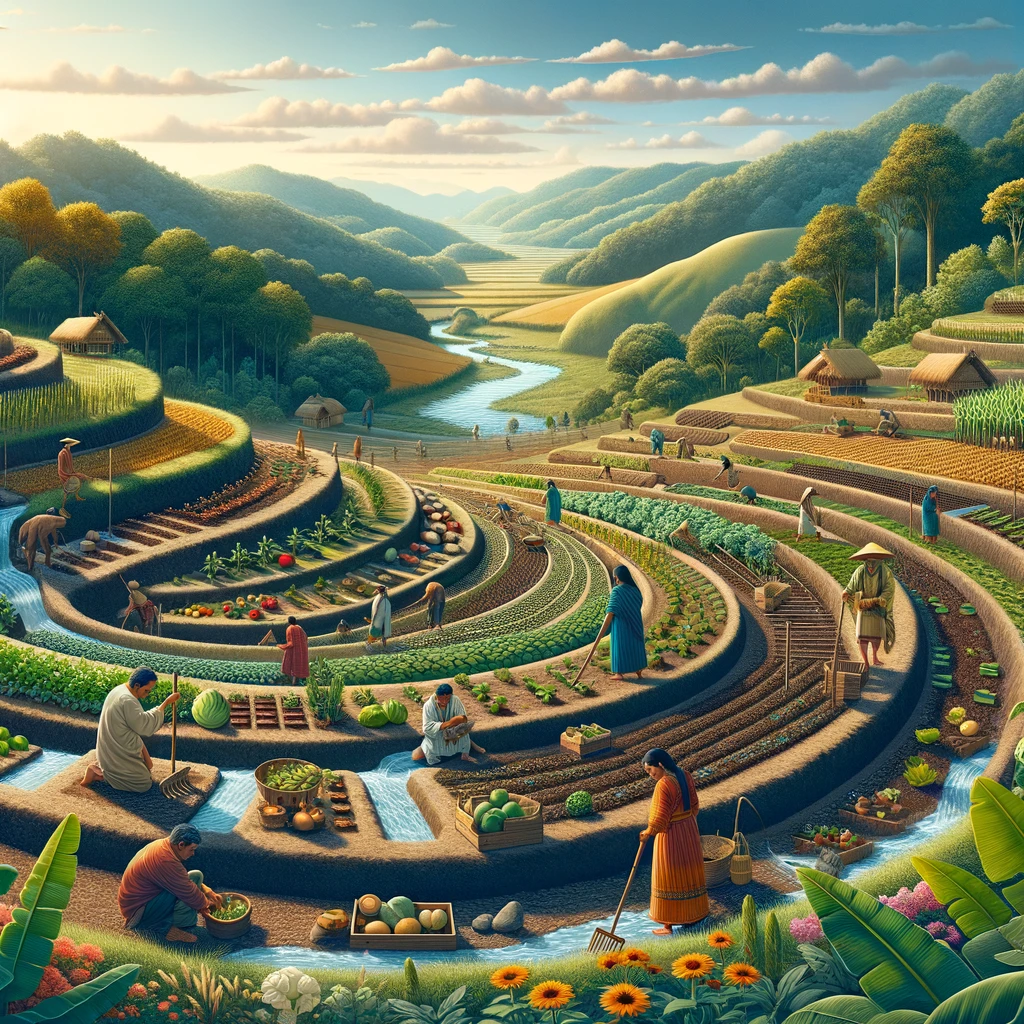
Terrace farming, widely used in the mountainous regions of the Andes and Asia, involves cutting flat areas into the mountainsides. This method reduces soil erosion and water runoff, making steep land arable. Terraces trap rainwater and allow it to slowly percolate into the soil, ensuring moisture even during dry periods. This technique showcases how indigenous communities adapted to challenging environments and utilized every inch of available land efficiently.
Chitemene System (Africa)
In parts of Africa, the Chitemene system involves the clearing of trees in a circular pattern and spreading the ash as fertilizer. This slash-and-mulch method enriches the soil with nutrients. While it involves deforestation, the scale and method of clearing in traditional Chitemene are such that the land recovers relatively quickly, showing an understanding of the balance between land usage and conservation.
Shifting Cultivation (Various Regions)
Shifting cultivation, also known as swidden agriculture, is practiced in various parts of the world, including Southeast Asia, the Amazon, and Central Africa. Farmers clear a piece of land, use it for cultivation for a few years, and then move on to a new area, allowing the old plot to regenerate. This cycle prevents soil depletion and maintains forest cover over time. While often criticized, when practiced sustainably and on a small scale, it can be an effective way of farming in dense forest areas.
Lessons for Modern Agriculture
The wisdom embedded in indigenous farming practices offers invaluable lessons for modern agriculture, particularly in the context of environmental challenges and the need for sustainability. These methods emphasize diversity, sustainability, and a holistic approach to land management. They can inspire modern farming to move away from monocultures and chemical dependencies towards more ecologically sound practices.
Embracing Crop Diversity
Indigenous techniques often involve growing a variety of crops together, which not only supports soil health but also reduces the risk of total crop failure. Modern agriculture can learn from this by diversifying crops, which can lead to greater resilience against pests, diseases, and changing climatic conditions.
Sustainable Soil Management
Traditional methods like the Chitemene system and terrace farming show a deep understanding of soil management. Modern farming can adopt these practices to improve soil health, reduce erosion, and enhance water retention, all of which are crucial for sustainable agriculture.
Integrated Pest Management
Indigenous farming often uses natural pest control methods, which can be an alternative to chemical pesticides. For instance, planting certain crops together can naturally repel pests or attract beneficial insects. Modern agriculture can integrate these natural methods to reduce chemical use and promote biodiversity.
Water Conservation
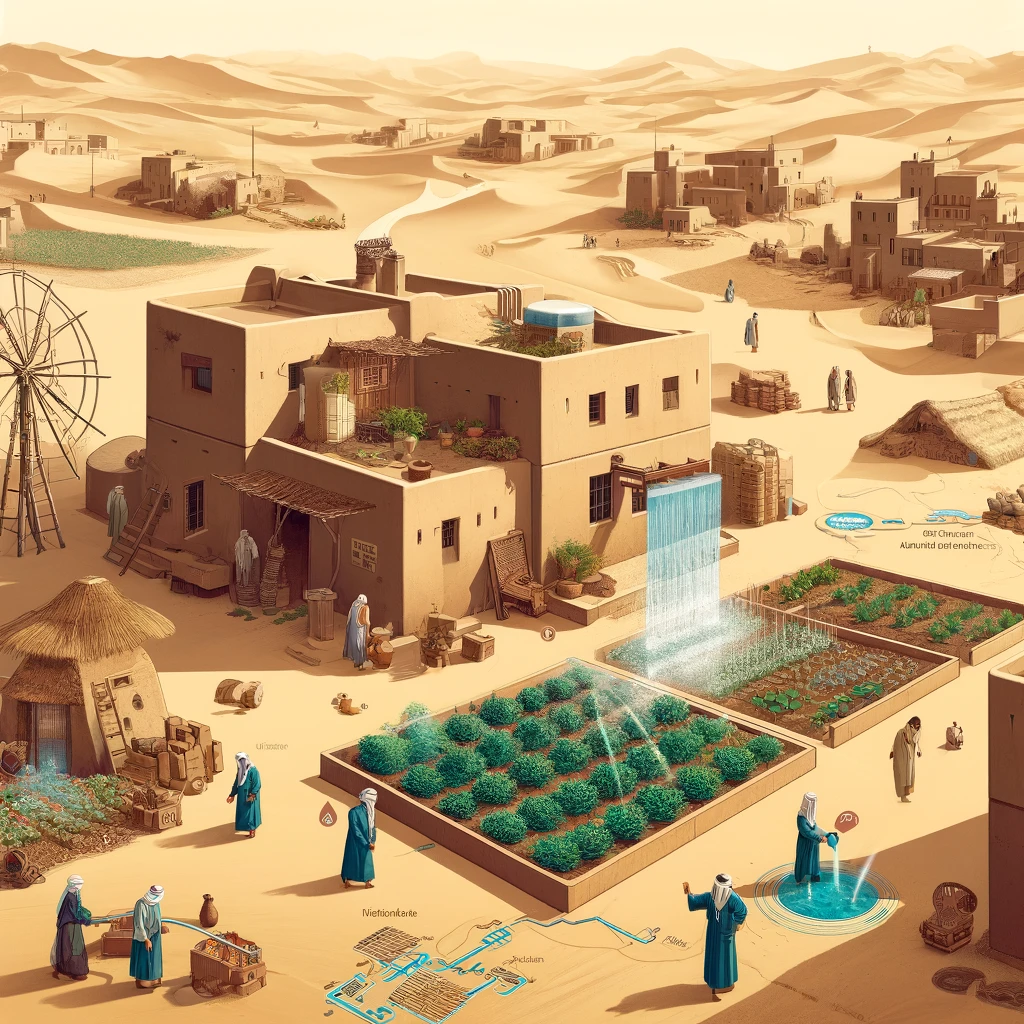
Many indigenous farming techniques are adept at conserving water, a resource that is becoming increasingly scarce. Modern agriculture can learn from these methods to use water more efficiently and sustainably.

The Importance of Cultural Context in Indigenous Farming
One of the key aspects of indigenous farming techniques is their deep-rooted connection to the cultural and spiritual beliefs of the communities that practice them. These farming practices are not merely techniques for food production; they are intertwined with rituals, stories, and a profound respect for nature. This cultural context is essential in understanding the holistic approach of indigenous farming, which sees humans as an integral part of the ecosystem rather than as separate or dominant.
Respecting Local Knowledge and Traditions
Indigenous farming practices are based on centuries of accumulated knowledge and a deep understanding of the local environment. This knowledge is often passed down through generations and is as much about the timing of planting and harvesting as it is about understanding the subtle signs of nature. Modern agriculture can benefit immensely from this wisdom, particularly in the face of climate change, which requires a more nuanced understanding of local ecosystems.
Sustainable Community Development
Indigenous farming techniques are not only about producing food but also about sustaining communities. These practices often involve communal efforts and sharing of resources, which strengthens community bonds and ensures equitable distribution of food. This aspect of indigenous farming can be a model for modern agriculture, especially in developing sustainable and resilient rural communities.
Biodiversity and Ecosystem Services
The diversity of crops in indigenous farming systems supports a wide range of biodiversity. This biodiversity is not just important for crops but also plays a crucial role in the overall health of the ecosystem, providing services like pollination, pest control, and nutrient cycling. Modern agricultural practices can learn from this to create more diverse and resilient ecosystems.
The Challenge of Integration
Integrating indigenous farming techniques into modern agricultural practices is not without challenges. One of the biggest challenges is the scale at which modern agriculture operates. However, by adopting a more localized approach and adapting these techniques to suit modern contexts, it is possible to reap the benefits of these time-honored practices.
Case Studies in Successful Integration
The Zai System in Burkina Faso
In Burkina Faso, farmers have revitalized an ancient indigenous technique known as the Zai system. This involves digging pits to capture water and applying organic matter to improve soil fertility. The technique has transformed barren lands into productive fields, demonstrating how traditional methods can be adapted to modern challenges.
Permaculture and Agroforestry
Permaculture, a modern agricultural movement, draws heavily from indigenous practices, particularly in its emphasis on mimicking natural ecosystems and creating sustainable agricultural systems. Agroforestry, which combines agriculture with tree cultivation, is another example where modern techniques align with traditional practices, leading to improved soil health, increased biodiversity, and better crop yields.
The Role of Technology and Innovation
While respecting and learning from indigenous practices, there is also a role for technology and innovation in enhancing these techniques. For example, satellite imagery and GIS technology can be used to better understand and manage traditional farming systems. Similarly, advancements in sustainable materials can complement traditional methods, such as using biodegradable mulches instead of synthetic ones.
Looking Forward: A Synthesis of Old and New
The future of sustainable agriculture lies in a thoughtful synthesis of indigenous wisdom and modern innovation. By valuing and integrating indigenous farming techniques, we can create agricultural systems that are not only productive but also sustainable, resilient, and in harmony with the environment.
Conclusion
Indigenous farming techniques offer a window into a world where agriculture is in balance with nature. These practices, refined over centuries, embody sustainability, resilience, and a deep understanding of the natural world. As the global community seeks solutions to environmental degradation and the challenges of feeding a growing population, these ancient techniques stand as a testament to the ingenuity and wisdom of our ancestors. By learning from and integrating these practices, we can pave a path towards a more sustainable and harmonious future.