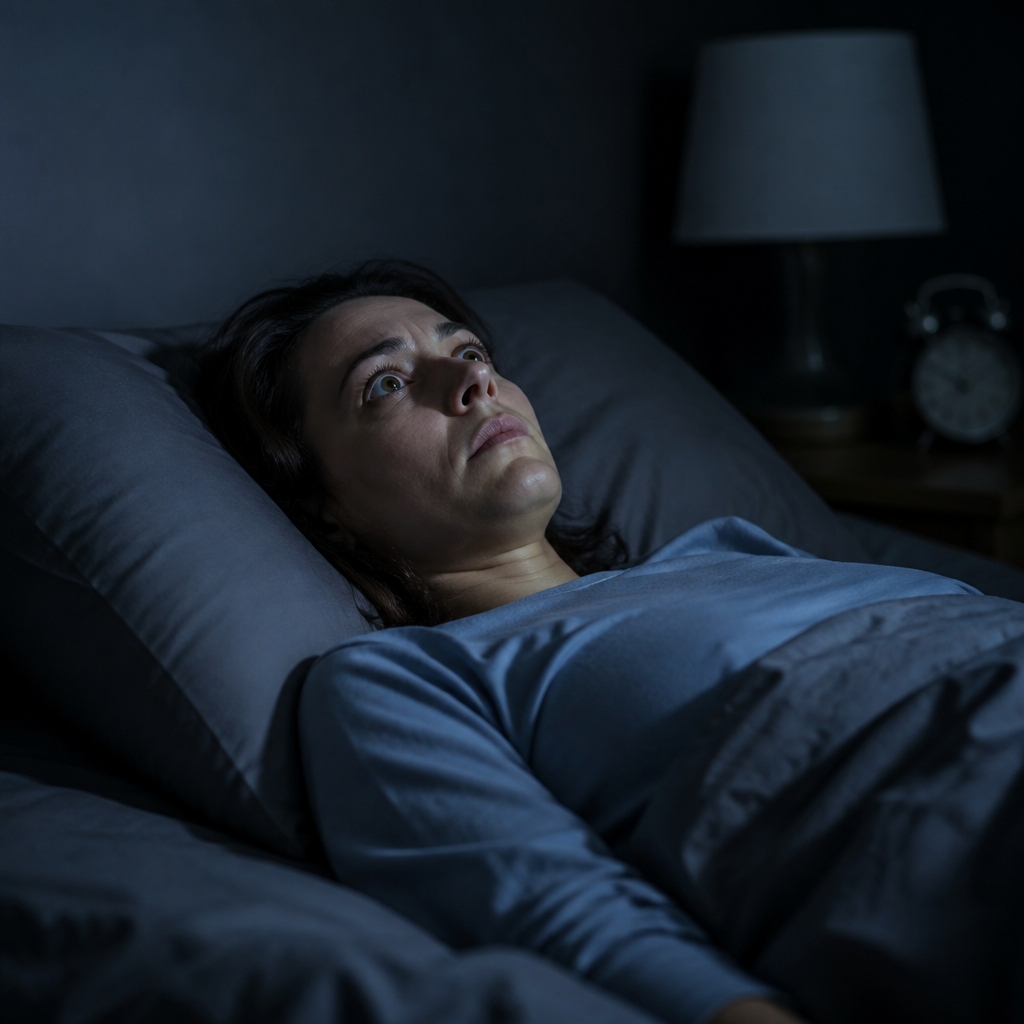
Sleep paralysis is a temporary state in which a person wakes up or falls asleep while remaining unable to move or speak, and neuroscience explains it as a mismatch between brain arousal and the body’s normal REM sleep paralysis. For students of psychology, especially in AP Psychology, it is one of the clearest examples of how states of consciousness are not fixed categories but shifting patterns of brain activity, perception, memory, and bodily control. I have found that once learners see sleep paralysis as a bridge topic connecting sleep stages, dreaming, circadian rhythms, sensation, and consciousness, the experience becomes less mysterious and the unit becomes easier to organize. This article serves as a hub for the full States of Consciousness topic by defining key terms, explaining the brain mechanisms involved, and placing sleep paralysis within the larger study of sleep, dreams, hypnosis, meditation, psychoactive drugs, and biological rhythms. In psychology, consciousness refers to awareness of ourselves and our environment, but that awareness changes across waking attention, drowsiness, light sleep, deep sleep, REM sleep, and altered states. Sleep paralysis matters because it shows that the brain can produce vivid, emotionally intense experiences even when outside danger is absent, and because misunderstanding it can increase fear. It also matters academically: it illustrates REM atonia, hallucinations, sleep architecture, and the interaction of the thalamus, cortex, and brainstem in regulating conscious experience.
States of Consciousness: the AP Psychology framework
States of consciousness describes the different modes of awareness and responsiveness a person can experience across a day and lifespan. In AP Psychology, the core areas usually include circadian rhythms, sleep stages, dreaming, sleep disorders, hypnosis, meditation, and psychoactive drugs. These topics belong together because each one changes perception, attention, memory, self-control, or awareness. Sleep paralysis belongs here not as an isolated disorder but as a vivid case study in state overlap. During a typical night, the brain cycles through non-REM stage N1, N2, and N3 sleep, then REM sleep, in roughly ninety-minute patterns, although timing varies by age, sleep debt, and individual biology. REM sleep is the stage most associated with vivid dreaming and rapid eye movements, while N3 is slow-wave sleep linked to physical restoration and harder awakening. Consciousness is not simply on or off during these stages. Instead, different neural systems governing movement, sensory gating, emotional arousal, and reflective awareness come online or shut down at different times. That uneven transition is the key to understanding sleep paralysis.
What exactly happens during sleep paralysis?
Sleep paralysis usually occurs in one of two transition points: as a person is falling asleep, called hypnagogic sleep paralysis, or as a person is waking up, called hypnopompic sleep paralysis. In both cases, the person is conscious enough to sense the bedroom and understand that they are awake, but the skeletal muscles remain inhibited. Most episodes last seconds to a few minutes. People often report chest pressure, difficulty calling out, a sensed presence in the room, footsteps, shadow figures, floating sensations, or intense fear. These features sound supernatural in folklore, but they are consistent with REM intrusion into waking consciousness. The person is not dying, suffocating, or losing contact with reality permanently. They are experiencing a short-lived blend of REM physiology and waking awareness. One reason the event feels terrifying is that the amygdala and related threat-detection systems can be highly active when the mind is trying to explain immobility. The brain tends to generate a cause for the alarm, which can become an intruder, demon, or attacker depending on culture and expectation. In practical terms, sleep paralysis is common, especially among adolescents, college students, people with irregular sleep schedules, and those under stress.
The neuroscience explanation: REM atonia, arousal, and hallucinations
The central neuroscience concept is REM atonia, the normal paralysis of most voluntary muscles during REM sleep. This protective mechanism prevents people from physically acting out dreams. Brainstem circuits, especially within the pons and medulla, inhibit motor neurons in the spinal cord using neurotransmitters such as glycine and GABA. When this system remains active while cortical awareness returns, the mind wakes before the body regains movement. That is sleep paralysis. At the same time, parts of the cortex involved in visual imagery, body mapping, and threat interpretation may still be influenced by dreamlike activity. The result is a waking person who can perceive the room but may also experience internally generated images or sensations layered onto it. Researchers describe this as state dissociation, meaning features of one state of consciousness intrude into another. This explanation fits what clinicians observe in narcolepsy, where REM phenomena such as cataplexy, vivid hallucinations, and sleep paralysis appear at inappropriate times because the boundaries between wakefulness and REM are unstable.
From experience explaining this topic to students, the turning point comes when they realize the chest-pressure sensation does not mean the lungs have stopped working. Breathing during REM is more shallow and automatic, and the chest wall feels constrained because voluntary control is reduced, but respiration continues. The person interprets unusual breathing plus immobility as suffocation, which intensifies panic. The hallucinations are also understandable. The temporoparietal junction helps construct the sense of body position and self-location; when that representation becomes unstable, people may feel floating, out-of-body movement, or a nearby presence. Meanwhile, hypervigilance pushes perception toward threat. None of that makes the event imaginary in the dismissive sense. The fear is real, the perception is vivid, and the brain state is measurable. It simply arises from internal neural activity rather than an external attacker.
How sleep paralysis fits with sleep stages, dreams, and biological rhythms
To place sleep paralysis within the broader States of Consciousness unit, start with sleep architecture. Early in the night, people spend more time in N3 slow-wave sleep. Later cycles contain more REM sleep, which is why sleep paralysis is often reported in the early morning hours when REM periods are longer. Circadian rhythms also matter. The suprachiasmatic nucleus in the hypothalamus helps regulate the sleep-wake cycle by responding to light cues and influencing melatonin timing. When this rhythm is disrupted by jet lag, shift work, all-night studying, or inconsistent weekends, REM timing and sleep continuity can become fragmented. Fragmented sleep raises the chance that elements of REM will spill into wakefulness. Dreams provide another connection. REM dreams are typically vivid, emotional, and story-like, so when dream imagery lingers into waking, the experience can feel like a real intruder in a real room. This is why sleep paralysis is a strong teaching example for the psychology of dreaming: it demonstrates that dream content and waking interpretation can briefly coexist.
Common triggers, risk factors, and related sleep disorders
Sleep paralysis can happen to healthy people, but several factors increase the odds. The most consistent triggers are sleep deprivation, irregular sleep schedules, sleeping on the back, stress, anxiety, and fragmented sleep from conditions such as obstructive sleep apnea. Students are a high-risk group because they often combine inconsistent bedtimes, caffeine use, academic stress, and reduced sleep duration. Episodes also occur more often in people with narcolepsy, post-traumatic stress symptoms, panic disorder, and a family history of similar experiences. Importantly, sleep paralysis itself is not the same as narcolepsy, night terrors, nightmares, or psychosis. Narcolepsy includes excessive daytime sleepiness and may involve cataplexy, sudden loss of muscle tone triggered by emotion. Night terrors usually occur during non-REM sleep, especially in children, and the person may not remember them clearly. Nightmares are disturbing dreams from which the sleeper awakens able to move. Psychosis involves persistent difficulties distinguishing internal experience from external reality across waking life, not just during brief sleep transitions.
| Condition | Typical Timing | Main Features | Key Difference from Sleep Paralysis |
|---|---|---|---|
| Sleep paralysis | Falling asleep or waking | Awareness with temporary inability to move, possible hallucinations | Brief REM-related muscle atonia with intact awareness |
| Nightmare | Usually REM sleep | Disturbing dream, full movement after awakening | Person can move once awake |
| Night terror | Usually N3 sleep | Intense arousal, screaming, confusion, limited recall | Occurs from deep non-REM sleep, not REM intrusion |
| Narcolepsy | Daytime and nighttime | Sleep attacks, daytime sleepiness, cataplexy, REM intrusion | Broader neurological disorder, not isolated episodes |
| Psychosis | Not limited to sleep transitions | Persistent hallucinations or delusions | Symptoms extend beyond the sleep-wake boundary |
Cultural meanings, historical explanations, and why people see intruders
Across cultures, sleep paralysis has been explained as witchcraft, demonic attack, spirit visitation, or alien abduction. In Newfoundland, stories referred to the “Old Hag.” In Japan, the term kanashibari has described a binding paralysis. Similar traditions appear in the Middle East, Scandinavia, and parts of Africa and Latin America. These repeated patterns do not prove supernatural causes; they show that the same underlying neurobiology can be interpreted through different belief systems. The sensed presence is especially common because the brain is built to detect agents quickly under uncertainty. When the body cannot move and arousal rises, the safest evolutionary guess is that another being is nearby. Culture then supplies the identity of that being. This is useful for psychology because it links biology with cognition and social learning. The brain provides the raw experience; expectation shapes the story. In class discussions, this is often where students grasp how top-down processing works during altered states of consciousness.
Management, treatment, and when to seek help
For occasional episodes, the most effective response is education plus sleep stabilization. Regular sleep and wake times, adequate total sleep, stress reduction, and limiting sleep disruption from alcohol or erratic schedules often reduce frequency. Some people benefit from avoiding the supine position if back sleeping reliably triggers episodes. During an event, focusing on slow breathing and trying to move a small muscle, such as a fingertip or toe, can help break the episode without escalating panic. When episodes are frequent, highly distressing, or accompanied by excessive daytime sleepiness, cataplexy, loud snoring, witnessed apneas, or sudden awakenings gasping, medical evaluation is appropriate. A clinician may assess for narcolepsy, obstructive sleep apnea, insomnia, or anxiety-related sleep fragmentation. Sleep specialists sometimes use polysomnography, multiple sleep latency testing, and structured history taking to separate isolated sleep paralysis from broader disorders. Treatment depends on cause. For narcolepsy, management may include wake-promoting medication and REM-suppressing agents. For sleep apnea, continuous positive airway pressure can improve fragmented sleep and reduce related events. The key point is balanced: sleep paralysis is usually benign, but repeated episodes deserve proper assessment rather than internet myths.
Sleep paralysis is one of the best entry points into the full States of Consciousness unit because it connects nearly every major concept in a single, memorable phenomenon. It shows that consciousness changes in patterned ways across the night, that sleep has biologically distinct stages, that dreams arise from specific brain states, and that perception is shaped by both neural activity and expectation. It also demonstrates a central lesson of psychology: an experience can feel supernatural, personal, and overwhelming while still having a precise scientific explanation. For AP Psychology students, the lasting value of this topic is not just memorizing REM atonia or the difference between hypnagogic and hypnopompic episodes. The real benefit is learning how to organize the wider subject. Circadian rhythms explain timing, sleep stages explain structure, brainstem inhibition explains paralysis, cortical imagery explains hallucinations, and culture explains interpretation. If you are building mastery of Psychology states of consciousness, use sleep paralysis as the hub concept, then connect outward to dreaming, sleep disorders, hypnosis, meditation, and psychoactive substances. Review those linked topics next, and the entire unit will make more sense.
Frequently Asked Questions
What is sleep paralysis, and what does it actually feel like?
Sleep paralysis is a brief state in which a person becomes mentally aware either while falling asleep or while waking up but cannot move their body or speak. It often lasts only a few seconds to a couple of minutes, although it can feel much longer in the moment. People commonly describe it as waking up and realizing they are conscious but unable to sit up, call out, or even move their arms and legs. Breathing may feel strange or shallow, which can make the episode seem more frightening than it actually is, even though the muscles responsible for breathing continue to work.
What makes sleep paralysis especially memorable is that it can be accompanied by vivid sensory experiences. Some people report hearing footsteps, buzzing, whispers, or other sounds. Others feel a presence in the room, pressure on the chest, or a strong sense that something threatening is nearby. These experiences can seem supernatural if a person does not know the science behind them, but neuroscience explains them as dreamlike imagery and fear responses occurring during a mixed state between sleep and wakefulness. In other words, the mind is partially awake while parts of the brain are still operating in a REM-like mode, which can blend conscious awareness with dream content.
What causes sleep paralysis from a neuroscience perspective?
From a neuroscience perspective, sleep paralysis is best understood as a temporary mismatch between brain systems that regulate consciousness and body movement. During normal REM sleep, the brain is highly active and vivid dreaming is common, but the body is placed into a state called REM atonia. REM atonia is a built-in protective mechanism that temporarily inhibits most voluntary muscles so people do not physically act out their dreams. In sleep paralysis, a person becomes aware before this paralysis has fully ended, or enters sleep while awareness remains unusually active, creating the unsettling experience of being conscious but unable to move.
This is one reason sleep paralysis is so useful in psychology and neuroscience education. It shows that consciousness is not a single on-off switch. Instead, waking awareness, motor control, perception, and dreaming can become temporarily out of sync. The brain may be awake enough to recognize the room and the self, but the motor system is still locked in the REM pattern. At the same time, dream-generating systems may still be active, which helps explain the vivid hallucinations or sensed presence some people experience. For students, especially in AP Psychology, sleep paralysis is a clear example of how mental states are constructed from overlapping brain processes rather than fixed categories.
Why do people see shadows, feel a presence, or think something is in the room during sleep paralysis?
These experiences are common because sleep paralysis often includes REM-related dream activity blending into waking awareness. During REM sleep, the brain can generate vivid images, sounds, emotional intensity, and realistic scenarios. If a person wakes before the REM state has fully resolved, some of that dream-like processing can continue while the person is aware of their actual bedroom environment. The result can be a strange hybrid experience in which real sensory input and internally generated imagery become mixed together.
The strong sense of fear also has a neurological basis. When a person realizes they cannot move, the brain may interpret the situation as dangerous, activating alarm systems that heighten vigilance and threat detection. In that state, ambiguous sensations can be interpreted as a threatening presence. Pressure on the chest may come from the normal muscle changes and breathing patterns associated with REM sleep, but the frightened brain can misread that sensation as something external pressing down. Across history and cultures, people have explained these episodes in spiritual or supernatural terms, but modern neuroscience shows that they are understandable products of a partially awakened brain still carrying features of REM sleep.
Is sleep paralysis dangerous, and should someone be worried if it happens?
Sleep paralysis is usually not dangerous, even though it can feel extremely intense. The episode typically ends on its own, and it does not mean a person is losing control of their mind or experiencing a psychotic disorder. Most cases are harmless and occasional. The fear comes mainly from the temporary inability to move and from the realistic sensations or hallucinations that can happen during the episode. Once the brain fully transitions into wakefulness, motor control returns and the experience ends.
That said, frequent sleep paralysis can be a sign that sleep quality or sleep timing is disrupted. Episodes are more likely when a person is sleep deprived, under stress, sleeping irregularly, or experiencing fragmented REM sleep. It can also occur more often in people with narcolepsy or other sleep-related conditions. If episodes happen regularly, cause major anxiety, or occur alongside excessive daytime sleepiness, sudden muscle weakness, or other unusual sleep symptoms, it is a good idea to speak with a healthcare professional or sleep specialist. For most people, though, the key message is reassuring: sleep paralysis is a known and explainable sleep phenomenon, not a dangerous attack on the body.
How can someone reduce the chances of having sleep paralysis?
The most effective way to reduce sleep paralysis is to improve sleep consistency and overall sleep health. Irregular schedules, too little sleep, high stress, and repeated awakenings can increase the likelihood of the brain and body becoming misaligned during REM transitions. Keeping a regular bedtime and wake time, allowing enough total sleep, and creating a calm pre-sleep routine can help stabilize the sleep cycle. Many people also benefit from limiting caffeine late in the day, reducing screen exposure before bed, and managing stress through relaxation techniques, exercise, or mindfulness practices.
It can also help to understand what is happening during an episode. Knowledge reduces fear, and fear often amplifies the experience. If sleep paralysis occurs, reminding oneself that it is temporary and caused by REM-related muscle atonia can make the event less distressing. Some people focus on slow breathing or try to make very small movements, such as wiggling a finger or toe, until full movement returns. For psychology students, this is an important lesson in itself: the experience may feel mysterious, but it reflects the brain’s normal sleep systems overlapping in an unusual way. Seeing sleep paralysis through that neuroscience lens turns a frightening event into a vivid example of how consciousness, perception, memory, and bodily control can briefly separate and recombine.