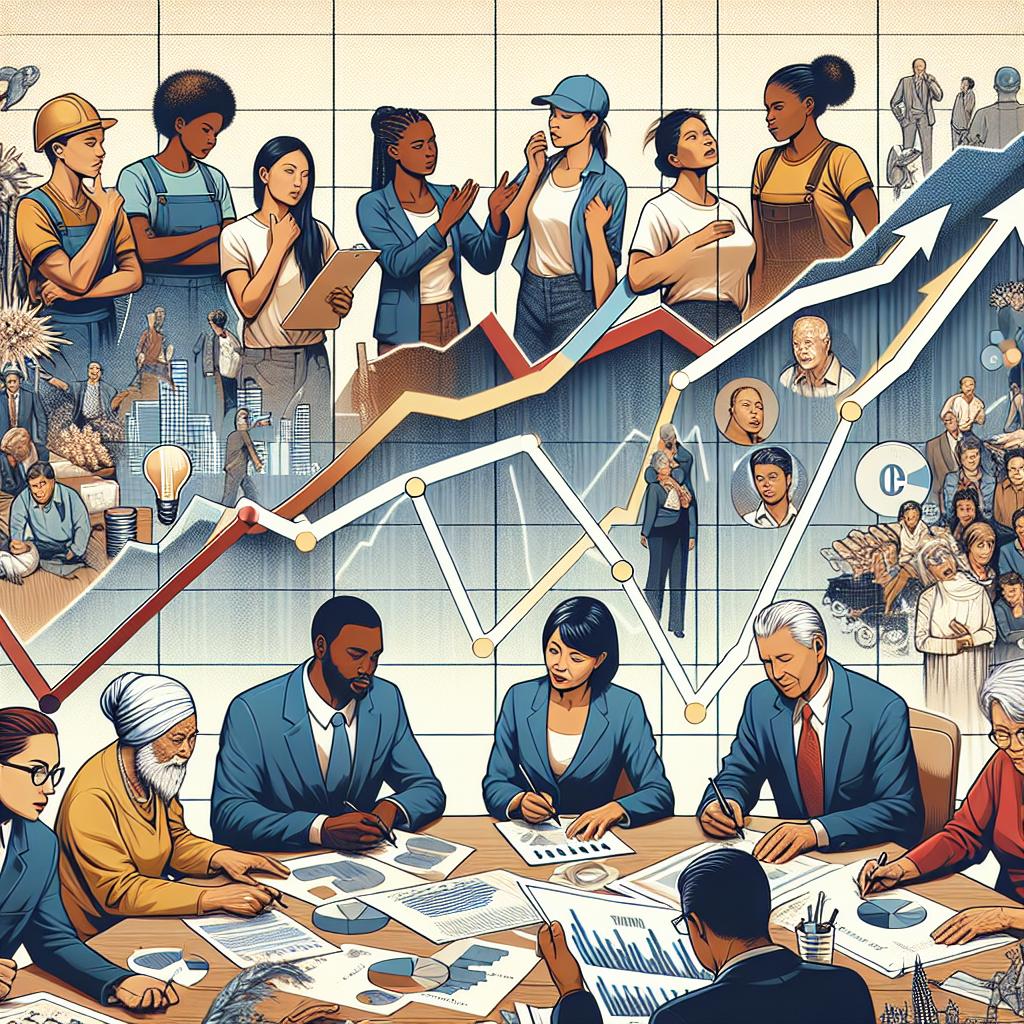
The concept of the welfare state represents a pivotal juncture in the evolution of modern economies. Originating in the early 20th century, the welfare state seeks to create a balance between capitalism’s entrepreneurial drive and socialism’s social equity. Historically, the welfare state’s establishment has bolstered economic stability, reduced poverty levels, and endorsed a humanitarian approach to governance. Analyzing its economic justifications and social impacts offers an insightful perspective into its significance and efficiency. This article endeavors to unravel the multidimensional facets of the welfare state, spotlighting its crucial role in contemporary society.
Economic Justifications for a Welfare State
One of the core economic justifications for a welfare state is to stabilize the economy. Governments use welfare policies as tools to mitigate the adverse effects of economic downturns. Public expenditure on welfare programs functions as an automatic stabilizer. During recessions, welfare spending increases as unemployment rises, providing much-needed financial relief to citizens. This not only helps individuals but also stimulates the economy by maintaining consumer demand.
Additionally, welfare programs help bridge the gap between the rich and poor. Redistribution of wealth through taxes and social welfare programs is fundamental to reducing inequality. In societies with significant income disparities, social cohesion can become strained. Redistributive policies promote social stability by ensuring that wealth is more evenly spread, reducing the likelihood of social unrest and fostering a more inclusive society.
Education and healthcare are significant areas where welfare states contribute economically. By investing in human capital, these programs enhance the productivity of the workforce. Educated and healthy individuals are more likely to be employed and contribute positively to the economy. This creates a virtuous cycle, where economic growth leads to higher tax revenues, which can then be reinvested into welfare programs.
Further, welfare states can address market failures. Certain essential services, like healthcare and education, cannot be efficiently provided by the free market alone due to their public good characteristics and externalities. Government intervention through welfare programs ensures that these services are accessible to all citizens, leading to greater economic efficiency and societal well-being.
Social Impacts of a Welfare State
On the social front, welfare states have a profound impact on the quality of life. By guaranteeing a minimum standard of living through various social security programs, welfare states lift millions out of poverty. This contributes significantly to enhancing social mobility, as individuals from disadvantaged backgrounds have better access to education, healthcare, and employment opportunities.
Moreover, welfare states play a crucial role in gender equality. Many welfare programs, such as subsidized childcare and parental leave policies, enable more women to participate in the workforce. This not only boosts economic growth by increasing labor force participation but also promotes gender equality by challenging traditional gender roles and reducing gender disparities in income and employment.
Welfare policies also promote social solidarity. Universal programs, such as public healthcare and pensions, reinforce the idea that society has a collective responsibility towards its members. This sense of shared responsibility fosters social cohesion and reduces the stigma associated with receiving welfare benefits.
Another significant social impact is the reduction in crime rates associated with welfare states. By addressing the root causes of poverty and providing socioeconomic security, welfare programs can reduce crime and promote a safer society. Economic stability and social support networks offered by welfare states diminish the desperation that often leads to criminal activities.
Challenges and Criticisms of Welfare States
Despite their benefits, welfare states face several challenges and criticisms. One common criticism is the potential for welfare dependence. Some argue that extensive welfare programs can create a disincentive to work, fostering a culture of dependency. However, this criticism often ignores the complexity of welfare systems, which typically include measures to encourage employment, such as job training programs and earned income tax credits.
Another challenge is the financial sustainability of welfare states. As populations age, the cost of maintaining welfare programs increases. This is particularly true for pension systems and healthcare services. Ensuring the long-term sustainability of welfare states requires careful planning and potential reforms, such as adjusting retirement ages and exploring alternative funding methods.
There is also the issue of inefficiency and bureaucracy. Large welfare programs can sometimes become bogged down by administrative complexity and inefficiency. Streamlining processes and leveraging technology can help address these issues, ensuring that welfare programs are both effective and efficient.
Moreover, political opposition and varying ideologies often challenge welfare states. Different political parties and ideologies have distinct perspectives on the role of government and welfare. Balancing these divergent views while maintaining comprehensive welfare programs necessitates ongoing dialogue and compromise.
Comparative Perspectives on Welfare States
A comparative analysis of welfare states across different countries reveals varied approaches and outcomes. Scandinavian countries, such as Sweden, Norway, and Denmark, are often cited as exemplary welfare states. Their comprehensive welfare systems, high levels of taxation, and robust public services result in low inequality levels and high standards of living.
In contrast, countries like the United States adopt a more market-oriented approach with relatively limited welfare provisions. While proponents argue that this encourages individual responsibility and economic dynamism, critics point to higher levels of inequality and insufficient support for vulnerable populations.
The welfare state models in European countries like Germany and France combine elements from both Scandinavian and Anglo-Saxon approaches. They offer substantial welfare benefits while also promoting employment and economic competitiveness. Each model reflects its unique historical, cultural, and economic contexts, highlighting the diversity of approaches to welfare state policies.
Analyzing these different models provides valuable insights into the potential strengths and weaknesses of various welfare state configurations. It underscores the importance of context-specific policies tailored to the unique needs and circumstances of each society.
The Future of Welfare States
Looking ahead, welfare states face evolving challenges and opportunities. One of the significant trends is the digitalization and automation of the economy. As technology advances, traditional employment patterns are shifting, potentially leading to increased unemployment and job insecurity. Welfare states must adapt to these changes by providing support for retraining and upskilling workers.
Moreover, the COVID-19 pandemic has underscored the importance of robust welfare systems in times of crisis. The pandemic exposed vulnerabilities in healthcare and social security systems, prompting many countries to reevaluate and bolster their welfare provisions. This experience may lead to lasting reforms and innovations in welfare policies.
Sustainability also remains a critical issue. As climate change becomes an increasingly urgent concern, welfare states must integrate environmental sustainability into their policies. This includes promoting green jobs, supporting sustainable development, and ensuring that vulnerable populations are not disproportionately affected by environmental changes.
The concept of a Universal Basic Income (UBI) has gained traction as a potential future direction for welfare states. UBI advocates argue that a guaranteed minimum income for all citizens could address poverty, reduce inequality, and adapt to the changing nature of work. While the feasibility and implications of UBI are still debated, it represents a bold and innovative approach to welfare policy.
Conclusion
In conclusion, the welfare state is a cornerstone of modern economic and social policy. Its economic justifications, including stabilization, wealth redistribution, and addressing market failures, highlight its essential role in promoting a balanced and equitable society. The social impacts, from poverty reduction and gender equality to social cohesion and crime reduction, underscore its profound influence on the quality of life.
However, welfare states are not without challenges. Ensuring financial sustainability, addressing potential inefficiencies, and navigating political opposition require careful planning and adaptability. Comparative perspectives from different countries reveal diverse approaches, offering valuable lessons for policymakers.
Looking to the future, welfare states must evolve to address emerging challenges such as digitalization, environmental sustainability, and changing employment patterns. Innovative ideas like Universal Basic Income hold promise for shaping the next generation of welfare policies.
Ultimately, the welfare state represents a commitment to social justice and economic stability. It embodies the principle that a society should support and protect its members, promoting a fair and inclusive future. As we navigate the complexities of the modern world, the welfare state remains a vital and evolving institution, integral to the well-being of individuals and the broader society.