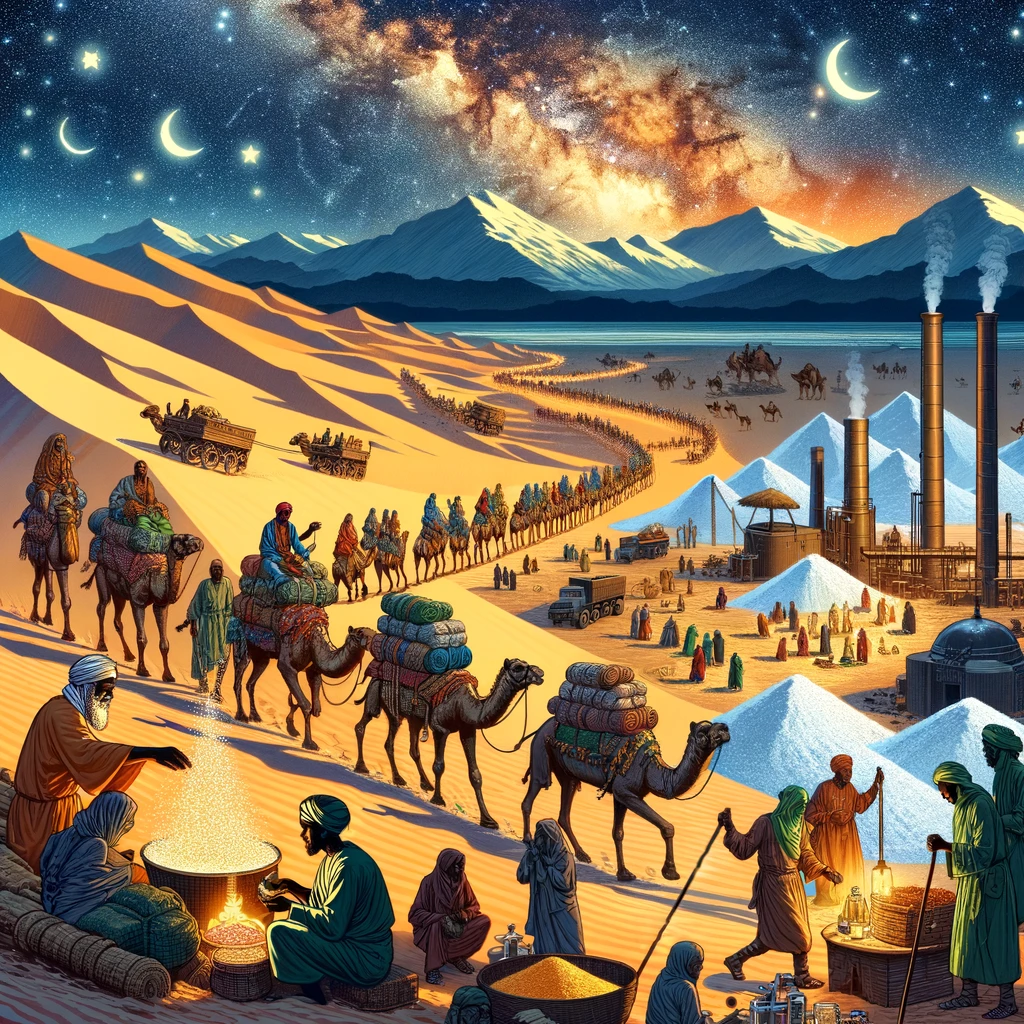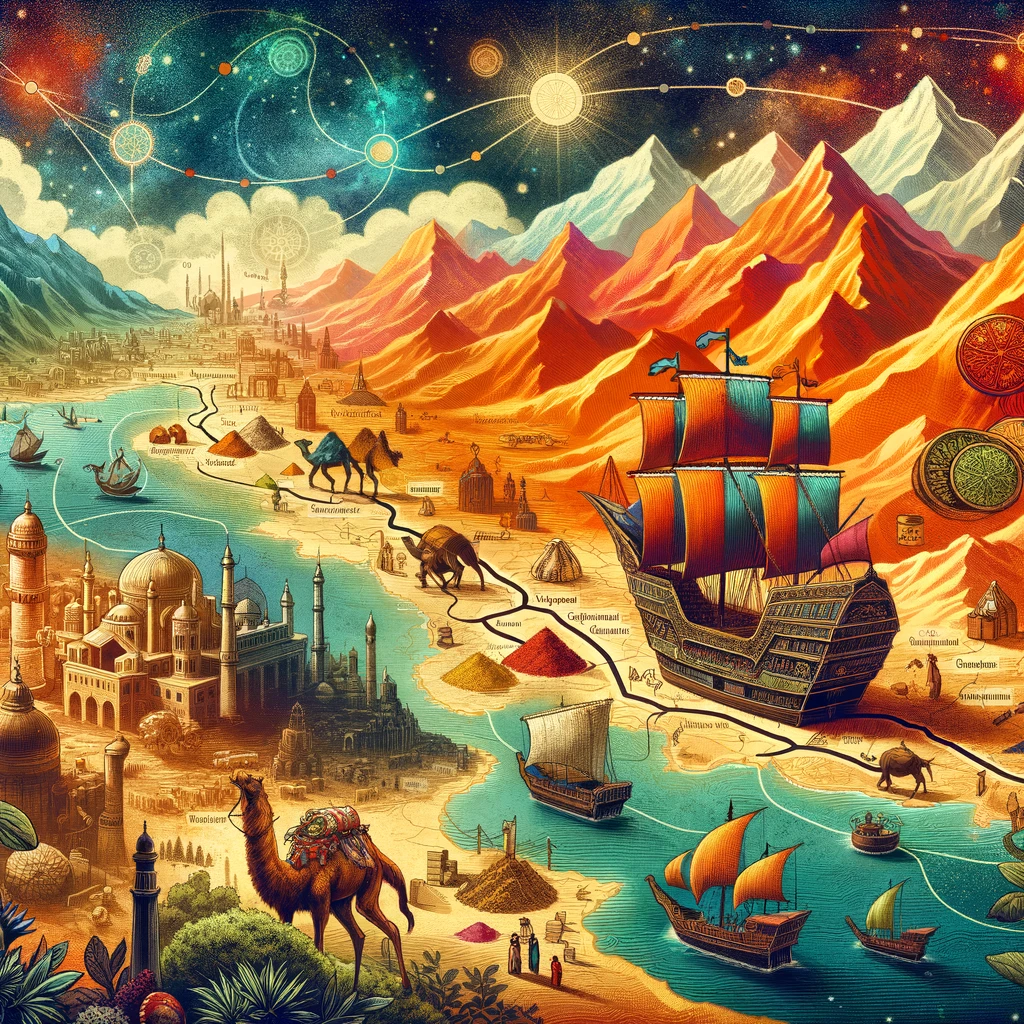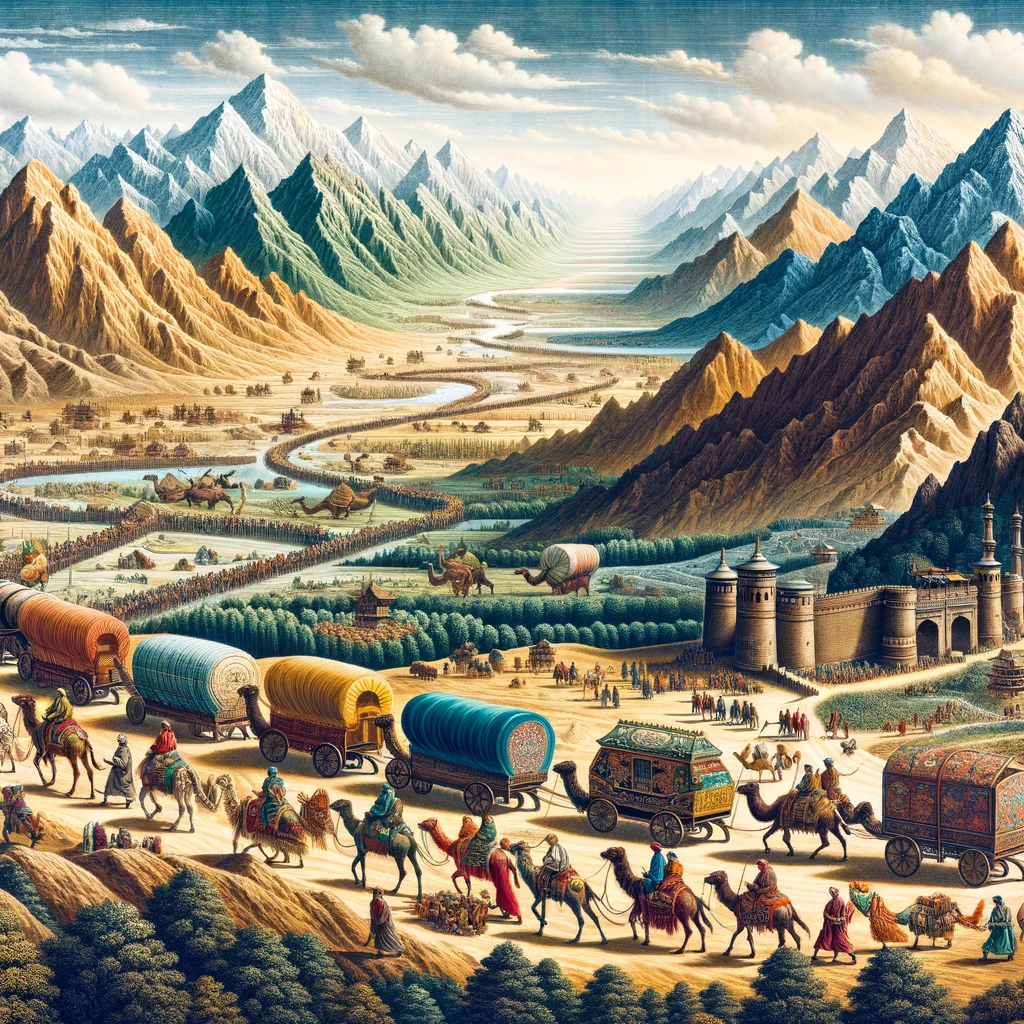
The Silk Road, an ancient network of trade routes, stands as a monumental corridor in human history, facilitating not only the exchange of goods but also the intertwining of cultures, ideas, and technologies between East and West. This legendary route stretched from the heart of China all the way to the Mediterranean, influencing numerous civilizations along the way.
Origins and Development
The term “Silk Road” was coined in the 19th century by the German geographer Ferdinand von Richthofen, but the routes themselves had been in use for centuries prior. These routes originated during the Han Dynasty around 130 BCE, when Emperor Wu sought to secure allies and open up channels for trade.
Silk, as the name suggests, was one of the primary goods transported on these routes, but it was far from the only commodity. Spices, grains, fruits, valuable stones, metals, and even animals were traded along the Silk Road. From China, silk, porcelain, and tea flowed westward. In exchange, horses, woolen goods, gold, and silver made their way east.
Cultural Exchange
Beyond mere trade, the Silk Road was a vibrant avenue for cultural exchange. It facilitated the spread of religions such as Buddhism, Islam, and Christianity. Artistic influences permeated along the routes, visible in the spread of artistic styles and techniques. The Buddhist art of the Gandhara region, for instance, is a fusion of Greco-Roman and Indian influences, illustrating the blend of East and West.
Language and literature also found new audiences, with stories, ideas, and scientific knowledge spreading across continents. This exchange was not just confined to the intellectual elite but permeated all levels of society, enriching the daily lives of people across Asia and Europe.
Impact on Technology and Science
The Silk Road was instrumental in the spread of technologies and scientific knowledge. Papermaking, which originated in China, was introduced to the West through these routes, revolutionizing communication and record-keeping in Europe just as it had in Asia.
Similarly, the route facilitated the westward spread of gunpowder, leading to significant military advancements in Europe. In the realm of astronomy and mathematics, ideas flowed freely, with the Islamic world playing a key role in conveying knowledge to Europe, particularly during the Renaissance.
Architectural Marvels and Urban Development
The Silk Road also influenced architectural styles and urban planning. Cities along the route, like Samarkand in modern-day Uzbekistan and Xi’an in China, flourished as cultural and trade hubs. The architecture of these cities often displayed a blend of styles, reflecting their multicultural influences.
Challenges and Decline
Despite its success, the Silk Road faced numerous challenges. The harsh, unpredictable terrain and the vast distances involved made travel and trade risky. Banditry was a constant threat, and political instability could lead to the sudden closure of sections of the route.
The rise of maritime trade routes in the 15th century marked the beginning of the decline of the Silk Road. These sea routes were cheaper, safer, and faster, offering new opportunities for traders and reducing reliance on the overland journey.
Legacy and Relevance Today
Today, the Silk Road’s legacy lives on in the modern concept of connectivity and global exchange. It serves as a reminder of how interlinked our ancestors’ lives were and how trade and cultural exchanges have consistently shaped human development.
The routes today are being revisited through initiatives like China’s Belt and Road Initiative (BRI), which aims to recreate the trade and cultural connectivity of the ancient Silk Road, using both land and sea routes to enhance trade and diplomatic ties across Asia, Africa, and Europe.
The Silk Road is more than a mere series of ancient trade routes. It is a testament to the interconnected nature of human societies. Its history teaches us about the power of trade and cultural exchange to transform societies. Understanding the Silk Road is not just about looking to the past; it’s about drawing lessons for the future as we continue to navigate the complexities of global interdependence.
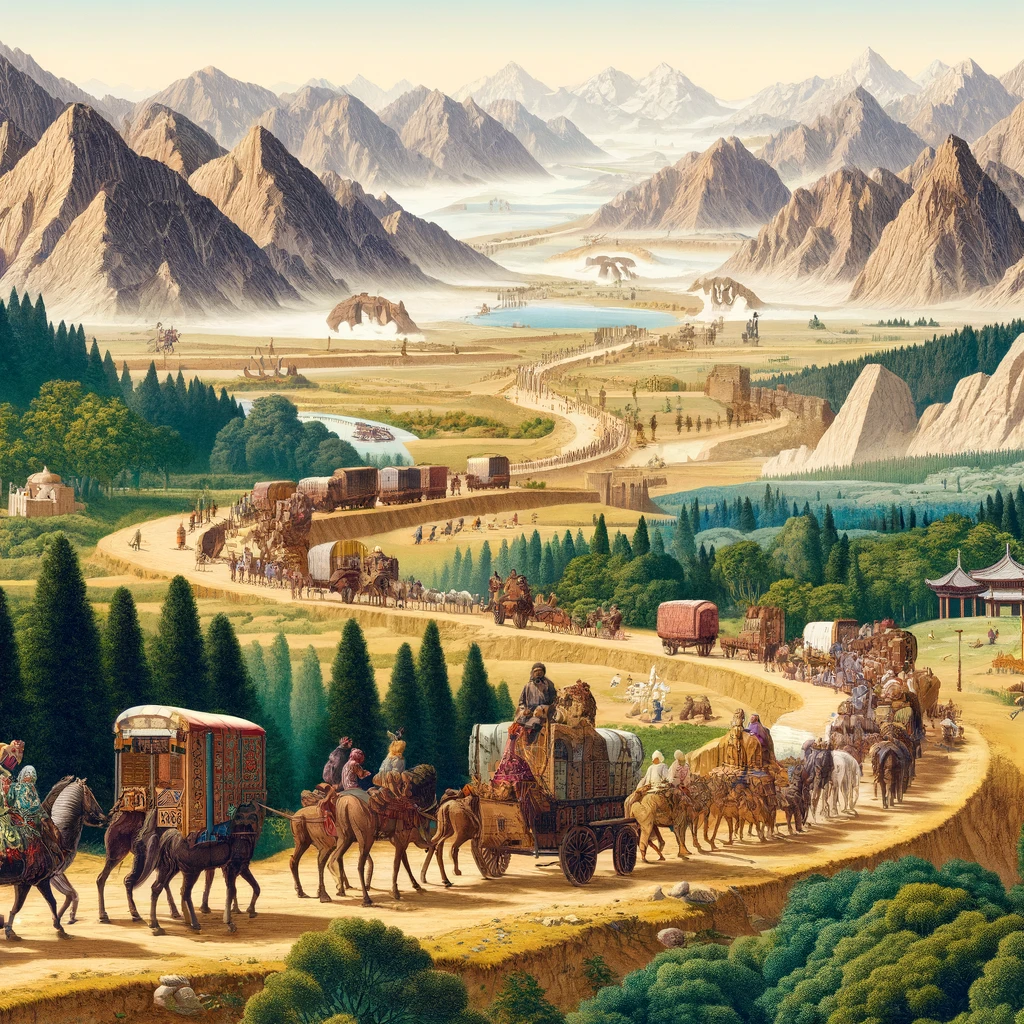
The Silk Road and Its Influence on Modern Globalization
The Silk Road was not merely a conduit for trade but a catalyst for the early forms of globalization. The intricate network of routes facilitated not only the exchange of goods but also the intermingling of diverse cultures, languages, and philosophies. This historical interconnectivity has parallels with today’s globalized world, where borders are increasingly blurred by trade, technology, and communication.
Economic Transformations
Economically, the Silk Road contributed to the prosperity of many regions. Cities that lay along the trade routes, like Kashgar, Bukhara, and Constantinople, thrived as commercial centers, drawing merchants from across the known world. These cities were the economic powerhouses of their time, much like today’s major commercial hubs such as New York, London, and Shanghai.
The economic impact of the Silk Road is a testament to the power of trade networks in fostering economic development and prosperity. Modern efforts to revive these routes through projects like the Belt and Road Initiative reflect an understanding of how strategic trade partnerships and infrastructure development can stimulate economic growth.
Social and Cultural Impacts
Socially and culturally, the Silk Road was a bridge that connected disparate communities. Merchants, pilgrims, and travelers along the Silk Road exchanged not just goods but also ideas, customs, and traditions. This cultural exchange led to the development of tolerant and diverse societies.
For instance, the city of Venice, which was influenced significantly by the Silk Road through its trade in the Mediterranean, became a melting pot of cultures, a place where Eastern and Western societies coalesced. The influence of the East is evident in Venetian architecture and art, which incorporate elements from Byzantine and Islamic traditions.
The Spread of Technology
Technologically, the Silk Road facilitated the spread of numerous innovations that have shaped human civilization. The compass, paper, printing, and gunpowder are among the significant Chinese inventions that reached the West via these ancient routes. These technologies brought profound changes to societies and accelerated advancements in various fields.
The dissemination of such technologies through the Silk Road is reminiscent of today’s global exchange of new technologies, such as the internet and renewable energy technologies, which are rapidly transforming societies on a global scale.
Diplomacy and Political Alliances
Politically, the Silk Road played a crucial role in forming diplomatic ties and alliances across empires. The network enabled political leaders to establish and maintain long-distance relationships, some of which were crucial for the stability and expansion of their empires. These relationships were often cemented through marriage, treaties, and trade agreements.
Today, international diplomacy continues to be shaped by trade and economic partnerships, underscoring the enduring relevance of the principles that governed exchanges along the Silk Road.
Modern Reflections on the Silk Road
Reflecting on the Silk Road in the modern context encourages a deeper understanding of globalization as a multifaceted phenomenon that encompasses economic, cultural, technological, and political dimensions. It reminds us that our current global interconnectivity has deep historical roots.
The modern digital “Silk Road” of cyber connectivity and global trade networks mirrors the ancient routes in facilitating exchanges that are shaping the world’s future. It underscores the importance of fostering positive global relationships and mutual understanding among diverse cultures.
Conclusion
The Silk Road’s enduring legacy is a powerful reminder of how history shapes the present and influences the future. By examining this ancient network, we gain insights into the transformative power of global connectivity. The Silk Road is not just a relic of the past but a beacon for understanding the complexities and opportunities of today’s interconnected world.
Understanding the Silk Road offers valuable lessons in the power of connectivity, whether through dusty caravan trails or the digital pathways of the internet. It teaches us that our progress, prosperity, and mutual understanding are deeply interconnected, much like the ancient trade routes that once connected East with West.
The Silk Road’s story is a testament to humanity’s unending quest for connection and advancement—a narrative that continues to inspire and shape global interactions today.