English, a language that originated on a small island, has become a global lingua franca, spoken by billions around the world. But how did this happen? How has English evolved to be so much more than just a means of communication, becoming a tapestry woven from countless cultural threads? This article delves into the rich, multifaceted history of English, revealing how it has been shaped and reshaped by the diverse cultures it has touched.
From Anglo-Saxon Roots to Global Branches
The story of English begins around the 5th century with the arrival of three Germanic tribes – the Angles, Saxons, and Jutes – in what is now England. Their languages melded to form what we now call Old English. This language was quite different from the English we know today. Imagine listening to Beowulf in its original form – it would sound almost foreign.
But English was not to remain in this ancient form. The 11th-century Norman Conquest brought significant changes. French became the language of the ruling class, and this intermingling brought about Middle English. Think of Chaucer’s “Canterbury Tales,” which, while more recognizable, still challenges the modern reader.
The Renaissance: A Time of Flourishing and Expansion
The Renaissance period was a turning point for the English language. The revival of learning and culture saw an influx of Latin and Greek words into English. This period also marked the beginning of English exploration overseas, sowing the seeds for English to become a global language.
The British Empire: Spreading the Seeds of English
As the British Empire expanded, English began to take root in diverse soils. In the Americas, Africa, Asia, and Australasia, English mixed with local languages. Words from Indian languages like ‘bungalow’ and ‘jungle,’ or from Aboriginal languages like ‘kangaroo,’ found their way into English. This was not just a linguistic change but a cultural exchange.
The Industrial Revolution and Technological Advancement
The Industrial Revolution brought another surge in the evolution of English. Technical advancements and scientific discoveries required new vocabulary. Words like ‘engine,’ ‘railway,’ and ‘electricity’ emerged. The technological revolution continued into the 20th and 21st centuries, bringing terms like ‘internet,’ ‘blog,’ and ’emoji.’
The Influence of American English
The 20th century saw the rise of American English as a dominant force. Hollywood, jazz, and later, the digital revolution, all contributed to this. American English, with its distinctive accent and vocabulary, started influencing other varieties of English worldwide.
English in the Digital Age
Today, English is the dominant language of the internet, business, science, and diplomacy. It has become a bridge language for people from different linguistic backgrounds. The internet, in particular, has accelerated the spread of English, making it more accessible and also more diverse.
The Blending of Cultures
English is now a collage of cultures, with each English-speaking country adding its flavor. For example, Singaporean English (Singlish) is a blend of English, Malay, Tamil, and Chinese. This is not just a linguistic phenomenon; it’s a cultural fusion.
English as a Lingua Franca
The role of English as a global lingua franca is complex. While it connects people, it also raises concerns about linguistic imperialism and the erosion of local languages and cultures. English’s dominance can overshadow other languages, impacting their survival and the cultural heritage they represent.
The Future of English: A Dynamic Evolution
The future of English is as dynamic as its past. It will continue to evolve, shaped by global trends, technology, and cultural exchanges. The English of the future might be quite different from what we speak today, enriched by a multitude of global voices.
Embracing Multicultural Influences
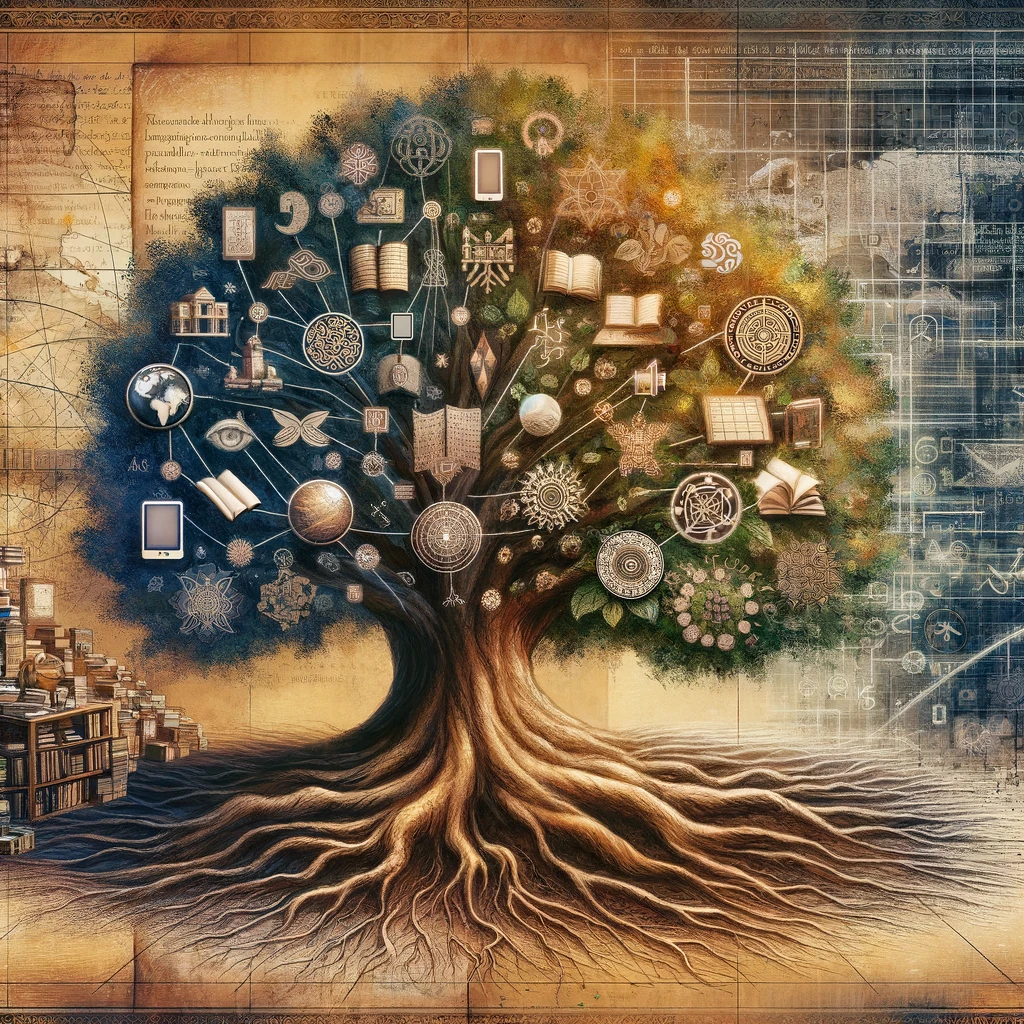
As we delve further into the evolution of English, it’s essential to recognize how multicultural influences continually reshape the language. English is like a living organism, growing and changing with each new interaction. As people from different cultures use English, they infuse it with unique expressions, idioms, and nuances from their native tongues. This fusion enriches the language, making it more vibrant and reflective of a diverse world.
The Role of Media and Entertainment
Media and entertainment have played a significant role in the spread and evolution of English. Hollywood films, American TV shows, British literature, and music have been instrumental in popularizing English. But it’s not just one-way traffic. Bollywood, Korean pop music, and African literature in English also contribute to this global exchange, showcasing the versatility and adaptive nature of the language.
English in Education and Academia
In many parts of the world, English is the medium of instruction in schools and universities. This has facilitated access to global knowledge but also brought challenges. For instance, students in non-native English-speaking countries often have to balance learning in English while maintaining their cultural and linguistic heritage.
The Impact of Social Media
Social media has revolutionized how English is used and spread. Platforms like Twitter, Facebook, and Instagram have created spaces for informal, creative language use. Internet slang, hashtags, and memes in English permeate various cultures, sometimes even influencing spoken language.
Dialects and Accents: The Local Flavors of English
English is not a monolithic language; it has many dialects and accents. From the drawl of Southern American English to the sing-song rhythm of Caribbean English, these variations add depth and character to the language. They tell stories of migration, colonization, and cultural fusion.
English in Business and Global Relations
In the global business arena, English is often the common ground for communication. Multinational corporations, international conferences, and diplomatic relations frequently rely on English. This has made proficiency in English a valuable skill in the global job market.
Challenges and Criticisms
While the global dominance of English has benefits, it’s not without criticism. Some argue that it leads to the marginalization of other languages and cultures. Others point out that the pressure to learn English can put non-native speakers at a disadvantage. These concerns highlight the need for a balanced approach to language learning and cultural preservation.
English as a Tool for Empowerment
Despite these challenges, English can be a tool for empowerment. It can provide access to global opportunities, facilitate cross-cultural communication, and open doors to a wealth of information and resources.
English and Cultural Identity
As people around the world speak English, they often blend it with their cultural identity. This results in unique varieties of English that carry the imprint of local cultures. It’s a testament to how language can adapt and survive in a multicultural world.
The Ever-Changing Lexicon of English
The lexicon of English is ever-changing, with new words being added regularly. These words often reflect contemporary issues, technological advancements, and cultural trends. The Oxford English Dictionary, for instance, updates its entries frequently to capture these changes.
Conclusion
The evolution of English is a testament to the language’s resilience and adaptability. From its origins as a Germanic tongue to its status as a global lingua franca, English has absorbed elements from countless cultures, making it a rich, dynamic, and diverse language. As we move forward, the story of English will continue to be written by the people who speak it, reflecting the ever-changing landscape of our interconnected world. The journey of English is more than linguistic; it’s a narrative of human cultural exchange and understanding.