The American Revolution, spanning from 1775 to 1783, represents one of the pivotal moments in world history, igniting a wave of democratic ideals that reshaped nations. This epochal event wasn’t just a struggle for independence; it was the crucible in which modern democratic principles were forged. The Revolution not only led to the birth of a nation but also laid the groundwork for global movements that champion liberty, equality, and self-governance. As we delve into the multifaceted impacts of the American Revolution, we come to appreciate its profound influence on both American society and the broader world culture.
Introduction
The American Revolution didn’t occur in a vacuum. It was the culmination of escalating tensions between the British Crown and its American colonies, driven by an array of political, economic, and social factors. The seeds of revolution were sown with the British government’s imposition of taxes and trade restrictions, most notably the Stamp Act of 1765 and the Tea Act of 1773. But beyond tangible grievances, there was a burgeoning colonial identity and desire for self-determination, vividly depicted in pamphlets like Thomas Paine’s “Common Sense.”
The conflict gained intensity with events such as the Boston Massacre in 1770 and the Boston Tea Party in 1773. These incidents, coupled with the Intolerable Acts of 1774, galvanized colonial resistance, leading to the formation of revolutionary bodies like the Continental Congress. In April 1775, armed conflict erupted at Lexington and Concord, igniting a full-scale war that would last nearly eight years.
The Declaration of Independence, adopted on July 4, 1776, was a revolutionary document that articulated the colonies’ right to self-governance and rejected the notion of monarchy as the only legitimate form of government. This manifesto didn’t just inspire American patriots; it resonated with oppressed peoples worldwide, symbolizing the universal quest for freedom and human rights.
While the American Revolution led to the establishment of the United States, its reverberations were felt far beyond. It inspired numerous other revolutions and movements, affecting European politics, igniting debates on governance, and influencing uprisings in Latin America and beyond. This article will explore the complexities and far-reaching implications of the American Revolution on global cultures and democratic ideals.
Colonial Resistance and Unleashing Revolutionary Spirit
The American colonies, once relatively quiescent under British rule, became hotbeds of resistance due to a series of imperial policies perceived as unjust. This era saw the rise of influential figures such as Samuel Adams, John Hancock, and Patrick Henry, who rallied colonial sentiment against British tyranny. Organizations like the Sons of Liberty were instrumental in orchestrating acts of defiance, including the Boston Tea Party.
The establishment of the Continental Congress in 1774 exemplified the colonies’ burgeoning unity and resolve. Delegates from across the colonies convened to respond to the Intolerable Acts, marking a significant step toward collective action. By the time the Second Continental Congress met in 1775, the move toward independence was gaining irreversible momentum.
The Revolution also saw the development of a new political philosophy, emphasizing the rights of the individual and the legitimacy of government as based on the consent of the governed. Enlightenment thinkers such as John Locke influenced these notions profoundly. Locke’s ideas about natural rights and social contracts provided a philosophical grounding that justified the colonies’ break from Britain.
This revolutionary spirit, encapsulated by the Declaration of Independence, also manifested in diverse ways across colonial society. Literature and pamphleteering became potent tools for spreading revolutionary ideas. Figures such as Thomas Paine were crucial in making the case for independence compelling and accessible to the common person. Paine’s “Common Sense,” published in January 1776, argued passionately for independence and crystallized the colonists’ grievances into a coherent revolutionary vision.
Thus, colonial resistance not only unified the colonies but also unleashed a revolutionary spirit that was fundamentally transformative. It fostered a sense of American identity and set the stage for sweeping political change, creating a blueprint for other national movements seeking liberty and justice.
Military Struggles and International Dynamics
The American Revolution saw the transformation of relatively untrained colonial militias into a fighting force capable of taking on the powerful British Army. Under the leadership of figures like George Washington, the Continental Army faced severe challenges, including supply shortages, harsh winters, and internal dissent. Despite these hardships, significant victories such as the Battle of Saratoga in 1777 and the eventual British surrender at Yorktown in 1781 proved pivotal.
International support, especially from France, was crucial to the American cause. In 1778, the Franco-American alliance brought much-needed military support and supplies. The French navy played a decisive role in the Siege of Yorktown, leading to British General Cornwallis’s surrender. Spain and the Dutch Republic also made notable contributions, if less directly involved in combat.
The war’s terrain extended beyond the American mainland. Naval battles in the Atlantic and Caribbean, as well as skirmishes between British forces and colonial allies, highlighted the global dimensions of the conflict. British resources were stretched thin as they had to defend their global empire, which facilitated American victories.
Native American tribes and African American populations also played significant roles in the conflict. While most Native American tribes sided with the British, hoping to limit colonial expansion, African Americans fought on both sides, seeking personal freedom and better prospects. Their contributions, while often overlooked, were critical to the eventual outcome.
The military struggles of the American Revolution thus had significant international ramifications. The support from European powers not only tipped the balance in favor of the colonies but also showcased the interplay between global politics and emerging American ambitions. The conflict underscored the interconnectedness of national independence movements and set a precedent for future international interventions in the pursuit of freedom.
The Social Fabric of a Young Nation
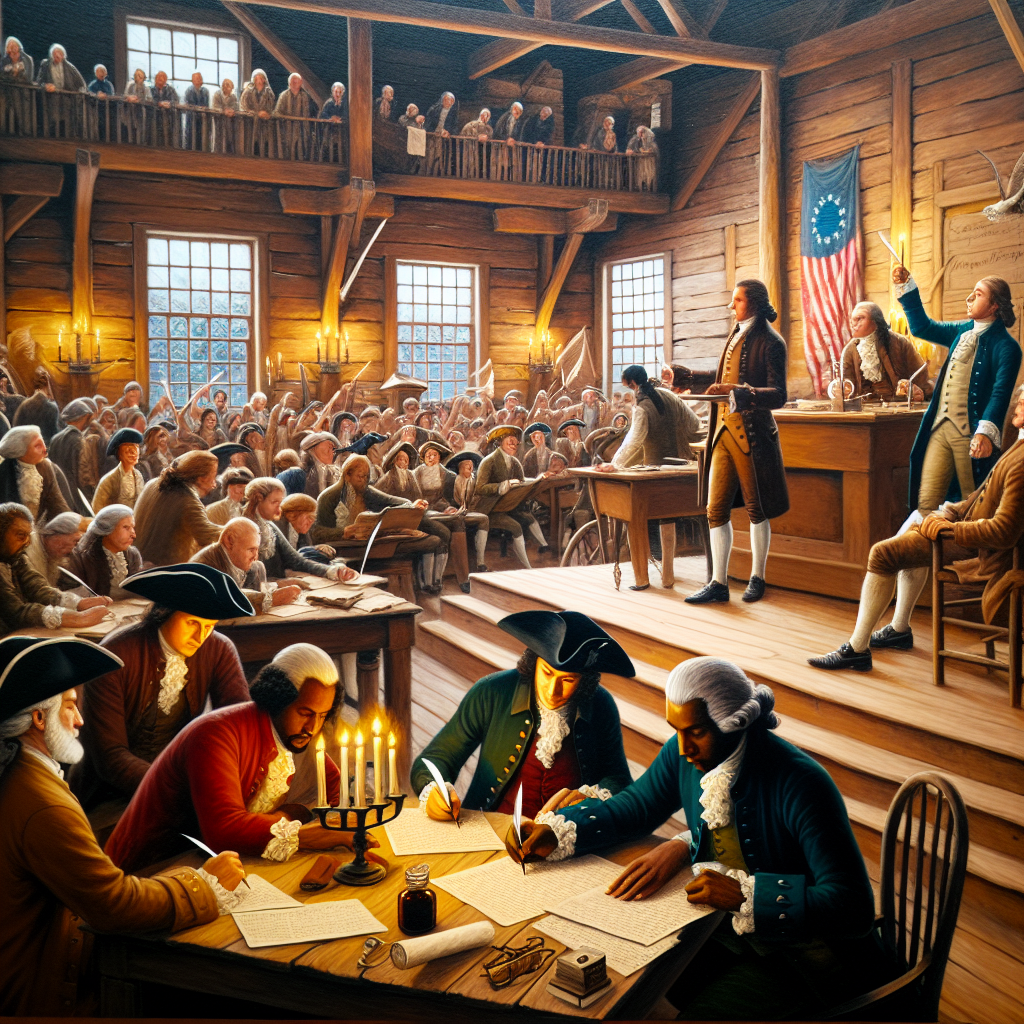
The American Revolution profoundly transformed the social fabric of the nascent United States. The war and its aftermath led to a rethinking of social hierarchies and norms. One of the most significant changes was the move towards more egalitarian principles. The notion that “all men are created equal,” as stated in the Declaration of Independence, challenged long-standing social structures and sparked debates on slavery, women’s rights, and the status of Indigenous peoples.
While the Revolution did not immediately end slavery, it planted the seeds for the abolitionist movements that gained momentum in the 19th century. Northern states moved toward gradual emancipation, and the contradiction of a nation founded on liberty that permitted slavery became increasingly untenable. African American communities began to voice their demands for freedom and equality more vocally.
Women also saw changes in their social standing, although progress was slower and more subtle. Figures such as Abigail Adams, who famously urged her husband John to “remember the ladies” in the new laws, highlighted the growing awareness of women’s issues. Despite limited immediate changes in legal status, the Revolution sparked ideas that would later fuel women’s suffrage and rights movements.
The Revolution also significantly impacted Native American tribes. Many tribes faced displacement and loss of land, as the new American government sought to expand westward. Despite their critical roles in the war, Native Americans found themselves marginalized in the new nation’s fabric, setting the stage for future conflicts and injustices.
The social transformations catalyzed by the American Revolution were complex and multifaceted. While the ideals of equality and liberty did not materialize uniformly for all groups, the period marked the beginning of profound societal shifts. The Revolution laid the groundwork for future movements that sought to realize the democratic promises articulated in 1776.
Political Reformation and Constitutional Legacy
The American Revolution led to significant political reformation, culminating in the creation of the United States Constitution. After the war, the Articles of Confederation proved inadequate for governing the new nation, leading to the Constitutional Convention of 1787. Here, the framers of the Constitution sought to create a robust yet flexible framework that balanced federal and state powers.
The resultant Constitution was a pioneering document that enshrined principles of republicanism, federalism, and the separation of powers. It introduced the system of checks and balances, aimed at preventing any one branch of government from becoming too powerful. The inclusion of the Bill of Rights in 1791 further safeguarded individual liberties, a direct response to the colonists’ experiences under British rule.
The creation of the Constitution and the establishment of a new political order had profound impacts globally. The American model of governance inspired numerous other nations and political thinkers. The French Revolution, which began in 1789, drew heavily on American revolutionary ideals and the notion of popular sovereignty. Similarly, Latin American independence movements in the early 19th century were influenced by the principles of self-determination and constitutional governance enshrined in the American Revolution.
The Constitution also sparked ongoing debates about the nature of democracy and governance. Issues such as the balance of power between the federal and state governments, individual rights versus collective security, and the role of the judiciary continue to shape American political discourse. The resilience and adaptability of the Constitution have allowed it to evolve with the nation, reflecting and shaping the American democratic experience.
In conclusion, the political reformation ushered in by the American Revolution left an indelible mark not only on American society but on world cultures. It provided a blueprint for democratic governance and inspired countless movements worldwide, highlighting the enduring power of the ideals forged during the Revolution.
Global Reverberations and Legacy
The impact of the American Revolution transcended national boundaries, setting off a cascade of revolutionary fervor that would sweep across continents. In Europe, the principles espoused by the American Revolution found fertile ground among those disillusioned with monarchic and autocratic regimes. The French Revolution, beginning in 1789, is perhaps the most direct descendant of American revolutionary ideals. The Declaration of the Rights of Man and of the Citizen, adopted by the French National Assembly, echoed the American Declaration of Independence in its proclamation of universal rights and equality.
In Latin America, revolutionary leaders like Simón Bolívar and José de San Martín drew inspiration from the American struggle for independence. The early 19th century saw a wave of revolutions that freed Spanish and Portuguese colonies across South America, leading to the formation of several independent republics. The principles of republicanism, individual rights, and self-governance that characterized the American experience became central pillars in the political doctrines of these new nations.
The American Revolution also influenced political thought and reform in Europe beyond France. In Britain, the success of the colonies in achieving self-rule prompted discussions about parliamentary reform and the rights of the British subjects. Radical groups and intellectuals across Europe began to advocate for constitutional reforms and greater political participation, laying the groundwork for future democratic developments.
The legacy of the American Revolution can also be seen in the anti-colonial movements of the 20th century. Leaders like Mahatma Gandhi in India and Kwame Nkrumah in Ghana cited the American struggle for independence as a precedent for their own quests to end colonial rule and establish sovereign nations. The universal appeal of the ideals of liberty, equality, and self-determination continued to inspire and galvanize oppressed populations around the world.
The global reverberations of the American Revolution underscore its significance as a seminal event in world history. It was a catalyst for change, inspiring subsequent generations to challenge oppression, fight for their rights, and aspire to democratic governance. The transformative power of the American Revolution’s ideals remains evident in the ongoing global pursuit of freedom and justice.
Conclusion
The American Revolution was much more than a colonial rebellion against British rule; it was a profound upheaval that set the stage for the modern world. The Revolution forged a new nation on principles of democracy and human rights, principles that have since become integral to global political discourse. From the revolutionary fervor in France to the independence movements in Latin America, and the decolonization waves in Africa and Asia, the impact of the American Revolution has been both far-reaching and deeply transformative.
The Revolution reshaped the American social fabric, challenging entrenched hierarchies and sparking debates about liberty and equality. It led to the creation of a lasting constitutional framework that has inspired countless other nations. The political reformation it ushered in changed the course of history, establishing a new paradigm of governance based on popular sovereignty and the protection of individual rights.
As we reflect on the American Revolution, it is clear that its legacy extends far beyond the borders of the United States. It stands as a testament to the enduring power of the principles of freedom, equality, and democracy. These ideals continue to inspire movements for justice and human dignity around the world, underscoring the Revolution’s enduring impact on global history and culture.
The birth of the American nation was not just the realization of a people’s aspiration for independence; it was the dawn of a new era in human governance. The Revolution’s ideals of democratic governance and human rights have become a universal benchmark against which societies measure their progress. Its legacy reminds us that the quest for liberty and justice is a continuum, a journey that transcends time and geography, demanding continuous reflection, commitment, and action.