
When it comes to the synthesis of political acumen and military strategy, few figures are as enduringly influential as Sun Tzu. His seminal work, “The Art of War,” has transcended time and geography to become an essential read for military leaders, business strategists, and anyone interested in the art of conflict management and resolution. This article delves into Sun Tzu’s philosophy, his timeless strategies, and the broader implications of “The Art of War” on contemporary political and military thinking.
Introduction
Sun Tzu, a military general and strategist who lived during China’s Eastern Zhou period, is best known for his military treatise, “The Art of War.” Despite debates about his actual existence and the true extent of his writings, the strategies attributed to him have permeated various facets of modern strategic thinking and leadership. Sun Tzu’s life, thought to span from 544 to 496 BC, encapsulates an era rich in philosophical evolution and intense territorial disputes.
“The Art of War,” composed of 13 chapters, each focused on different aspects of warfare, extends beyond mere military applications. Its principles have been adopted by leaders in business, politics, sports, and more. Whether on the battlefield or in the boardroom, Sun Tzu’s approaches to strategy, leadership, and conflict offer invaluable insights into human behavior and decision-making.
Understanding the fundamental concepts of Sun Tzu’s work provides a unique lens through which to examine leadership and strategy. His emphasis on adaptability, the importance of intelligence, and the strategic use of deception remain relevant today. This article will delve into key aspects of Sun Tzu’s strategic thought, the historical context in which he lived, and how his principles can be applied to various disciplines.
Sun Tzu’s Historical Context
Sun Tzu’s life unfolded during a time of significant upheaval and fragmentation in China. The Eastern Zhou period, particularly the Spring and Autumn period, saw the decline of the Zhou dynasty’s power and the rise of feudal states vying for dominance. This era of incessant warfare provided the perfect backdrop for a military strategist like Sun Tzu.
Sun Tzu was purportedly born in the state of Qi but migrated to the state of Wu, where he served as a military general and strategist. His military acumen allowed the state of Wu to achieve significant victories against more powerful adversaries, cementing his reputation as a formidable strategist. The exact details of his campaigns and his official position remain subjects of scholarly debate and historical scrutiny.
The political and social environment of the times heavily influenced Sun Tzu’s thoughts and written work. His treatise reflects a broader understanding of conflict, one that involves not just the physical aspect of warfare but also psychological, sociopolitical, and economic dimensions. By understanding the historical circumstances that shaped “The Art of War,” readers can better appreciate the depth and applicability of its teachings.
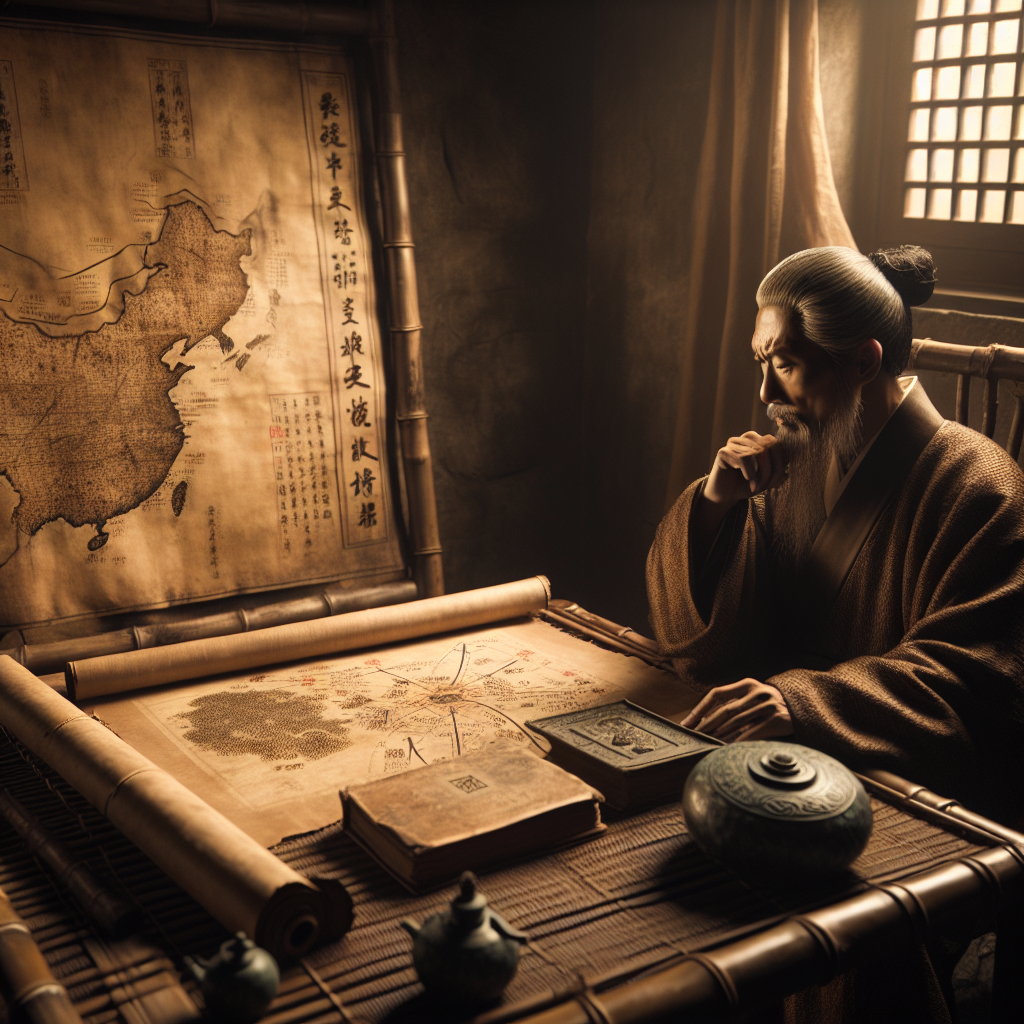
Core Principles of The Art of War
At the heart of “The Art of War” lie several core principles that underpin Sun Tzu’s approach to strategy and conflict. These principles are applicable across different arenas, emphasizing the universality of his insights. Here are some of the most pivotal concepts:
- Know Yourself and Know Your Enemy: Sun Tzu famously stated, “If you know the enemy and know yourself, you need not fear the result of a hundred battles.” Understanding both your strengths and weaknesses, as well as those of your opponent, is crucial for strategic planning and success.
- The Importance of Adaptability: Remaining flexible and adaptable is essential in the face of changing circumstances. Sun Tzu emphasized the need to be fluid like water, adapting to and exploiting changing conditions.
- Deception and Surprise: Deception is a key element in Sun Tzu’s strategic playbook. The ability to mislead opponents and achieve surprise attacks can create significant advantages in conflict.
- Efficiency and Effectiveness: Achieving the objective with minimal expenditure of resources and effort is a recurring theme in Sun Tzu’s philosophy. Efficiency is drawn from thorough planning and decisive actions.
These principles underscore the importance of preparation, intelligence, and psychological acumen in achieving victory. Sun Tzu’s holistic approach to strategy considers various dimensions of conflict, making his teachings versatile and profound.
Applications of Sun Tzu’s Strategies in Modern Times
While “The Art of War” was conceived as a manual for military strategy, its principles have found resonance in numerous modern disciplines. Here are a few:
- Business: Modern business leaders often turn to Sun Tzu’s principles for guidance on competition, leadership, and strategic planning. Concepts like competitive analysis, market positioning, and negotiation tactics bear similarities to Sun Tzu’s military strategies.
- Sports: Coaches and athletes use Sun Tzu’s strategies to gain competitive edges, optimize performance, and maintain psychological advantage over opponents.
- Politics: Politicians and policymakers apply Sun Tzu’s insights to navigate complex political landscapes, manage public perceptions, and outmaneuver adversaries.
The adaptability of Sun Tzu’s principles underscores their timeless nature. The ability to analyze, adapt, and strategically maneuver finds broad applicability, testifying to the enduring relevance of “The Art of War.”
Case Studies: Sun Tzu’s Strategies in Action
Examining real-world applications of Sun Tzu’s strategies provides concrete examples of their effectiveness. Here are a couple of notable case studies:
- Business Strategy – The Amazon Approach: Jeff Bezos, founder of Amazon, has been known to reference Sun Tzu’s principles. Amazon’s strategies often involve anticipating trends, understanding competitors, and taking calculated risks. The emphasis on customer-centricity over competing aggressively in price wars reflects Sun Tzu’s preference for winning without direct confrontation.
- Military Tactics – The Vietnam War: The North Vietnamese military applied Sun Tzu’s principles of guerrilla warfare against the technologically superior U.S. forces. By leveraging their knowledge of the terrain, engaging in hit-and-run tactics, and maintaining public support, they exemplified Sun Tzu’s strategies for overcoming a more powerful adversary.
These examples highlight the versatility of Sun Tzu’s philosophies and their practical applications in diverse scenarios.
Criticisms and Limitations of Sun Tzu’s Theories
Despite the widespread reverence for “The Art of War,” it isn’t without its critics. Some argue that Sun Tzu’s strategies, while insightful, may not be wholly applicable in today’s context. Here are some common criticisms:
- Overemphasis on Deception: Critics claim that relying heavily on deception can lead to ethical dilemmas and long-term mistrust.
- Lack of Concrete Tactics: “The Art of War” is often seen as too abstract, providing overarching principles rather than concrete tactics.
- Historical Context: Some argue that Sun Tzu’s strategies are rooted in ancient warfare and may not translate seamlessly to modern conflicts that involve technology and global dynamics.
While the criticisms hold some merit, they do not negate the valuable insights that Sun Tzu’s work offers. The key lies in critical application and adaptation of his principles to suit contemporary needs.
Conclusion
Sun Tzu’s “The Art of War” endures as a monumental work in the realms of strategy and leadership. Beyond its historical significance, the principles articulated in this ancient treatise continue to offer valuable guidance across various modern disciplines. Whether maneuvering through corporate competition, orchestrating political campaigns, or striving for personal excellence, the wisdom of Sun Tzu provides a robust framework for achieving success.
The universality of Sun Tzu’s insights speaks to the fundamental nature of human conflict and strategy. His enduring legacy serves as a testament to the power of understanding, preparation, and adaptability in the quest for victory. As modern challenges continue to evolve, the lessons drawn from “The Art of War” remain profoundly relevant, reaffirming its status as a timeless guide to strategy and leadership.


