
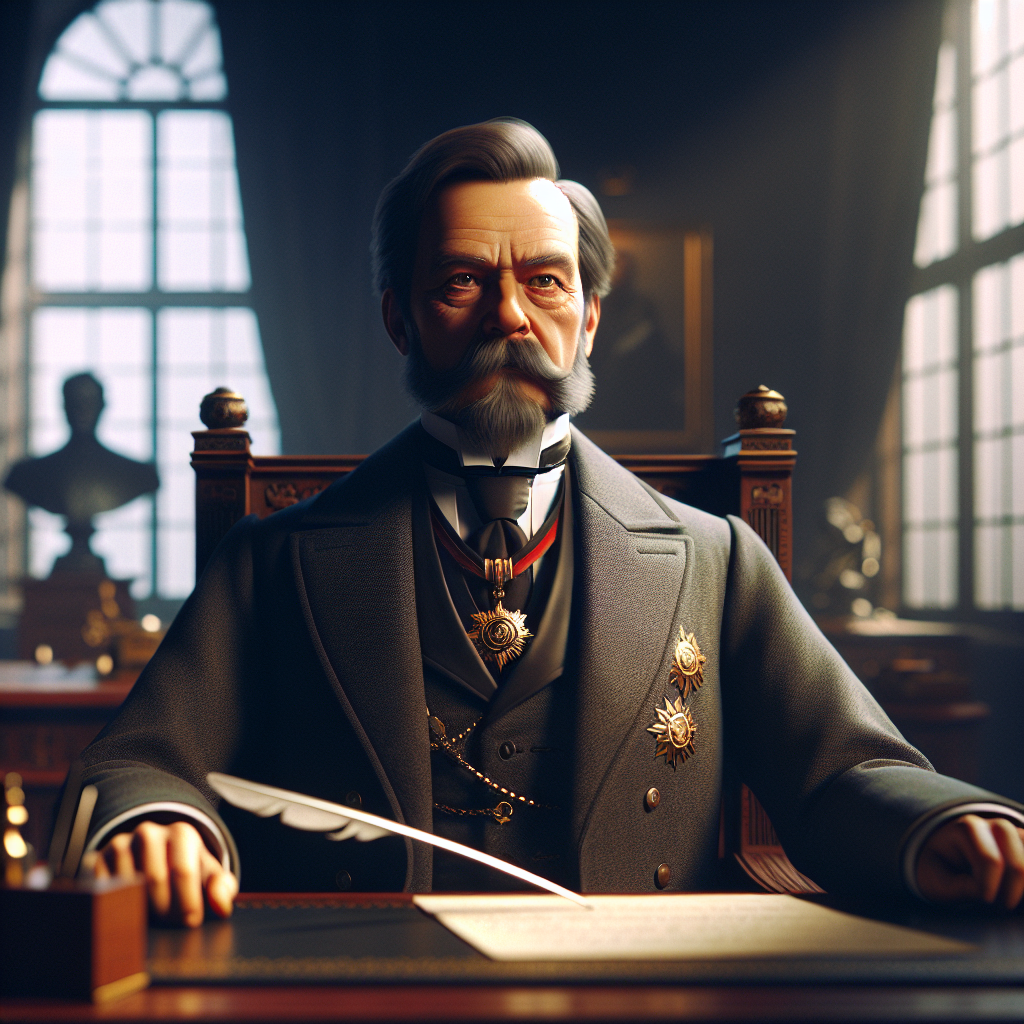
Otto von Bismarck remains one of the most significant figures in modern European history. Often dubbed “The Iron Chancellor,” Bismarck was the architect of German unification and a masterful political and military strategist. His influence extended beyond Germany and had profound impacts on the European continental landscape. Born on April 1, 1815, in Schönhausen, Prussia, Bismarck rose through the ranks of Prussian politics to orchestrate a series of wars and political maneuvers that ultimately led to the unification of Germany under Prussian leadership in 1871.
The significance of Bismarck’s leadership cannot be overstated. Before his influence, the German territories were a patchwork of independent kingdoms, duchies, and principalities loosely connected by a common language and culture but fragmented by individual political interests. Bismarck’s vision and strategy changed all that, creating a united German Empire and establishing Germany as a dominant European power.
This article aims to delve into the multifaceted legacy of Otto von Bismarck, examining his political strategies, military campaigns, and enduring influence. As we explore his life and legacy, we’ll uncover how Bismarck’s shrewd diplomacy and ruthless pragmatism helped to shape the modern world. Prepare to journey through the extraordinary life of a man whose name became synonymous with unyielding strength and indomitable will: Otto von Bismarck, The Iron Chancellor.
The Early Years and Rise to Power
Otto von Bismarck’s early life was integral to shaping his ambitions and skills as a leader. Born into a well-off Prussian aristocratic family, Bismarck was educated at the University of Göttingen and Humboldt University in Berlin. Although he displayed little interest in academia, his early years were deeply influenced by the conservative and nationalist ideas of his social class.
Bismarck began his political career by securing a minor administrative position, but his skills quickly caught the attention of higher authorities. In 1847, he entered the Prussian Diet, where he initially supported conservative policies and opposed the liberal revolutions sweeping across Europe. His steadfast loyalty to the monarchy and his ability to navigate complex political landscapes earned him rapid promotions.
Bismarck’s rise to prominence truly began with his appointment as the Prussian ambassador to Russia in 1859 and then to France in 1862. These positions gave him invaluable experience in foreign affairs, allowing him to develop a keen understanding of European power dynamics. His diplomatic acuity and ability to build relationships with key figures were critical skills that he later used to achieve his grand vision of a unified Germany.
In 1862, Bismarck’s talents brought him to the pinnacle of Prussian power when King Wilhelm I appointed him as the Minister President of Prussia. It was in this role that Bismarck would begin to implement his ambitious plans for German unification, setting the stage for his later accomplishments.
Master of Realpolitik: Bismarck’s Political Strategy
Otto von Bismarck is often regarded as the quintessential practitioner of Realpolitik—a pragmatic approach to politics grounded in the practicalities of power rather than ideological principles. Bismarck’s Realpolitik involved a mix of diplomacy, deception, and brute force, all aimed at strengthening Prussia and achieving German unification.
One of Bismarck’s first major political maneuvers was the manipulation of the Schleswig and Holstein crisis, which culminated in the Danish War of 1864. Bismarck allied with Austria to defeat Denmark and secure control over the duchies of Schleswig and Holstein. This victory not only expanded Prussian influence but also set the stage for future conflicts that would further Bismarck’s objectives.
The Austro-Prussian War of 1866 was the next pivotal moment in Bismarck’s strategy. By skillfully isolating Austria diplomatically and forming strategic alliances with other German states, Bismarck managed to defeat Austria and dissolve the German Confederation. In its place, he established the North German Confederation, dominated by Prussia. This war demonstrated Bismarck’s ability to use military force in conjunction with diplomatic efforts to achieve his goals.
Bismarck’s crowning achievement came with the Franco-Prussian War of 1870-1871. By manipulating diplomatic communications—most notably, the Ems Dispatch—Bismarck provoked France into declaring war on Prussia. The resulting conflict galvanized the German states, leading them to rally around Prussia in a collective effort. The decisive Prussian victory sealed the unification of Germany, with King Wilhelm I being crowned as the first German Emperor in the Hall of Mirrors at Versailles in January 1871.

Architect of the German Empire
With the unification of Germany in 1871, Otto von Bismarck became the first Chancellor of the German Empire, a position he held until 1890. As Chancellor, Bismarck’s primary focus was on consolidating the new empire and ensuring its stability and growth.
Bismarck’s domestic policies were characterized by a mixture of authoritarian control and strategic reforms. He sought to integrate the various German states into a cohesive nation, ensuring loyalty and conformity to the imperial government. One of his key initiatives was the Kulturkampf, or “culture struggle,” aimed at reducing the influence of the Catholic Church in German affairs. Although this campaign faced significant resistance and was ultimately scaled back, it demonstrated Bismarck’s willingness to confront powerful institutions to strengthen the central authority.
Another significant aspect of Bismarck’s domestic policy was his approach to social welfare. Recognizing the growing influence of the socialist movement, Bismarck introduced a series of pioneering social insurance programs, including health insurance, accident insurance, and old-age pensions. These measures were designed to appease the working class and mitigate the appeal of socialism by addressing their economic concerns. Bismarck’s innovative social policies laid the groundwork for the modern welfare state and showcased his ability to adapt his strategies to changing social and political landscapes.
Bismarck also focused on maintaining Germany’s position in Europe through a complex web of alliances and treaties. His foreign policy aimed at isolating France and preventing the formation of hostile coalitions against Germany. Notable among these efforts was the establishment of the Triple Alliance with Austria-Hungary and Italy, which served as a counterbalance to potential threats from France and Russia. Through careful diplomacy, Bismarck maintained a balance of power in Europe that preserved German interests and stability.
Bismarck’s Legacy and Long-term Impact
Otto von Bismarck’s influence on German and European history extends far beyond his lifetime. His strategic acumen, diplomatic prowess, and unwavering commitment to his vision left an enduring legacy that continues to be studied and debated by historians and political scientists.
One of the most significant aspects of Bismarck’s legacy is the creation of a unified German state. Before Bismarck, the idea of a united Germany seemed a distant dream, hindered by regional rivalries and external threats. Bismarck’s strategic use of war, diplomacy, and political maneuvering finally brought this vision to fruition. The establishment of the German Empire not only altered the political landscape of Europe but also set the stage for Germany’s emergence as a major industrial and military power in the early 20th century.
Bismarck’s approach to governance and his application of Realpolitik have also had a profound influence on modern political thought. His emphasis on pragmatic decision-making, balance of power, and strategic alliances has shaped the way states conduct international relations to this day. Bismarck’s ability to adapt to changing political circumstances and his willingness to make difficult decisions for the greater good of the state continue to serve as a model for contemporary leaders.
However, Bismarck’s legacy is not without its controversies. His authoritarian style of governance and efforts to suppress opposition, particularly through measures like the Anti-Socialist Laws, have been criticized for stifling political dissent and fostering a culture of obedience that persisted long after his departure from office. Additionally, some historians argue that Bismarck’s focus on maintaining a delicate balance of power in Europe contributed to tensions that eventually led to the outbreak of World War I.
Despite these criticisms, Otto von Bismarck’s impact on history remains undeniable. His achievements in unifying Germany and shaping its early trajectory as a nation have left an indelible mark on the world. As we reflect on his life and legacy, it becomes clear that Bismarck was a master strategist whose vision and determination reshaped the course of history.
Conclusion
Otto von Bismarck’s life and legacy stand as a testament to the power of vision, strategy, and leadership. From his early years navigating the complex political landscape of Prussia to his triumph in unifying Germany and his tenure as the Iron Chancellor, Bismarck demonstrated an unparalleled ability to shape the destiny of nations. His masterful application of Realpolitik—marked by pragmatic decision-making, calculated risk-taking, and strategic alliances—set a new standard for political leadership and statecraft.
Bismarck’s influence extended well beyond the unification of Germany. His domestic policies, including his innovative social welfare programs, showcased his ability to adapt to changing social and political realities. His efforts to consolidate the new empire and maintain a balance of power in Europe were instrumental in shaping the continent’s political dynamics for decades to come.
While Bismarck’s legacy is not without its complexities and controversies, his impact on history is irrefutable. His achievements continue to be studied by historians and political scientists, and his approach to governance and diplomacy remains relevant in contemporary discussions of international relations and statecraft. The Iron Chancellor’s steadfast determination and unparalleled strategic acumen have left an indelible mark on the world, making him one of the most important figures in modern history.
As we look back on the life and legacy of Otto von Bismarck, we are reminded of the profound influence that a single individual can have on the course of history. Bismarck’s journey from a minor aristocrat to the architect of a unified German Empire serves as a powerful example of how vision, strategy, and leadership can shape the destiny of nations. His enduring legacy continues to inspire and challenge us, offering valuable lessons for leaders and policymakers in the modern world.


