Skip to content

SOCIALSTUDIESHELP.COM

Learn Social Studies and American History

  • American History Lessons
  • American History Topics
  • AP Government and Politics
  • Economics
  • Resources
    • Blog
    • Practice Exams
    • AP Psychology
    • World History
    • Geography and Human Geography
    • Comparative Government & International Relations
    • Most Popular Searches
  • Toggle search form

Shifting Election Control: Impact on Blacks, Women, Youth

Posted on By admin

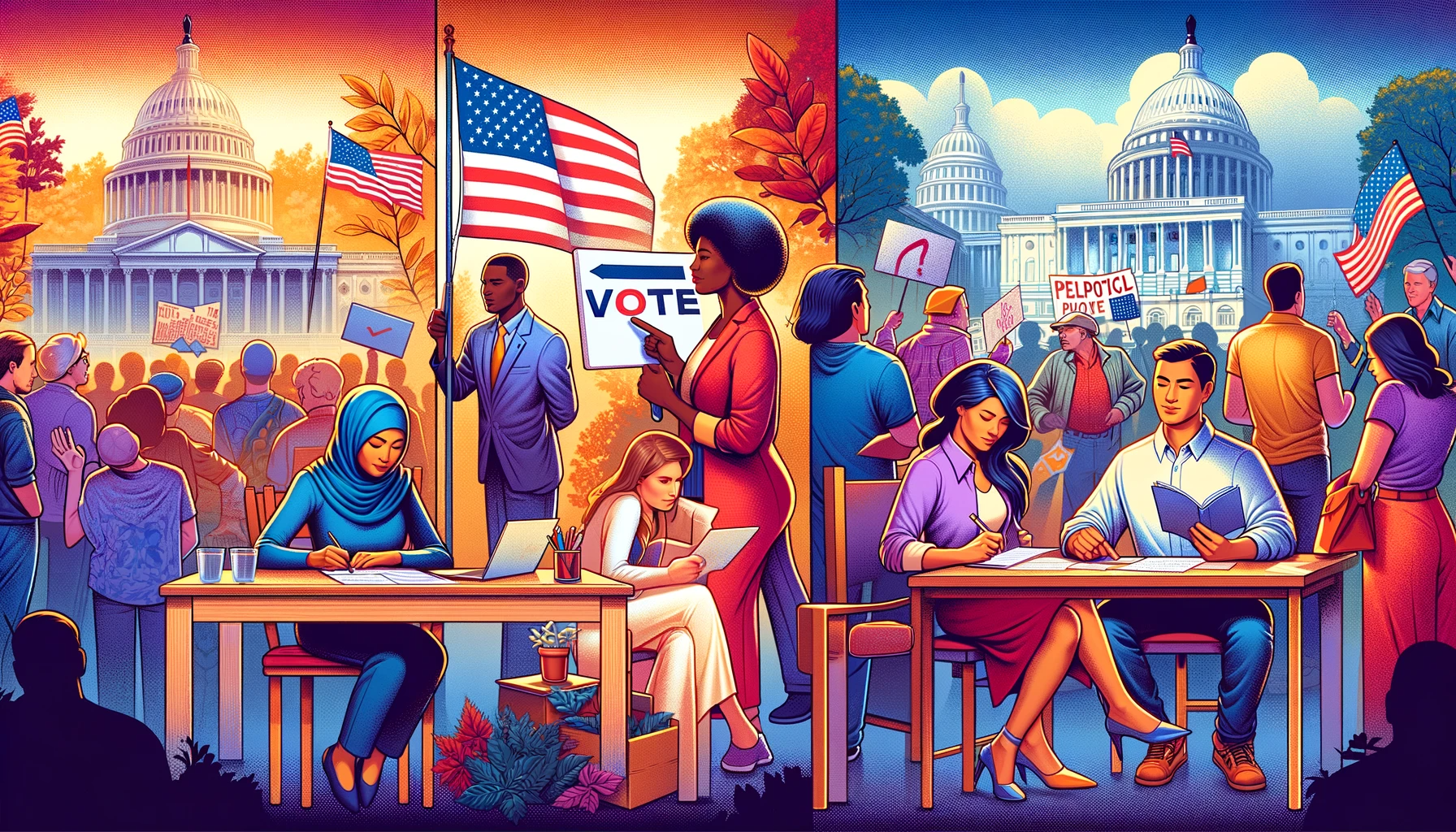
The evolution of election control from state to federal authority represents a significant shift in the American political landscape, profoundly impacting various demographic groups, particularly blacks, women, and youth. This article examines this transition, exploring its origins, implications, and the resultant changes in political participation for these groups.

Historical Context

Initially, the U.S. Constitution granted states the primary responsibility for managing elections. This approach led to a patchwork of election laws and practices, often reflecting the local political and social dynamics. Over time, however, several factors, including the civil rights movement, women’s suffrage, and youth advocacy, catalyzed a gradual shift towards greater federal involvement.

The Shift to Federal Control

Key legislative acts mark the transition of election control from states to the federal government. The most pivotal of these include the 15th Amendment (1870), granting black men the right to vote; the 19th Amendment (1920), ensuring women’s suffrage; the Voting Rights Act of 1965, aimed at dismantling racial barriers to voting; and the 26th Amendment (1971), lowering the voting age to 18. These amendments and acts not only expanded the electorate but also signaled a growing federal role in safeguarding voting rights.

Impact on Black Americans

The shift to federal control had profound implications for black Americans. Under state control, many states, particularly in the South, implemented Jim Crow laws and other discriminatory practices like literacy tests and poll taxes to suppress black voting. The federal intervention, most notably through the Voting Rights Act of 1965, aimed to eliminate such barriers, leading to a significant increase in black voter registration and participation. This change also facilitated the election of black officials at local, state, and national levels, gradually altering the political landscape.

Effect on Women

For women, the transition meant an enhancement of their political voice. Prior to the 19th Amendment, women were largely excluded from the electoral process. The amendment’s ratification was a culmination of decades of suffrage movements and reflected a growing acknowledgment at the federal level of women’s rights. This change did not just enable women to vote; it also encouraged their active participation in politics, leading to greater representation in political offices and a broader discussion of issues pertinent to women.

Youth Engagement

The lowering of the voting age to 18 through the 26th Amendment significantly impacted youth political participation. This change acknowledged the argument that if 18-year-olds were old enough to be drafted for military service, they should also have the right to vote. The amendment energized young voters, leading to increased political activism among the youth. This age group has since played a crucial role in shaping political discourse, especially on issues like climate change, gun control, and education reform.

Broader Implications

The shift in election control from states to the federal government has broader implications beyond these demographic groups. It reflects a fundamental change in the understanding of voting rights as a national concern, requiring federal oversight to ensure fairness and equality. This transition also highlights the dynamic nature of American democracy, where legal and constitutional changes respond to social movements and shifting societal values.

Challenges and Continuing Debates

Despite these advances, challenges persist. Debates continue over issues like voter ID laws, gerrymandering, and the accessibility of polling places. Critics argue that some state-level actions still aim to suppress voter turnout among minorities, women, and the youth. Furthermore, the federal government’s role in elections remains a contentious topic, with discussions around federalism and states’ rights persisting.

Continued Evolution and Reform

The journey toward a more inclusive electoral process has been marked by continuous evolution and the need for ongoing reform. The reauthorization and amendments to the Voting Rights Act, for instance, reflect the federal government’s commitment to adapting to changing circumstances and addressing new challenges in election fairness and accessibility.

Technological Advancements and Election Integrity

In the contemporary era, technological advancements have introduced new dimensions to the debate over election control. Issues like electronic voting, cybersecurity, and misinformation campaigns have become central concerns. The federal government’s role in ensuring the integrity and security of elections in the digital age has become increasingly important, impacting all demographics but particularly the tech-savvy youth.

The Role of the Judiciary

The judiciary has played a pivotal role in this shifting landscape. Landmark Supreme Court decisions, such as Shelby County v. Holder (2013), which struck down key provisions of the Voting Rights Act, demonstrate the ongoing tension between federal oversight and states’ autonomy in election administration. These decisions have significant implications for how elections are conducted and who has access to the ballot box.

The Impact on Minority Representation

For minority groups, the federal oversight of elections has been crucial in ensuring representation. The creation and enforcement of majority-minority districts, aimed at enhancing minority representation in Congress and state legislatures, is a direct outcome of federal intervention in election processes. This has allowed for greater diversity in political representation, giving voice to communities that were historically marginalized.

Women in Politics

The impact on women’s political participation extends beyond the right to vote. Federal policies and initiatives aimed at encouraging women to run for office and participate in political campaigns have helped to increase the number of women in political leadership positions. This has led to more diverse perspectives in policy-making and a greater focus on issues such as gender equality, childcare, and reproductive rights.

Youth Mobilization and Advocacy

The involvement of the youth in politics has evolved from mere participation to active advocacy and mobilization. Youth-led movements on various social and environmental issues demonstrate the significant impact of this demographic in shaping public policy and discourse. The federal government’s role in facilitating youth participation, through education and outreach programs, has been instrumental in this regard.

The Future of Federal and State Roles

Looking forward, the balance between federal and state control over elections remains a dynamic and evolving aspect of American democracy. The challenge lies in maintaining a delicate balance that respects states’ rights while ensuring that federal standards for fairness and inclusivity are met. This balance is crucial in addressing emerging issues such as voting accessibility, redistricting, and campaign finance reform.

Conclusion

In summary, the shift from state to federal control of elections in the United States has been a transformative process with profound impacts on various demographic groups, notably blacks, women, and youth. This transition has been instrumental in expanding and protecting the right to vote, ensuring greater representation and participation in the political process. As American society continues to evolve, the relationship between state and federal authorities in election management will remain a critical area for ongoing discussion, reform, and adaptation.

Uncategorized

Post navigation

Previous Post: Global Voter Turnout Analysis: A Comparative Study
Next Post: Voter Turnout Decline: Unveiling the Century-Long Debate

Related Posts

Understanding Bureaucratic Pathologies and Reform Challenges Uncategorized
Corporate Taxation – Economic Implications and Policy Debates Uncategorized
Contributions to American Political Culture: Revolution, Religion, Family, and Class Consciousness Uncategorized
Exploring Federal Grants: Mandates vs. Conditions of Aid Uncategorized
Federal Fiscal Policy: Analyzing Policymaking Politics Uncategorized
U.S. Constitution: Drafting, Principles, Modern Impact Uncategorized
  • World History
  • Timeline of US History: Major Events from 1492 to Present
  • Glossary of Government Terms: 50 AP Gov Concepts Explained in Plain English
  • Top 10 Most Common Social Studies Exam Terms (and What They Mean)
  • Research Paper Outline Example (Template for High School & AP Research)

Navigation

  • Economics
    • Agricultural Price Supports
    • Agriculture in the United States
    • Bank Deregulation and the S&L Crisis
    • Banking and the Federal Reserve System
    • Basic Economic Concepts
    • Budgeting
    • Business Cycle
    • Business Organizations
    • Perspectives on Business Structures
    • Circular Flow Model
    • Collective Bargaining
    • Comparative Economic Systems
    • Different Types of Banks
    • Economic Growth
    • Economic Indicators
    • Economics Final Exam Review
    • Economics Links
    • Elasticity
    • Federal and State Budgeting
    • Federal Spending and National Debt
    • Free Enterprise
    • Governments Role in the Economy
    • History of Labor Unions
    • Government Protection of the Consumer
    • Income Inequality
    • Inflation
  • History Topics
    • “Robber Barons” or “Captains of Industry”
    • The 18th & 19th Amendments: Prohibition & Women’s Suffrage Explored
    • 19th Amendment – Womens Suffrrage
    • African American Reformers
    • African American Reform in the Progressive Era
    • America – Divided at Birth
    • America’s Role in WWII: Decisive Influence in War’s Outcome
    • Spanish American War: How it Forged America’s Global Dominance
    • Andrew Carnegie – Gospel of Wealth
    • Effectiveness of U.S. Antitrust Laws in Protecting Competition
    • Articles of Confederation
    • Justifications & Impacts: Policies Toward Native Americans
    • Understanding the Bill of Rights’ Protections
    • US Campaigns and Elections: Democracy’s Backbone
    • Causes of the Great Depression
    • Opposition & Responses to the New Deal: Roosevelt’s Strategy
    • Checks and Balances
    • Effectiveness of the Civil Rights Movement in U.S. Social Change
    • What Caused the Beginning of the Civil War?
    • Colonization and Mercantilism
    • Constitutional Convention
    • Constitutional Flexibility
    • Containment Policy: America’s Tactics Against Communism
    • Cooling the Cold War: From Peaceful Coexistence to Detente
    • Cooling Off: Peaceful Coexistence to Detente
    • Declaration of Independence
    • Democracy in the colonies
    • Dropping of the Atomic Bomb
    • Early Domestic Policies
    • Washington & Jefferson’s Impactful Foreign Policies
    • Reconstruction’s Impact on Freedmen’s Lives
    • Effect of Lincoln’ Death on Reconstruction
    • Effects of the Great Depression
    • Electoral College
    • Enlightenment Thinkers
    • Events Leading Up To The Revolution
    • French and Indian War
    • Government Relationship with Unions
    • How a bill becomes a law.
    • Immigration – Why they came
    • Improvement in the cities – Progressive Era
    • American Influence in Asia during the 1800s
    • John Quincy Adams and Andrew Jackson
  • History Lessons
    • Cold War Genesis: A Detailed Analysis
    • The End of the Cold War
    • FDR’s New Deal
    • Foundation of Democracy
    • The Presidency of Andrew Jackson
    • JFK versus LBJ
    • The Presidency of John Adams
    • Judicial Branch
    • Immigration in the U.S
    • Legislative Branch
    • Madison – War of 1812
    • Monopolies & Trusts: Exploring American Businesses’ Quest to Curb Competition
    • The Presidency of James Monroe
    • Judicial Review and Supreme Court Cases
    • Justification for Imperialism
    • Korematsu V. United States
    • Origins of Legalized Segregation in the South
    • Management vs Unions: Responses to Unionization in the Industrial Revolution
    • Westward Expansion: Manifest Destiny’s Impact
    • McCarthyism Explained: Politics, Fear, and Cold War Context
    • The New Deal’s Impact on Minorities in 1930s America
    • Monopolies
    • Monroe Presidency
    • New Technologies – Industrialization
    • WWI and Civil Liberties: Striking the Balance in Wartime
  • Gov & Politics
    • Elections and Campaigns – Week 9 Notes
    • Interest Groups in American Politics: A Historical Review
    • Interest Groups – Text Notes – Week Seven
    • Lecture Notes – American Political System
    • Lecture Notes – Congress – Week 11
    • Lecture Notes – Economic Policy
    • Lecture Notes – Federalism
    • Lecture Notes – The Judiciary – Week 13
    • Notes – The Bureaucracy
    • Lecture Notes – Political Culture in America
    • Political Participation
    • Political Participation – Text Notes – Week Six
    • Political Parties – Week 8 – Text Notes
  • World Cultures
    • Asian Cultures
    • African Cultures
    • European Cultures
    • Middle Eastern Cultures
    • North American Cultures
    • Oceania and Pacific Cultures
    • South American Cultures
  • Global Trends
  • Important Events
  • Social Studies Weekly
  • Cultural Celebrations
    • Ancient Civilizations
    • Architectural Wonders
    • Celebrating Hispanic Heritage
    • Celebrating Women
    • Celebrating World Heritage Sites
    • Clothing and Fashion
    • Culinary Traditions
    • Cultural Impact of Language
    • Environmental Practices
    • Festivals
    • Global Art and Artists
    • Global Music and Dance
  • Economics
    • Behavioral Economics
    • Development Economics
    • Econometrics and Quantitative Methods
    • Economic Development
    • Economic Geography
    • Economic History
    • Economic Policy
    • Economic Sociology
    • Economics of Education
    • Environmental Economics
    • Financial Economics
    • Health Economics
    • History of Economic Thought
    • International Economics
    • Labor Economics
    • Macroeconomics
    • Microeconomics
  • Important Figures in History
    • Artists and Writers
    • Cultural Icons
    • Groundbreaking Scientists
    • Human Rights Champions
    • Intellectual Giants
    • Leaders in Social Change
    • Mythology and Legends
    • Political and Military Strategists
    • Political Pioneers
    • Revolutionary Leaders
    • Scientific Trailblazers
    • Explorers and Innovators
  • Global Events and Trends
  • Regional and National Events
  • World Cultures
    • Asian Cultures
    • African Cultures
    • European Cultures
    • Middle Eastern Cultures
    • North American Cultures
    • Oceania and Pacific Cultures
    • South American Cultures
  • Privacy Policy

Copyright © 2025 SOCIALSTUDIESHELP.COM. Powered by AI Writer DIYSEO.AI. Download on WordPress.

Powered by PressBook Grid Blogs theme