Skip to content

SOCIALSTUDIESHELP.COM

Learn Social Studies and American History

  • American History Lessons
  • American History Topics
  • AP Government and Politics
  • Economics
  • Resources
    • Blog
    • Practice Exams
    • AP Psychology
    • World History
    • Geography and Human Geography
    • Comparative Government & International Relations
    • Most Popular Searches
  • Toggle search form

Rosalind Franklin: The Unsung Hero of DNA

Posted on By admin

To appreciate the myriad of scientific achievements that have shaped our understanding of the world, one must delve into the stories of pioneering individuals whose tireless work has led to revolutionary breakthroughs. Among such influential figures is Rosalind Franklin, whose remarkable contributions to the field of molecular biology, specifically in the discovery of DNA’s structure, remain understated yet monumental. This article aims to shed light on Franklin’s life, her groundbreaking work, and the longstanding impact of her contributions to science.

The Early Life and Education of Rosalind Franklin

Born on July 25, 1920, in London, Rosalind Franklin grew up in a family that placed high value on education and social service. Her father, Ellis Franklin, was a merchant banker who later became a professor of electromagnetism, and her mother, Muriel Franklin, was deeply involved in charitable activities. Rosalind was imbued with a spirit of inquiry from a young age, which was fostered by the intellectual environment at home.

Franklin’s exceptional academic prowess emerged early on when she attended St. Paul’s Girls’ School, one of the few institutions at that time where girls could receive an education in physics and chemistry. Her excellence in science earned her a scholarship to Newnham College, Cambridge, where she pursued Natural Sciences. At Cambridge, she became deeply involved in research, particularly in physical chemistry, laying a strong foundation for her future scientific endeavors.

Early Career and Contributions to Coal Research

After completing her studies at Cambridge, Franklin embarked on a career that showcased her analytical skills and meticulous approach to scientific research. During World War II, she worked for the British Coal Utilization Research Association, where she investigated the microstructures of coal and carbon. Her research was pivotal in understanding the properties of these materials and had significant implications for the development of more efficient fuel sources.

Franklin’s work on coal earned her a Ph.D. from Cambridge and also led to several publications that established her as a respected scientist in her field. Her papers on the structural properties of coal demonstrated her expertise in crystallography and her ability to apply this technique to solve complex scientific problems.

Transition to DNA Research

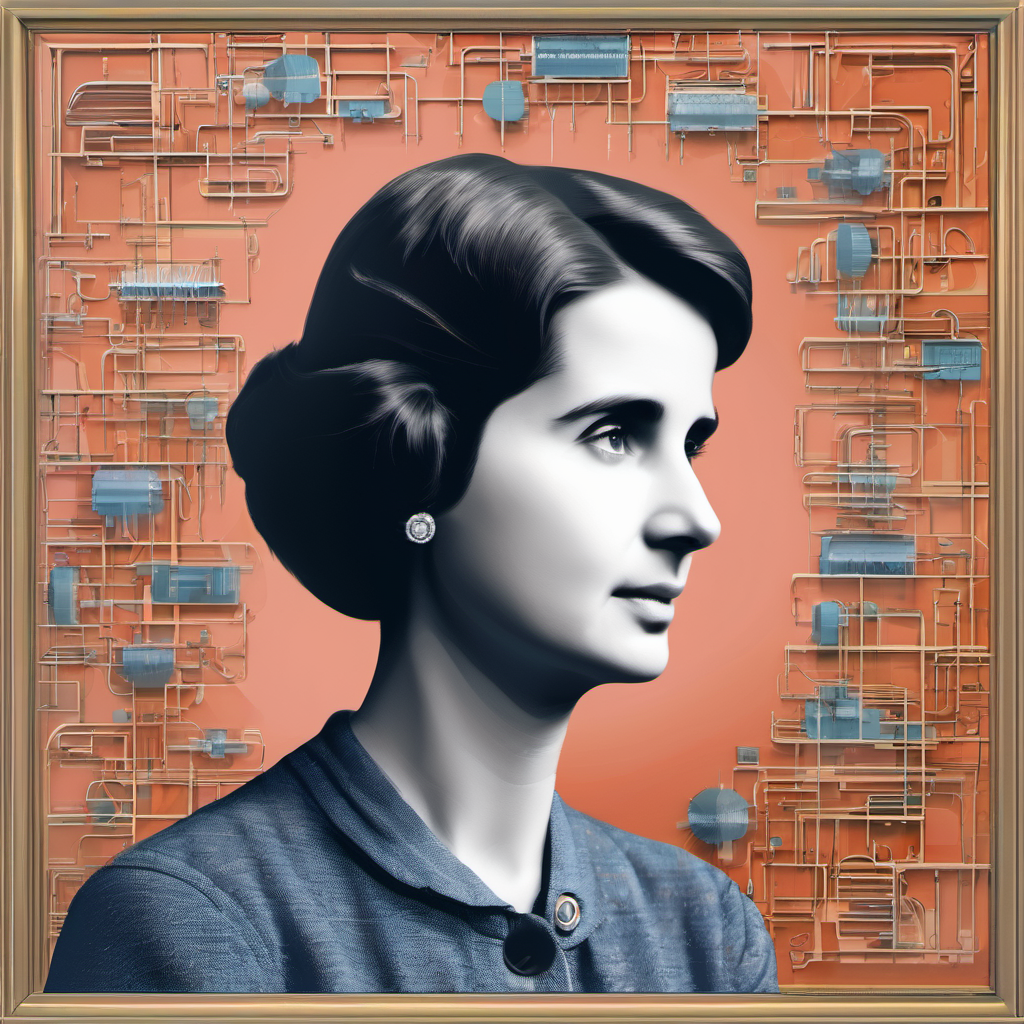
In 1951, Franklin joined King’s College London to work as a research associate in John Randall’s laboratory, where she began her groundbreaking work on DNA. At King’s College, she utilized X-ray diffraction techniques, which were crucial for visualizing molecular structures. Franklin’s meticulous X-ray photographs provided clear evidence of DNA’s helical structure, and her precise measurements laid the groundwork for understanding the molecule’s dimensions.

Franklin’s Photo 51, an X-ray diffraction image, was particularly significant. This photograph, taken in May 1952, demonstrated a clear X-shaped pattern that was critical in deciphering the helical structure of DNA. Yet, due to scientific politics and ethical breaches, her photograph was shared without her direct permission with James Watson and Francis Crick, who were also working on uncovering the structure of DNA.
The Impact of Photo 51 and the Discovery of DNA’s Structure

Armed with the insights provided by Franklin’s Photo 51 and her comprehensive research data, Watson and Crick proposed the double helix model of DNA in 1953. While they received widespread acclaim and eventually the Nobel Prize in Physiology or Medicine in 1962, Franklin’s pivotal role in this groundbreaking discovery was largely overshadowed.

It wasn’t until years later that Franklin’s contributions began to receive the recognition they deserved. Scholars and historians reevaluated the historical narrative, shedding light on the critical role that Franklin played in elucidating the structure of DNA. Her work not only provided the evidence necessary for Watson and Crick’s model but also contributed a host of other insights into DNA’s physical and chemical properties.

Franklin’s Later Work and Untimely Death

After her time at King’s College, Franklin moved to Birkbeck College in London, where she shifted her research focus to the structure of viruses. There, she achieved significant results in understanding the tobacco mosaic virus and poliovirus. Her research in this field further showcased her expertise in using X-ray diffraction techniques to solve biological puzzles.

Tragically, Franklin’s career was cut short when she was diagnosed with ovarian cancer. She continued to work and publish her findings while undergoing treatment, demonstrating remarkable resilience and dedication to her scientific pursuits. Rosalind Franklin passed away on April 16, 1958, at the age of 37, leaving behind a legacy of groundbreaking scientific achievements.

Legacy and Recognition

Rosalind Franklin’s contributions to science have since gained substantial recognition, leading to a reevaluation of her role in the history of the discovery of DNA’s structure. Numerous awards, honors, and institutions now bear her name, commemorating her invaluable contributions to science. The Rosalind Franklin University of Medicine and Science, the Rosalind Franklin Laboratory in Norwich, and numerous buildings and research centers worldwide pay homage to her legacy.

Her story has also been immortalized in various books, documentaries, and plays, serving as a powerful reminder of the crucial yet often underrecognized role of women in science. Franklin’s meticulous research methodology, commitment to scientific integrity, and perseverance in the face of adversity continue to inspire new generations of scientists.

Conclusion: Rosalind Franklin’s Enduring Legacy

Rosalind Franklin stands as a testament to the profound impact of diligent and dedicated scientific inquiry. Though her contributions to the discovery of the DNA double helix were initially overshadowed, the eventual recognition of her work highlights the importance of intellectual honesty and collaboration in scientific progress.

Franklin’s life story teaches us valuable lessons about perseverance, the quest for knowledge, and the challenges faced by women in science. Her legacy continues to inspire and influence the fields of molecular biology, genetics, and beyond. As we celebrate Franklin’s achievements, we honor not just a scientist, but a trailblazer whose work has left an indelible mark on humanity’s understanding of the fundamental building blocks of life. Through her pioneering research, Rosalind Franklin’s name rightfully holds a place in the pantheon of scientific greats, illuminating the path for future generations of researchers and innovators.

Important Figures in History, Scientific Trailblazers

Post navigation

Previous Post: Scientific Trailblazers: Galileo Galilei and His Telescope
Next Post: Scientific Trailblazer: Carl Sagan – Bringing the Cosmos Closer

Related Posts

Lenin: Key Figure Behind Soviet Russia Important Figures in History
Marie Curie: A Titan of Radioactive Research Important Figures in History
Hedy Lamarr: Hollywood Star and Technology Pioneer Important Figures in History
Jane Addams: The Champion of Social Work and Social Justice Important Figures in History
Louis Pasteur: The Father of Modern Microbiology Important Figures in History
Stephen Hawking: Unlocking the Universe’s Secrets Important Figures in History
  • World History
  • Timeline of US History: Major Events from 1492 to Present
  • Glossary of Government Terms: 50 AP Gov Concepts Explained in Plain English
  • Top 10 Most Common Social Studies Exam Terms (and What They Mean)
  • Research Paper Outline Example (Template for High School & AP Research)

Navigation

  • Economics
    • Agricultural Price Supports
    • Agriculture in the United States
    • Bank Deregulation and the S&L Crisis
    • Banking and the Federal Reserve System
    • Basic Economic Concepts
    • Budgeting
    • Business Cycle
    • Business Organizations
    • Perspectives on Business Structures
    • Circular Flow Model
    • Collective Bargaining
    • Comparative Economic Systems
    • Different Types of Banks
    • Economic Growth
    • Economic Indicators
    • Economics Final Exam Review
    • Economics Links
    • Elasticity
    • Federal and State Budgeting
    • Federal Spending and National Debt
    • Free Enterprise
    • Governments Role in the Economy
    • History of Labor Unions
    • Government Protection of the Consumer
    • Income Inequality
    • Inflation
  • History Topics
    • “Robber Barons” or “Captains of Industry”
    • The 18th & 19th Amendments: Prohibition & Women’s Suffrage Explored
    • 19th Amendment – Womens Suffrrage
    • African American Reformers
    • African American Reform in the Progressive Era
    • America – Divided at Birth
    • America’s Role in WWII: Decisive Influence in War’s Outcome
    • Spanish American War: How it Forged America’s Global Dominance
    • Andrew Carnegie – Gospel of Wealth
    • Effectiveness of U.S. Antitrust Laws in Protecting Competition
    • Articles of Confederation
    • Justifications & Impacts: Policies Toward Native Americans
    • Understanding the Bill of Rights’ Protections
    • US Campaigns and Elections: Democracy’s Backbone
    • Causes of the Great Depression
    • Opposition & Responses to the New Deal: Roosevelt’s Strategy
    • Checks and Balances
    • Effectiveness of the Civil Rights Movement in U.S. Social Change
    • What Caused the Beginning of the Civil War?
    • Colonization and Mercantilism
    • Constitutional Convention
    • Constitutional Flexibility
    • Containment Policy: America’s Tactics Against Communism
    • Cooling the Cold War: From Peaceful Coexistence to Detente
    • Cooling Off: Peaceful Coexistence to Detente
    • Declaration of Independence
    • Democracy in the colonies
    • Dropping of the Atomic Bomb
    • Early Domestic Policies
    • Washington & Jefferson’s Impactful Foreign Policies
    • Reconstruction’s Impact on Freedmen’s Lives
    • Effect of Lincoln’ Death on Reconstruction
    • Effects of the Great Depression
    • Electoral College
    • Enlightenment Thinkers
    • Events Leading Up To The Revolution
    • French and Indian War
    • Government Relationship with Unions
    • How a bill becomes a law.
    • Immigration – Why they came
    • Improvement in the cities – Progressive Era
    • American Influence in Asia during the 1800s
    • John Quincy Adams and Andrew Jackson
  • History Lessons
    • Cold War Genesis: A Detailed Analysis
    • The End of the Cold War
    • FDR’s New Deal
    • Foundation of Democracy
    • The Presidency of Andrew Jackson
    • JFK versus LBJ
    • The Presidency of John Adams
    • Judicial Branch
    • Immigration in the U.S
    • Legislative Branch
    • Madison – War of 1812
    • Monopolies & Trusts: Exploring American Businesses’ Quest to Curb Competition
    • The Presidency of James Monroe
    • Judicial Review and Supreme Court Cases
    • Justification for Imperialism
    • Korematsu V. United States
    • Origins of Legalized Segregation in the South
    • Management vs Unions: Responses to Unionization in the Industrial Revolution
    • Westward Expansion: Manifest Destiny’s Impact
    • McCarthyism Explained: Politics, Fear, and Cold War Context
    • The New Deal’s Impact on Minorities in 1930s America
    • Monopolies
    • Monroe Presidency
    • New Technologies – Industrialization
    • WWI and Civil Liberties: Striking the Balance in Wartime
  • Gov & Politics
    • Elections and Campaigns – Week 9 Notes
    • Interest Groups in American Politics: A Historical Review
    • Interest Groups – Text Notes – Week Seven
    • Lecture Notes – American Political System
    • Lecture Notes – Congress – Week 11
    • Lecture Notes – Economic Policy
    • Lecture Notes – Federalism
    • Lecture Notes – The Judiciary – Week 13
    • Notes – The Bureaucracy
    • Lecture Notes – Political Culture in America
    • Political Participation
    • Political Participation – Text Notes – Week Six
    • Political Parties – Week 8 – Text Notes
  • World Cultures
    • Asian Cultures
    • African Cultures
    • European Cultures
    • Middle Eastern Cultures
    • North American Cultures
    • Oceania and Pacific Cultures
    • South American Cultures
  • Global Trends
  • Important Events
  • Social Studies Weekly
  • Cultural Celebrations
    • Ancient Civilizations
    • Architectural Wonders
    • Celebrating Hispanic Heritage
    • Celebrating Women
    • Celebrating World Heritage Sites
    • Clothing and Fashion
    • Culinary Traditions
    • Cultural Impact of Language
    • Environmental Practices
    • Festivals
    • Global Art and Artists
    • Global Music and Dance
  • Economics
    • Behavioral Economics
    • Development Economics
    • Econometrics and Quantitative Methods
    • Economic Development
    • Economic Geography
    • Economic History
    • Economic Policy
    • Economic Sociology
    • Economics of Education
    • Environmental Economics
    • Financial Economics
    • Health Economics
    • History of Economic Thought
    • International Economics
    • Labor Economics
    • Macroeconomics
    • Microeconomics
  • Important Figures in History
    • Artists and Writers
    • Cultural Icons
    • Groundbreaking Scientists
    • Human Rights Champions
    • Intellectual Giants
    • Leaders in Social Change
    • Mythology and Legends
    • Political and Military Strategists
    • Political Pioneers
    • Revolutionary Leaders
    • Scientific Trailblazers
    • Explorers and Innovators
  • Global Events and Trends
  • Regional and National Events
  • World Cultures
    • Asian Cultures
    • African Cultures
    • European Cultures
    • Middle Eastern Cultures
    • North American Cultures
    • Oceania and Pacific Cultures
    • South American Cultures
  • Privacy Policy

Copyright © 2025 SOCIALSTUDIESHELP.COM. Powered by AI Writer DIYSEO.AI. Download on WordPress.

Powered by PressBook Grid Blogs theme