Public Choice Theory is a branch of economics that applies the principles and methodologies of economic analysis to political decision-making. It represents a fascinating intersection between economics and political science, exploring how voters, politicians, and bureaucrats interact within political processes. Founded on the premise that individuals involved in political activities behave similarly to those in the marketplace, Public Choice Theory delves into questions of collective decision-making, voter behavior, and government efficiency.
In essence, Public Choice Theory challenges the notion that political entities always act in the public interest. Instead, it posits that individuals, whether they are voters, elected officials, or bureaucrats, make decisions based on their self-interest. This perspective has revolutionized the way economists and political scientists understand the workings of governments and political processes.
Over the years, Public Choice Theory has provided profound insights into various public policy issues, including regulation, government performance, and institutional design. By analyzing political behavior through an economic lens, it sheds light on the incentives and constraints faced by those involved in the political arena, thereby offering a more realistic portrayal of how political decisions are made.
This article aims to comprehensively explore Public Choice Theory, its key concepts, real-world applications, and its implications for public policy. We will delve into the foundational principles and scrutinize how these principles explain various political phenomena. Additionally, we will illustrate how Public Choice Theory can be used to design more effective and efficient governance structures.
Foundational Principles of Public Choice Theory
At its core, Public Choice Theory operates on a few foundational principles. One of these is the notion of methodological individualism, which asserts that collective decisions originate from the actions and choices of individuals. This principle diverges from the traditional view that assumes the existence of an inherent ‘public interest’ guiding political behavior. Instead, policymakers, voters, and bureaucrats are seen as individuals driven by their preferences and incentives.
Another key principle is rational choice theory, which posits that individuals make decisions by maximizing their utility based on personal preferences and constraints. Within the political sphere, this translates to voters selecting policies or candidates that they believe will best serve their interests, politicians seeking re-election or higher office, and bureaucrats aiming to expand their power or secure job stability.
The theory also emphasizes the importance of institutional arrangements and how they shape individual behavior. Different political institutions create varied sets of incentives and constraints, which in turn influence the outcomes of political decision-making processes. For instance, the structure of electoral systems can significantly affect the policies that politicians pursue and the nature of voter engagement.
Additionally, Public Choice Theory highlights the concept of rent-seeking, which refers to individuals or groups trying to obtain economic gains through political processes rather than productive economic activities. Rent-seeking behavior often leads to resource misallocation and inefficiency, pinpointing the importance of designing policies and institutions that minimize these activities.
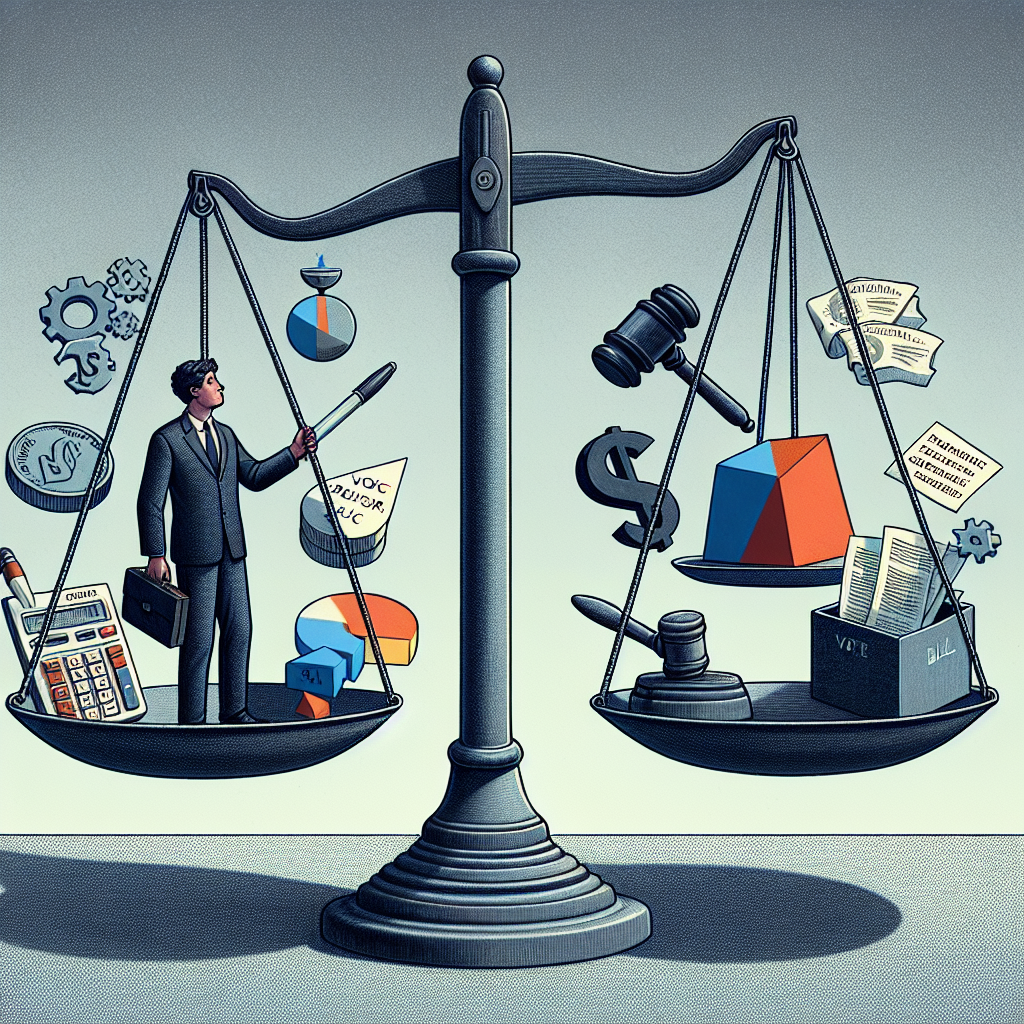
Voter Behavior: Rational Ignorance and Expressive Voting
Understanding voter behavior is a critical aspect of Public Choice Theory. Two important concepts within this field are rational ignorance and expressive voting. Rational ignorance occurs when voters choose not to become fully informed about political issues or candidates because the cost of acquiring that information outweighs the perceived benefits. Given that a single vote is unlikely to influence the outcome of an election, individuals often do not dedicate time and resources to extensively researching political options.
Expressive voting, on the other hand, suggests that voters derive satisfaction from the act of voting itself rather than the outcome it produces. This can explain why people vote for policies or candidates that align with their personal beliefs or social identity, even if doing so does not directly benefit them materially. In essence, voting becomes an expressive act reflecting one’s principles and identity.
These concepts challenge the traditional view that voters are fully informed and always vote in their best economic interests. Instead, they illustrate the complexities of voter behavior and underscore the limitations of democratic decision-making. Policymakers and analysts relying on Public Choice Theory must therefore consider these behavioral nuances when designing political systems and expecting electoral outcomes.
Moreover, recognizing rational ignorance and expressive voting helps explain why certain public policies persist despite being economically inefficient. Politicians catering to voter sentiments and identity-based preferences may implement policies that are popular but not necessarily optimal from an economic standpoint.
Politicians and Bureaucrats: Self-Interest in Political Decision-Making
Public Choice Theory acknowledges that politicians and bureaucrats, like voters, pursue their self-interest. Politicians often seek to maximize their chances of being elected or re-elected, which can influence their policy decisions and legislative behavior. This pursuit of political success sometimes leads to short-term policy solutions that appeal to voters rather than long-term, sustainable strategies.
Similarly, bureaucrats are motivated by personal incentives, such as career advancement, job security, and budget maximization for their departments. These motivations can result in bureaucratic inefficiencies, as agencies might prioritize expanding their influence and resources over effectively serving the public. The phenomenon of budget maximization, where bureaucratic agencies seek to increase their budgets irrespective of actual public need, is one example of such behavior.
Public Choice Theory thus provides a framework for understanding why government agencies and politicians might not always function optimally. By recognizing the self-interested behavior in the political realm, we can better understand issues such as government overreach, policy failures, and inefficiencies in public administration.
Additionally, understanding these dynamics allows for more informed critiques of various governance systems and offers policy recommendations for curbing inefficient behaviors. For instance, implementing performance-based evaluations for bureaucrats or designing electoral systems that mitigate vote-buying can be effective strategies.
Public Choice Theory in Policy Analysis
Public Choice Theory is an invaluable tool for policy analysis, providing insights into why certain policies are adopted and how they perform over time. By viewing policy decisions through the lens of individual incentives, analysts can better predict policy outcomes and identify potential pitfalls.
One application of Public Choice Theory in policy analysis is in understanding regulatory capture. Regulatory capture occurs when regulatory agencies are dominated by the industries they are supposed to regulate, resulting in regulations that serve industry interests rather than the public good. This can be explained by the self-interest of regulators who may seek future employment within the industry, or by the influence of industry lobbying.
Public Choice Theory also sheds light on the limitations of direct democracy measures such as referendums and initiatives. While these tools are designed to enhance citizen participation in governance, they can also be swayed by interest groups and suffer from voters’ rational ignorance. Consequently, the policies that emerge from direct democracy processes may not always reflect the best interests of the general populace.
By applying Public Choice Theory, policymakers can design better regulatory frameworks and democratic processes that account for individual incentives and minimize inefficiencies. For example, creating independent oversight bodies to prevent regulatory capture or educating the public to reduce rational ignorance can lead to more effective public policies.
Critiques and Limitations of Public Choice Theory
While Public Choice Theory offers significant insights, it is not without its critiques and limitations. One common criticism is that the theory may overly emphasize self-interest, neglecting other motivations such as altruism or civic duty that can influence political behavior. Critics argue that by focusing too narrowly on personal incentives, Public Choice Theory may present a somewhat cynical view of political actors.
Another critique is that the assumptions of rational choice theory—central to Public Choice Theory—may not always hold true in the complex and often irrational realm of human behavior. Psychological factors, social influences, and cultural contexts can all impact decision-making, making it overly simplistic to attribute all political behavior to self-interested rationality.
Moreover, some scholars argue that Public Choice Theory does not adequately address the role of power and inequality in political processes. By primarily focusing on individual incentives, it may overlook how power dynamics and institutional structures shape political outcomes in more nuanced ways.
Despite these critiques, Public Choice Theory remains a powerful tool for analyzing political behavior. It provides a necessary counterbalance to more idealized views of political processes and encourages a realistic assessment of the incentives and constraints faced by political actors. However, integrating insights from behavioral economics, sociology, and political theory can enrich our understanding of political decision-making.
Conclusion
In conclusion, Public Choice Theory offers a profound and nuanced perspective on political decision-making by applying economic analysis to the complex world of politics. It challenges traditional assumptions about selfless public service and highlights the self-interested motivations of voters, politicians, and bureaucrats.
By examining foundational principles such as methodological individualism and rational choice theory, as well as concepts like rational ignorance and expressive voting, Public Choice Theory provides valuable insights into how political decisions are made and why certain policies prevail. It reveals the often-inefficient nature of government operations and emphasizes the importance of designing institutions and policies that mitigate self-interested behavior and rent-seeking activities.
Moreover, Public Choice Theory serves as a crucial tool in policy analysis, helping to understand phenomena such as regulatory capture and the limitations of direct democracy. It underscores the importance of considering individual incentives and institutional contexts when formulating public policies.
While acknowledging its critiques and limitations, Public Choice Theory remains a vital part of the broader dialogue on political economy. Integrating this theory with perspectives from other disciplines can lead to a more comprehensive and realistic understanding of political processes, ultimately contributing to more effective and just governance.