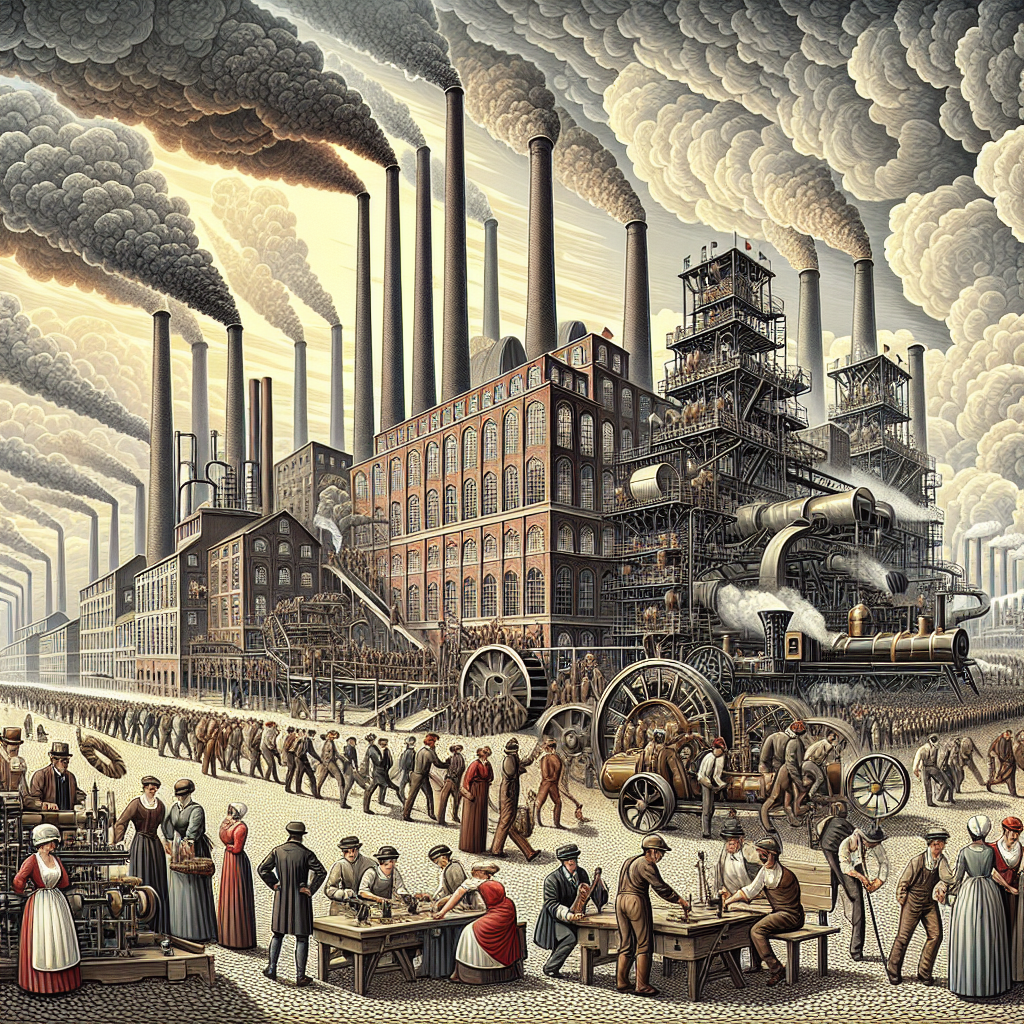
The study of economic methodology involves analyzing the methods, tools, and frameworks economists use to understand and explain economic phenomena. It delves into the philosophical foundations of economic analysis, touching upon various approaches and debates that have shaped economic thought over time. Understanding these foundations is crucial for appreciating how economic theories are formulated, evaluated, and applied to solve real-world problems. This article explores the historical and philosophical underpinnings of economic methodology, highlighting key developments and contributions from notable economists and philosophers.
At its core, economic methodology seeks to answer fundamental questions about the nature of economic inquiry. What constitutes valid evidence in economics? How should economic models be constructed and tested? These questions are not merely academic; they influence policy decisions that affect millions of lives. Therefore, clarity about the methods and assumptions underlying economic analysis is essential for both scholars and practitioners.
In the subsequent sections, we will examine the evolution of economic methodology, beginning with classical economics and moving through various schools of thought, such as neoclassical economics, institutional economics, and behavioral economics. We will also touch upon contemporary debates in the methodology of economics, including the role of mathematics and econometrics, and the ongoing dialogue between positivism and interpretivism.
Classical Economics and its Methodological Underpinnings
Classical economics, which emerged in the late 18th and early 19th centuries, laid the groundwork for modern economic thought. Influential figures such as Adam Smith, David Ricardo, and John Stuart Mill sought to understand how markets function and how wealth is created and distributed. Their work was driven by a desire to uncover the “natural laws” of economics, akin to the laws of physics.
Adam Smith’s seminal work, “The Wealth of Nations,” is a cornerstone of classical economic methodology. Smith’s idea of the “invisible hand” suggested that individuals, acting in their self-interest, inadvertently contribute to the overall good of society. This concept relied on the assumption that markets are inherently self-regulating.
David Ricardo’s theory of comparative advantage expanded on Smith’s ideas, positing that countries should specialize in producing goods where they have a relative efficiency. Ricardo’s methodology was characterized by the use of abstract models to simplify complex economic interactions, a practice that continues to influence economic analysis today.
John Stuart Mill further refined classical economic methodology by emphasizing the importance of empirical observation and the role of deductive reasoning. Mill argued that economics should be treated as a social science, distinct from natural sciences, due to its reliance on human behavior and social institutions.
Neoclassical Economics and the Mathematical Turn
The late 19th and early 20th centuries saw the rise of neoclassical economics, which brought a more rigorous mathematical approach to economic analysis. Economists such as William Stanley Jevons, Léon Walras, and Alfred Marshall sought to formalize economic theories using mathematical models and concepts from calculus and statistics.
Neoclassical economics introduced the concept of marginal analysis, which examines the incremental changes in economic variables. This approach allowed economists to develop more precise theories about consumer behavior, production, and market equilibrium. The use of mathematics enabled economists to create sophisticated models that could be tested and refined through empirical data.
Alfred Marshall’s “Principles of Economics” became a foundational text for neoclassical economics. Marshall integrated classical economic principles with new mathematical techniques, bridging the gap between theory and practice. His work emphasized the importance of supply and demand, price elasticity, and the role of time in economic analysis.
The methodological advancements of neoclassical economics also led to the development of econometrics, a field that combines economic theory with statistical methods to analyze economic data. Pioneers such as Ragnar Frisch and Jan Tinbergen contributed to the establishment of econometrics as a crucial tool for empirical research in economics.

Institutional Economics and the Critique of Reductionism
Institutional economics, which emerged in the early 20th century, challenged the reductionist approach of neoclassical economics. Institutional economists argued that economic behavior cannot be fully understood without considering the social, cultural, and institutional contexts in which it occurs. This school of thought emphasized the importance of historical analysis and qualitative methods.
Thorstein Veblen, a key figure in institutional economics, critiqued the “robotic” view of human behavior in neoclassical models. Veblen introduced the concept of evolutionary economics, which considers the dynamic and adaptive nature of economic systems. He argued that economic analysis should account for the influence of social norms, habits, and institutions on economic outcomes.
John R. Commons further developed institutional economics by focusing on the role of legal and organizational structures in shaping economic behavior. Commons introduced the concept of “transaction” as the fundamental unit of economic analysis, highlighting the importance of contracts, property rights, and governance mechanisms.
Institutional economics paved the way for interdisciplinary approaches to economic analysis, drawing insights from sociology, political science, and anthropology. This holistic perspective offered a more comprehensive understanding of economic phenomena, recognizing the complexity and interconnectedness of social systems.
Behavioral Economics and the Challenge to Rationality
Behavioral economics emerged in the late 20th century as a response to the limitations of neoclassical models, particularly their assumption of rationality. Behavioral economists, such as Daniel Kahneman and Amos Tversky, explored how psychological factors influence economic decision-making. Their research revealed that individuals often deviate from rational behavior due to cognitive biases, emotions, and heuristics.
Kahneman and Tversky’s prospect theory challenged the traditional utility-maximization framework by demonstrating that people evaluate potential gains and losses differently. Their work highlighted the role of loss aversion, framing effects, and anchoring in shaping economic choices. Behavioral economics introduced new methodological tools, such as experiments and surveys, to study these phenomena.
Richard Thaler, another prominent behavioral economist, integrated insights from psychology into economic analysis through concepts like “nudge theory.” Thaler argued that small changes in the way choices are presented can significantly impact behavior. This approach has been applied to various policy domains, including finance, health, and education, to design interventions that promote better decision-making.
Behavioral economics has led to a more nuanced understanding of human behavior, challenging the notion of homo economicus—the perfectly rational and self-interested economic agent. By incorporating psychological insights, this field has enriched economic methodology and provided practical tools for addressing real-world problems.
Positivism vs. Interpretivism in Economic Methodology
The debate between positivism and interpretivism has long been a central theme in economic methodology. Positivism, which emerged from the natural sciences, emphasizes the use of empirical observation and logical reasoning to develop objective and testable theories. Positivist economists advocate for the use of quantitative methods, such as econometrics, to analyze economic data and derive causal relationships.
Interpretivism, on the other hand, argues that economics is fundamentally a social science that requires an understanding of subjective meanings and social contexts. Interpretivist economists emphasize qualitative methods, such as case studies and interviews, to capture the complexity of economic behavior. They contend that economic phenomena cannot be fully understood through purely quantitative approaches.
Max Weber, a key figure in interpretivist methodology, introduced the concept of “verstehen,” or interpretive understanding, to social sciences. Weber argued that researchers must consider the intentions and purposes of economic actors to grasp the underlying motives driving their behavior. This perspective has influenced fields like economic sociology and anthropology.
The positivism-interpretivism debate continues to shape contemporary economic methodology. While positivist approaches have dominated mainstream economics, there is a growing recognition of the value of interpretivist methods in providing deeper insights into economic phenomena. Integrating both perspectives can lead to a more robust and comprehensive understanding of economic behavior and outcomes.
Contemporary Debates and Future Directions
In recent years, economic methodology has witnessed new debates and developments driven by advances in technology, data availability, and interdisciplinary collaboration. Big data and machine learning techniques offer novel ways to analyze complex economic systems, enabling economists to uncover patterns and make predictions that were previously beyond reach.
The rise of experimental economics has also transformed economic methodology. By conducting controlled experiments, economists can test hypotheses and identify causal relationships in a more precise manner. This approach has been particularly valuable in studying behavioral economics and market dynamics.
Another emerging debate centers around the role of ethical considerations in economic analysis. Critics argue that traditional economic models often overlook issues of fairness, justice, and sustainability. Integrating ethical perspectives into economic methodology can lead to more inclusive and socially responsible policy recommendations.
Interdisciplinary collaborations are increasingly shaping the future of economic methodology. Economists are working alongside psychologists, sociologists, computer scientists, and other experts to develop more holistic approaches to understanding economic phenomena. This trend reflects a growing recognition that economic behavior is influenced by a myriad of factors that extend beyond traditional economic models.
Conclusion
The history of economic thought reveals a rich tapestry of methodological approaches and philosophical debates that have shaped the field over centuries. From the natural laws of classical economics to the mathematical rigor of neoclassical economics, and from the institutional context emphasized by institutional economics to the psychological insights of behavioral economics, each school of thought has contributed to our understanding of economic phenomena.
Economic methodology is not a static discipline; it evolves in response to new challenges, discoveries, and societal changes. As we move into the future, ongoing debates between positivism and interpretivism, the integration of ethical considerations, and the embrace of interdisciplinary perspectives will continue to shape the landscape of economic analysis.
Ultimately, a comprehensive understanding of economic methodology requires an appreciation of both its historical roots and its contemporary innovations. By examining the philosophical foundations of economic analysis, we can develop more effective and nuanced approaches to addressing the complex economic issues facing our world today.
In summary, economic methodology provides the tools and frameworks necessary to analyze and solve economic problems. Understanding its philosophical foundations not only enriches our theoretical knowledge but also enhances our capacity to implement practical solutions that improve economic well-being.