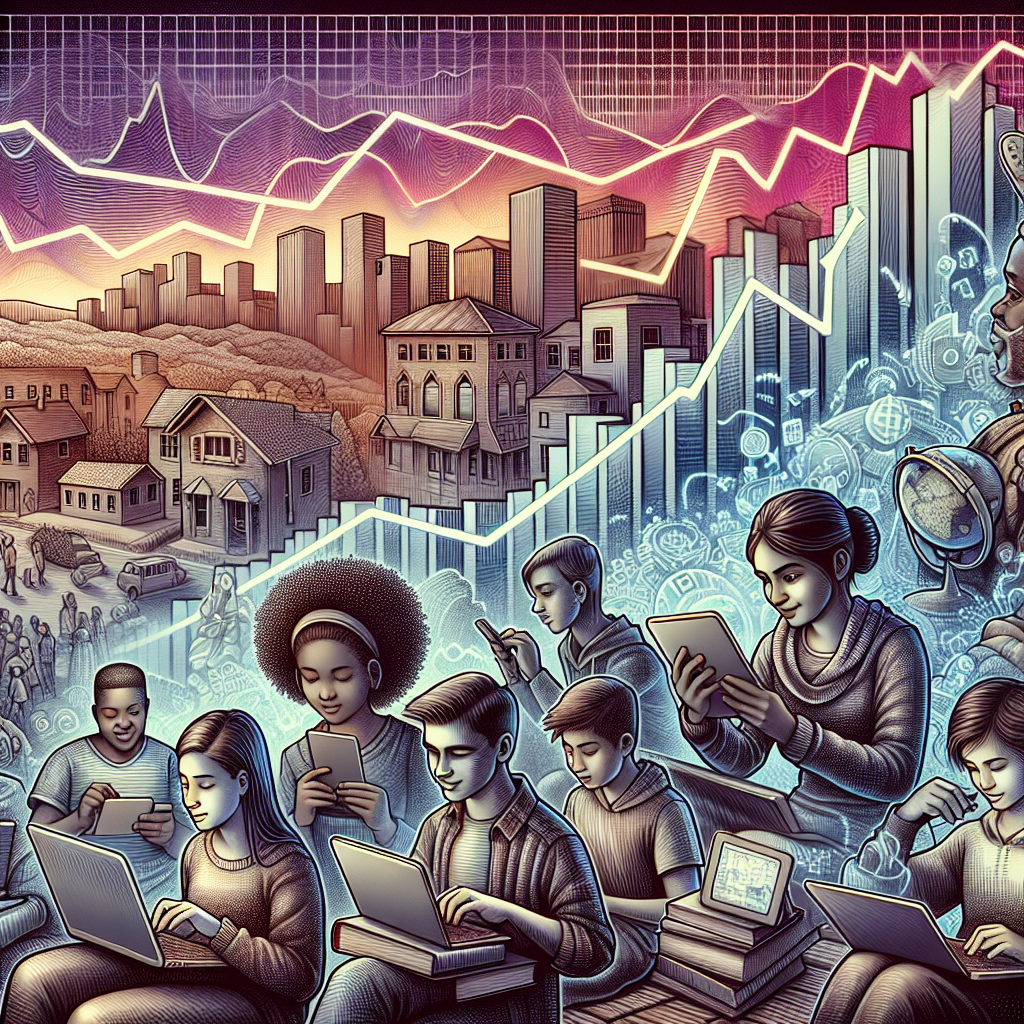
The landscape of education has undergone a revolution thanks to the advent of online learning. What was once supplementary now stands at the forefront of education systems across the globe. Online education has brought it within reach for people who previously found education to be inaccessible due to financial or geographical limits. However, the economic implications are vast and multifaceted, affecting students, educators, institutions, and even entire economies. With increasing internet penetration and the ubiquity of digital devices, online education facilitates an unprecedented level of flexibility and resource accessibility. Delving into the economic dimension reveals that this isn’t just a simple shift in educational delivery methods; it is a profound disruption that reverberates across various sectors, from traditional educational structures to new business models emerging in the educational technology industry. In examining the economic impact of online education, it becomes evident that this transformation holds the potential for significant benefits and substantial challenges.
Online Education and Access to Learning
One of the most notable impacts of online education is the democratization of knowledge and educational opportunity. Online learning breaks down the barriers traditionally associated with geographical and economic access. Students in rural areas or those in countries with fewer educational resources can access the same courses as their peers in urban centers or more affluent nations. This level of access contributes significantly to human capital development, which is a critical driving force behind economic growth. The economic implications extend to reducing inequality in education, where lower-income students have more educational options at their disposal, often from esteemed institutions offering massive open online courses (MOOCs). Moreover, as more students engage in online education, economies can benefit from a more educated workforce, leading to increased productivity and innovation. However, access to technology and digital literacy remains a challenge for some, potentially creating a new digital divide that must be addressed to ensure that online education’s economic benefits are inclusive.
Economic Implications for Institutions
The growth of online education presents universities and educational institutions with both opportunities and challenges. On the positive side, institutions can expand their outreach to global markets, attracting students without the limitations of physical space and geographical borders. This can lead to increased revenue streams and brand expansion. However, the shift also prompts institutions to reevaluate their business models, often necessitating substantial investments in technology infrastructure and faculty training. Furthermore, as traditional institutions compete with entirely online entities and new educational technology startups, they may face pressures to lower tuition fees, especially as new players offer more affordable and flexible learning options. The landscape is becoming increasingly competitive, which could lead to more mergers and partnerships within the educational sector. The economic sustainability of institutions may therefore hinge on their ability to adapt quickly and creatively to this digital transformation.

Disruption in Traditional Learning Structures
The shift to online education is disrupting traditional educational structures, from the function of classrooms to the role of teachers. Online education models prioritize flexibility, allowing learners to tailor their educational experience to better fit their personal and professional lives. This flexibility is driving a demand for more personalized educational content and learning pathways. The traditional role of instructors is evolving from being the primary source of information to becoming facilitators of learning experiences, requiring new skill sets and pedagogical approaches. This evolves into an economic aspect, driving demand in the market for courses and tools aimed at educators adapting to these new roles. Schools and universities may need to reconfigure their physical and digital resources and rethink their roles within the broader educational ecosystem, where learning can happen anywhere and at any time.
Emerging Economic Opportunities in EdTech
The surge in online education has fostered a burgeoning education technology (EdTech) industry poised for significant economic growth. Companies developing platforms for online learning, creating educational software, or providing digital infrastructure services are witnessing robust demand. This segment of the technology industry is attracting considerable investments and driving innovation. The emphasis on remote learning during the COVID-19 pandemic has accelerated this growth, leading to broader adoption of digital learning tools in even the most resistant markets. As these technologies advance, they have the potential to further reduce costs and boost the scalability of educational offerings worldwide. Moreover, EdTech fosters new job opportunities in content creation, technology development, and analytics, contributing to economic diversification and resilience.
Economic Challenges and Future Outlook
While the benefits of online education are evident, several economic challenges persist. Issues such as the quality of online education, accreditation, and the digital divide pose potential drawbacks. Additionally, the transition can strain existing educational and governmental infrastructures, requiring policies that support technology integration and equity in education access. Furthermore, the economic benefits may not be uniformly distributed, leading to potential regional disparities in educational and economic outcomes. The future of online education will likely involve integrating artificial intelligence and machine learning to even further personalize and optimize learning experiences, which could drive another wave of economic benefits and challenges. As stakeholders navigate this evolving landscape, it will be essential to create adaptive frameworks that harness the potential of online education while mitigating its challenges for sustainable economic impact.
Conclusion
In conclusion, online education represents a powerful catalyst for economic change across multiple dimensions. It enhances access to learning, influences institutional economics, disrupts traditional educational models, and fosters the growth of the EdTech industry. While offering substantial benefits in terms of increased access to education and economic opportunities, it also poses significant challenges, requiring strategic adaptations and investments from educational institutions, governments, and the private sector. As the online education landscape continues to evolve, its economic impact will undoubtedly expand, shaping the future of learning and the global economy. Stakeholders must prioritize inclusivity and quality to ensure that the transformative potential of online education is realized for all.