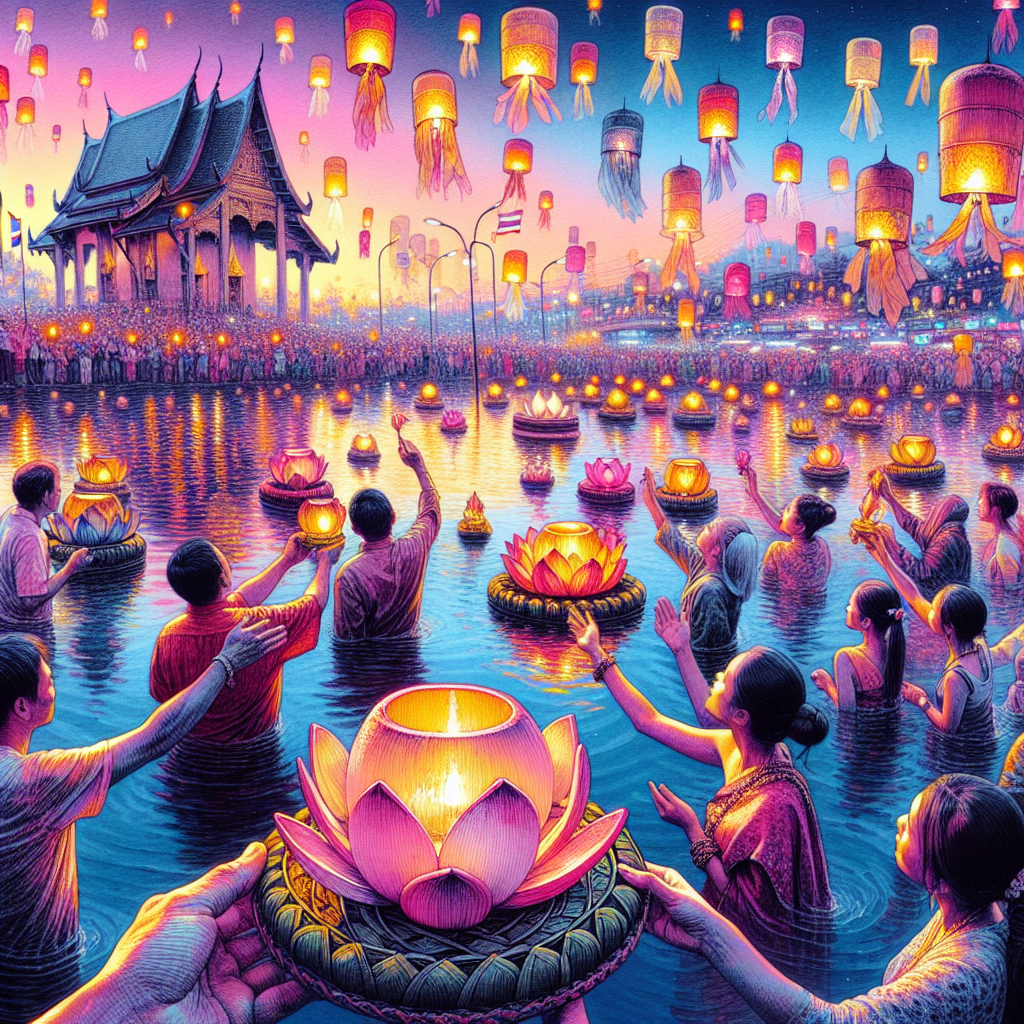
Thailand’s cultural tapestry is rich with a plethora of vibrant festivals, but one that stands out in its sheer beauty and spiritual significance is Loi Krathong. Coinciding with the full moon of the 12th month in the Thai lunar calendar, typically in November, this mesmerizing festival illuminates the night with thousands of floating lanterns and delicately crafted “krathongs” that glide along the country’s rivers, carrying wishes and prayers for the coming year. For those enchanted by global celebrations of light, Loi Krathong encapsulates the quintessence of cultural harmony juxtaposed with nature’s magnificence.
Introduction
The essence of Loi Krathong can be traced back centuries, steeped in traditions that combine Buddhist and ancient Thai beliefs. The term “Loi Krathong” directly translates to “floating basket,” where “loi” means to float, and “krathong” refers to the basket or vessel. These baskets are often intricately adorned with banana leaves, flowers, candles, and incense sticks, each element carrying symbolic meaning. The act of placing these illuminated krathongs into the water is believed to honor the goddess of water, Phra Mae Khongkha, and to express gratitude for providing the essential water resources.
Loi Krathong is not merely a religious observance but a communal event that brings people together in celebration. Across the country, from bustling cities to tranquil villages, everyone partakes in crafting their krathongs, reflecting the diversity and creativity inherent in Thai culture. The festival is augmented by a myriad of activities, including cultural performances, beauty contests called “Noppamas Queen Contests,” traditional dances, and fireworks that light up the night sky.
The glow of thousands of krathongs gently floating on rivers and waterways serves as a moving spectacle symbolizing the release of negative thoughts and the welcoming of new beginnings. The serene beauty of the scene, coupled with the melodic sounds of traditional Thai music, evokes a deep sense of peace and reflection among participants and onlookers alike.
As the festival’s charm continues to attract visitors from around the world, it also fosters an appreciation for Thailand’s cultural heritage and the universal themes of peace, forgiveness, and renewal. The transcendence of Loi Krathong is a testament to the enduring human spirit and its search for light and harmony amidst life’s chaos.
Historical Significance and Origins
The origins of Loi Krathong are intertwined with various legends and historical narratives, making it a festival rich in historical significance. One prominent story attributes the inception of Loi Krathong to the ancient Sukhothai Kingdom in the 14th century. It is said that the festival was created by a royal court lady named Noppamas, who crafted the first krathong to honor the water spirits and win the favor of the king.
Another theory suggests that Loi Krathong has roots in the Hindu festival of Diwali, which also celebrates the triumph of light over darkness. As Hinduism and Buddhism intermingled in the Thai culture, elements of both religions found expression in local traditions. The festival, therefore, embodies a blend of spiritual and cultural influences, celebrating the Buddhist principle of letting go of hatred and embracing renewal while paying homage to nature’s bounties.
An additional layer to the festival’s historical significance is its association with the harvest season. Held around the time of the rice harvest, Loi Krathong also signifies the end of the monsoon season and the arrival of cool, dry weather. The timing of the festival, therefore, aligns with a period of abundance and gratitude, further enriching its celebratory essence.
Over the centuries, the festival has evolved, absorbing elements of Thai folklore, royal customs, and regional variations. Today, Loi Krathong is celebrated across Thailand with unique local twists, reflecting the richness and diversity of Thai culture. Cities like Chiang Mai, Sukhothai, and Bangkok each have their distinct ways of observing the festival, making it a mosaic of regional cultural expressions united by a common theme.
Cultural Activities and Attractions
Loi Krathong is far more than just the act of floating baskets; it encompasses a wide array of cultural activities and attractions that enhance the festive spirit. In many parts of Thailand, the celebration includes elaborate parades showcasing traditional Thai costumes, dances, and music. These parades are not just visual spectacles but also depict historical and mythological narratives, providing visitors with a deeper understanding of Thai culture.
In Chiang Mai, the festival coincides with Yi Peng, where thousands of lit lanterns are released into the sky, creating a breathtaking scene against the backdrop of the city’s ancient temples. The sight of these lanterns, symbolizing the release of misfortune and the ushering in of good luck, captivates both locals and tourists, turning the city into a haven of light and serenity.
Beauty contests, known as Noppamas Queen Contests, are another integral part of the celebrations. Named after the legendary royal court lady, these contests highlight the elegance and grace of Thai women, with participants donning traditional attire and showcasing their cultural knowledge. The contests are a blend of beauty, tradition, and cultural pride, drawing crowds and adding a festive vibrancy to the occasion.
Fireworks displays, traditional boat races, and musical performances further amplify the lively atmosphere of Loi Krathong. In many areas, temple fairs are held, featuring an assortment of food stalls, games, and cultural exhibitions. These activities collectively foster a sense of community and shared joy, embodying the spirit of collective celebration and cultural unity.

The Art of Making Krathongs
The craft of making krathongs is an art form in itself, showcasing the ingenuity and creativity of Thai culture. Traditionally, krathongs are made from banana tree trunks, banana leaves, and decorated with flowers, candles, and incense sticks. The process of creating these floating offerings is often a communal activity, with families and friends coming together to design and assemble their krathongs.
The choice of materials is significant, reflecting an eco-friendly approach that respects nature. In recent years, there has been a conscious effort to use biodegradable and natural materials, stepping away from the use of non-degradable items like styrofoam, which were popular in the past. This shift underscores the festival’s evolving nature and its alignment with contemporary environmental consciousness.
Each element of the krathong holds symbolic meaning. The candle represents light, wisdom, and knowledge, guiding individuals on their path. The incense sticks symbolize purity and the fragrance of virtue, while the flowers denote beauty and the transient nature of life. Once the krathong is set afloat, it is believed to carry away one’s past grievances and ill feelings, invoking a sense of spiritual cleansing and renewal.
The act of making a krathong is meditative and reflective, allowing individuals to engage with their inner thoughts and emotions. It is an opportunity to express creativity and personal wishes, with each person’s krathong being a unique testament to their aspirations and prayers. This hands-on involvement in the festival deepens the personal connection to the cultural tradition, making it a meaningful and memorable experience.
Environmental Considerations and Modern Adaptations
As Loi Krathong attracts increasing numbers of participants and tourists, it also raises important environmental considerations. The practice of floating krathongs, while symbolically profound, has the potential to impact waterways and ecosystems. In response to this, there has been a concerted effort to promote the use of eco-friendly materials and educate the public about sustainable practices.
Modern adaptations of the festival include initiatives by local authorities and environmental organizations to collect and clean up krathongs after they have been floated. Many communities organize clean-up drives, ensuring that the waterways are cleared of debris and that the festival leaves behind minimal environmental impact. This collaborative effort not only preserves the sanctity of the festival but also fosters a sense of environmental stewardship among participants.
Additionally, technological advancements have introduced new ways to celebrate the festival responsibly. LED-lit krathongs and virtual krathong floating events have emerged as innovative alternatives, allowing people to partake in the tradition without contributing to water pollution. These modern adaptations highlight the festival’s dynamic nature and its ability to adapt to contemporary challenges while retaining its core essence.
The dialogue between tradition and modernity is evident in the ongoing efforts to balance cultural preservation with environmental consciousness. The evolution of Loi Krathong reflects a broader societal shift towards sustainable practices, demonstrating that cultural traditions can harmonize with ecological responsibility. This blend of ancient customs and modern awareness ensures that the festival continues to thrive for future generations, embodying the timeless values of respect, gratitude, and renewal.
Loi Krathong in the Global Context
Loi Krathong’s mesmerizing beauty and profound cultural significance have captured the imagination of people worldwide, making it a celebrated event beyond Thailand’s borders. Thai communities and cultural organizations around the globe host Loi Krathong celebrations, sharing the festival’s traditions and spiritual essence with international audiences.
In cities with significant Thai populations, such as Los Angeles, London, and Sydney, Loi Krathong events have become cultural highlights, attracting both Thai expatriates and locals. These celebrations often include krathong-making workshops, traditional Thai performances, and communal floating of krathongs in local waterways. Such events serve as cultural bridges, fostering intercultural understanding and appreciation.
The global appeal of Loi Krathong is also reflected in its inclusion in travel itineraries and tourism promotions. Tourists from around the world are drawn to Thailand to witness and participate in the festival, contributing to the country’s cultural tourism. The enchanting visuals of floating lanterns and krathongs, often shared on social media platforms, further amplify the festival’s global reach, inspiring curiosity and admiration for Thai culture.
Moreover, the universal themes of light, water, and renewal embedded in Loi Krathong resonate with diverse cultural and spiritual traditions. The festival’s emphasis on letting go of grievances and embracing new beginnings aligns with similar practices in various cultures, creating a sense of shared human experience. In this way, Loi Krathong transcends geographical boundaries, offering a moment of reflection and connection for people worldwide.
Conclusion: Embracing Light and Renewal
Loi Krathong stands as a luminous beacon in the tapestry of global celebrations of light, embodying the harmonious interplay of cultural richness, spiritual depth, and environmental awareness. As the festival’s glowing krathongs adorn Thailand’s waterways and its radiant lanterns illuminate the night sky, they carry with them the collective hopes, dreams, and gratitude of all who partake in this beautiful tradition.
The festival’s enduring appeal lies in its ability to nurture a sense of community and shared humanity. Through the simple yet profound act of floating a krathong or releasing a lantern, individuals from all walks of life are invited to pause, reflect, and connect with something greater than themselves. This act of letting go and welcoming the new is a timeless reminder of resilience, hope, and the continuous cycle of renewal.
As Loi Krathong continues to evolve and adapt to the changing world, it remains a testament to the enduring power of cultural traditions to inspire and unite us. The festival not only preserves and celebrates Thai heritage but also invites us all to partake in the universal quest for light, harmony, and renewal. Whether experienced on the banks of the Chao Phraya River or in a distant city, Loi Krathong’s message of peace and gratitude resonates deeply, illuminating our paths and hearts.