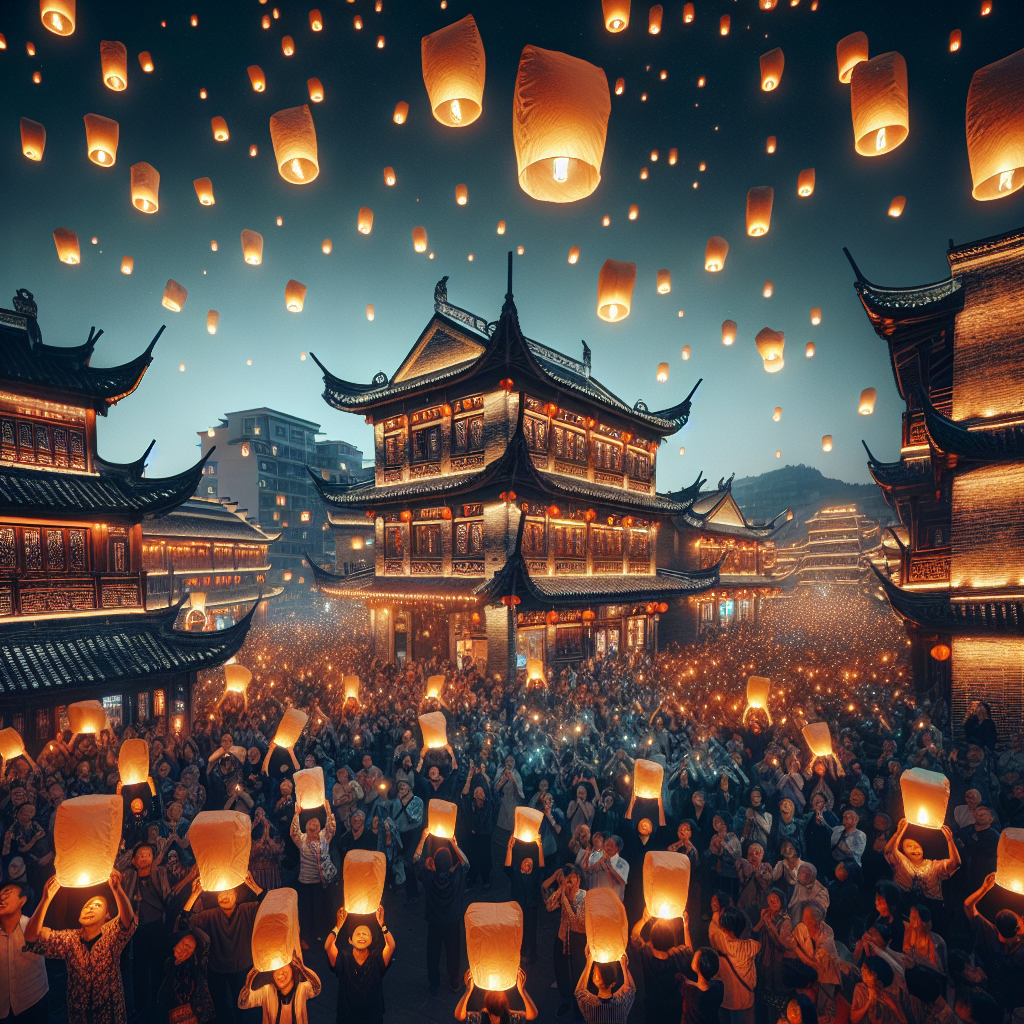
The Lantern Festival, known in Chinese as “Yuan Xiao Jie,” is one of the most picturesque and enchanting celebrations in China’s long list of cultural festivities. This festival marks the end of the Chinese New Year celebrations and falls on the 15th day of the first lunar month. By tradition, it takes place under the first full moon of the lunar year, symbolizing unity and perfection. Crowding streets and public squares, thousands of colorful lanterns illuminate the night sky, creating an awe-inspiring spectacle that captivates locals and tourists alike. But this festival is not just about lighting lanterns; it’s a vibrant tapestry of history, culture, rituals, and communal activities.
The roots of the Lantern Festival trace back over 2,000 years to the Han Dynasty. Initially, it was a ceremony to worship the deities and drive away evil spirits, and it has since evolved into a modern-day celebration that highlights Chinese artistry, craftsmanship, and culinary delights. Each lantern design is unique, often depicting themes ranging from historical tales to zodiac animals, providing a visual lesson in Chinese mythology and tradition. Today, in addition to lantern displays, activities such as lion dances, dragon dances, stilt walking, and fireworks are integral parts of the celebration.
The beauty of the Lantern Festival is more than just its visual spectacle. It is a living representation of Chinese cultural heritage, family unity, and the perpetual human quest for enlightenment and prosperity. Understanding and experiencing this festival is pivotal to appreciating the broader elements of East Asian cultures, as it encapsulates fundamental values and traditions resonating through centuries.
The Historical Significance of Lantern Festival
The Lantern Festival, steeped in historical significance, dates back to the Western Han Dynasty (206 BC – 25 AD). During Emperor Ming’s reign, Buddhism started gaining ground in China, and it is believed that Emperor Ming, in an effort to promote Buddhist culture, ordered the lighting of lanterns in his palace and temples. Thus, the Lantern Festival was born as a fusion of traditional Chinese and Buddhist cultures.
Historically, the festival held different meanings over various dynasties. In the Tang Dynasty (618 – 907 AD), it became a grand national celebration with fireworks and acrobatics, reflecting China’s cultural golden age. The Song Dynasty (960 – 1279 AD) introduced more elaborate and artistic lanterns, turning the festival into an exhibition of exceptional craftsmanship. The Ming (1368 – 1644 AD) and Qing (1644 – 1912 AD) Dynasties saw the festival become even more widespread, emphasizing family reunions and public entertainment.
The lighting of lanterns was originally an act of reverence to the different gods and deities to seek their blessings. These illuminated wonders were meant to ward off evil spirits and guide lost souls to the afterlife, ensuring peace and prosperity for the living. Over time, the religious aspects were overshadowed by more secular activities, but the spiritual essence of the festival remains intact.
Additionally, the Lantern Festival is intertwined with ancient agricultural traditions. The full moon represents an abundant harvest, and communities came together to celebrate nature’s bounty. It is a time of gratitude, reflection, and the strengthening of communal bonds. The historical significance of the festival underpins its continued popularity and endurance in Chinese society today.
Cultural Practices and Rituals
The Lantern Festival is rife with cultural practices and rituals that make it distinctively Chinese. The lighting of lanterns being the most prominent, it is believed that these bright lights symbolize hope, light, and a bright future. Lanterns of various shapes and sizes are meticulously crafted, often designed with intricate patterns that carry deep symbolic meanings. For instance, fish-shaped lanterns represent prosperity while dragon-shaped lanterns signify power and luck.
Eating tangyuan, a type of glutinous rice ball, is another quintessential tradition during the Lantern Festival. These sweet, chewy balls are usually filled with black sesame paste, red bean paste, or peanut butter and are served in a syrup. Tangyuan’s round shape symbolizes wholeness, unity, and family togetherness. Sharing and eating tangyuan signify familial harmony and completeness.
Another traditional activity is solving lantern riddles. Riddles written on paper notes are attached to the lanterns, and people gather to decipher them. This intellectual exercise is both a form of entertainment and a demonstration of wit, often with the person who solves the riddle winning a small prize. It is a fun and engaging way to involve the community in the festivities.
Performances such as lion dances and dragon dances add to the festival’s lively atmosphere. These dances are more than mere entertainment; they hold cultural significance, symbolizing power, courage, and good fortune. The loud drumming and vibrant costumes are thought to scare away evil spirits and attract good luck for the upcoming year. Fireworks displays are also customary, lighting up the sky with their dazzling explosions and contributing to the festival’s overall sense of exuberance and joy.
Regional Variations of Lantern Festival
While the Lantern Festival is celebrated nationwide in China, regional variations add a fascinating layer of diversity to the event. In northern China, for example, the festival is characterized by snow-clad lantern displays and ice sculptures, turning the celebration into a winter wonderland. Shanxi Province is known for its grand ice lantern exhibits, where artisans carve stunning lanterns from blocks of ice illuminated from within.
In southern provinces like Guangdong and Fujian, the celebration alters to fit the warmer climate. Here, it’s common to see large-scale parades featuring elaborate dragon lanterns, which can be hundreds of meters long. These giant lanterns weave through the city streets, accompanied by traditional music and dance performances. Water lanterns are also popular in these regions, where lanterns are placed on rivers and lakes, creating mesmerizing reflections on the water surface.
Taiwan presents another unique perspective on the Lantern Festival. The annual Taiwan Lantern Festival attracts millions of visitors, featuring impressively large lantern displays, including massive installations that can reach the height of multi-story buildings. Lanterns often depict significant events from Taiwanese history and culture, making the festival both a visual and educational experience.
Furthermore, in the rural areas of western China, traditional customs are maintained more rigorously. Here, you might find smaller, more community-focused celebrations where every household contributes by making their handcrafted lanterns. The emphasis is on fostering community spirit and preserving age-old traditions rather than grand public spectacles.
Global Influence and Modern Celebrations
The Lantern Festival’s charm has transcended China’s borders, impacting global celebrations and traditions in various countries. In places with large Chinese communities, such as Malaysia, Singapore, and the Philippines, the Lantern Festival is celebrated with almost as much fervor as in China, marked by public lantern displays, parades, and cultural performances.
In recent years, major cities around the world have started to embrace this vibrant tradition. For instance, London’s Chinatown and New York City host lantern festivals that draw diverse crowds eager to experience this unique cultural event. These festivals often incorporate elements of the local culture, creating a blend that honors Chinese traditions while celebrating multiculturalism.
Modern technology has also paved the way for innovative interpretations of the Lantern Festival. Digital and LED lanterns, interactive displays, and augmented reality experiences are becoming popular in urban areas, appealing to the tech-savvy generation and global audience. These modern touches do not detract from the festival’s cultural roots but rather enhance its reach and relevance in today’s world.
Social media plays a crucial role in spreading the festival’s popularity. Platforms like Instagram and TikTok are flooded with images and videos of lantern festivals from around the world, showcasing their beauty to a global audience. This has spurred international interest and tourism, bringing people from different backgrounds together to partake in the celebration.
The Symbolism Behind the Lanterns
Unlike ordinary lights, the lanterns of the Lantern Festival brim with symbolism and meaning. They are not just decorative objects but carry profound messages embedded in Chinese philosophy and folklore. Lanterns traditionally symbolize the driving away of darkness and the ushering in of a bright and auspicious future.
Red lanterns, the most popular color choice, symbolize good fortune, happiness, and prosperity. Red is considered a lucky color in Chinese culture, often seen during major festivals and celebrations. The shape of the lanterns also matters. While some are round to signify wholeness and unity, others are designed in shapes like lotus flowers, which stand for purity and renewal. Animal-shaped lanterns often represent the zodiac sign of the year, offering specific blessings associated with each animal.
The act of lighting and releasing lanterns is also imbued with meaning. In some regions, lanterns are inscribed with wishes and prayers before being released into the sky or set afloat on water. This act is a way of seeking divine blessings and sending one’s hopes and dreams to the heavens. The sight of countless lanterns ascending into the night sky or gliding across water represents collective aspirations for peace, prosperity, and harmony.
Moreover, the festival’s emphasis on light resonates with the human quest for enlightenment and wisdom. Just as light dispels darkness, the Lantern Festival represents the dispelling of ignorance, leading to a deeper understanding and insight. It is an age-old reminder of the human spirit’s resilience and the perennial search for knowledge and truth.
Conclusion
The Lantern Festival, with its rich history, cultural significance, and visual splendor, offers a fascinating glimpse into Chinese society’s heart and soul. It is a celebration that unites people, transcending geographical and cultural boundaries while staying firmly rooted in tradition. From the meticulously crafted lanterns to the communal activities that bring families and friends together, every aspect of the festival embodies themes of unity, hope, and renewal.
While the festival has evolved over the centuries, adapting to modern influences and expanding its global reach, its core values remain unchanged. It continues to be a time for reflection, celebration, and the strengthening of communal bonds. Through regional variations and modern adaptations, the Lantern Festival maintains its unique charm, offering a blend of ancient traditions and contemporary innovations.
Whether experienced in the bustling streets of Beijing, the tranquil waters of southern China, or even global cities like New York and London, the Lantern Festival’s magic never fails to enchant. It serves as a powerful reminder of the enduring human values of wisdom, unity, and hope. The festival encourages us all to light our own lanterns, symbolically driving away the darkness in our lives and illuminating the path toward a brighter future.
In an increasingly interconnected world, the Lantern Festival stands as a beacon of cultural preservation and global unity. As it continues to light up skies around the globe, it invites people of all backgrounds to partake in its joyous celebrations, making it a truly universal festivity.