Kailash Satyarthi is a name synonymous with the fight against child labor and the advocacy for children’s rights. With a career spanning over four decades, Satyarthi has been a tireless crusader, dedicating his life to eradicating child labor and ensuring education for all children. His work has earned him the Nobel Peace Prize and global recognition, but more importantly, it has given hope and freedom to thousands of children around the world.
Early Life and Inspiration
Born on January 11, 1954, in Vidisha, a small town in the Indian state of Madhya Pradesh, Kailash Satyarthi was inspired from a young age by the disparities he observed around him. Witnessing children his age working in hazardous conditions while he attended school planted the seeds of his lifelong mission. He often wondered why some children were denied the right to education and a carefree childhood. These early observations fueled his passion for social justice and human rights.
The Birth of Bachpan Bachao Andolan
In 1980, Satyarthi founded Bachpan Bachao Andolan (BBA), or Save the Childhood Movement, an organization dedicated to the eradication of child labor and the promotion of children’s rights. BBA’s mission was clear: to rescue and rehabilitate children trapped in bonded labor and to ensure their right to a free and quality education.
BBA’s approach is multifaceted, involving direct interventions to rescue children, legal action to bring perpetrators to justice, and advocacy to influence policy changes. The organization’s impact has been profound, rescuing over 88,000 children from various forms of exploitation, including bonded labor, trafficking, and slavery.
Dangerous Rescues and Relentless Advocacy
Satyarthi’s work often placed him in danger. Rescuing children from the clutches of traffickers and unscrupulous employers frequently meant facing threats and violence. Despite these risks, Satyarthi and his team persevered. Their courage and determination have been instrumental in raising awareness about the plight of child laborers and mobilizing support for their cause.
One of the most significant aspects of Satyarthi’s advocacy has been his ability to bring global attention to child labor. He has spoken at numerous international forums, including the United Nations, and has collaborated with various global organizations to push for stronger protections for children. His efforts were crucial in the adoption of Convention No. 182 by the International Labour Organization (ILO), which calls for the elimination of the worst forms of child labor.
The Global March Against Child Labor
In 1998, Satyarthi organized the Global March Against Child Labor, a worldwide campaign that brought together individuals and organizations from 103 countries. The march aimed to raise awareness about child labor and to demand legislative changes to protect children’s rights. The Global March covered 80,000 kilometers and culminated in Geneva, Switzerland, where the ILO was holding its annual conference.
The Global March was a monumental success, highlighting the issue of child labor on a global stage and leading to significant policy changes in several countries. It also fostered a sense of solidarity among activists and organizations working towards the same goal, creating a powerful network of advocates dedicated to ending child labor.
Education as a Key to Freedom
A fundamental belief underpinning Satyarthi’s work is that education is the key to ending child labor. He argues that providing children with access to quality education not only helps them escape the cycle of poverty and exploitation but also empowers them to build a better future for themselves and their communities.
Through BBA and other initiatives, Satyarthi has been instrumental in promoting education for all children. He has worked tirelessly to ensure that rescued children receive the support they need to reintegrate into society and continue their education. His efforts have also included advocating for policy changes to make education more accessible and inclusive, particularly for marginalized and disadvantaged communities.
Nobel Peace Prize and Continued Impact
In 2014, Kailash Satyarthi was awarded the Nobel Peace Prize, along with Malala Yousafzai, for their respective struggles against the suppression of children and young people and for the right of all children to education. The Nobel Committee recognized Satyarthi’s relentless efforts to combat child labor and his unwavering commitment to children’s rights.
Receiving the Nobel Peace Prize brought further global recognition to Satyarthi’s work and amplified his message. It also provided him with a broader platform to advocate for children’s rights and to continue his fight against child labor. However, Satyarthi remained grounded, emphasizing that the award was not just a personal achievement but a recognition of the collective efforts of all those fighting for children’s rights.
The 100 Million Campaign
In 2016, Satyarthi launched the 100 Million Campaign, an ambitious global initiative aimed at mobilizing 100 million young people to advocate for the rights of 100 million children living in exploitation. The campaign seeks to engage youth as agents of change, empowering them to take action and to create a world where every child is free, safe, and educated.
The 100 Million Campaign has been successful in raising awareness about child labor and other forms of child exploitation. It has also fostered a sense of global solidarity, bringing together young people from different backgrounds and countries to work towards a common goal. The campaign’s emphasis on youth leadership and activism is a testament to Satyarthi’s belief in the power of young people to drive social change.
Challenges and the Road Ahead
Despite significant progress, the fight against child labor is far from over. Millions of children around the world continue to be trapped in exploitative labor, deprived of their right to education and a safe childhood. Satyarthi acknowledges the challenges ahead but remains optimistic and determined.
He continues to call for stronger laws and enforcement mechanisms to protect children from exploitation. He also emphasizes the need for comprehensive social policies that address the root causes of child labor, such as poverty, lack of education, and social inequality. Collaboration and partnership among governments, civil society, and the private sector are crucial in achieving these goals.
Kailash Satyarthi’s crusade against child labor has transformed the lives of thousands of children and has inspired a global movement for children’s rights. His unwavering commitment, courage, and vision have made him a true leader in social change. As we continue to face the challenge of eradicating child labor, Satyarthi’s work serves as a powerful reminder of the importance of fighting for justice, equality, and the rights of every child.
Through his efforts, Satyarthi has not only rescued children from exploitation but has also given them hope and a future. His legacy is a testament to the impact that one individual’s dedication and passion can have in creating a better world for all. The fight against child labor continues, and with leaders like Kailash Satyarthi at the helm, there is hope that one day, every child will be free, safe, and educated.
Mobilizing Technology and Innovation
Kailash Satyarthi has always recognized the power of technology and innovation in advancing his mission. He has leveraged digital platforms and social media to raise awareness, mobilize support, and create a more connected and informed global community. Initiatives like the Child Labour Free India Campaign have utilized technology to map and document cases of child labor, making it easier to identify and respond to instances of exploitation.
Additionally, Satyarthi’s use of media campaigns has been instrumental in spreading his message. Documentaries, interviews, and news coverage have highlighted the grim realities of child labor and showcased the successes of rescue operations and rehabilitation programs. These efforts have not only educated the public but also pressured governments and organizations to take action.
Engaging the Business Sector
Understanding that businesses play a crucial role in perpetuating or combating child labor, Satyarthi has actively engaged with the corporate sector. He has urged companies to adopt ethical practices and to ensure their supply chains are free from child labor. Through partnerships and dialogues with industry leaders, Satyarthi has promoted corporate social responsibility and emphasized the importance of fair trade and ethical sourcing.
One notable collaboration is with the RugMark (now GoodWeave) initiative, which certifies carpets and rugs made without child labor. This certification not only helps consumers make informed choices but also supports efforts to eliminate child labor from the carpet industry. Such initiatives highlight Satyarthi’s holistic approach to addressing the issue, combining grassroots activism with strategic partnerships.
Personal Sacrifices and Recognition
Satyarthi’s journey has not been without personal sacrifices. He has faced threats, attacks, and legal challenges, yet his resolve has never wavered. His family, too, has stood by him, supporting his mission despite the risks involved. This unwavering commitment has earned him respect and admiration worldwide.
In addition to the Nobel Peace Prize, Satyarthi has received numerous awards and honors, including the Robert F. Kennedy Human Rights Award, the Defenders of Democracy Award, and the Medal of the Italian Senate. These accolades recognize his extraordinary contributions to human rights and his relentless fight against child labor. However, Satyarthi often emphasizes that the true reward lies in the smiles and freedom of the children he has helped rescue.
Inspiring Future Generations
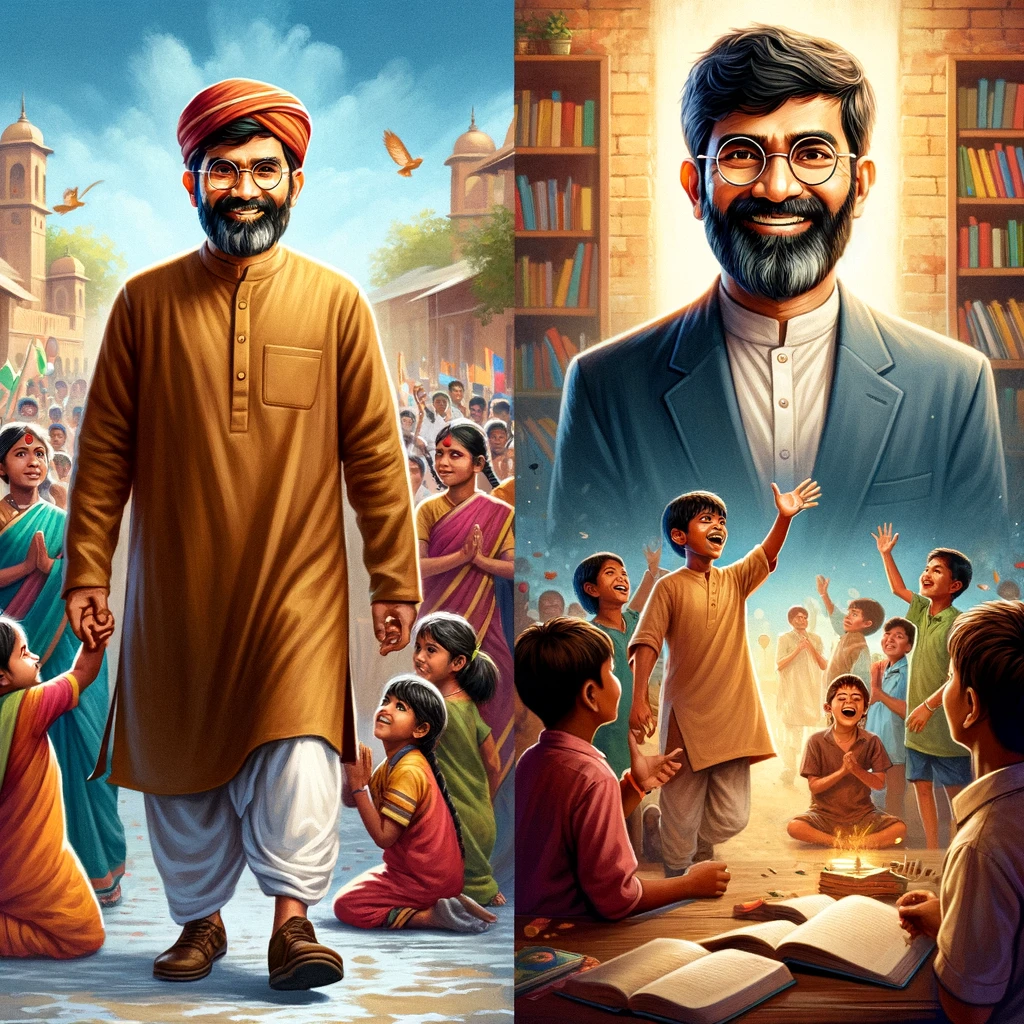
Kailash Satyarthi’s story is one of inspiration and hope. He has demonstrated that a single individual’s dedication and perseverance can bring about significant social change. His life and work inspire future generations to take up the mantle of advocacy and to continue the fight for justice and equality.
Educational institutions and organizations frequently invite Satyarthi to speak, sharing his experiences and insights with young people. Through these engagements, he encourages youth to be proactive in addressing social issues and to believe in their power to effect change. His message resonates deeply, fostering a new generation of activists committed to building a better world.
Legacy and Ongoing Efforts
Kailash Satyarthi’s legacy is one of profound impact and enduring influence. His work has laid a strong foundation for the global fight against child labor and the promotion of children’s rights. As he continues his advocacy, he remains focused on the ultimate goal: a world where no child is exploited, and every child has the opportunity to thrive.
Satyarthi’s ongoing efforts include pushing for the universal ratification and implementation of international conventions on child labor and children’s rights. He also continues to support grassroots movements and local organizations, recognizing that sustainable change requires community-driven solutions. His approach is inclusive and collaborative, bringing together diverse stakeholders to address the complex issue of child labor.
Conclusion
Kailash Satyarthi’s crusade against child labor has not only transformed the lives of countless children but has also galvanized a global movement for children’s rights. His relentless advocacy, bravery, and vision have made him a true leader in social change. As the fight against child labor continues, Satyarthi’s work serves as a powerful reminder of the importance of standing up for justice, equality, and the inherent rights of every child.
Through his efforts, Satyarthi has rescued children from the depths of exploitation and given them hope for a brighter future. His legacy is a testament to the impact that one dedicated individual can have in creating a better, more just world. The journey to eradicate child labor is ongoing, but with leaders like Kailash Satyarthi at the forefront, there is hope that one day, every child will be free, safe, and empowered to reach their full potential.