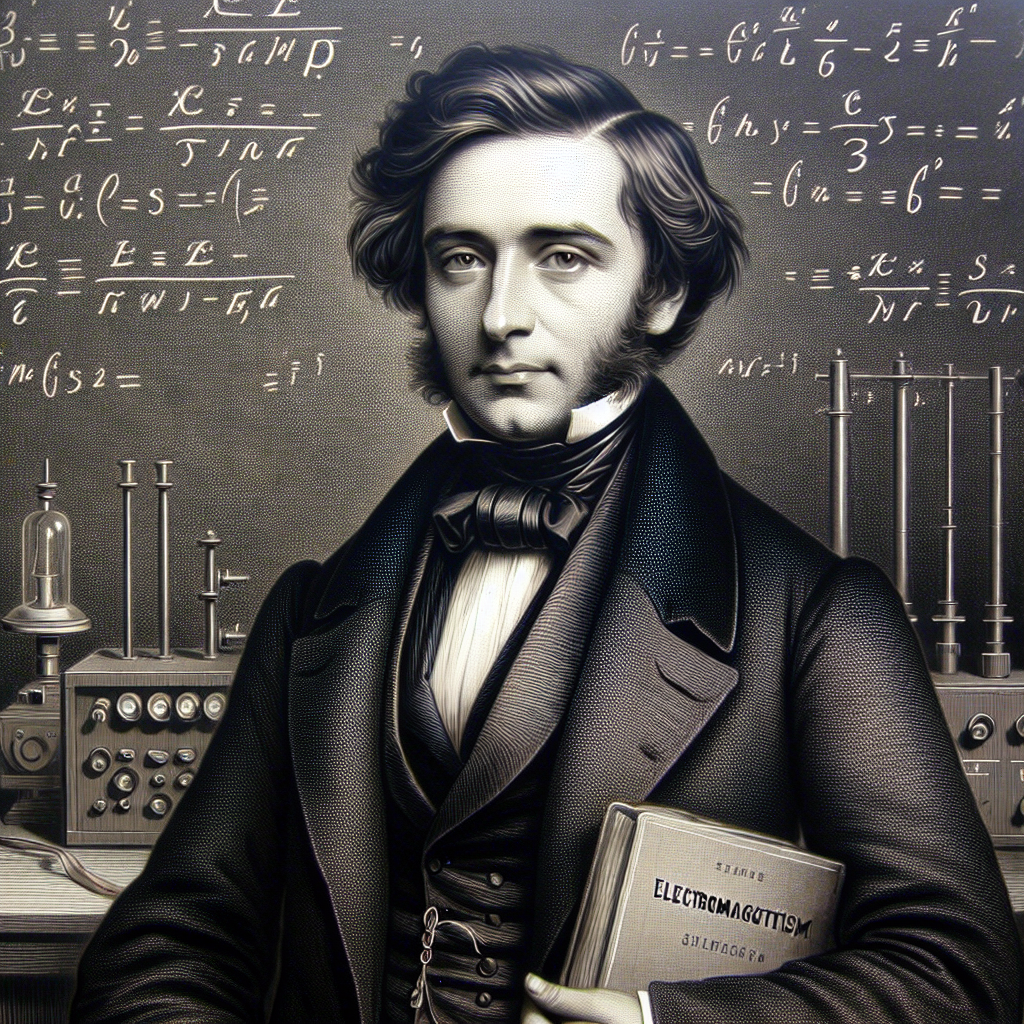
Welcome to our comprehensive exploration of one of history’s most groundbreaking scientists, James Clerk Maxwell. Often overshadowed by the likes of Newton and Einstein, Maxwell’s contributions to science fundamentally transformed our understanding of the natural world. He is rightfully known as the Father of Electromagnetic Theory, a title that underscores his immense impact on physics and technology.
Introduction
Born in Edinburgh, Scotland, in 1831, James Clerk Maxwell showed prodigious talent from a very young age. His early exposure to the world of letters and numbers facilitated a pathway to stellar academic achievements. His curious mind and rigorous dedication to the sciences led him to make pivotal discoveries that have since shaped multiple scientific domains.
Before delving into his monumental work on electromagnetic theory, it’s essential to appreciate Maxwell’s broad range of interests and achievements. From formulating the Bugle Call equation in music to laying down the mathematical foundation of color photography, his expertise was remarkably diverse. James Clerk Maxwell was not just a pioneering physicist—he was a polymath whose groundbreaking ideas continue to reverberate through the corridors of modern science.
Maxwell’s influence extends far beyond textbooks and academic circles; his theories underpin much of today’s technological advancements. Without his contributions, the field of electromagnetism might not have attained the same level of sophistication that it enjoys today. This article aims to shed light on the life, works, and enduring legacy of James Clerk Maxwell, bringing recognition to a titan whose theories continue to electrify humanity.
The Early Years and Education
James Clerk Maxwell was born into a family that valued education and curiosity. His father, John Clerk, was an advocate whose keen interest in science influenced young James. At the tender age of eight, Maxwell could recite lengthy passages of Milton’s “Paradise Lost” and had already started showing signs of his future brilliance.
His formal education began at the Edinburgh Academy, where he received the nickname “Dafty” due to his unique habits and intense focus on his studies. Despite the teasing, Maxwell thrived academically, displaying a particular aptitude for mathematics and the sciences. He later enrolled at the University of Edinburgh and, subsequently, the University of Cambridge, where he further honed his skills under some of the finest minds of his time.
While at Cambridge, Maxwell’s genius began to truly shine. In 1854, he graduated from Trinity College with a degree in mathematics and soon thereafter began his groundbreaking work on the theory of electromagnetism. The supportive academic environments he experienced played a crucial role in shaping his career and enabling his most important contributions.
Maxwell’s Contribution to Electromagnetic Theory
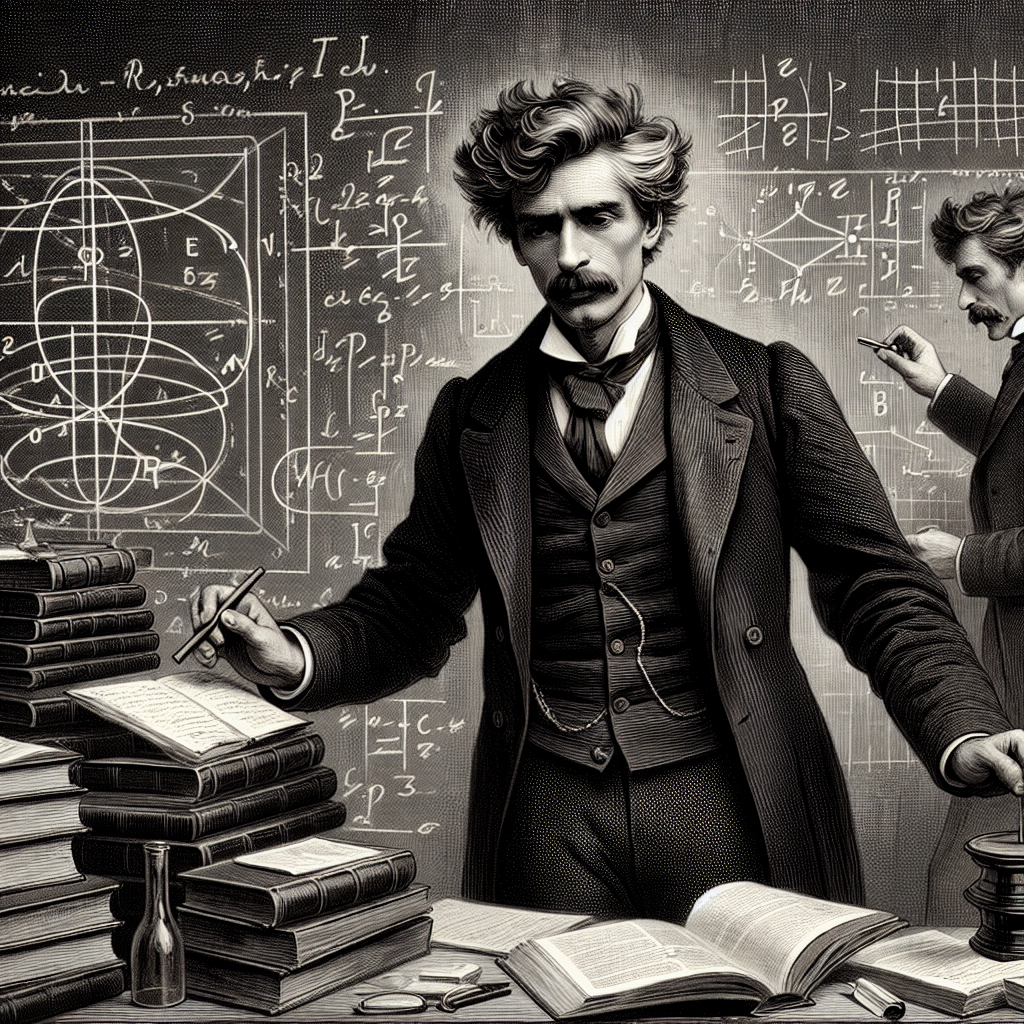
Maxwell’s most iconic achievement is undoubtedly his formulation of the four fundamental equations that bear his name. These equations describe how electric and magnetic fields propagate and interact, essentially laying the groundwork for classical electromagnetic theory. Published in his seminal work, “A Treatise on Electricity and Magnetism” (1873), Maxwell’s Equations unified the previously disparate fields of electricity and magnetism into a coherent theoretical framework.
The beauty of Maxwell’s Equations lies in their simplicity and depth. They predict that changing electric fields produce magnetic fields and vice versa, leading to the revelation that light itself is an electromagnetic wave. This insight was extraordinarily profound, connecting the visible phenomenon of light with the invisible forces of electricity and magnetism.
These equations not only explained known phenomena but also paved the way for future technological advancements. Radio waves, microwaves, X-rays—all of these emerged from Maxwell’s theoretical framework. In essence, our modern communication systems that rely on these technologies owe their existence to his pioneering work.
Other Notable Achievements
Although Maxwell’s electromagnetic theory often takes center stage, his contributions to other scientific fields are equally noteworthy. For instance, his work on gases formulated what is now known as the Maxwell-Boltzmann distribution. This statistical law describes the distribution of speeds among molecules in a gas, laying crucial groundwork for the field of statistical mechanics.
Maxwell also made significant contributions to the study of optics and color vision. In partnership with Thomas Young, he developed the Young–Maxwell theory of color, which proposed that primary colors could be combined to create other colors. This theory directly led to the invention of the first color photograph in 1861, using a three-color process based on Maxwell’s principles.
Even in his lesser-known work, Maxwell’s influence was transformative. His development of the mechanical model for Saturn’s rings, for example, showed that the rings were composed of numerous small particles, a theory that was later confirmed by space missions centuries afterward. His curiosity and ingenuity enabled him to leave a lasting impact in multiple scientific disciplines.
Maxwell’s Legacy in Modern Science and Technology
Today, Maxwell’s legacy is evident in almost every facet of modern technology. From understanding how radios transmit signals to the very principles behind electricity we use daily, his work forms the backbone of much modern science. Scientists and engineers continue to build upon his theories, extending their utility into ever-new areas.
For instance, the advent of quantum mechanics, although it diverges from classical electromagnetism, was significantly informed by the theoretical groundwork laid down by Maxwell. His equations remain crucial even in relativistic and quantum frameworks, illustrating their robustness and versatility.
Moreover, electrical engineering, signal processing, and telecommunications are all fields that would be inconceivable without Maxwell’s contributions. His equations are included in fundamental engineering curricula worldwide and serve as critical touchstones for ongoing research and development.
Recognition and Honors
Despite the towering significance of his work, Maxwell did not achieve the same level of popular fame in his time as some of his contemporaries. However, academic and scientific communities have long recognized his immense contributions. Maxwell was the recipient of numerous accolades during his lifetime, including being elected as a Fellow of the Royal Society, a testament to the impact and regard his work commanded.
Posthumously, Maxwell’s contributions have continued to gain recognition, and he is now universally acknowledged as one of the great scientific minds of all time. Numerous institutions, awards, and even physical constants bear his name, preserving his legacy for future generations. His face appears on various bank notes and stamps, serving as a lasting tribute to his monumental impact on science.
The establishment of the James Clerk Maxwell Prize, one of the highest honors in the field of electromagnetic theory, further attests to his enduring legacy. This award is given annually to individuals who have made significant contributions to the field, continuing Maxwell’s legacy of excellence and innovation.
Conclusion
In reflecting on the life and contributions of James Clerk Maxwell, one is struck by the breadth and depth of his influence. From unifying the fields of electricity and magnetism to laying foundational theories that facilitate the functioning of modern technology, Maxwell’s work transcends time and continues to be a cornerstone of scientific inquiry.
While he may have been underappreciated during his lifetime, today Maxwell is rightfully celebrated as one of the true giants of science. His equations not only solved the pressing scientific questions of his time but also laid the groundwork for countless innovations that have revolutionized the modern world. His interdisciplinary pursuits provide a blueprint for how curiosity and dedication can yield extraordinary results.
As we continue to explore and innovate, Maxwell’s contributions serve as a guiding light. Whether in developing new technologies or deepening our understanding of the natural world, his pioneering spirit lives on, inspiring generations of scientists, engineers, and thinkers. Maxwell’s story is a powerful reminder of the incredible impact that one individual can have on the world through unwavering commitment to discovery and knowledge.