Vincent van Gogh, a name that resonates with art enthusiasts, historians, and casual admirers alike, was a figure of immense talent and complexity. Born on March 30, 1853, in the Netherlands, Vincent Willem van Gogh is one of the most famous and influential figures in the history of Western art. His contribution to Post-Impressionism, a movement that aimed to express emotion and symbolism, went far beyond the visual beauty of his works. Van Gogh’s life, marred with mental illness, poverty, and tumultuous relationships, adds a layer of depth and tragedy to his already intriguing narrative.
At the outset, Vincent’s journey in the art world was anything but typical. He struggled with finding his place and purpose, attempting various careers before dedicating himself entirely to painting at the age of 27. Over the following decade, he created over 2,100 artworks, including about 860 oil paintings, most of which were done in the last two years of his life. His use of bold colors, emotional honesty, and expressive brushwork distinguished his work from his contemporaries.
However, van Gogh’s life was not merely a litany of artistic achievements. It was also a poignant tale of struggle and suffering, marked by episodes of mental illness that led to his premature death at 37. Despite the adversities he faced, or perhaps because of them, his art remains a powerful testament to his inner life and vision. This article aims to shed light on van Gogh’s troubled yet extraordinary life, his unique contribution to art, and his enduring legacy that continues to inspire countless individuals and artists around the world.
Early Life and Struggles
Vincent van Gogh’s early years were marked by a sense of restlessness and search for meaning. Born into a middle-class family, van Gogh initially pursued various paths, including working at an art dealership, teaching, and even attempting to become a clergyman, much like his father. Each endeavor, however, ended in disappointment, leaving him disillusioned and directionless.
It was not until 1880, after being encouraged by his brother Theo, who was a constant source of emotional and financial support, that Vincent decided to devote himself to art. This decision marked the beginning of a significant yet challenging chapter in his life. His initial works were heavily influenced by the Dutch masters, characterized by dark palettes and somber themes that reflected the plight of peasant life.
Van Gogh’s early struggles were not only professional but also personal. He experienced bouts of loneliness, rejection, and existential angst, which were compounded by his complex personality and psychological troubles. Despite these difficulties, or perhaps because of them, Vincent’s early works were powerful and evocative, capturing the raw emotion and humanness of his subjects.
By moving from the Netherlands to Paris in 1886, van Gogh began a transformative period, allowing him to encounter new artistic styles and influences. The Parisienne art scene exposed him to Impressionism, and the vibrant use of color and light left a lasting impact on his works. This exposure shifted his style from the drab hues of his earlier years to the bright, vivid tones that he is celebrated for today.
Artistic Breakthrough
The years in Paris were transformative for Vincent van Gogh’s career. Here, he interacted with many of the leading artists of the day, including Henri de Toulouse-Lautrec, Paul Gauguin, and Camille Pissarro. These interactions did much to broaden his artistic horizons and deepen his understanding of color, light, and form.
In 1888, van Gogh moved to Arles, a town in the south of France, seeking the tranquility and vivid landscape that would inspire some of his most famous works. During his time in Arles, van Gogh produced a staggering number of paintings and drawings, including iconic pieces such as “The Starry Night,” “Sunflowers,” and “The Bedroom.”
In Arles, van Gogh’s style matured and became more distinctive. His use of color became more expressive and symbolic, moving beyond the literalism that characterized much of his earlier work. The swirling, turbulent skies of “The Starry Night,” for instance, achieved a degree of emotional intensity and transcendence that has captivated viewers for generations.
However, this period was also marked by significant mental strain and instability. Vincent’s health deteriorated, and he began to experience severe psychological crises. Despite these challenges, his output during this period was prodigious, driven by an almost manic creative energy that was as remarkable as it was unsustainable.
The Final Years
Vincent van Gogh’s final years were a mix of prolific creativity and intense suffering. After a violent quarrel with Paul Gauguin in December 1888, during which Vincent famously cut off part of his own ear, he was hospitalized multiple times. His deteriorating mental health led him to admit himself to the Saint-Paul-de-Mausole asylum in Saint-Rémy-de-Provence in 1889.
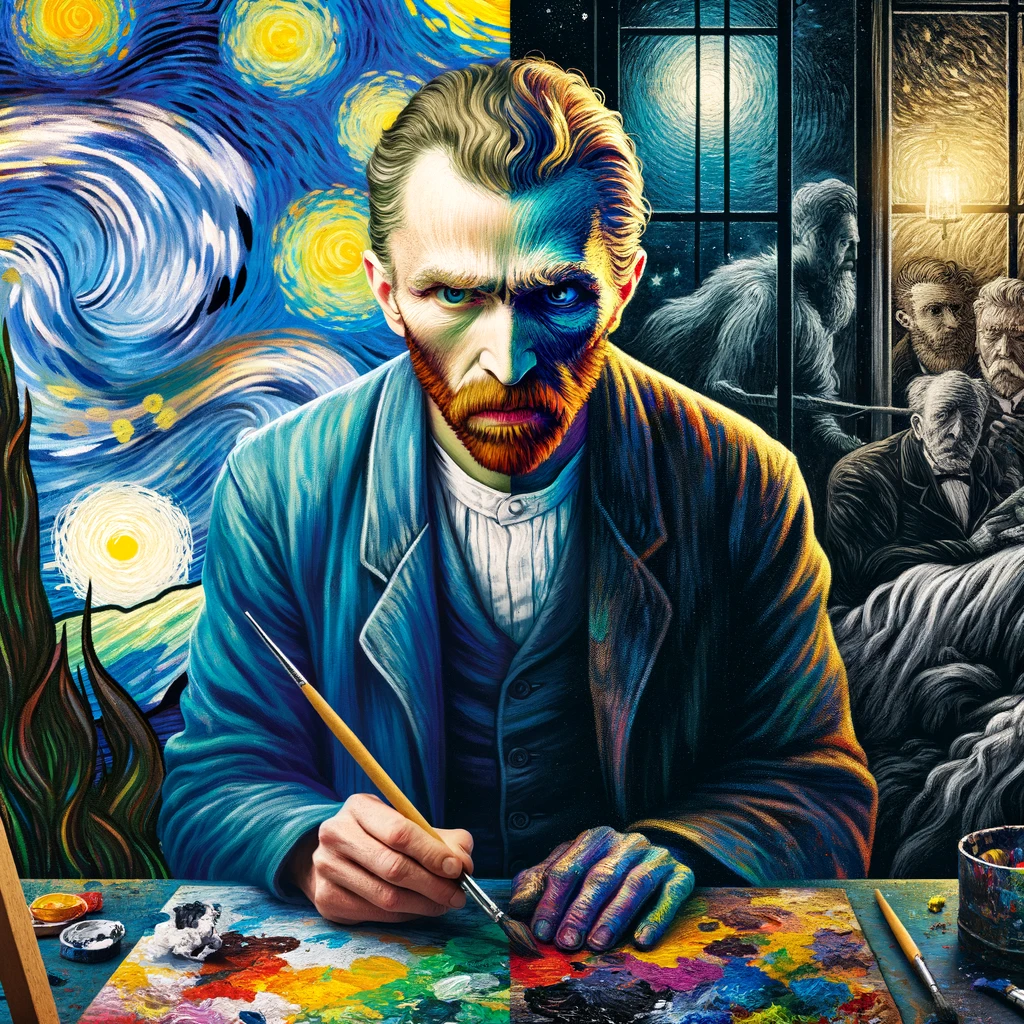
Despite his confinement, van Gogh continued to produce art with fervor. It was at the asylum that he painted “The Starry Night,” one of his most renowned masterpieces. This period, albeit fraught with suffering, yielded some of his most introspective and profound works. The swirls and intensity of “The Starry Night” are often interpreted as reflections of his tormented mind.
In May 1890, Vincent moved to Auvers-sur-Oise under the care of Dr. Paul Gachet, whom he respected as both a physician and fellow artist. In Auvers, Vincent painted over 70 works in the last two months of his life, demonstrating an astonishing level of productivity. However, the emotional turmoil never ceased.
On July 27, 1890, in a tragic culmination of his long battle with mental illness, Vincent shot himself in the chest. He succumbed to his injuries two days later, on July 29, with Theo by his side. His death marked the end of a troubled yet profound life, but his work ensured that his legacy would endure far beyond his years.
Legacy and Influence
Vincent van Gogh’s impact on the art world is immeasurable. Despite his lack of commercial success during his lifetime—selling only one painting—his work posthumously garnered immense appreciation and acclaim. Today, he is celebrated as one of the greatest painters of all time, with his works exhibited in major museums and commanding astronomical prices at auctions.
Van Gogh’s approach to color, brushwork, and emotion has influenced countless artists and movements. His vibrant, dynamic use of color broke away from traditional approaches and paved the way for modern art movements such as Expressionism and Fauvism. Artists like Jackson Pollock, Willem de Kooning, and the German Expressionists have cited van Gogh as a major influence on their work.
Beyond his technical innovations, van Gogh’s raw emotional honesty and vulnerability continue to resonate deeply with audiences. His letters to Theo reveal a deeply thoughtful, sensitive individual who poured his heart and soul into his art. This personal connection makes his work profoundly relatable and timeless.
Van Gogh’s life story has been immortalized in numerous books, films, and exhibitions. His struggles and triumphs have humanized him beyond his artistic genius, making his story one of resilience and passion in the face of adversity. Through his art, he achieved a form of immortality, continuing to touch lives and inspire new generations.
Conclusion
Vincent van Gogh’s life and work present a compelling narrative of brilliance and hardship. His journey from a troubled, searcher of meaning to an iconic figure in the art world is both inspiring and profoundly tragic. Van Gogh’s struggles with mental health and his turbulent personal life did not diminish his artistic genius; instead, they seemed to fuel the passionate creativity that led him to produce some of the most beloved and influential artworks in history.
His story offers valuable lessons about the human condition, the nature of creativity, and the importance of perseverance. Despite facing numerous setbacks and demons, Vincent’s unwavering dedication to his art and his ability to express his deepest emotions through his work have left an indelible mark on the world.
Vincent van Gogh remains a figure of enduring fascination not merely due to his undeniable talent but also because of the poignant humanity apparent in his life and work. His legacy continues to grow, reaching far beyond the art community to touch the hearts and minds of people worldwide. By appreciating Vincent van Gogh’s contributions, we not only honor a genius but also embrace the universal and timeless quest for beauty, connection, and meaning.
Understanding van Gogh’s story in its entirety allows us to appreciate the depth and richness of his art. His journey, filled with both despair and brilliance, continues to inspire and remind us of the transformative power of art.