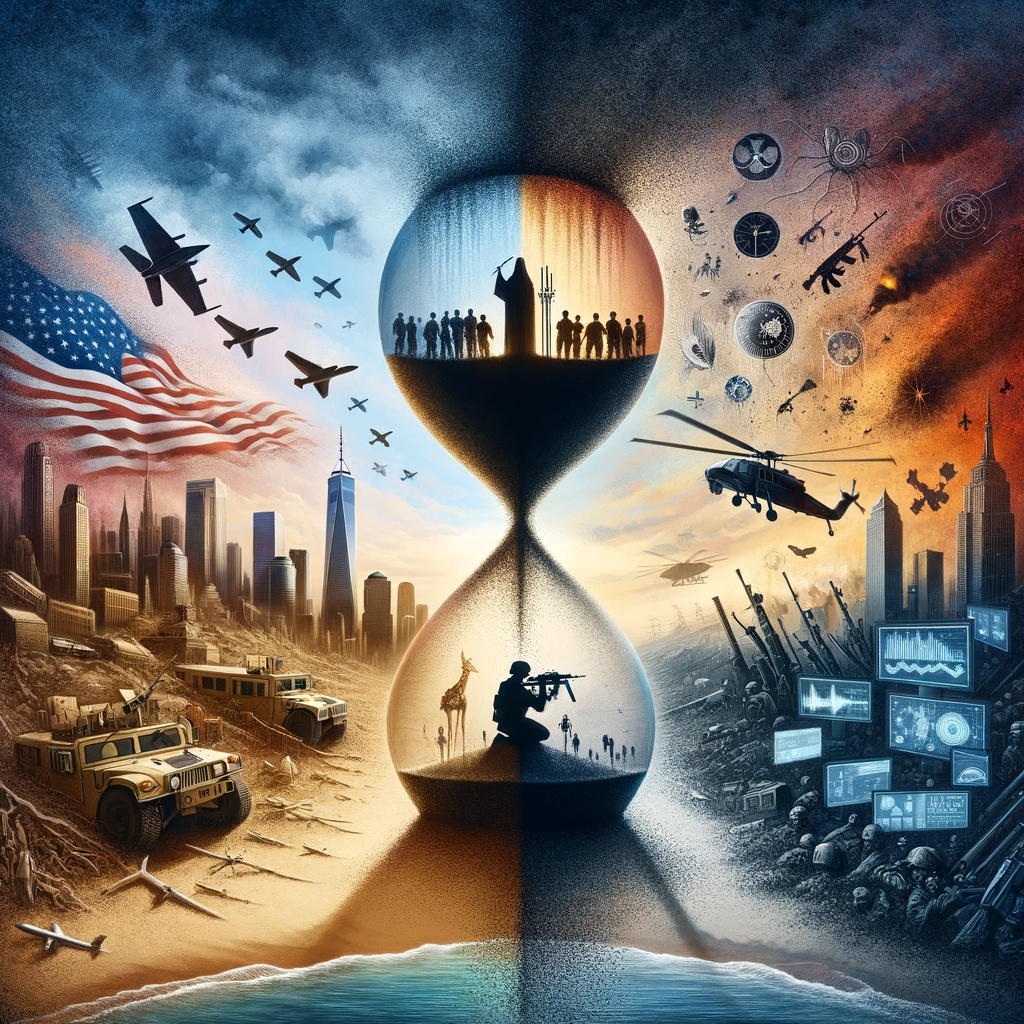
The events of September 11, 2001, marked a paradigm shift in global politics, security, and international relations. The attacks on the World Trade Center and the Pentagon, orchestrated by the terrorist group Al-Qaeda, not only claimed nearly 3,000 lives but also fundamentally altered the world’s approach to terrorism, security, and freedom. The subsequent War on Terror, initiated by the United States, brought forth significant changes in international relations, domestic security policies, and civil liberties, the impacts of which are still felt in the 21st century.
9/11: A Catalyst for Change
On the morning of September 11, 2001, the world watched in horror as hijacked airplanes crashed into the Twin Towers in New York City and the Pentagon in Washington, D.C. This unprecedented act of terrorism was masterminded by Al-Qaeda leader Osama bin Laden. The immediate impact was catastrophic, with thousands killed and injured, and a profound sense of vulnerability and fear permeating societies worldwide.
International Response and Solidarity
The attacks were met with a global outpouring of sympathy for the United States. Countries worldwide condemned the attacks and offered support. NATO invoked Article 5 for the first time in its history, declaring the attacks on the U.S. as an attack on all NATO members. This international solidarity was instrumental in shaping the initial response to the emerging threat of global terrorism.
The War on Terror: A New Frontier
In response to the attacks, the U.S. government, under President George W. Bush, launched the War on Terror. This global military campaign aimed to eliminate Al-Qaeda and other terrorist organizations. It began with the invasion of Afghanistan in 2001 to dismantle the Taliban regime, which had provided a safe haven for Al-Qaeda. This marked the beginning of a prolonged military engagement in the region.
Impact on International Relations
The War on Terror significantly altered international relations. The U.S.’s unilateral approach in some aspects of the war, especially the 2003 invasion of Iraq under contested justifications, strained relationships with some allies and attracted widespread criticism. The doctrine of pre-emptive war and the concept of a global battlefield against terrorism brought new dimensions to international law and diplomacy.
Coalition Building and New Alliances
The U.S. formed coalitions with various countries to combat terrorism. These alliances, while successful in pooling global resources against a common enemy, also led to complex diplomatic challenges. Countries had to balance their participation in these coalitions with their own regional interests and public opinion.
Shift in Foreign Policies
The focus on counterterrorism reshaped foreign policies globally. Countries reevaluated their relationships based on their stance on terrorism, leading to new alliances and sometimes strained traditional relationships. The war also brought attention to regions like the Middle East and South Asia, reshaping diplomatic and military strategies.
Domestic Security: Tightening the Reins
Post-9/11, countries around the world revamped their domestic security measures to prevent similar attacks. In the U.S., this led to the creation of the Department of Homeland Security and the passing of the Patriot Act, which expanded surveillance and law enforcement powers.
Enhanced Security Measures
Air travel witnessed stringent security protocols. Surveillance and intelligence operations were ramped up, both domestically and internationally. Governments invested heavily in security infrastructure, intelligence sharing, and counter-terrorism technologies.
Controversial Policies and Practices
Some measures, such as mass surveillance and enhanced interrogation techniques, sparked debates over their ethical and legal ramifications. The detention facility at Guantanamo Bay, intended for suspected terrorists, became a symbol of the controversial aspects of the War on Terror, raising questions about human rights and legal due process.
Civil Liberties: A Balancing Act
The focus on security had significant implications for civil liberties. The need to protect citizens from terrorist threats was often weighed against the rights to privacy, free expression, and legal due process.
Erosion of Privacy
The expansion of surveillance programs led to concerns over privacy rights. In the U.S., the National Security Agency’s (NSA) data collection practices, revealed by Edward Snowden in 2013, sparked a global debate over privacy and government surveillance.
Targeting and Profiling Concerns
Anti-terrorism measures led to increased scrutiny of certain groups, particularly Muslims and people of Middle Eastern descent. This resulted in instances of profiling and discrimination, raising concerns about societal divisions and the stigmatization of entire communities.
Legal and Ethical Challenges
The War on Terror posed complex legal and ethical questions. The use of drone strikes, extrajudicial killings, and the indefinite detention of suspects without trial were among the practices that faced legal scrutiny and ethical debate.
The Long-Term Effects on Global Politics
The War on Terror not only influenced the immediate policy responses but also had long-lasting effects on global politics and international power dynamics. The focus on counter-terrorism led to a realignment of global priorities and resources, affecting international aid, development policies, and diplomatic engagements.
Changing Nature of Warfare
The nature of warfare evolved significantly due to the War on Terror. The rise of asymmetric warfare, involving non-state actors and unconventional tactics, posed new challenges for traditional military powers. The use of drones and other advanced technologies became prevalent, raising ethical and legal questions about modern warfare.
Impact on Global Stability
The interventions in Afghanistan and Iraq, along with military actions in other regions, had mixed outcomes. While they dismantled key terrorist networks, they also led to instability, civil strife, and the emergence of new terrorist groups like ISIS. This instability had a cascading effect on regional and global security.
The Economic Cost of the War on Terror
The financial burden of the War on Terror has been immense. The U.S. alone has spent trillions of dollars on military operations, homeland security, and related costs. This expenditure had significant implications for the U.S. economy and global economic trends.
Redirection of Resources
Funds that could have been used for domestic development, education, healthcare, or international aid were redirected to counter-terrorism efforts. This reallocation of resources affected social policies and economic priorities both in the U.S. and in allied countries.
Global Economic Impacts
The focus on security also affected global trade, travel, and economic cooperation. The tightening of borders and increased security measures slowed down trade processes, affected tourism, and altered international business practices.
The Societal Impact
Beyond politics and economics, the War on Terror has profoundly influenced societies worldwide. The heightened sense of threat led to changes in public opinion, media narratives, and cultural dynamics.
The Culture of Fear
The pervasive fear of terrorism impacted societal behavior and attitudes. This culture of fear influenced political discourse, media coverage, and public opinion, often leading to heightened security measures and changes in public policy.
Impact on Social Cohesion
The stigmatization and profiling of certain communities strained social cohesion and inter-community relations. This often led to increased polarization, discrimination, and in some cases, hate crimes, affecting the fabric of multicultural societies.
Media and Public Perception
The media played a significant role in shaping public perception of the War on Terror. The coverage of terrorist attacks, military operations, and related events influenced public opinion and policy debates, often swaying between patriotic support for counter-terrorism measures and criticism of their excesses.
Rebalancing Security and Freedom
The ongoing challenge in the aftermath of the War on Terror is finding the right balance between ensuring security and preserving civil liberties. Governments and societies continue to navigate this complex landscape, seeking to protect citizens while upholding democratic values and human rights.
Legal and Policy Reforms
In response to criticisms and legal challenges, some countries have reformed their surveillance and security practices. The emphasis has shifted towards more oversight, transparency, and legal safeguards to prevent abuses of power and protect civil liberties.
International Cooperation and Dialogue
There is an increasing recognition of the need for international cooperation and dialogue in addressing the root causes of terrorism. Efforts towards global peace, development, and conflict resolution are seen as integral to preventing terrorism and ensuring long-term security.
The Role of Civil Society
Civil society organizations play a crucial role in advocating for human rights, providing checks and balances on government policies, and fostering dialogue and understanding. Their involvement is crucial in ensuring that the fight against terrorism does not come at the expense of fundamental freedoms.
Looking Ahead: A New Era in Counter-Terrorism
As the world moves further into the 21st century, the lessons learned from the War on Terror are shaping a new approach to counter-terrorism. This approach is more nuanced, involving a combination of military, diplomatic, economic, and social strategies.
Evolving Threats and Responses
The nature of the terrorist threat continues to evolve, with new groups, tactics, and technologies emerging. The response to this threat is also evolving, with a greater emphasis on intelligence, international collaboration, and addressing the underlying causes of extremism.
The Future of International Relations
The War on Terror has underscored the interconnectedness of global security. The future of international relations will likely involve a more collaborative approach to security challenges, recognizing the need for a coordinated response to threats that know no borders.
Balancing Act Continues
The challenge of balancing security and freedom remains a central theme in the post-9/11 world. As societies and governments adapt to new threats and realities, the pursuit of this balance will continue to define the global landscape.
Conclusion
The events of 9/11 and the subsequent War on Terror have had profound and lasting impacts on international relations, domestic security, and civil liberties. As the world continues to confront the challenges of terrorism and extremism, the lessons of the past two decades remain critical. The quest to ensure security without compromising on freedom and human rights is an ongoing journey, reflecting the complexities of the 21st-century global landscape.


