Skip to content

SOCIALSTUDIESHELP.COM

Learn Social Studies and American History

  • American History Lessons
  • American History Topics
  • AP Government and Politics
  • Economics
  • Resources
    • Blog
    • Practice Exams
    • AP Psychology
    • World History
    • Geography and Human Geography
    • Comparative Government & International Relations
    • Most Popular Searches
  • Toggle search form

Globalization – Blending Cultures and Economic Integration

Posted on By admin

In the increasingly interconnected world of today, globalization has emerged as a powerful force, shaping not just economies, but also the cultural fabric of societies around the globe. This phenomenon goes beyond mere financial transactions, influencing the way societies perceive and interact with each other. By blurring geographical boundaries, globalization promotes cultural exchange and economic integration, leading to a dynamic blend of various world cultures. As we delve into the intricate effects of major global events on cultures worldwide, it’s essential to understand that globalization has both constructive and destructive facets. From the introduction of diverse cuisines to the infiltration of foreign media, its impact is both broad and profound. This article aims to explore the cultural consequences of globalization, shedding light on how major world events have fostered a new global culture by blending disparate traditions and values.

Historical Context of Globalization

To understand the modern implications of globalization, we must first look at its historical context. The roots of globalization can be traced back to ancient civilizations and their trade routes. The Silk Road, for instance, was an ancient network of trade routes that connected the East and West, facilitating not just the exchange of goods but also the intermingling of cultures and ideas. Fast forward to the Age of Exploration, European colonialism played a pivotal role in global interactions. Although driven by economic interests, colonization resulted in the exchange of languages, religions, and cultural practices. The industrial revolution further accelerated globalization by introducing technological advancements that made travel and communication more accessible than ever before. Today, the advent of the internet and digital technologies has taken globalization to unprecedented levels, allowing instant communication and cultural exchange on a global scale within seconds. Understanding this historical backdrop provides context for the contemporary cultural dynamics shaped by globalization.

Technological Advancements and Cultural Exchange

The role of technology cannot be overstated when discussing globalization and cultural integration. The advent of the internet has revolutionized the way cultures interact, making information and communication more accessible than ever before. Social media platforms like Facebook, Twitter, and Instagram have become melting pots of cultural exchange, where people from different backgrounds share their traditions, lifestyles, and opinions. Streaming services such as Netflix and Spotify expose audiences to films, music, and shows from around the world, broadening their cultural horizons. Moreover, e-commerce platforms like Amazon and Alibaba make it possible for people to buy products from different cultures, effectively bringing the world marketplace to their fingertips. These technological advancements not only facilitate economic integration but also promote cultural understanding and acceptance. The rapid dissemination of information and cultural content through these digital platforms has played a crucial role in blending cultures, making the world feel more connected and unified.
Cultural Homogenization vs. Cultural Diversification

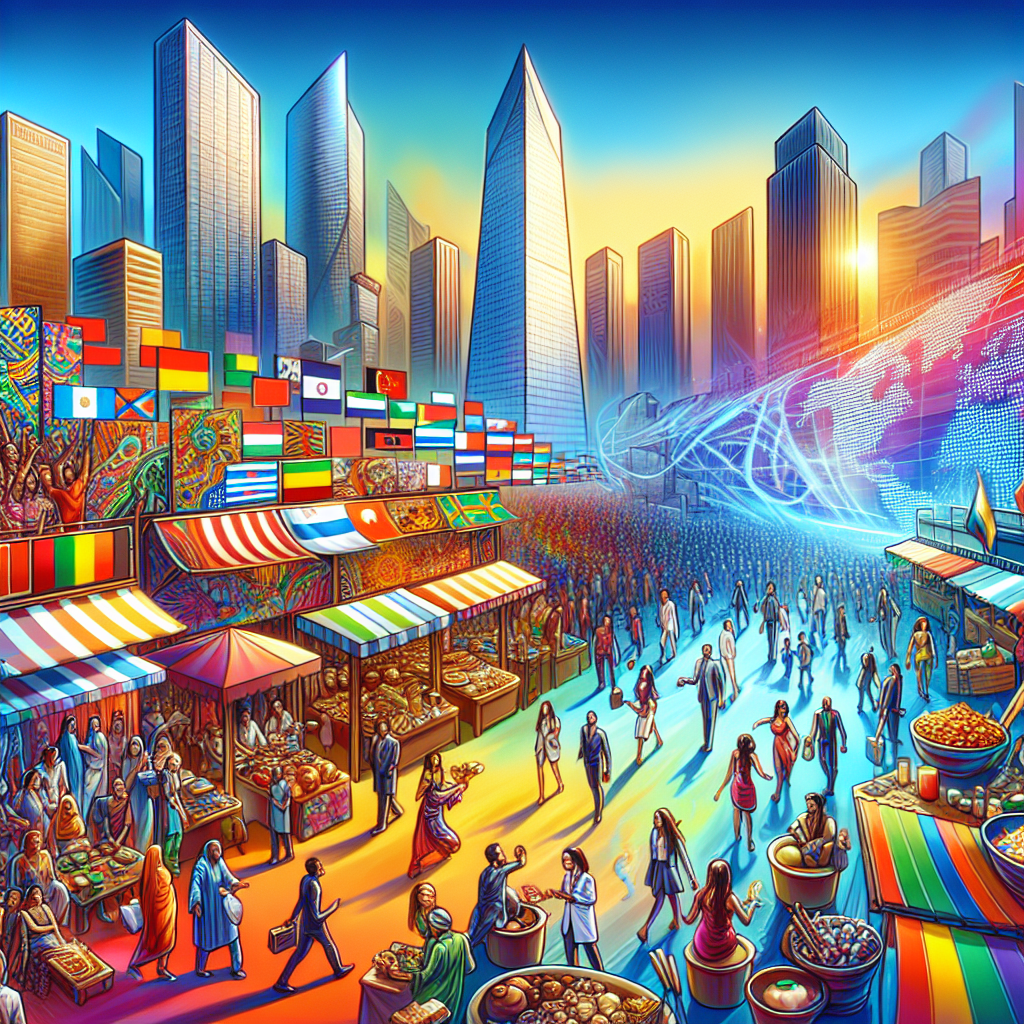
One of the most debated aspects of globalization is its impact on cultural diversity. Critics argue that globalization leads to cultural homogenization, where dominant cultures overshadow and erode local traditions and practices. For instance, the widespread popularity of Western fast food chains like McDonald’s and Starbucks is often cited as an example of cultural imperialism, where local culinary traditions are gradually displaced. On the flip side, proponents of globalization emphasize the benefits of cultural diversification. They argue that exposure to different cultures enriches societies, fostering tolerance and mutual understanding. Festivals like Diwali, Chinese New Year, and Oktoberfest are celebrated worldwide, showcasing the beauty of cultural diversity. In essence, while globalization has the potential to homogenize cultures, it also offers opportunities for cultural enrichment and diversification. The challenge lies in finding a balance that preserves local cultures while embracing the benefits of global interconnectedness.

Economic Integration and Cultural Dynamics

Economic integration is another core component of globalization that significantly influences cultural dynamics. Global trade agreements, multinational corporations, and international tourism have created a web of economic interdependence that brings societies closer together. For instance, international establishments like the United Nations and World Trade Organization play crucial roles in creating policies that facilitate this integration. This economic interconnectedness often leads to cultural exchanges, as businesses and individuals adapt to foreign markets and work environments. For example, American companies operating in Japan or India often incorporate local customs and traditions into their business models, creating a fusion of work cultures. Similarly, the influx of expatriates and international students in countries worldwide fosters a multicultural environment, leading to cultural blending and hybrid identities. Thus, economic integration not only boosts economic growth but also promotes cultural interactions and mutual understanding.

Impact of Major Global Events

Major global events, such as wars, pandemics, and climate change, have profound cultural consequences. The COVID-19 pandemic, for instance, accelerated digital communication and remote working, forcing individuals and businesses to adapt to new cultural norms. Virtual meetings, online education, and telehealth became the norm, altering the way we interact and function in society. Similarly, global conflicts such as the World Wars and the Cold War have had lasting cultural impacts. Post-World War II, for example, the United States emerged as a cultural superpower, influencing global fashion, music, and lifestyle. The ongoing climate crisis also shapes cultural practices, as societies worldwide adopt sustainable lifestyles and eco-friendly products. These global events highlight the interconnectedness of the world and underscore the need for collective cultural and economic responses to address shared challenges.

Conclusion

As we navigate through the complexities of globalization, it’s crucial to recognize its dual nature. On one hand, it fosters economic integration, technological advancement, and cultural exchange, creating a more interconnected and informed world. On the other hand, it poses challenges such as cultural homogenization and economic disparities. Striking a balance between these opposing forces is key to harnessing the benefits of globalization while mitigating its drawbacks. It’s essential to promote policies and practices that preserve cultural diversity, encourage mutual respect, and ensure fair economic opportunities for all. By doing so, we can create a global culture that is not only economically robust but also culturally rich and inclusive. In conclusion, globalization is an ongoing process that requires continuous adaptation and collaboration, enabling us to build a world where diverse cultures coexist harmoniously, contributing to global peace and prosperity.

Global Events and Trends, Major World Events

Post navigation

Previous Post: The End of Apartheid – A New Cultural Era for South Africa
Next Post: The Arab Spring: Political Upheaval and Cultural Renaissance

Related Posts

The Spread of Pop Culture Across Continents Global Events and Trends
The French Revolution: Liberty, Equality, and Cultural Change Global Events and Trends
How World Wars Shaped National Boundaries and Cultures Major World Events
Climate Change Activism: Evolution & Impact Since 1990s Global Events and Trends
Diwali: Celebrating India’s Enchanting Festival of Lights Cultural Celebrations
The End of Apartheid – A New Cultural Era for South Africa Major World Events
  • World History
  • Timeline of US History: Major Events from 1492 to Present
  • Glossary of Government Terms: 50 AP Gov Concepts Explained in Plain English
  • Top 10 Most Common Social Studies Exam Terms (and What They Mean)
  • Research Paper Outline Example (Template for High School & AP Research)

Navigation

  • Economics
    • Agricultural Price Supports
    • Agriculture in the United States
    • Bank Deregulation and the S&L Crisis
    • Banking and the Federal Reserve System
    • Basic Economic Concepts
    • Budgeting
    • Business Cycle
    • Business Organizations
    • Perspectives on Business Structures
    • Circular Flow Model
    • Collective Bargaining
    • Comparative Economic Systems
    • Different Types of Banks
    • Economic Growth
    • Economic Indicators
    • Economics Final Exam Review
    • Economics Links
    • Elasticity
    • Federal and State Budgeting
    • Federal Spending and National Debt
    • Free Enterprise
    • Governments Role in the Economy
    • History of Labor Unions
    • Government Protection of the Consumer
    • Income Inequality
    • Inflation
  • History Topics
    • “Robber Barons” or “Captains of Industry”
    • The 18th & 19th Amendments: Prohibition & Women’s Suffrage Explored
    • 19th Amendment – Womens Suffrrage
    • African American Reformers
    • African American Reform in the Progressive Era
    • America – Divided at Birth
    • America’s Role in WWII: Decisive Influence in War’s Outcome
    • Spanish American War: How it Forged America’s Global Dominance
    • Andrew Carnegie – Gospel of Wealth
    • Effectiveness of U.S. Antitrust Laws in Protecting Competition
    • Articles of Confederation
    • Justifications & Impacts: Policies Toward Native Americans
    • Understanding the Bill of Rights’ Protections
    • US Campaigns and Elections: Democracy’s Backbone
    • Causes of the Great Depression
    • Opposition & Responses to the New Deal: Roosevelt’s Strategy
    • Checks and Balances
    • Effectiveness of the Civil Rights Movement in U.S. Social Change
    • What Caused the Beginning of the Civil War?
    • Colonization and Mercantilism
    • Constitutional Convention
    • Constitutional Flexibility
    • Containment Policy: America’s Tactics Against Communism
    • Cooling the Cold War: From Peaceful Coexistence to Detente
    • Cooling Off: Peaceful Coexistence to Detente
    • Declaration of Independence
    • Democracy in the colonies
    • Dropping of the Atomic Bomb
    • Early Domestic Policies
    • Washington & Jefferson’s Impactful Foreign Policies
    • Reconstruction’s Impact on Freedmen’s Lives
    • Effect of Lincoln’ Death on Reconstruction
    • Effects of the Great Depression
    • Electoral College
    • Enlightenment Thinkers
    • Events Leading Up To The Revolution
    • French and Indian War
    • Government Relationship with Unions
    • How a bill becomes a law.
    • Immigration – Why they came
    • Improvement in the cities – Progressive Era
    • American Influence in Asia during the 1800s
    • John Quincy Adams and Andrew Jackson
  • History Lessons
    • Cold War Genesis: A Detailed Analysis
    • The End of the Cold War
    • FDR’s New Deal
    • Foundation of Democracy
    • The Presidency of Andrew Jackson
    • JFK versus LBJ
    • The Presidency of John Adams
    • Judicial Branch
    • Immigration in the U.S
    • Legislative Branch
    • Madison – War of 1812
    • Monopolies & Trusts: Exploring American Businesses’ Quest to Curb Competition
    • The Presidency of James Monroe
    • Judicial Review and Supreme Court Cases
    • Justification for Imperialism
    • Korematsu V. United States
    • Origins of Legalized Segregation in the South
    • Management vs Unions: Responses to Unionization in the Industrial Revolution
    • Westward Expansion: Manifest Destiny’s Impact
    • McCarthyism Explained: Politics, Fear, and Cold War Context
    • The New Deal’s Impact on Minorities in 1930s America
    • Monopolies
    • Monroe Presidency
    • New Technologies – Industrialization
    • WWI and Civil Liberties: Striking the Balance in Wartime
  • Gov & Politics
    • Elections and Campaigns – Week 9 Notes
    • Interest Groups in American Politics: A Historical Review
    • Interest Groups – Text Notes – Week Seven
    • Lecture Notes – American Political System
    • Lecture Notes – Congress – Week 11
    • Lecture Notes – Economic Policy
    • Lecture Notes – Federalism
    • Lecture Notes – The Judiciary – Week 13
    • Notes – The Bureaucracy
    • Lecture Notes – Political Culture in America
    • Political Participation
    • Political Participation – Text Notes – Week Six
    • Political Parties – Week 8 – Text Notes
  • World Cultures
    • Asian Cultures
    • African Cultures
    • European Cultures
    • Middle Eastern Cultures
    • North American Cultures
    • Oceania and Pacific Cultures
    • South American Cultures
  • Global Trends
  • Important Events
  • Social Studies Weekly
  • Cultural Celebrations
    • Ancient Civilizations
    • Architectural Wonders
    • Celebrating Hispanic Heritage
    • Celebrating Women
    • Celebrating World Heritage Sites
    • Clothing and Fashion
    • Culinary Traditions
    • Cultural Impact of Language
    • Environmental Practices
    • Festivals
    • Global Art and Artists
    • Global Music and Dance
  • Economics
    • Behavioral Economics
    • Development Economics
    • Econometrics and Quantitative Methods
    • Economic Development
    • Economic Geography
    • Economic History
    • Economic Policy
    • Economic Sociology
    • Economics of Education
    • Environmental Economics
    • Financial Economics
    • Health Economics
    • History of Economic Thought
    • International Economics
    • Labor Economics
    • Macroeconomics
    • Microeconomics
  • Important Figures in History
    • Artists and Writers
    • Cultural Icons
    • Groundbreaking Scientists
    • Human Rights Champions
    • Intellectual Giants
    • Leaders in Social Change
    • Mythology and Legends
    • Political and Military Strategists
    • Political Pioneers
    • Revolutionary Leaders
    • Scientific Trailblazers
    • Explorers and Innovators
  • Global Events and Trends
  • Regional and National Events
  • World Cultures
    • Asian Cultures
    • African Cultures
    • European Cultures
    • Middle Eastern Cultures
    • North American Cultures
    • Oceania and Pacific Cultures
    • South American Cultures
  • Privacy Policy

Copyright © 2025 SOCIALSTUDIESHELP.COM. Powered by AI Writer DIYSEO.AI. Download on WordPress.

Powered by PressBook Grid Blogs theme