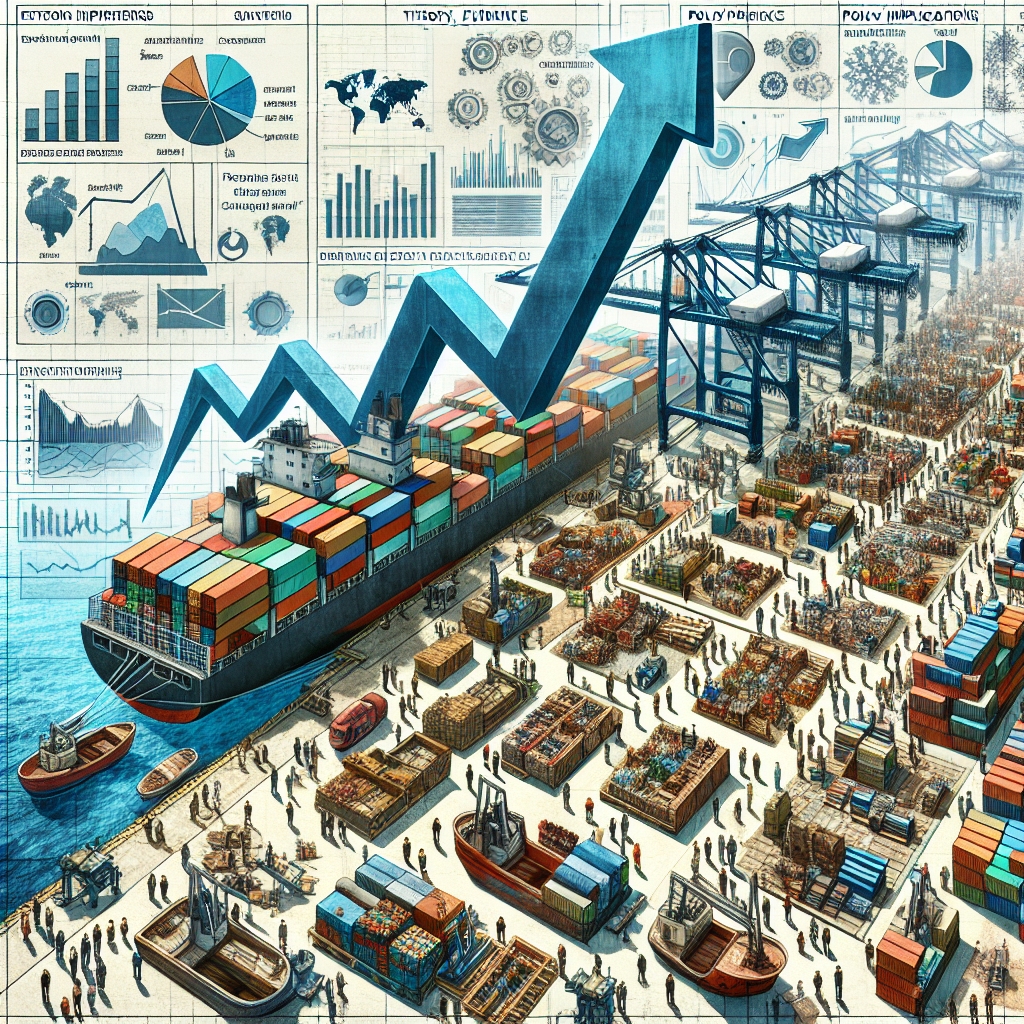
Economic development has fascinated scholars, policymakers, and practitioners for decades. One compelling strategy that has gained significant traction is export-led growth. This concept posits that an increase in exports drives economic performance, leads to higher levels of GDP, and supports advanced economies. Unlike inward-looking policies that focus on import substitution or self-sufficiency, export-led growth emphasizes integrating the national economy into the global market. But what underpins this approach, what evidence supports its effectiveness, and what are its policy implications?
Export-led growth relies on the comparative advantages a country has in producing certain goods or services more efficiently than other nations. By concentrating on these strengths, countries can maximize their production capabilities, generate foreign exchange earnings, and stimulate economic activities across various sectors. Furthermore, a focus on exports can instigate technological innovation and productivity improvements, expanding the overall economic landscape.
This article delves into the theoretical foundation, empirical evidence, and policy recommendations related to export-led growth. We’ll evaluate the strengths and weaknesses of this strategy, providing a well-rounded perspective on its role in catalyzing economic development.
Theoretical Foundation
Export-led growth draws primarily from classical and neoclassical economics, especially the Theory of Comparative Advantage proposed by David Ricardo. According to this theory, countries benefit from specializing in the production and export of goods in which they have a comparative advantage. This specialization leads to enhanced economic efficiency and production capabilities, thereby fueling overall economic growth.
Another pivotal theoretical framework supporting export-led growth is the Endogenous Growth Theory. This theory suggests that activities such as research, development, and innovation – stimulated by exposure to international markets – have a positive impact on economic growth. Open economies are more likely to adopt advanced technologies and processes, continually enhancing their production capabilities and competitiveness.
Further, the Balance of Payments Constraint model emphasizes that a country’s economic growth rate is constrained by the need to maintain sustainable current account deficits. Here, exports become vital as they balance import expenditures, allowing for a sustainable growth trajectory without precipitating a balance of payments crisis.
These theoretical frameworks collectively underscore the potential of export-led growth to be a potent strategy for national economic development. They build the foundation for understanding why many developing countries have favored this approach to achieve rapid industrialization and economic improvement.
Empirical Evidence
Various empirical studies have substantiated the effectiveness of export-led growth. A notable example is the economic rise of the East Asian Tigers – South Korea, Taiwan, Hong Kong, and Singapore – during the latter half of the 20th century. These economies transformed from poverty-stricken regions to industrial powerhouses through policies that aggressively promoted exports.
In South Korea, for instance, the government implemented tariff reductions, offered incentives for export-oriented industries, and invested heavily in education and infrastructure. This holistic approach led to remarkable economic growth, fostering industrial diversification and technological advancements.
A similar trajectory can be observed in China post-1978, following the economic reforms led by Deng Xiaoping. By opening its economy to foreign investment and focusing on export-driven industrial policies, China propelled itself into becoming the world’s manufacturing hub. This shift facilitated an era of unprecedented economic growth, lifting millions out of poverty.
However, it’s crucial to recognize that export-led growth is not universally applicable. Sub-Saharan African nations often exhibit mixed results due to varying geopolitical, economic, and social conditions. Factors such as poor infrastructure, political instability, and limited access to global markets can dampen the benefits associated with an export-oriented approach.
Therefore, while empirical evidence generally supports the advantages of export-led growth, it’s essential to consider the specific context of each nation to ensure that such strategies are effectively implemented.
Policy Implications
Adopting an export-led growth strategy necessitates favorable policy measures. Policymakers must create an enabling environment that encourages exports through several mechanisms.
First and foremost, trade liberalization is essential. Reducing tariffs and non-tariff barriers, simplifying export procedures, and promoting free trade agreements can stimulate the export sector. Such policies enhance market access and encourage businesses to participate in the international arena.
Secondly, investment in infrastructure is critical. Quality transport networks, reliable energy supply, and advanced telecommunications systems are foundational to supporting export activities. Governments must allocate sufficient resources to develop these sectors, ensuring that businesses can operate efficiently and competitively.
Additionally, education and skill development programs are vital. An educated and skilled workforce can adapt more easily to new technologies and processes, thus increasing productivity. Vocational training, higher education investments, and partnerships between industry and academia can enhance the labor force’s capabilities.
Moreover, financial support mechanisms such as low-interest loans, export subsidies, and tax incentives can be instrumental in mitigating risks associated with international trade. Businesses, especially SMEs, should be provided with financial support to explore and capitalize on export opportunities.
Lastly, regulatory frameworks must be streamlined to facilitate business operations. Simplified compliance procedures, reduced bureaucratic red tape, and fostering a business-friendly environment can attract foreign investment, further bolstering export-led growth.
Challenges and Criticisms
Despite its advantages, export-led growth is not without its challenges and criticisms. One significant challenge is the vulnerability to global economic fluctuations. Countries heavily reliant on exports can experience economic instability during global downturns, such as during the 2008 financial crisis.
Another criticism is the potential for exacerbating income inequality. Export-oriented industries may predominantly benefit urban areas and skilled workers, leaving rural communities and unskilled laborers behind. This disparity can lead to social unrest and hinder long-term economic stability.
The environmental impact is another concern. Rapid industrialization driven by export demands can lead to significant environmental degradation, exemplified by increased carbon emissions, deforestation, and pollution. Sustainable development practices must be integrated into export strategies to mitigate these adverse effects.
Lastly, there’s the issue of “race to the bottom” practices, where countries may lower labor standards and environmental regulations to become more competitive in the global market. This can result in poor working conditions and exploitation of labor, leading to social and ethical dilemmas.
Addressing these challenges requires a balanced approach that considers both the economic benefits and potential drawbacks of export-led growth. Policymakers must adopt comprehensive strategies to mitigate these risks while leveraging the advantages of this economic development model.
Future Prospects
Looking ahead, the future of export-led growth appears promising yet complex. The rapid evolution of technology, rising global interconnectedness, and shifting geopolitical dynamics are redefining the contours of international trade.
Technological advancements such as automation, artificial intelligence, and the Internet of Things are transforming manufacturing and export processes, offering new avenues for efficiency and innovation. Countries that invest in these technologies are likely to maintain a competitive edge in global markets.
Moreover, the expansion of digital trade offers significant opportunities. E-commerce platforms enable even small businesses to reach international customers, democratizing access to global markets. Government support for digital infrastructure and skills development can help businesses harness these opportunities.
However, geopolitical tensions and the resurgence of protectionist policies pose challenges. Trade wars, tariff escalations, and political instability can disrupt international trade flows and impede the benefits of export-led growth. Navigating these complexities will require diplomatic agility and robust trade policy frameworks.
Additionally, the emphasis on sustainable development will play a crucial role. Environmental considerations must be integrated into export strategies to ensure that economic growth does not come at the expense of ecological balance. Green technologies, sustainable practices, and international cooperation on climate policies will shape the future trajectory of export-led growth.
Conclusion
Export-led growth remains a compelling strategy for economic development, underpinned by robust theoretical foundations and supported by empirical evidence. It offers numerous advantages, from enhancing production capabilities to stimulating technological innovation and creating employment opportunities.
Nevertheless, it is not a one-size-fits-all solution. Policymakers must tailor strategies to their unique national contexts, considering potential challenges such as global economic fluctuations, income inequality, and environmental impact. By adopting holistic and forward-thinking approaches, countries can effectively leverage export-led growth to achieve long-term economic development.
The future of export-led growth lies at the intersection of technological innovation, sustainable development, and diplomatic agility. As the global economic landscape continues to evolve, this strategy will undoubtedly play a pivotal role in shaping the prosperity of nations worldwide.