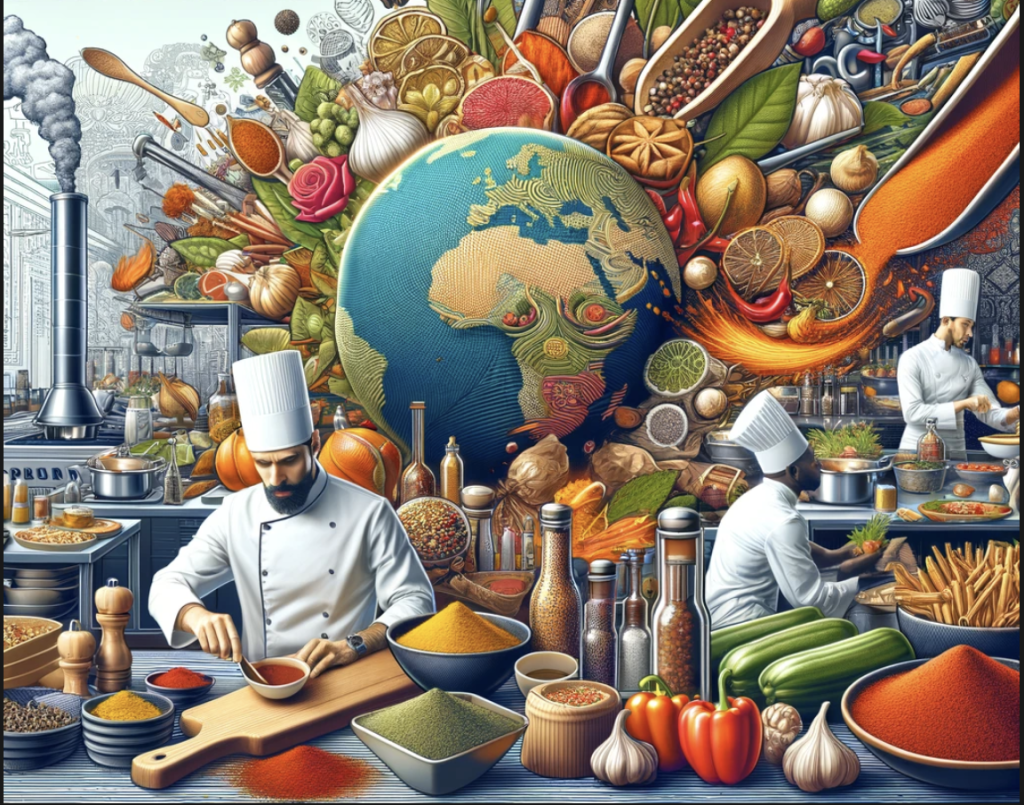
Culinary traditions across the globe are like intricate tapestries, woven with threads of history, geography, and culture. One of the most vibrant threads in this tapestry is the spice trade, an ancient network of commerce that not only moved goods but also ideas, techniques, and flavors across continents. This article explores the rich tapestry of global cuisine, unraveling the spicy secrets of how trade influenced what we eat today.
The Dawn of Spice Trade
Our journey begins thousands of years ago when the spice trade was more than just commerce; it was a bridge connecting distant lands. Spices like pepper, cinnamon, cardamom, and cloves, native to the East, were coveted in the West for their flavors and presumed medicinal properties. This demand led to the creation of trade routes spanning Asia, the Middle East, Africa, and Europe, famously known as the Silk Road and the Spice Route.
Spices as a Currency of Cultures
Spices were more than mere commodities; they were a currency that transcended borders. The Middle East, serving as a nexus point, absorbed and then radiated culinary influences from both East and West. Arab merchants brought spices to Europe, where they were used to preserve food and mask the flavor of spoiling meat, a necessity before refrigeration. This necessity birthed innovation, with each region adapting spices to their local ingredients, leading to the development of distinct, flavorful cuisines.
The Melting Pot of the Mediterranean
The Mediterranean region, a melting pot of cultures, serves as a prime example of culinary cross-pollination. Italian cuisine, famous for its tomato-based dishes, was unimaginable before tomatoes were brought from the Americas via the Columbian Exchange. Similarly, the Middle East introduced rice and spices like saffron to Europe, transforming Spanish cuisine and giving birth to iconic dishes like paella.
The Asian Influence
In Asia, the spice trade fostered a culinary revolution. Indian cuisine, with its rich array of spices, influenced the cooking styles of countries from Thailand to Indonesia. Curries, an integral part of many Asian cuisines, showcase the blend of local ingredients with spices like turmeric, coriander, and cumin, traded from India and the Middle East.
Africa’s Culinary Journey
Africa, often overlooked in discussions of the spice trade, played a crucial role. African ingredients like okra, sorghum, and millet journeyed to the Americas, while the continent embraced new flavors through Arab and European traders. Dishes like Moroccan tagines, flavored with cinnamon and cumin, embody the continent’s rich culinary diversity.
The New World and the Columbian Exchange
The discovery of the New World marked a pivotal moment in culinary history. The Columbian Exchange introduced a wealth of ingredients to the global pantry. Tomatoes, potatoes, vanilla, and chocolate from the Americas revolutionized cuisines across the world. European staples like wheat and sugar were introduced to the Americas, along with African staples like yams, shaping the diverse foodscapes of the New World.
Fusion Cuisine: A Modern Continuation
The modern era of globalization has seen the fusion of culinary traditions, much like the historical spice trade. Immigrant communities blend their traditional recipes with local ingredients, creating new, hybrid cuisines. For instance, the Indo-Chinese cuisine of India, a blend of Chinese cooking techniques with Indian flavors, is a testament to this ongoing fusion.
The Impact on Health and Nutrition
Beyond taste, the global spice trade significantly impacted health and nutrition. Spices like turmeric and ginger, known for their anti-inflammatory properties, have been incorporated into diets worldwide, influencing both culinary and medicinal practices.
Preserving Cultural Heritage Through Cuisine
Cuisine is a living museum of cultural heritage. Each dish tells a story of migration, trade, and adaptation. By exploring and preserving traditional recipes, we keep these stories alive, fostering a deeper understanding and appreciation of our interconnected world.
The spice trade, a catalyst for culinary exchange, demonstrates how interconnected our world has always been. This historic trade route did more than just change what we eat; it transformed how we perceive flavors, health, and each other. As we sit down to our next meal, let’s remember that every spice and ingredient carries a piece of history, a fragment of a global journey that has seasoned our plates with the flavors of the world.
The Role of Colonialism in Shaping Cuisine
The age of exploration and colonialism further intensified the culinary exchange initiated by the spice trade. European powers, in their quest for control over spice-producing regions, inadvertently became conduits for the global movement of food. The Portuguese and Dutch, for instance, not only traded in spices but also introduced new food staples to their colonies. The introduction of chilies by the Portuguese transformed cuisines in India, Southeast Asia, and Africa, adding a fiery dimension that is now integral to these culinary traditions.
The Silk Road: A Culinary Highway
The Silk Road, while primarily known for trade in silk and spices, was also a highway for culinary exchange. This route facilitated the movement of fruits, nuts, and grains between Asia and Europe. Ingredients like apricots, which originated in China, found their way to the Mediterranean, while rice and citrus fruits traveled the opposite direction.
The Influence of the Americas
The impact of the Americas on global cuisine cannot be overstated. The introduction of corn, a staple of Native American diets, transformed food cultures in Africa and Europe. In Italy, maize became the basis for polenta, while in Africa, it became a key ingredient in dishes like ugali. Similarly, the potato, initially met with suspicion in Europe, became a staple crop, significantly impacting European agriculture and cuisine.
Trade and Religious Influence
Trade routes also served as conduits for religious and cultural exchanges, which in turn influenced culinary practices. The spread of Islam, for example, introduced halal dietary laws across the Middle East, North Africa, and parts of Asia, influencing the types of foods eaten and the methods of food preparation. In India, the Mughal Empire introduced Persian cooking techniques and ingredients, leading to the creation of rich, flavorful dishes like biryani.
Spice Islands and European Power Struggle
The Spice Islands (Maluku Islands) in Indonesia were the epicenter of the spice trade and the subject of intense European competition. Nutmeg, cloves, and mace, native to these islands, were highly valued in Europe for their rarity and supposed medicinal properties. Control over these islands meant economic wealth, leading to colonial battles between the Dutch, British, and Portuguese.
Modern-Day Culinary Tourism
Today, culinary tourism has become a way for people to explore the spice route’s legacy. Food enthusiasts travel to experience authentic cuisines, explore local markets, and learn about the historical significance of spices and ingredients. This form of tourism not only boosts local economies but also helps preserve traditional culinary practices.
Environmental Impact and Sustainability
The global spice trade also highlights the importance of environmental sustainability. Historically, the over-cultivation of spice plants led to soil depletion and deforestation. Today, there is a growing awareness of sustainable farming practices and the need to preserve biodiversity in spice-producing regions.
The Digital Age and Global Cuisine
In the digital age, the exchange of culinary ideas and recipes has never been easier. Social media and cooking platforms allow chefs and food enthusiasts to share and learn from different culinary traditions, continuing the legacy of the spice route in a new, digital form.
Food as a Tool for Cultural Understanding
Ultimately, the story of the spice route is a reminder that food is a powerful tool for cultural understanding. Each dish is a conversation between different cultures, a blend of history and innovation. In a world that often focuses on differences, cuisine has the power to unite people, reminding us of our shared humanity.
Final Thoughts
The story of the spice route is a journey through time, illustrating how the movement of spices and ingredients shaped not just diets, but entire cultures. This trade influenced global cuisine in profound ways, creating a rich mosaic of flavors and traditions. It reminds us that our culinary preferences are deeply intertwined with history, geography, and the constant human endeavor to explore and connect.
In conclusion, the spice route is not just a historic trade path; it is a testament to the power of culinary exchange in bridging cultures. It underscores the role of food in our collective history and its ability to bring diverse peoples together. As we explore the myriad flavors of global cuisine, we partake in a centuries-old tradition of exchange, appreciation, and understanding. Let’s cherish and continue this delicious journey of discovery and connection.