The intricate relationship between economics and politics has been a subject of scholarly interest for decades, giving rise to the field of political economy. One particularly intriguing concept within this field is economic voting, which suggests that economic conditions significantly influence electoral outcomes. Voters, consciously or subconsciously, tend to hold incumbent politicians accountable for economic performance. This interplay is a cornerstone of democratic systems, where citizens’ perceptions of economic well-being can sway election results.
But how robust is this relationship, and what are the specific economic indicators that voters consider when casting their ballots? Economic voting is not a monolithic concept; it is nuanced and varies across political systems, economies, and cultures. Several theories attempt to explain the phenomenon, each dissecting how and why economic conditions shape electoral choices. Some theories argue that voters are rational actors who base their decisions on tangible data, such as unemployment rates, inflation, and GDP growth. Others suggest that voters rely more on subjective perceptions of economic well-being, which may not align with actual economic indicators.
Media influence, political campaigns, and partisan loyalty further amplify the complexity of economic voting. Understanding this phenomenon is not just academically stimulating; it has real-world implications. Policymakers and political candidates closely observe economic trends and voter sentiments to strategize their campaigns. By dissecting the various elements of economic voting, this article aims to provide a comprehensive overview of how economic factors shape electoral outcomes.
Economic Indicators and Voter Behavior
Economic indicators serve as the backbone of economic voting theory. GDP growth, unemployment rates, and inflation are the most frequently scrutinized metrics:
- GDP Growth:
A growing GDP often signifies higher economic activity, increased employment opportunities, and improved public services, leading to voter satisfaction. In contrast, a shrinking GDP signals economic distress, often resulting in voter dissatisfaction. Research shows that voters tend to reward incumbents during economic prosperity and penalize them during downturns. - Unemployment Rates:
High unemployment devastates communities, causing voter discontent. Elected officials who preside over high unemployment periods often suffer at the polls. Conversely, low unemployment rates boost public perceptions of the incumbent’s performance. - Inflation:
High inflation erodes purchasing power, reducing living standards and turning voters against incumbents. Moderate and stable inflation, however, tends to correspond with electoral satisfaction.
While these indicators are crucial, they do not operate in isolation. Subjective perceptions of economic well-being, influenced by media coverage and political discourse, also play a significant role in shaping voter behavior.
The Role of Media and Political Campaigns
Media and political campaigns significantly shape public perceptions of the economy. In modern democracies, voters rarely engage with raw statistics directly; instead, they rely on media interpretations. This makes media a powerful player in economic voting, influencing sentiment through selective reporting or framing of economic issues.
Media outlets with varying political biases may present the same economic data differently. For example, a pro-incumbent outlet might focus on positive indicators like job creation, while an opposition-leaning media source might highlight economic challenges such as income inequality. Political campaigns further amplify media effects by framing economic issues to suit their narratives.
Candidates craft messages to either take credit for economic successes or blame opponents for economic shortcomings. This intertwined mechanism creates a charged electoral environment, where it is challenging to disentangle genuine voter sentiment from media-induced biases.
Partisan Loyalty and Economic Voting
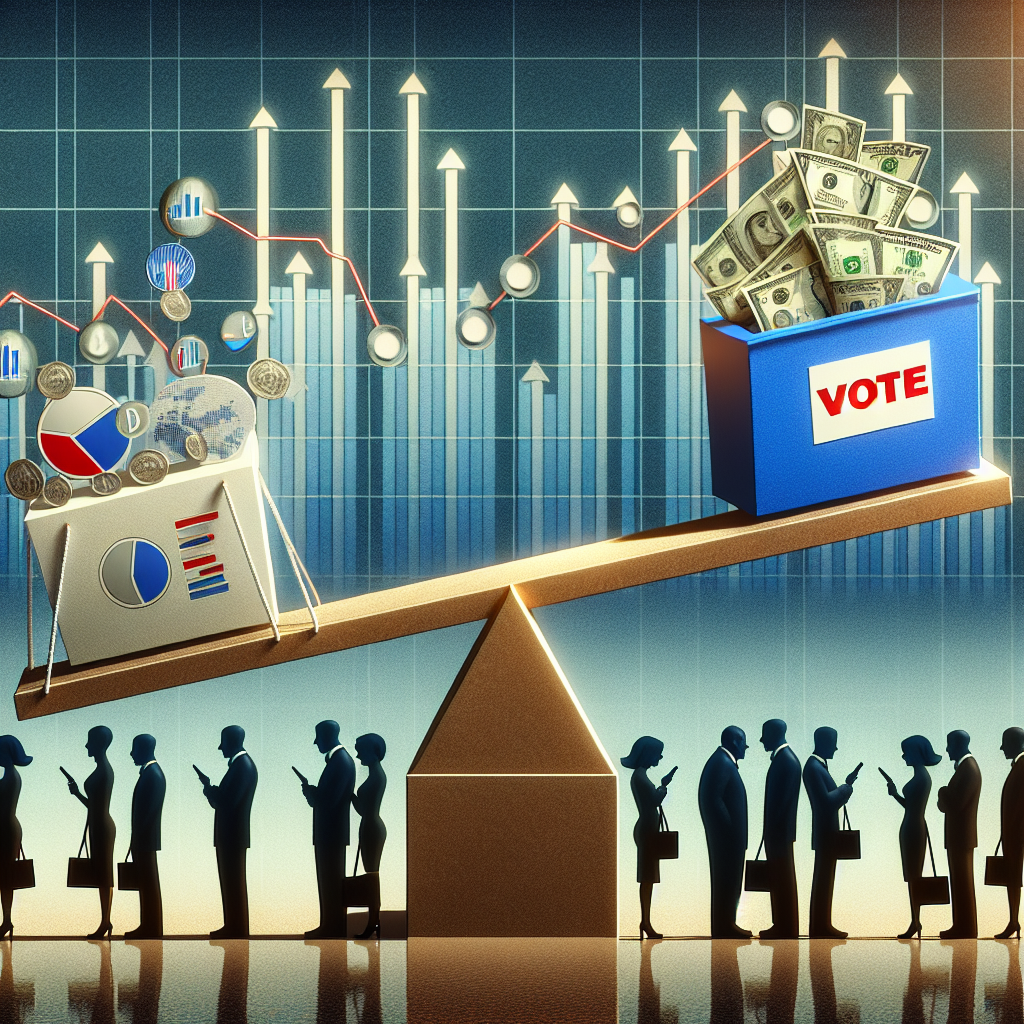
Partisan loyalty also plays a critical role in economic voting. Voters with strong party affiliations are less likely to be swayed by economic conditions than independents or swing voters. However, even among loyalists, economic performance can matter—particularly during severe economic crises that weaken partisan barriers.
Partisan voters engage in motivated reasoning, interpreting economic data through a biased lens. For instance, a voter may dismiss favorable economic data if it benefits the opposing party. Conversely, loyalists may overlook economic shortcomings if ideological values outweigh economic concerns.
Despite these biases, extreme economic downturns or unprecedented growth can break through partisan barriers, influencing voter behavior across the political spectrum.
Demographics and Economic Voting
Demographic variables such as age, income, education, and geographic location add another layer of complexity to economic voting:
- Age:
Younger voters may prioritize job opportunities, while older voters focus more on pensions, healthcare, and inflation. This generational divide can lead to differing electoral outcomes. - Income:
Higher-income individuals, enjoying financial stability, often prioritize long-term policies. Lower-income voters, more vulnerable to economic fluctuations, are inclined to focus on short-term performance. - Education:
More educated voters tend to engage in sophisticated economic reasoning, while less educated voters may rely on media portrayals of economic conditions. - Geographic Location:
Urban voters, exposed to service and tech sectors, may prioritize different economic issues than rural voters, whose economies often depend on agriculture or manufacturing.
Political Systems and Cultural Contexts
Economic voting varies across political systems and cultural contexts. In established democracies with robust institutions, economic voting tends to be more pronounced. Citizens in these systems hold incumbents accountable for economic performance, facilitated by a free press and an informed electorate.
In contrast, in fledgling democracies, non-economic factors like political patronage or ethnic loyalty often take precedence. Similarly, cultural attitudes toward individualism versus collectivism influence how voters prioritize economic well-being. In highly collectivist cultures, communal success may matter more than individual economic gains, leading to different voting behaviors.
Implications for Policymakers and Political Candidates
Understanding economic voting is essential for policymakers and candidates. For incumbents, awareness of economic trends helps guide decisions to ensure economic stability and growth. Candidates, especially challengers, can leverage economic issues as potent campaign tools by highlighting shortcomings and presenting alternative strategies.
During economic crises, effective communication becomes crucial. Political actors must address the public transparently, explaining causes and solutions while maintaining voter trust. Sound economic management, coupled with strategic messaging, enhances political actors’ prospects for electoral success.
Conclusion
Economic voting underscores the significant impact of economic conditions on electoral outcomes. By examining key economic indicators, the role of media, partisan loyalty, and demographic variables, we gain a deeper understanding of how economic factors influence voter behavior. While GDP growth, unemployment, and inflation are pivotal, these indicators do not function in isolation; they are mediated by perceptions shaped by media and campaigns.
Economic voting varies across political systems and cultures, with established democracies showing a stronger correlation between economic performance and electoral outcomes. For policymakers and candidates, understanding these dynamics helps align strategies with voter expectations, ensuring better electoral outcomes through effective governance and communication.
Ultimately, economic voting is a complex interplay of numerous factors. By delving into this phenomenon, we not only gain insights into voter behavior but also highlight the importance of sound economic management and strategic communication in democratic governance.