Contemporary Asian art stands at a fascinating intersection of tradition and innovation. This dynamic sector of the global art scene is home to artists who draw from rich, historical compendiums of cultural symbolism while simultaneously engaging with cutting-edge artistic practices. It’s a fertile ground for examining cultural expression that not only honors the past but also speaks eloquently to the present and future.
For many years, Asian art was predominantly associated with ancient traditions, classical painting, calligraphy, and pottery. However, the rise of contemporary Asian art signifies a broader transformation. Today’s artists are boldly experimenting with new mediums, including video installations, performance art, digital media, and innovative mixed-media techniques. By blending traditional influences with modern themes, these artists contribute to a constantly evolving discourse on identity, globalization, and societal change.
Asia, with its diverse cultures and histories, offers a rich tapestry from which contemporary art can emerge. Countries like China, Japan, South Korea, India, and Southeast Asia are particularly notable for their vibrant contemporary art scenes. Each region brings its unique perspective and heritage into the modern context, resulting in an array of artistic expressions that challenge, inspire, and captivate audiences worldwide.
Historical Influences and Traditional Motifs
Understanding contemporary Asian art requires a grasp of the historical and cultural contexts that inform it. Traditional Asian art is steeped in a range of socio-cultural practices and philosophies, from the intricate symbolism of Chinese landscape painting to the spiritual motifs of Indian miniature art. These traditional elements serve as a foundation upon which contemporary artists build.
In China, for instance, ancient techniques like ink wash painting and calligraphy are often reinterpreted in modern works. Artists such as Xu Bing use Chinese characters and calligraphy in unconventional ways to explore themes of language, communication, and cultural identity. His artwork often plays with traditional forms to create new narratives that resonate with current societal issues.
Similarly, Japanese contemporary art frequently incorporates elements from its rich history of woodblock printing, tea ceremonies, and Zen Buddhism. An artist like Takashi Murakami blends traditional Japanese aesthetics with pop culture, creating what he terms “Superflat”—a style that merges the flat perspectives of traditional Japanese art with the commercial appeal of anime and manga.
By reimagining and recontextualizing traditional motifs, contemporary Asian artists provide a link between the past and present. This blend not only showcases their cultural heritage but also serves as a commentary on the transformative effects of modernization and globalization on these time-honored traditions.
Modern Techniques and Mediums
One of the hallmarks of contemporary Asian art is its embrace of modern techniques and mediums. This experimentation represents a break from conventional methods, highlighting the adaptability and ingenuity of artists in navigating current technological and societal landscapes.
Installation art, video art, and digital media are increasingly prominent in the contemporary Asian art scene. For example, Korean artist Nam June Paik is often regarded as the father of video art. His innovative works used television screens and electronic imagery to challenge traditional notions of art and explore themes of technology and communication.
Singaporean artist Ho Tzu Nyen utilizes film, video, and performance to delve into historical narratives and cultural memory. His immersive installations capture the complexity of Southeast Asian histories, asking audiences to engage with his reinterpretations of historical events and figures.
The influx of digital technology has allowed artists to push the boundaries of artistic expression even further. Interactive and virtual reality artworks create engaging, immersive experiences that challenge viewers’ perceptions and encourage active participation. Through these modern techniques, contemporary Asian art continues to expand and redefine itself, intersecting seamlessly with global art movements while reflecting its unique cultural contexts.
Globalization and Its Impact
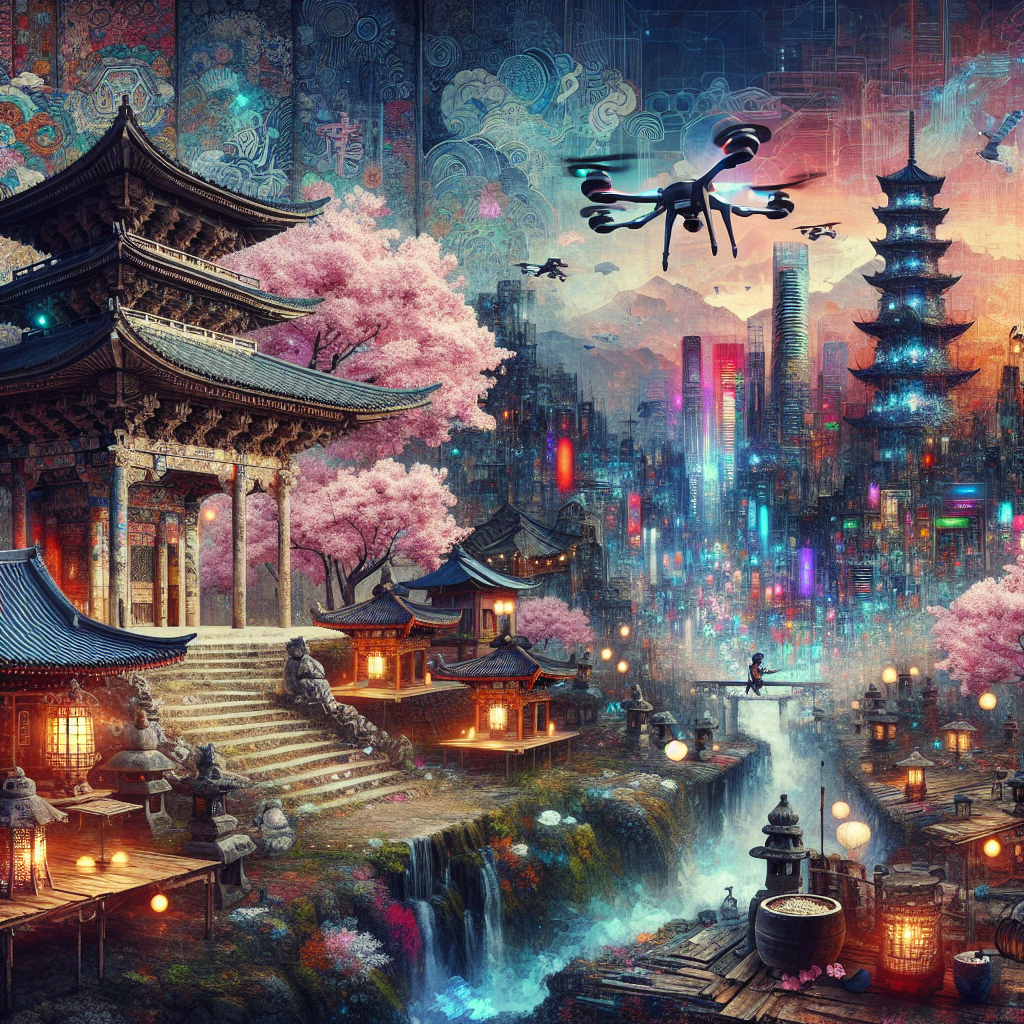
Globalization has had a profound influence on contemporary Asian art, transforming it into an ever-evolving entity. The increased cross-cultural exchange facilitated by globalization has allowed Asian artists to gain international exposure and integrate diverse influences into their work.
One significant impact of globalization is the collaboration between Asian and Western artists. These cross-cultural partnerships often result in innovative artworks that highlight universal themes while incorporating distinctive cultural elements. For instance, the Japanese architect Kazuyo Sejima has collaborated with Pritzker Prize-winning architects from around the world, creating unique structures that blend Eastern and Western architectural philosophies.
Art fairs, biennales, and international exhibitions serve as platforms for contemporary Asian artists to showcase their work on the global stage. Notable events such as Art Basel Hong Kong and the Yokohama Triennale offer opportunities for artists to reach wider audiences and engage in global artistic dialogues. These platforms not only boost the visibility of contemporary Asian art but also encourage artistic diversity and inclusion.
However, globalization also presents challenges, including the risk of cultural homogenization and the pressures of commercial success. Artists must navigate these complexities while striving to maintain their cultural integrity and artistic authenticity. Despite these challenges, contemporary Asian artists continue to thrive, using the globalized framework to forge new paths and innovative art forms.
A Platform for Socio-Political Commentary
Contemporary Asian art often serves as a platform for socio-political commentary, reflecting the social issues, political climates, and collective aspirations of the people and regions it represents. Through their artwork, many Asian artists address pressing concerns such as environmental degradation, human rights, and economic disparity.
Chinese artist Ai Weiwei is a prominent example of an artist using their platform for socio-political critique. Known for his outspoken activism, Ai Weiwei’s installations and performances highlight issues of censorship, human rights, and governmental transparency in China. His “Sunflower Seeds” installation at Tate Modern, comprising millions of hand-painted porcelain seeds, commented on the complexities of mass production, labor, and collective experience.
Similarly, Indian artist Nalini Malani employs multimedia and installation art to explore themes of gender, identity, and social justice. Her work often draws on historical narratives and mythological tales to address contemporary issues such as violence against women and the plight of refugees.
By engaging with socio-political themes, contemporary Asian artists transform their art into a form of activism, raising awareness and provoking critical reflection. This characteristic underscores the power of art as a tool for social change and underscores its relevance in today’s cultural landscape.
Market Trends and Economic Influence
The market for contemporary Asian art has experienced significant growth, reflecting the rising global interest and investment in this sector. Major auction houses, galleries, and collectors have increasingly acknowledged the value and potential of contemporary Asian artworks.
Auction houses like Sotheby’s and Christie’s regularly feature contemporary Asian art in their high-profile auctions, often fetching impressive prices. Chinese contemporary artist Zao Wou-Ki’s works, for instance, have achieved record-breaking sales, showcasing the lucrative potential of this market.
Galleries and art institutions across the globe have also expanded their collections to include contemporary Asian art. Institutions such as the Asia Society Museum in New York and the Mori Art Museum in Tokyo play pivotal roles in promoting and preserving contemporary Asian artworks, contributing to their global recognition and valuation.
However, the burgeoning art market also raises questions about the commodification of art and the pressures that come with commercial success. Artists may face conflicting demands between maintaining their creative freedom and meeting market expectations. Nevertheless, the economic influence and market trends surrounding contemporary Asian art reflect its growing prominence and the increasing respect it commands within the global art community.
Conclusion
Contemporary Asian art stands as a testament to the region’s rich cultural heritage and its dynamic, forward-looking vision. By fusing traditional and modern elements, contemporary Asian artists create works that resonate deeply with a wide range of audiences and reflect the complexities of their socio-cultural landscapes.
Historical influences and traditional motifs provide the foundational elements for many contemporary pieces, enabling artists to honor their cultural legacies while exploring new artistic territories. Modern techniques and mediums allow for innovative expressions that push the boundaries of what art can achieve, engaging audiences in fresh and immersive ways.
The forces of globalization have broadened the reach and impact of contemporary Asian art, fostering cross-cultural exchanges and elevating the visibility of Asian artists on the world stage. At the same time, these artists often use their platforms to engage with socio-political issues, demonstrating the power of art as a catalyst for social change.
As the market for contemporary Asian art continues to expand, the sector faces both opportunities and challenges. Balancing artistic authenticity with commercial success is a delicate act, but one that many artists navigate with impressive ingenuity and resilience.
Ultimately, contemporary Asian art represents a vibrant and evolving field that honors the past while remaining firmly grounded in the present, with implications that will undoubtedly shape the future of global art.