
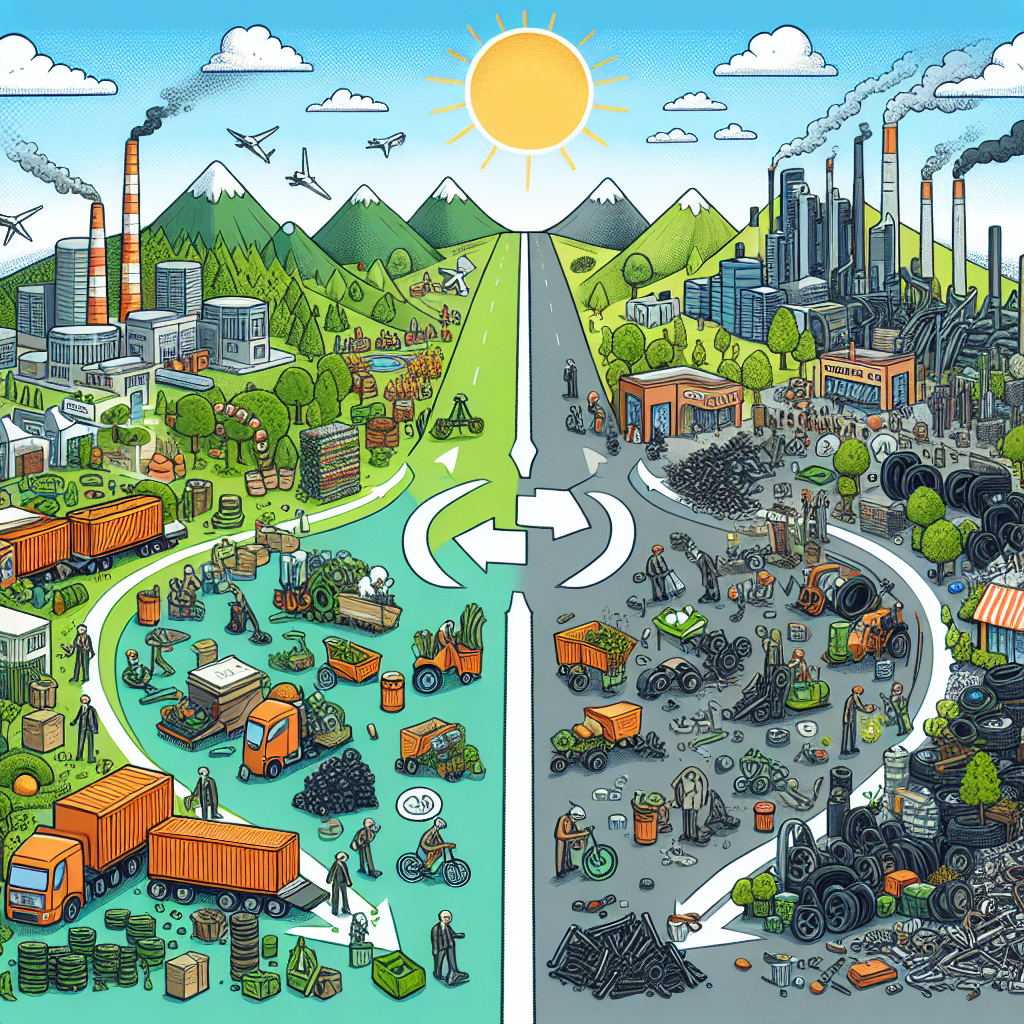
In recent years, the concept of a circular economy has gained significant traction among policymakers, businesses, and environmental advocates. Unlike the traditional linear economy—where resources are extracted, used, and then discarded—the circular economy emphasizes reuse, recycling, and extending the lifecycle of products. This paradigm shift promises numerous economic, social, and environmental benefits. However, it also brings forward a range of challenges that need to be addressed to ensure its successful implementation. This article aims to provide a comprehensive overview of the economic opportunities and challenges presented by the circular economy.
At its core, the circular economy aims to minimize waste and make the most of existing resources. By designing products for longer usability, promoting the sharing economy, and facilitating remanufacturing and recycling, this model not only benefits the environment but also opens up various economic opportunities. These include reducing material costs, creating new markets and job opportunities, and fostering innovation. However, transitioning from a linear to a circular economy is not without its obstacles. Companies must invest in new technologies and processes, and consumers need to shift their behavior and purchasing habits.
This article will explore the various facets of the circular economy, covering the opportunities it presents for businesses and economies, the challenges that must be overcome, and real-world examples of how it is being implemented. We will also look into the roles of policy and legislation in facilitating this transition. With a deep understanding of these aspects, businesses, policymakers, and consumers can better navigate the complexities of moving towards a more sustainable economic model.
Economic Opportunities
The transition to a circular economy offers a plethora of economic opportunities that can significantly impact various industries. One of the primary advantages is cost savings through more efficient resource utilization. By reusing and recycling materials, companies can reduce their raw material costs and dependency on volatile supply chains. For instance, manufacturers that adopt circular practices can save significantly on materials, reducing their overall production costs.
Moreover, the circular economy model encourages innovation and the development of new business models. Companies are being driven to design products that are easier to repair, upgrade, and recycle. This has led to the emergence of new markets for secondary raw materials and refurbished goods. Start-ups and established companies alike can capitalize on these opportunities by offering repair services, remanufactured products, and recycling services.
Another significant economic opportunity lies in job creation. The circular economy can generate new employment opportunities across various sectors, including recycling, refurbishing, and remanufacturing industries. According to studies, the shift to a circular economy could create millions of jobs worldwide, particularly in sectors related to waste management and material recovery.
Finally, the circular economy can enhance a company’s reputation and brand value. Consumers are becoming increasingly aware of environmental issues and are more likely to support businesses that adopt sustainable practices. By committing to circular economy principles, companies can attract eco-conscious consumers, thus gaining a competitive advantage in the market.
Challenges for Businesses
Despite the numerous economic opportunities, businesses face several challenges in transitioning to a circular economy. One of the main obstacles is the significant initial investment required for the development of new technologies and processes. For many companies, especially small and medium-sized enterprises (SMEs), the cost of implementing circular practices can be prohibitive.
Moreover, designing products for a circular economy requires a complete overhaul of existing design and manufacturing processes. Companies must invest in research and development to create products that are durable, easily repairable, and recyclable. This can be a time-consuming and costly endeavor, often requiring collaboration with other stakeholders, such as suppliers and recycling companies.
Another challenge is the lack of consumer awareness and acceptance. For the circular economy to succeed, consumers must change their behavior and purchasing habits, opting for products that are designed for longevity and recyclability. Educating consumers about the benefits of the circular economy and encouraging sustainable consumption patterns is a daunting task that requires concerted efforts from businesses, governments, and NGOs.
Regulatory and legislative barriers also pose significant challenges. In many regions, existing regulations and policies are not conducive to the circular economy. Companies may face legal hurdles related to waste management, product design, and material reuse. Policymakers must update and harmonize regulations to create a supportive framework for circular economy practices.
Case Studies: Successful Implementations
Several companies and regions have successfully implemented circular economy principles, serving as inspiring examples for others to follow. One notable case is that of the Netherlands, which has made significant strides towards becoming a circular economy leader. The Dutch government has set ambitious goals to transition to a circular economy by 2050, with a focus on reducing resource use and waste generation.
Philips, a global leader in healthcare and consumer electronics, has integrated circular economy practices into its business model. The company has implemented a “closed-loop” approach, designing products for reuse and recycling. For example, Philips refurbishes and resells medical imaging equipment, extending its lifecycle and reducing electronic waste.
Another example is the fashion industry, where companies like Patagonia and H&M have embraced circular economy principles. Patagonia offers repair services for its garments, encouraging customers to prolong the lifespan of their clothing. H&M has launched a garment collection program, allowing customers to return used clothes for recycling. These initiatives not only reduce waste but also strengthen customer loyalty and brand reputation.
The Ellen MacArthur Foundation, a global advocate for the circular economy, has also played a pivotal role in promoting circular practices. Through its initiatives, the foundation has partnered with businesses, governments, and academia to develop and scale circular economy solutions. Their efforts have led to the creation of various innovative projects and collaborations that demonstrate the viability of the circular economy.
The Role of Policy and Legislation
Policy and legislation play a crucial role in facilitating the transition to a circular economy. Governments can create a conducive environment for circular practices by enacting supportive regulations and providing incentives for businesses and consumers. For instance, policies that promote product design for recyclability, extended producer responsibility, and waste reduction can drive the adoption of circular economy principles.
Extended producer responsibility (EPR) is a policy approach that holds manufacturers accountable for the entire lifecycle of their products, including post-consumer waste. By requiring producers to take responsibility for the end-of-life management of their products, EPR policies encourage companies to design products that are easier to reuse, recycle, and remanufacture.
Governments can also provide financial incentives, such as tax breaks, grants, and subsidies, to support businesses in adopting circular practices. These incentives can help offset the initial costs of implementing new technologies and processes, making it more feasible for companies to transition to a circular economy.
Public awareness campaigns and educational initiatives are essential components of policy measures. Governments can collaborate with NGOs, businesses, and educational institutions to raise awareness about the benefits of the circular economy and encourage sustainable consumer behavior. By fostering a culture of sustainability, governments can drive demand for circular products and services.
Finally, international cooperation and harmonization of policies are vital for the global adoption of circular economy principles. As supply chains and markets are increasingly interconnected, coordinated efforts are necessary to ensure consistent and effective implementation of circular practices worldwide.
Future Outlook and Innovations
The future of the circular economy is promising, with continuous advancements in technology and innovative solutions driving its growth. One area of innovation is the development of advanced recycling technologies. These technologies enable the efficient recovery and reuse of materials from complex products, such as electronics and automotive components. For example, chemical recycling technologies can break down plastics into their molecular components, allowing for the production of high-quality recycled materials.
Digital technologies also play a significant role in the circular economy. The Internet of Things (IoT), blockchain, and artificial intelligence (AI) can enhance transparency and traceability in supply chains, enabling more efficient resource management and waste reduction. For instance, IoT sensors can monitor the condition of products, facilitating predictive maintenance and extending their lifespan. Blockchain technology can provide a secure and transparent record of product histories, ensuring that materials are accurately tracked and recycled.
The sharing economy, which emphasizes access over ownership, is another promising trend within the circular economy. Platforms that enable the sharing of goods and services, such as car-sharing, tool libraries, and rental services, can significantly reduce resource consumption and waste generation. By promoting collaborative consumption, the sharing economy aligns with the principles of the circular economy.
Businesses and governments are increasingly recognizing the potential of circular economy practices to address global challenges, such as climate change and resource scarcity. As a result, investments in circular economy startups and initiatives are on the rise. Venture capitalists and impact investors are channeling funds into companies that develop circular economy solutions, further driving innovation and scalability.
Education and research institutions also play a critical role in advancing the circular economy. Academic programs and research initiatives focused on circular economy principles can equip future leaders with the knowledge and skills needed to drive the transition. Collaborative research projects between academia and industry can lead to the development of new technologies and business models that support the circular economy.
Conclusion
The circular economy presents a transformative opportunity to create a more sustainable and resilient economic system. By rethinking how we produce, consume, and manage resources, we can reduce waste, conserve natural resources, and create economic value. The economic opportunities offered by the circular economy, such as cost savings, job creation, and market innovation, are substantial. However, the transition to a circular economy is not without challenges.
Businesses must navigate significant initial investments, redesign their products and processes, and educate consumers about sustainable consumption. Policymakers have a crucial role to play in creating a supportive regulatory environment and providing incentives for circular practices. Successful case studies from companies and regions around the world demonstrate that the circular economy is not just a theoretical concept but a practical and viable model for sustainable development.
As we move forward, continuous innovation and collaboration between businesses, governments, and academia will be essential in overcoming challenges and scaling circular economy practices. By embracing the principles of the circular economy, we can create a future where economic growth is decoupled from resource depletion, and where prosperity is achieved within the planet’s ecological boundaries.