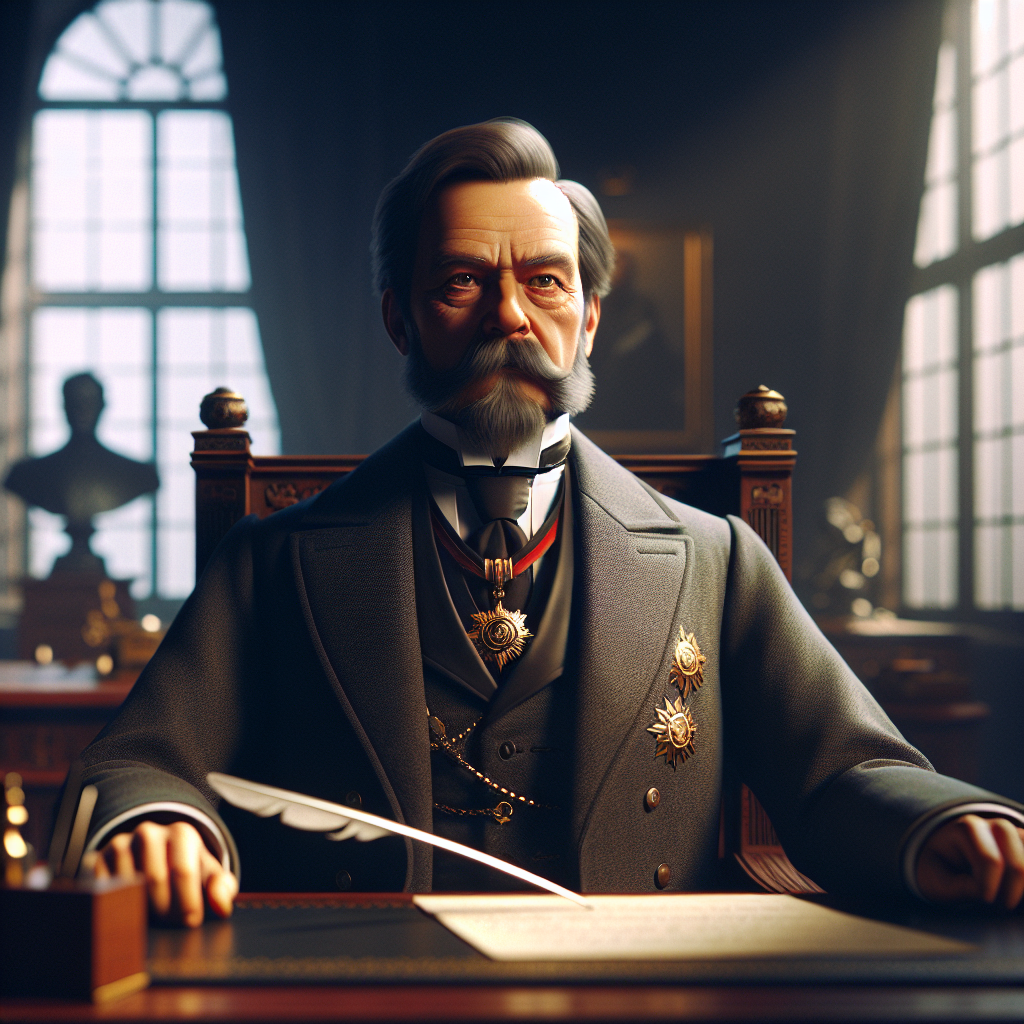
Abraham Lincoln stands as one of the most iconic figures in American history. Often referred to as the “Great Emancipator,” Lincoln’s leadership during a time of immense national turmoil has cemented his legacy as a champion of freedom and equality. Born on February 12, 1809, in a humble log cabin in Kentucky, Lincoln’s rise to the presidency is a testament to his intelligence, perseverance, and moral fortitude. From his early life on the frontier to his career as a lawyer and legislator, Lincoln’s journey was characterized by a relentless pursuit of justice and democracy. His tenure as the 16th President of the United States came at a critical juncture. The nation was tearing itself apart over issues of states’ rights and slavery, and it was Lincoln’s unwavering resolve that steered the country through its darkest hour – the Civil War. The significance of Lincoln’s contribution to American society can’t be overstated. His leadership not only preserved the Union but also set the stage for a new chapter in American history where the principles of freedom and equality became more than just ideals – they became actionable realities. This article aims to delve deeper into the multifaceted life of Abraham Lincoln, examining his early years, political career, wartime leadership, and enduring legacy.
Early Life and Career
Abraham Lincoln’s origins were modest, to say the least. Born into a family of limited means, Lincoln grew up in a one-room log cabin. Despite an environment lacking in financial privilege, he had a profound curiosity and a love for reading instilled in him by his stepmother. This appetite for learning drove him to self-educate, a trait that proved invaluable throughout his life. Lincoln’s early career led him through an eclectic array of jobs, including manual labor and work as a shopkeeper. However, it was the law that ultimately captured his interest. With a mere eighteen months of formal schooling, Lincoln became a self-taught lawyer, passing the bar in 1836. He quickly gained a reputation for his logical reasoning, eloquence, and unwavering honesty. His nickname, “Honest Abe,” was earned during this period and would serve him throughout his political career. Around the same time, Lincoln entered politics, serving four terms in the Illinois State Legislature as a member of the Whig Party. His tenure in the Illinois House provided him with invaluable experience and grounded his political philosophy. During this era, Lincoln began to articulate his views against the expansion of slavery, setting the stage for his future battles on the national stage.
The Road to the Presidency
Lincoln’s national prominence was first solidified during his debates with Senator Stephen Douglas in 1858. Though he lost that Senate race, his eloquence and stance against the spread of slavery caught the nation’s attention. These debates showcased Lincoln’s skill as an orator and his ability to articulate the moral and legal arguments against slavery’s expansion. The political landscape in the mid-19th century was volatile, rife with sectional tensions between the North and the South. The formation of the Republican Party offered Lincoln a platform more aligned with his and Northern sentiments. By 1860, Lincoln emerged as a prominent figure within the Republican Party and was nominated as their candidate for the presidency. The election of 1860 was one of the most contentious in American history. Lincoln’s victory, primarily garnered in the Northern states, did not include a single electoral vote from the Southern states. This electoral map underscored the deep divisions within the country and set the stage for the subsequent secession of Southern states and the outbreak of the Civil War.
Leadership During the Civil War
When Abraham Lincoln took office on March 4, 1861, the United States was on the brink of civil war. Southern states had already begun to secede, and by April 12, 1861, the war officially commenced with the Confederate attack on Fort Sumter. Throughout the conflict, Lincoln demonstrated extraordinary leadership, balancing military strategy, political maneuvering, and the overarching goal of national unity. Lincoln faced immense pressure from all sides. He had to ensure the loyalty of border states, manage dissent within his own party, and contend with varying levels of support from the Northern populace. His critical decisions, such as the suspension of habeas corpus to quell dissent and maintain order, showcased his determination but also drew criticism. One of Lincoln’s most significant accomplishments during the war was his issuance of the Emancipation Proclamation on January 1, 1863. This executive order declared that all slaves in Confederate territory were to be set free. While it did not immediately free all slaves, it fundamentally altered the character of the war, making it a fight not just to preserve the Union but also to end the institution of slavery.

The Emancipation Proclamation and Its Impact
When Lincoln issued the Emancipation Proclamation, it marked a turning point in American history. Although the proclamation did not end slavery outright, it redefined the purpose of the Civil War, adding moral weight to the Union cause and redefining the very fabric of American society. The proclamation declared “that all persons held as slaves” within the rebellious states “are, and henceforward shall be free.” The implications were far-reaching. Firstly, it ensured that any possibility of European powers recognizing or supporting the Confederacy was unlikely. European nations, particularly Britain and France, had already abolished slavery and could not publicly support the Confederacy without facing backlash at home. Second, the proclamation provided a new sense of purpose for the Union forces. It aligned the North’s military efforts with a higher moral purpose, injecting resolve and urgency into their cause. The Union armies now served not only as defenders of the nation but as liberators of the oppressed. Lastly, the Emancipation Proclamation paved the way for the eventual abolition of slavery throughout the entire United States. It laid the groundwork for the passage of the Thirteenth Amendment in December 1865, which officially abolished slavery once and for all.
Lincoln’s Assassination and National Mourning
Tragically, Abraham Lincoln did not live to see the full fruition of his efforts to reunite the country and ensure the rights of all its citizens. On April 14, 1865, just days after General Robert E. Lee’s surrender at Appomattox Court House, Lincoln attended a play at Ford’s Theatre in Washington, D.C. There, he was fatally shot by John Wilkes Booth, a Confederate sympathizer. Lincoln’s assassination sent shockwaves through the nation. The grief was profound and widespread, as millions mourned the loss of a leader who had guided the country through its most perilous period. His death left an indelible mark on the national psyche and solidified his status as a martyr for liberty and unity. The funeral train that carried Lincoln’s body from Washington, D.C., to his final resting place in Springfield, Illinois, passed through numerous cities and towns, allowing the grieving public to pay their respects. The nation’s collective mourning underscored the deep affection and respect that many held for the martyred president.
Lincoln’s Enduring Legacy
Abraham Lincoln’s legacy in American history is profound and enduring. Often regarded as one of the greatest presidents in U.S. history, his impact can be evaluated on multiple fronts. His leadership preserved the Union, his vision laid the foundation for the abolition of slavery, and his eloquent speeches, such as the Gettysburg Address, continue to be celebrated as masterpieces of American rhetoric and philosophy. The principles that Lincoln stood for – liberty, equality, and democracy – are ingrained in the American consciousness. His ability to navigate through a nation divided and emerge with a renewed sense of purpose speaks to his extraordinary political acumen and moral clarity. The numerous memorials and monuments dedicated to Lincoln, including the Lincoln Memorial in Washington, D.C., serve as testaments to his enduring influence. Moreover, Lincoln’s life and leadership continue to offer valuable lessons for contemporary society. In an era where divisions and conflicts persist, Lincoln’s example of striving for unity, justice, and moral integrity serves as a moral compass. His story is a reminder that true leadership requires not just political skill, but also a deep commitment to principles and an unwavering resolve to do what is right.
Conclusion
Abraham Lincoln, the Great Emancipator, remains a towering figure in American history. His life and legacy are a testament to the power of determination, empathy, and moral leadership. From his humble beginnings in a Kentucky log cabin to his tragic assassination, Lincoln’s journey is a compelling narrative of a man who rose above overwhelming challenges to lead a nation through its darkest hour. Lincoln’s achievements, particularly the Emancipation Proclamation and his leadership during the Civil War, have left an indelible mark on the fabric of American society. His vision for a united country and his unwavering commitment to freedom and equality have made him a timeless symbol of what the United States aspires to be. As we reflect on Lincoln’s legacy, it is essential to recognize the enduring relevance of his principles. In a world that continues grappling with issues of division and injustice, Lincoln’s example serves as a beacon of hope and a reminder of the power of integrity and perseverance. His story is not just a chapter in a history book; it is a living testament to the enduring struggle for a more just and equitable society.