Indigenous Peoples’ Day offers a powerful occasion to acknowledge and celebrate the diverse cultures and histories of indigenous communities around the globe. Within the tapestry of humanity, Australia’s Aboriginal people stand as a notable thread, maintaining their rich cultural heritage for tens of thousands of years. As the original inhabitants of Australia, Aboriginal communities have sustained their traditions, language, and deep spiritual connection to the land amidst waves of colonization and modernization. Understanding and appreciating the story of Australia’s Aboriginal people is an invitation to honor their resilience, contributions, and the living legacy of one of the world’s oldest continuous cultures.
The Aboriginal Australians are believed to have arrived on the continent over 65,000 years ago, predating the advent of human civilization as we know it. This immense temporal span saw the development of a society profoundly intertwined with the natural world. Through knowledge passed down across generations, Aboriginal people have preserved a unique relationship with the environment that remains substantial and influential. Exploring their customs, social structures, and contemporary challenges provides a deeper perspective on their enduring significance as protectors of an ancient land.
Traditions and Spiritual Beliefs
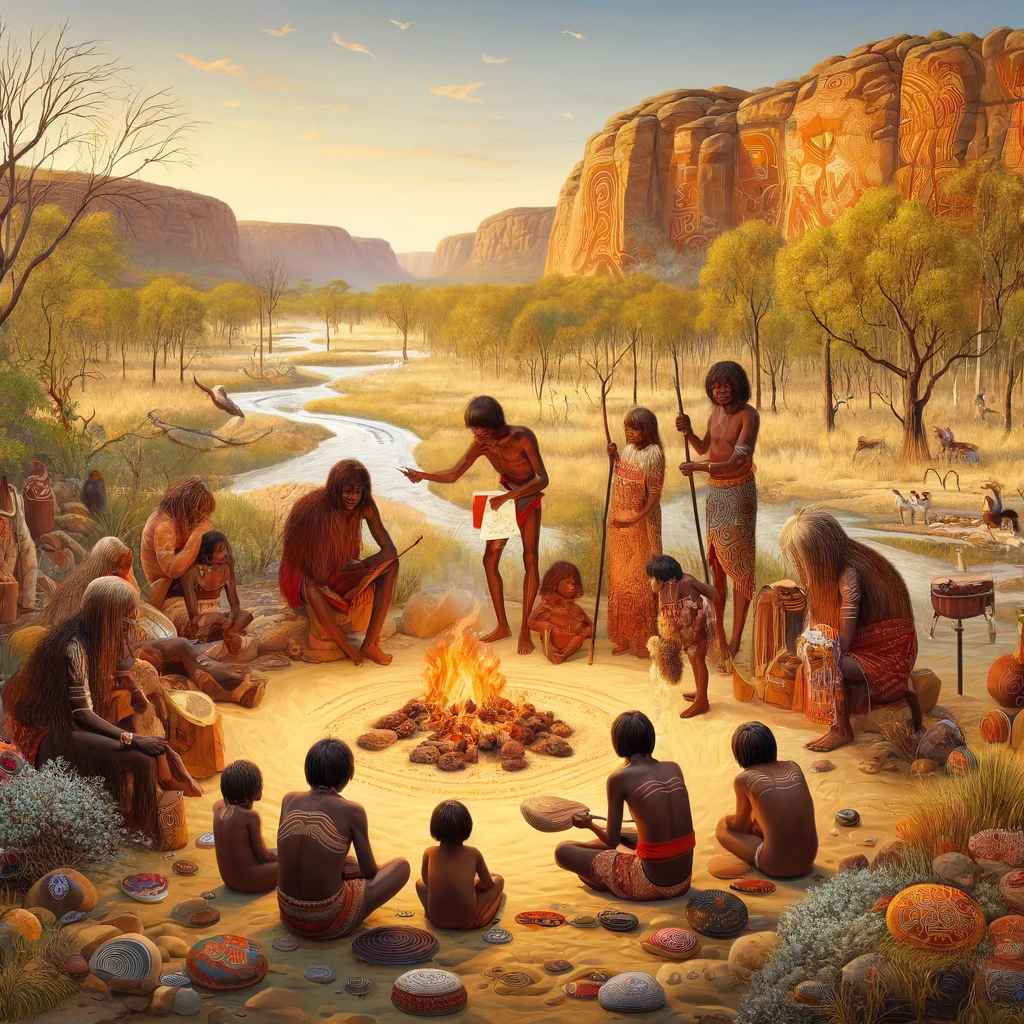
The cultural fabric of Aboriginal Australia is enriched with age-old traditions and spiritual beliefs that reverberate through time. At the core of this rich culture lies the Dreamtime, a foundational spiritual concept describing the creation of the world and the ancestral spirits who shaped it. Stories of the Dreamtime are conveyed through song, dance, and art, forming an unbroken link between past, present, and future. These narratives do more than recount myth; they encode practices, laws, and knowledge essential for survival and maintaining social order.
Aboriginal Australians’ spiritual beliefs are characterized by a deep connection to the land, which is considered a living entity imbued with a life force. Sacred sites are often intricately connected to Dreamtime stories and hold significant spiritual and cultural values. These sites are revered, maintained, and protected by the custodians of the land, ensuring their continuity for future generations. The transmission of these beliefs and practices through storytelling emphasizes the community’s collective responsibility in preserving their heritage.
Rituals and ceremonies play crucial roles in marking significant life events, such as birth, passage to adulthood, marriage, and death. These ceremonial practices are replete with symbolism and reinforce the interconnectedness of the community, ancestors, and the natural world. Traditional dances, musical instruments—like the didgeridoo—and intricate body painting serve not only to celebrate and honor these milestones but also to educate and instill a sense of identity and belonging within Aboriginal communities.
Language Diversity and Preservation
Language is a cornerstone of cultural identity, and for Aboriginal Australians, this holds profound importance. Prior to European colonization, it is estimated that there were over 250 distinct Aboriginal languages spoken across Australia, each with numerous dialects. These languages are not just means of communication; they are repositories of cultural knowledge, history, and traditional ways of life. They encapsulate unique worldviews and are crucial for the transmission of cultural practices and social norms.
The dramatic decline of Aboriginal languages since colonization has raised concerns about cultural erosion and the loss of linguistic diversity. Efforts to suppress Aboriginal languages, such as through forced assimilation policies and educational practices, significantly diminished the number of fluent speakers in many communities. This linguistic disruption not only altered communication within communities but also weakened the cultural ties that bind them.
Despite these challenges, there has been a concerted effort to revive and preserve Aboriginal languages. Community-led initiatives are receiving support from linguists, educators, and organizations dedicated to cultural preservation. Language revival programs often involve the documentation of languages, the creation of educational materials, and the integration of language learning in schools. These initiatives are essential for restoring pride, cultural continuity, and community cohesion, ensuring that the voices of the past resonate in the present and future.
Social Structure and Governance
Aboriginal Australian societies are traditionally organized through a complex web of kinship systems that define social roles, responsibilities, and relationships. These systems govern various aspects of life, including marriage, leadership, and resource distribution. The kinship structure is incredibly detailed and varies across different Aboriginal groups, but it fundamentally nurtures a sense of belonging and mutual support within the community.
Within these systems, elders hold a revered position as custodians of knowledge and culture. They play a pivotal role in decision-making processes and act as instructors for younger generations, imparting wisdom and the necessary skills for survival. The respect afforded to elders not only upholds traditional authority but also ensures the steady transmission of cultural values and practices across generations.
Aboriginal governance structures have adapted over millennia, showing remarkable resilience and flexibility in response to changes. However, the imposition of colonial rule significantly disrupted these traditional systems. The establishment of state and federal laws often conflicted with Aboriginal customary law, leading to considerable social upheaval. Today, there is a growing recognition of the importance of integrating Aboriginal governance principles with contemporary political and legal frameworks. This reconciliation aims to honor traditional practices while addressing the needs and rights of Aboriginal people within the modern Australian state.
Contemporary Challenges
The legacy of colonization has left lasting impacts on Aboriginal communities, who continue to face a series of socio-economic and cultural challenges. Issues such as land dispossession, systemic discrimination, and socio-economic disparities are persistent obstacles. Access to quality healthcare, education, and employment opportunities remains limited for many Aboriginal Australians, contributing to significant health and socio-economic gaps compared to the non-Indigenous population.
Efforts to address these disparities involve a combination of policy reforms, grassroots activism, and community-led initiatives. Land rights initiatives have seen some success, with the recognition of Aboriginal land tenure through legal frameworks such as native title. These victories are critical in restoring cultural connections to ancestral lands and fostering economic development.
In the realm of education, programs aimed at culturally inclusive curricula and Aboriginal-led schools are making strides. Health initiatives focusing on culturally appropriate care models are also gaining traction, aiming to reduce health inequities and improve overall well-being. Advocacy for the preservation and promotion of Aboriginal cultural heritage is essential not only for historical justice but also for fostering a more inclusive and equitable society.
Acknowledging Resilience and Contributions
Aboriginal Australians’ resilience and contributions to contemporary Australian society are manifold. Their rich cultural heritage, traditional ecological knowledge, and enduring artistry have significantly shaped Australia’s national identity. Aboriginal art, music, and dance have gained global recognition for their uniqueness and profound depth, attracting appreciation and respect on the world stage.
Particularly significant is the contribution of Aboriginal ecological knowledge. Sustainable land management practices, such as controlled burning known as fire-stick farming, have been recognized for their effectiveness in maintaining balanced ecosystems. This traditional knowledge holds valuable insights for addressing modern environmental challenges, particularly in the context of climate change and biodiversity preservation.
Aboriginal Australians continue to be trailblazers in various fields, including politics, academia, sports, and the arts. Figures such as Pat Dodson, often referred to as the ‘Father of Reconciliation,’ and athletes like Cathy Freeman, who lit the Olympic flame in Sydney 2000, inspire both Indigenous and non-Indigenous Australians alike. These individuals symbolize the ongoing journey towards equality and recognition, embodying the strength and potential of Aboriginal communities.
Conclusion
Indigenous Peoples’ Day offers an opportunity to honor and reflect upon the rich cultural heritage and resilience of Australia’s Aboriginal people. As custodians of an ancient land with a continuous history stretching back tens of thousands of years, they embody a profound connection to the natural world and a rich tapestry of traditions, beliefs, and knowledge. Understanding their past and present experiences helps us appreciate the significance of their contributions to Australia and the broader global community.
Recognizing the diverse and dynamic nature of Aboriginal cultures requires a commitment to supporting their rights, preserving their languages, and respecting their traditional knowledge and governance systems. It involves acknowledging the injustices of the past and working collaboratively towards a future of reconciliation and equity. By celebrating the strength and resilience of Aboriginal Australians, we can foster a more inclusive society that values and respects one of the world’s oldest living cultures.
The story of Australia’s Aboriginal people is not just a tale of endurance but one of continued vitality and relevance. Their ongoing efforts to preserve their cultural heritage amid modern challenges offer inspiration and guidance for all. As we look to the future, we must ensure that the voices of Aboriginal Australians are heard, their rights upheld, and their contributions recognized. Only then can we truly celebrate the richness of human diversity and the invaluable wisdom embedded in the world’s indigenous cultures.