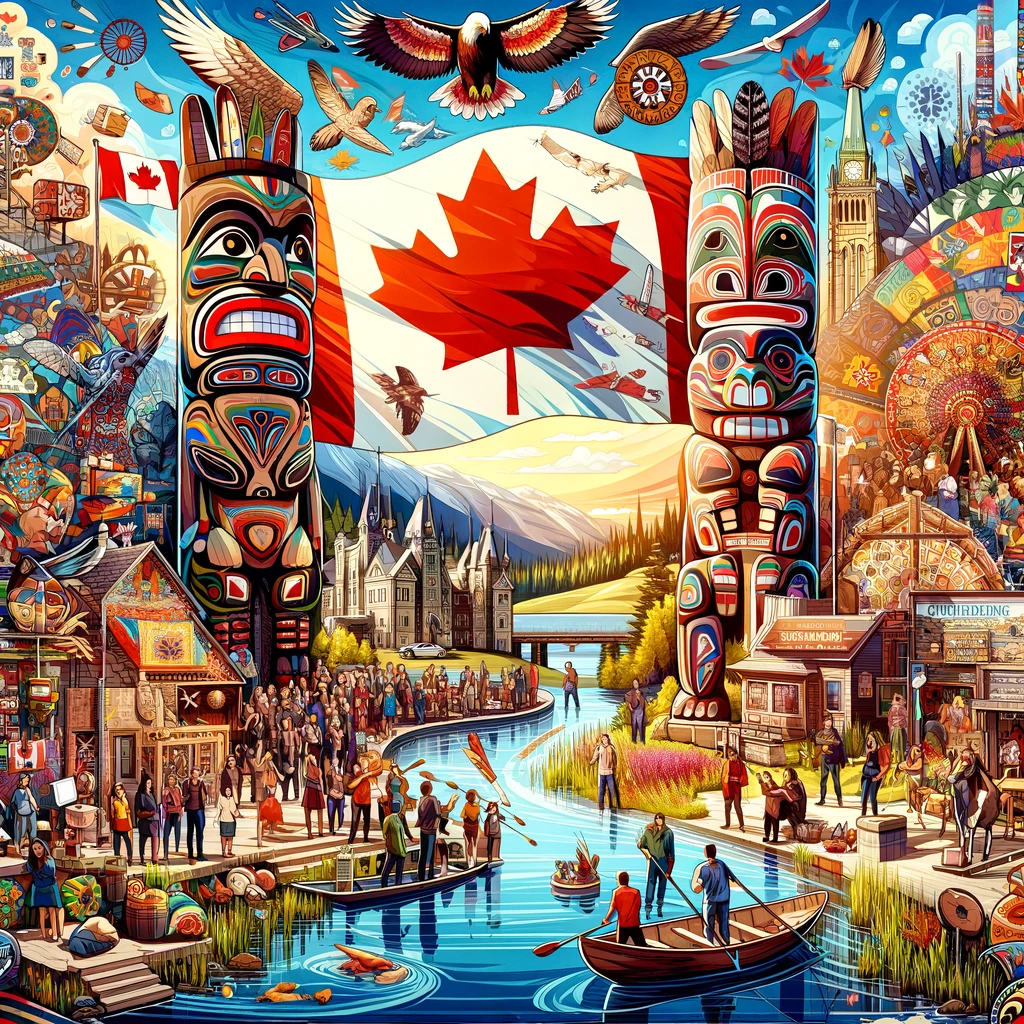
Canada stands as a vibrant testament to cultural diversity, a nation where a mosaic of different cultures coexists and thrives. Unlike the metaphorical ‘melting pot’ where different cultures assimilate into one, the Canadian philosophy of a ‘cultural mosaic’ encourages ethnic groups to maintain their distinctiveness while coexisting within a unified nation. This article delves into the historical context, present-day dynamics, and future implications of Canada’s cultural diversity, offering a comprehensive understanding of its multifaceted society.
Historical Context and Indigenous Foundations
Canada’s cultural diversity has deep historical roots, beginning with its indigenous peoples. Before European colonization, Canada was home to a rich tapestry of First Nations, Inuit, and Métis peoples, each with their own distinct languages, traditions, and ways of life. The indigenous influence remains a cornerstone of Canada’s cultural identity, despite the impact of colonization and the challenges faced by indigenous communities.
European Settlement and Multicultural Evolution
The arrival of European settlers in the 16th and 17th centuries marked the beginning of a new era. French and British colonies established the foundations for modern Canada, bringing with them their own cultures, languages, and traditions. The coexistence, and sometimes conflict, between these two European powers set the stage for Canada’s bilingual and bicultural identity.
Post-World War II, Canada saw an influx of immigrants from across the globe, reshaping its demographic landscape. This wave of immigration introduced a plethora of cultures, languages, and religions, contributing to the rich, diverse fabric of Canadian society.
The Policy of Multiculturalism
In 1971, Canada became the first country in the world to adopt an official policy of multiculturalism. This policy recognized the value of diversity and the rights of all citizens, irrespective of their racial or ethnic origins, language, or religion, to preserve and share their cultural heritage. It was a groundbreaking step, ensuring that cultural diversity was not just tolerated, but celebrated and nurtured.
Impact on Canadian Society
The multicultural policy has had a profound impact on Canadian society. It has fostered an environment of acceptance and inclusion, encouraging Canadians to embrace their heritage while respecting the differences of others. The result is a society where cultural festivals, diverse cuisine, and multilingualism are not just commonplace but celebrated aspects of daily life.
Contemporary Cultural Landscape
Today, Canada’s cultural landscape is as diverse as ever. Major cities like Toronto, Vancouver, and Montreal boast a cosmopolitan atmosphere, where a multitude of languages are spoken, and neighborhoods reflect the traditions and customs of their inhabitants.
Indigenous Renaissance
There is a growing recognition and revival of indigenous cultures in Canada. Efforts are underway to preserve indigenous languages, celebrate traditional arts and crafts, and acknowledge the historical and ongoing contributions of indigenous peoples to Canadian society.
The Role of Immigration
Immigration continues to shape Canada’s cultural mosaic. Newcomers bring with them their own cultures, enriching the Canadian tapestry. The government’s immigration policies and programs support this diversity, recognizing the vital role that immigrants play in Canada’s economic and social development.
Challenges and Opportunities
While Canada’s approach to cultural diversity is largely seen as successful, it is not without its challenges. Issues such as racial discrimination, economic disparities among ethnic groups, and the struggles of indigenous communities remain significant concerns. Addressing these issues is crucial for the continued success and harmony of Canada’s multicultural society.
Looking to the Future
As Canada looks to the future, it faces the task of balancing the preservation of its cultural heritage with the integration of new influences. The ongoing dialogue between different cultural groups and the commitment to mutual respect and understanding are key to maintaining the Canadian mosaic.
The Canadian mosaic is a living, evolving picture of cultural diversity. It is a model for the world in how a nation can embrace a multitude of cultures and create a society that is inclusive, vibrant, and continually enriched by its diversity. As Canada continues to evolve, it remains a fascinating case study in the power and potential of a truly multicultural society.
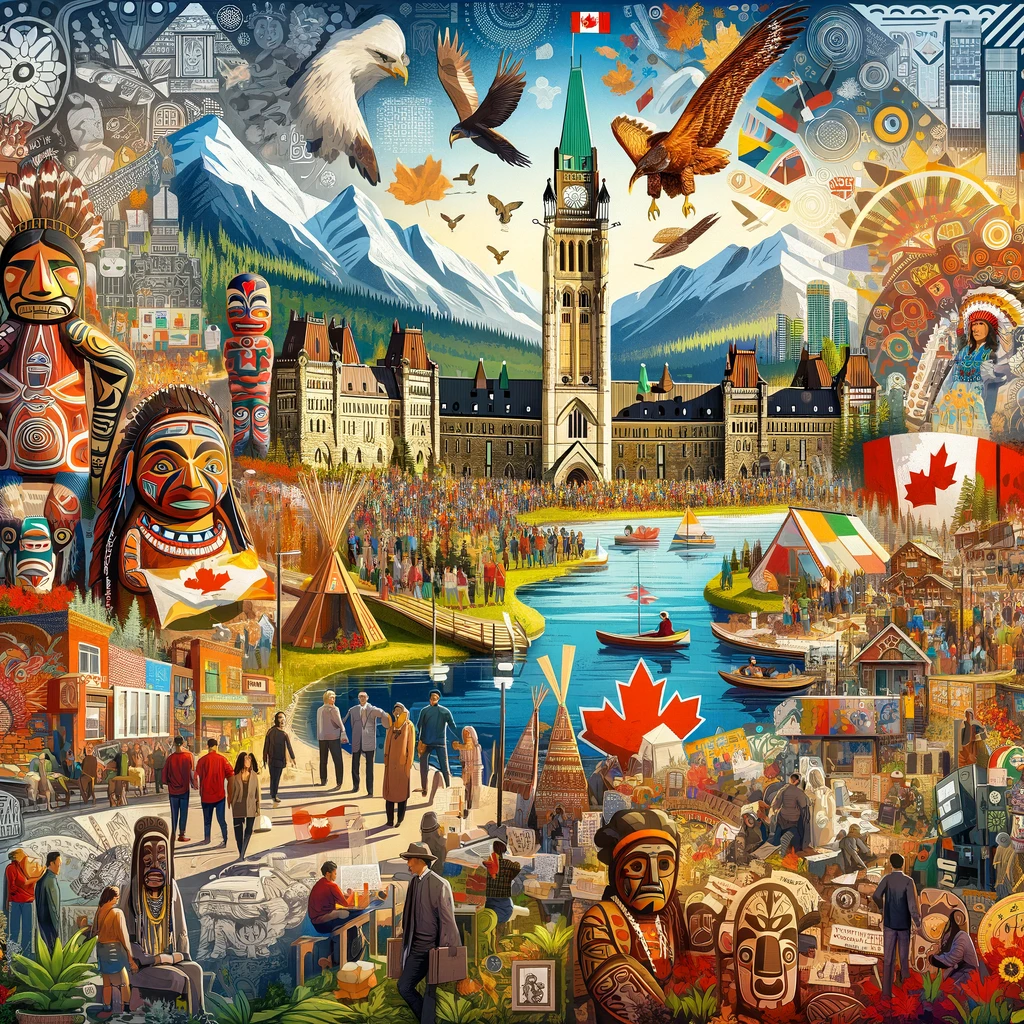
Embracing Diversity in Daily Life
In Canada, diversity is not just a policy or an ideal; it’s a reality of everyday life. From the food Canadians eat to the festivals they celebrate, cultural diversity is evident in every aspect of society. Canadian cities are known for their ethnic neighborhoods, such as Vancouver’s Chinatown or Toronto’s Little Italy, offering authentic experiences from various parts of the world. These enclaves not only preserve the traditions of their respective communities but also provide a rich cultural experience for all Canadians.
Education and Multilingualism
Education in Canada plays a critical role in fostering cultural understanding. Schools across the nation offer programs in different languages and teach about various cultures, promoting a sense of global citizenship among students. Canada’s commitment to bilingualism, with English and French as official languages, further underscores its embrace of cultural diversity.
The Arts and Cultural Expression
Canadian arts and culture are profoundly influenced by the country’s diverse population. From literature and music to film and visual arts, the influence of different cultures is unmistakable. Indigenous art, in particular, has gained prominence, with artists using traditional techniques to express both historical and contemporary themes.
Celebrating Cultural Festivals
Canada is home to a plethora of cultural festivals that celebrate the traditions of its diverse population. Events like the Caribbean Carnival in Toronto, the Chinese New Year celebrations across various cities, and the Montreal Jazz Festival are just a few examples. These festivals not only serve as a showcase for cultural traditions but also as a platform for cultural exchange and mutual appreciation.
Economic Contributions of Diversity
Cultural diversity also plays a significant role in Canada’s economy. The influx of different skills, ideas, and perspectives has been a driving force behind innovation and economic growth. Businesses in Canada benefit from a diverse workforce that can cater to a global market, and the cultural industries contribute significantly to the nation’s GDP.
Tourism and Cultural Attraction
Canada’s reputation as a culturally diverse nation makes it an attractive destination for tourists. Visitors are drawn to its multicultural cities, historic sites, and cultural festivals, contributing to the thriving tourism industry.
Social Cohesion and Inclusivity
The Canadian approach to diversity is not just about celebrating differences but also about building a cohesive society. Initiatives aimed at promoting inclusivity and reducing discrimination are pivotal in maintaining social harmony. This includes programs that support the integration of immigrants and initiatives that address the challenges faced by indigenous communities.
The Role of Government and Civil Society
The Canadian government, along with various non-governmental organizations, plays a crucial role in promoting cultural diversity and addressing related challenges. Policies and programs are continually updated to reflect the changing dynamics of Canadian society and to ensure that all citizens, regardless of their background, have equal opportunities.
Challenges in Cultural Integration
Despite its successes, Canada faces challenges in cultural integration and addressing systemic inequalities. Issues such as racism, economic disparity, and the integration of new immigrants are areas that require ongoing attention. The Canadian experience shows that embracing diversity is a continuous process, involving constant learning, adaptation, and commitment.
Building a More Inclusive Future
As Canada continues to welcome people from around the world, the challenge and opportunity lie in building an even more inclusive society. This means not only celebrating diversity but also addressing the underlying issues that hinder true inclusivity.
Conclusion
The Canadian mosaic is a vibrant, ever-changing picture of cultural diversity. It represents a country that has not only embraced its multicultural heritage but has also made it a cornerstone of its national identity. Canada’s experience serves as a model for the world, demonstrating the strength and beauty that lies in diversity. As Canada continues to evolve, it remains committed to nurturing this diversity, ensuring that it remains an integral part of its national fabric.