Throughout history, few military figures have left a lasting legacy that resonates through the ages. One such figure is Yi Sun-sin, a Korean naval commander whose genius as a strategist and bravery in battle made him a national hero. Yi Sun-sin’s incredible achievements during the Imjin War, particularly his innovative use of the “turtle ship” and his unwavering commitment to his country, have established him as one of the most revered military leaders in Korean history. This article delves into the life, strategies, and legacy of Yi Sun-sin, highlighting why he is celebrated as a prominent figure in both Korean and global military history.
Born on April 28, 1545, in Hanseong (modern-day Seoul), Yi Sun-sin grew up in a time of both cultural flourishings under the Joseon Dynasty and looming threats from neighboring countries. Despite facing numerous personal and professional challenges throughout his life, Yi Sun-sin’s dedication to his country never wavered. He demonstrated exceptional talent in military strategy and leadership, which would later play a critical role in Korea’s defense against Japanese invasions.
Yi Sun-sin’s expertise in naval warfare was not only a product of his advanced military training but also his innovative spirit. He is famously remembered for his development of the “turtle ship,” the world’s first ironclad warship, which played a crucial role in his numerous naval victories. His ability to inspire and lead his men, combined with his strategic brilliance, positioned Yi Sun-sin as an indispensable figure in Korea’s fight for sovereignty during the late 16th century.
Early Life and Military Career
Yi Sun-sin’s early years were marked by a combination of rigorous study and military training. He belonged to a modestly prominent family that valued education and patriotism. From a young age, Yi demonstrated a keen intellect and a strong sense of duty. He passed the rigorous military examination in 1576 and began his career in the Joseon naval forces.
Despite his talents, Yi Sun-sin faced significant obstacles during the early stages of his career. Political rivalries and corruption within the military establishment often hindered his progress. However, these challenges only fueled his determination to serve and protect his country. He was eventually appointed as the commander of the Left Jeolla Province Naval District, where he began to lay the groundwork for his future successes.
Yi’s innovative mind became evident during this period as he focused on strengthening Korea’s naval defenses. He recognized the importance of a strong navy in safeguarding the country’s coastline and began to implement new tactics and strategies. This foresight would prove invaluable in the face of the impending Japanese invasions.
The Imjin War and Yi Sun-sin’s Rise to Fame
The Imjin War, also known as the Japanese invasions of Korea (1592-1598), was a pivotal moment in Yi Sun-sin’s life and in Korean history. Neighboring Japan, under the leadership of Toyotomi Hideyoshi, launched a large-scale invasion of the Korean Peninsula with aspirations of reaching China. The invasion caught Korea unprepared, and the initial stages of the conflict were devastating for the Korean forces.
Amidst the chaos, Yi Sun-sin’s leadership and strategic prowess shone brightly. He swiftly organized a naval defense and achieved a series of remarkable victories against the Japanese fleet. One of his most notable achievements was the Battle of Myeongnyang in 1597, where he led a vastly outnumbered fleet of 13 ships to a stunning victory against 333 Japanese vessels. This battle not only cemented his reputation as a brilliant tactician but also provided a much-needed morale boost to the Korean forces and people.
Central to Yi Sun-sin’s success was his innovative use of the “turtle ship” (geobukseon). This ironclad warship, equipped with cannons and covered with iron-plated spikes to deter boarding, played a crucial role in his naval victories. The turtle ship’s design showcased Yi Sun-sin’s ability to adapt and innovate in the face of adversity, making it a symbol of his genius.
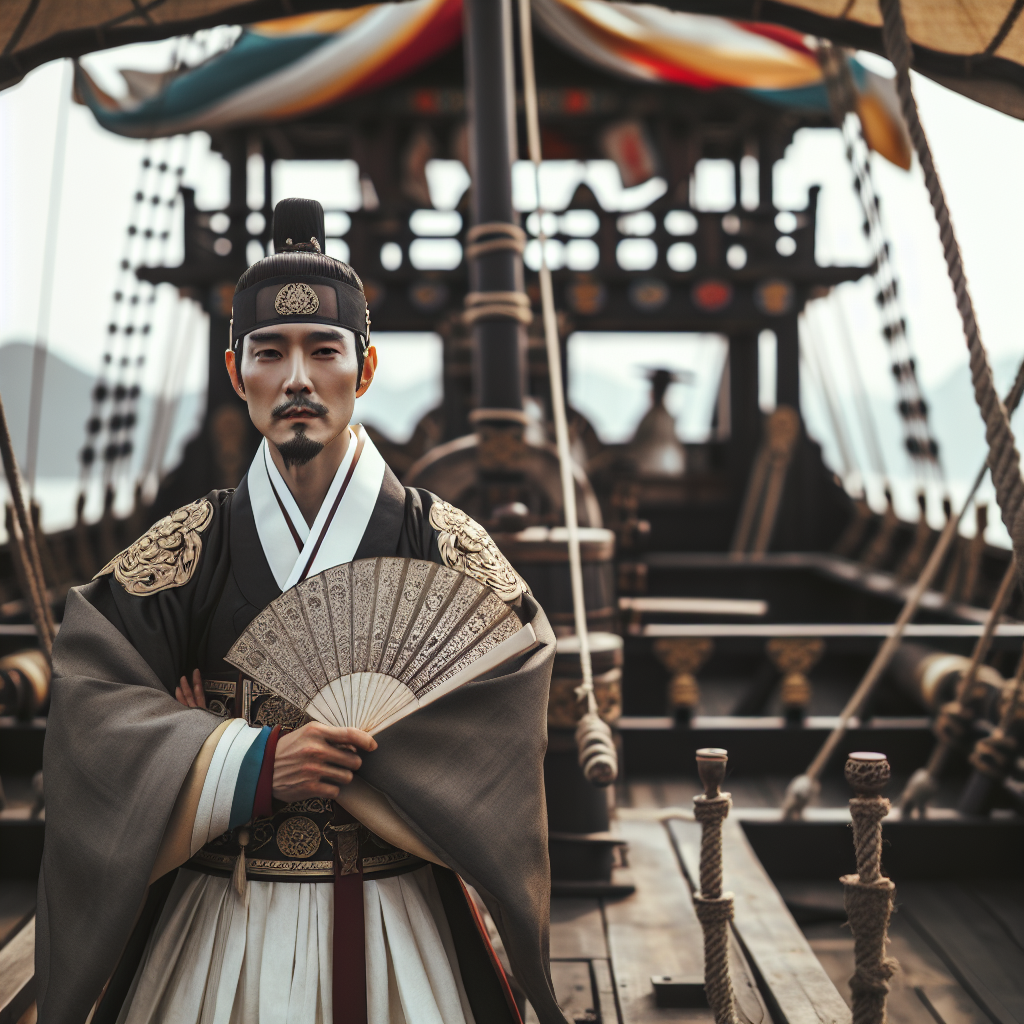
Yi Sun-sin’s Strategic Brilliance
Yi Sun-sin’s military strategies extended beyond the deployment of the turtle ship. His strategic brilliance was rooted in his deep understanding of naval warfare, geography, and the psychological aspects of battle. Yi meticulously planned his engagements, often utilizing the advantages of Korea’s coastal terrain to outmaneuver and ambush the Japanese fleets.
One exemplary strategic maneuver was his use of the “chain method” during the Battle of Hansando in 1592. Recognizing the narrow straits and strong tidal currents surrounding the Korean coastline, Yi ordered his ships to form a chain and lure the Japanese ships into a trap. Once ensnared, the Japanese fleet found themselves in disarray and vulnerable to coordinated attacks. This tactic resulted in a decisive Korean victory and demonstrated Yi’s ability to leverage environmental factors to his advantage.
Beyond his tactical acumen, Yi Sun-sin also possessed exceptional leadership qualities. He was known for his ability to inspire and motivate his men, even in the face of overwhelming odds. His unwavering commitment to his duty and his deep concern for the welfare of his sailors earned him the respect and loyalty of his troops. Yi’s leadership style was characterized by humility and a genuine concern for the well-being of those under his command, which contributed to his success as a military leader.
Legacy and Historical Impact
Yi Sun-sin’s impact on Korean and global history extends far beyond his tactical victories. His successful defense of Korea during the Imjin War played a crucial role in preserving the Korean Peninsula’s sovereignty and cultural identity. His innovative approach to naval warfare left a lasting legacy, influencing military strategies and ship design for generations to come.
In Korea, Yi Sun-sin is celebrated as a national hero and a symbol of resilience and patriotism. His story is taught in schools, and monuments and memorials dedicated to him can be found throughout the country. The famous statue of Yi Sun-sin in Seoul’s Gwanghwamun Square stands as a testament to his enduring legacy and the admiration he continues to receive from the Korean people.
Yi’s contributions to military history have also gained recognition beyond Korea’s borders. Historians and military scholars worldwide have studied his strategies and innovations, acknowledging his role in shaping naval warfare. His victories during the Imjin War demonstrated the potential of naval power in influencing the outcome of conflicts, a lesson that remains relevant in modern military doctrine.
Modern Recognition and Cultural Depictions
In contemporary times, Yi Sun-sin’s legacy continues to be celebrated and remembered through various cultural depictions. His life and achievements have been the subject of numerous books, movies, and television dramas, bringing his story to a global audience. These portrayals have immortalized Yi Sun-sin as a larger-than-life figure whose bravery and brilliance continue to inspire.
One notable representation of Yi Sun-sin’s story is the 2014 South Korean film “The Admiral: Roaring Currents,” which dramatizes the Battle of Myeongnyang. The film became a massive box office success and introduced Yi Sun-sin’s heroics to a wide audience. It underscored the continuing relevance and fascination with his story, both within Korea and internationally.
Yi Sun-sin’s legacy also finds expression in South Korea’s military traditions. The Republic of Korea Navy honors him as their spiritual predecessor, drawing inspiration from his leadership and strategic genius. Naval vessels are named after him, and his principles of innovation, resilience, and duty continue to serve as guiding lights for modern Korean service members.
Conclusion
Yi Sun-sin’s life and legacy offer a profound story of courage, innovation, and unwavering patriotism. As a military strategist and leader, his contributions to Korea’s defense during the Imjin War have cemented his place in history. His innovative use of the turtle ship and his strategic brilliance in naval warfare are celebrated as examples of military ingenuity and resilience.
Beyond his tactical victories, Yi Sun-sin’s leadership qualities and his ability to inspire and lead his men are noteworthy. His deep sense of duty, humility, and concern for the well-being of his troops earned him the respect and loyalty of his subordinates, contributing to his success as a military leader.
Yi Sun-sin’s enduring legacy continues to inspire generations of Koreans and individuals worldwide. His story serves as a reminder of the power of perseverance, innovation, and patriotism in the face of overwhelming odds. Whether as a national hero or a symbol of military brilliance, Yi Sun-sin’s legacy remains a beacon of inspiration and a testament to the impact that one individual’s courage and vision can have on history.