Skip to content

SOCIALSTUDIESHELP.COM

Learn Social Studies and American History

  • American History Lessons
  • American History Topics
  • AP Government and Politics
  • Economics
  • Resources
    • Blog
    • Practice Exams
    • AP Psychology
    • World History
    • Geography and Human Geography
    • Comparative Government & International Relations
    • Most Popular Searches
  • Toggle search form

Urbanization & Economic Growth: Challenges & Opportunities

Posted on By admin

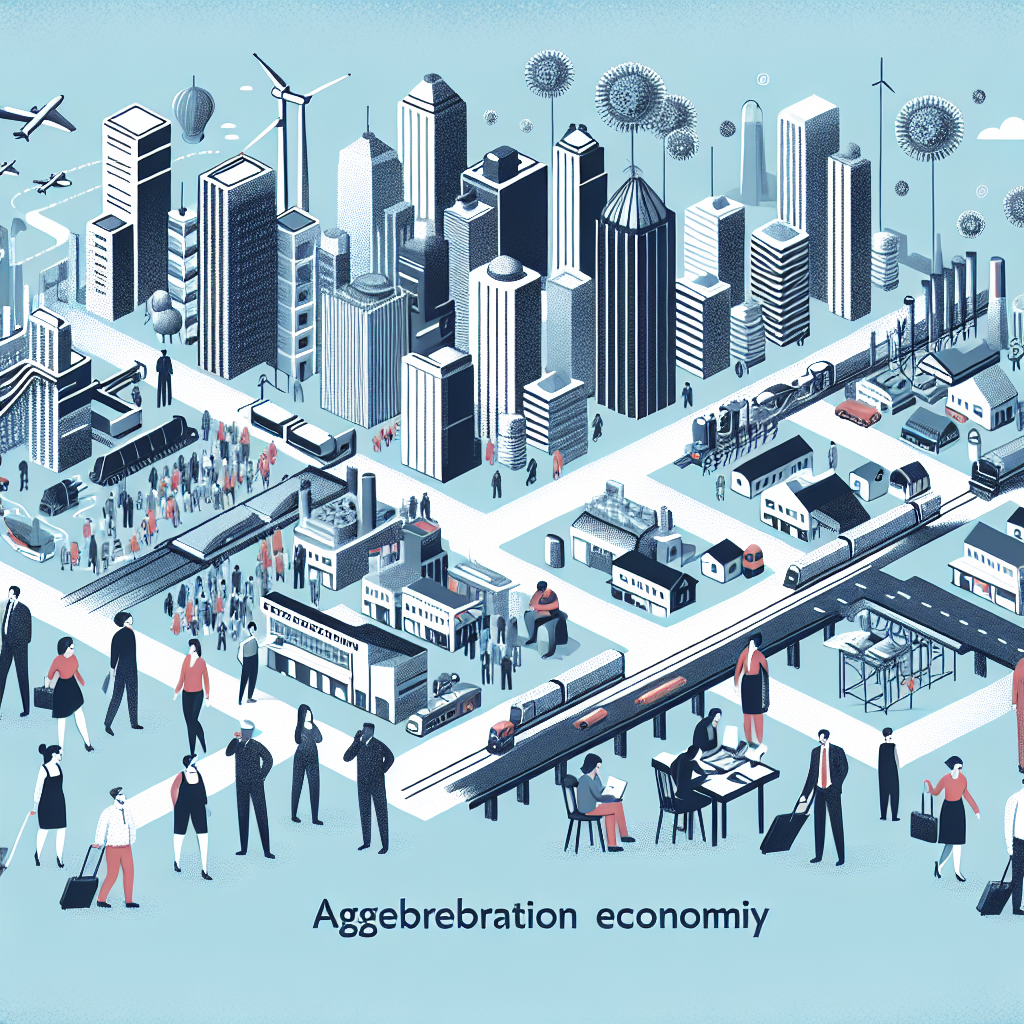
Economic development is a multifaceted process that encompasses improvements in various aspects of human welfare. Among these aspects, urbanization plays a crucial role. Urbanization, the process where an increasing percentage of a population lives in cities and urban areas, has been closely linked with economic growth. Throughout history, urban centers have served as hubs for innovation, economic activities, and cultural exchange. Currently, more than half of the world’s population resides in urban areas, and this proportion is expected to rise in the coming decades. However, the relationship between urbanization and economic growth is not straightforward and is accompanied by a myriad of challenges and opportunities. This article delves into the intricate dynamics of urbanization and economic growth, exploring both the hurdles and potentials that arise from this relationship.

Historical Perspectives on Urbanization

Historically, urbanization has been a driving force for economic development. Cities like ancient Rome, London during the industrial revolution, and contemporary metropolises like New York and Tokyo have been epicenters of economic activity. The concentration of resources, labor, and capital in these urban centers facilitates efficiencies and economies of scale. For instance, during the industrial revolution, the shift from agrarian economies to industrialized urban economies marked significant strides in productivity and income levels. Similarly, the technological revolution has seen the rise of tech hubs such as Silicon Valley, which have become engines of economic growth and innovation. Understanding these historical trends provides valuable insights into the potential pathways for modern urbanization and its economic implications.

Economic Benefits of Urbanization

Urbanization presents several economic benefits that can drive growth. One of the primary advantages is the agglomeration effect, where businesses and skilled workers cluster together. This proximity fosters innovation, enhances productivity, and facilitates the exchange of ideas. Moreover, urban areas offer better access to markets, infrastructure, and services, which can significantly boost economic activities. The service sector, in particular, thrives in urban environments due to the high demand for various services such as finance, healthcare, education, and entertainment. Furthermore, cities attract investments and provide ample opportunities for entrepreneurship, leading to job creation and economic diversification. In essence, urbanization can create a conducive environment for economic dynamism and growth.
Social and Environmental Challenges

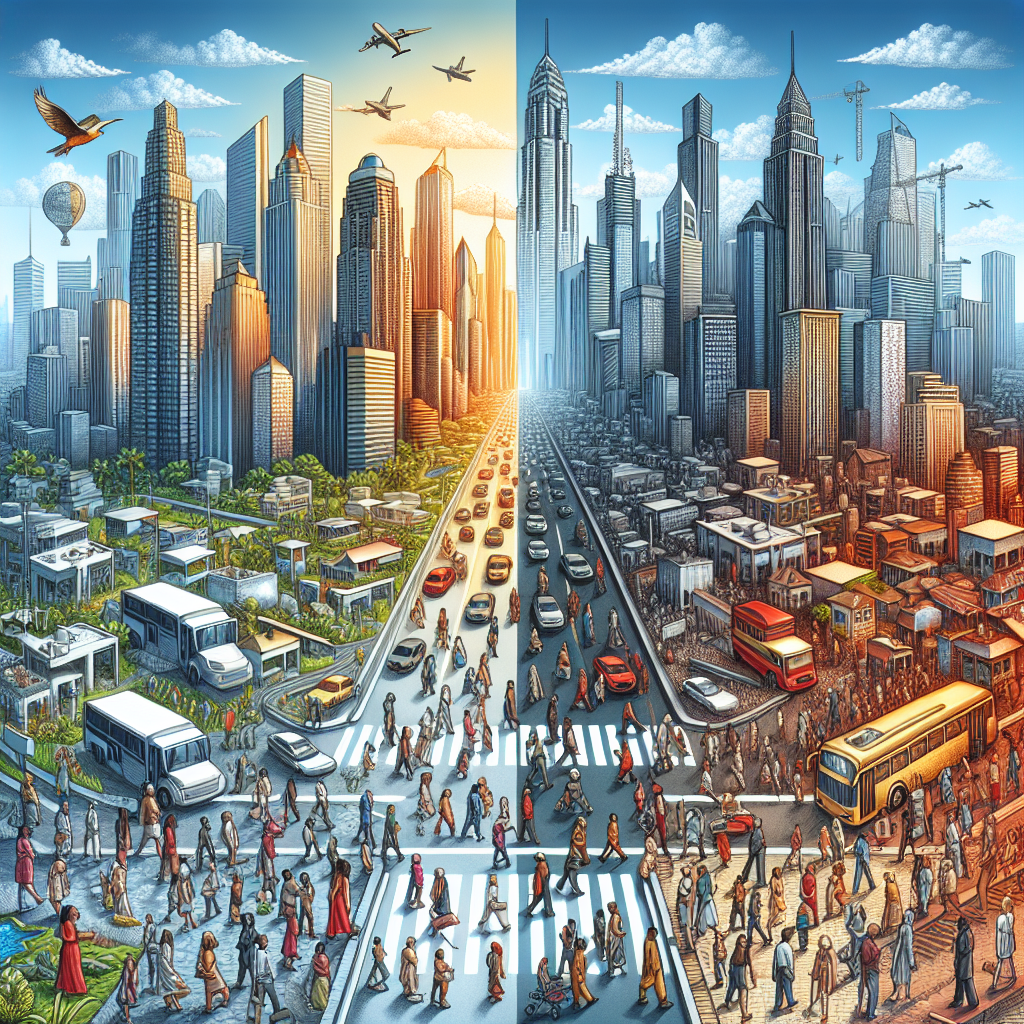
Despite the numerous economic advantages, urbanization also poses significant social and environmental challenges. Rapid urban growth often results in overcrowding, putting immense pressure on housing, transportation, and public services. This can lead to the proliferation of informal settlements or slums, where living conditions are substandard, and access to basic amenities is limited. Additionally, urbanization can exacerbate environmental issues such as air and water pollution, waste management problems, and the urban heat island effect. These challenges necessitate comprehensive urban planning and sustainable development practices to mitigate the adverse impacts of urbanization on both the social fabric and the environment.

Urban Planning and Infrastructure Development

Effective urban planning and infrastructure development are crucial in managing the challenges and harnessing the opportunities of urbanization. Well-planned cities with robust infrastructure can facilitate smooth functioning and enhance the quality of life for their residents. This includes the development of efficient public transportation systems, sustainable housing projects, and the provision of adequate public services such as healthcare, education, and sanitation. Smart city initiatives, which leverage technology to improve urban management and services, are also gaining traction. These initiatives can optimize resource use, reduce environmental impact, and improve overall urban living standards, thereby supporting sustainable economic growth.

Inclusive Urbanization for Equitable Growth

For urbanization to truly drive economic growth, it must be inclusive, ensuring that all segments of the population benefit from urban development. Policies aimed at social inclusion, poverty reduction, and equitable access to opportunities are essential. This includes promoting affordable housing, enhancing access to quality education and healthcare, and creating job opportunities for marginalized communities. Additionally, participatory urban planning processes that involve local communities can ensure that development projects are aligned with the needs and aspirations of the residents. By fostering inclusive urbanization, cities can become engines of equitable and sustainable economic growth.

Conclusion

The intricate relationship between urbanization and economic growth presents both challenges and opportunities. While urbanization can drive economic development through agglomeration effects, improved infrastructure, and increased investments, it also poses significant social and environmental challenges that require careful management. Historical perspectives highlight the transformative potential of urbanization, but modern urban centers must adopt sustainable and inclusive practices to realize this potential fully. Effective urban planning, infrastructure development, and inclusive policies are key to managing the complexities of urbanization and ensuring that it contributes to equitable and sustainable economic growth. As we navigate the future, a balanced approach that considers both the opportunities and challenges of urbanization will be essential in shaping the economic and social landscapes of our cities.

Economic Development, Economics

Post navigation

Previous Post: The Role of Microfinance in Economic Development
Next Post: Economic Impacts and Policy Responses to an Aging Population

Related Posts

Health Inequality: Determinants and Economic Consequences Economics
Innovation Policy: Economic Incentives for Technological Growth Economic Policy
Economic Planning: Centralized vs. Market-Based Approaches Economic Development
Employment Protection Legislation: Job Market Dynamics Economics
Sustainable Development Goals (SDGs) – Economic Challenges Economic Development
Occupational Health Economics: Workplace Safety Analysis Economics
  • World History
  • Timeline of US History: Major Events from 1492 to Present
  • Glossary of Government Terms: 50 AP Gov Concepts Explained in Plain English
  • Top 10 Most Common Social Studies Exam Terms (and What They Mean)
  • Research Paper Outline Example (Template for High School & AP Research)

Navigation

  • Economics
    • Agricultural Price Supports
    • Agriculture in the United States
    • Bank Deregulation and the S&L Crisis
    • Banking and the Federal Reserve System
    • Basic Economic Concepts
    • Budgeting
    • Business Cycle
    • Business Organizations
    • Perspectives on Business Structures
    • Circular Flow Model
    • Collective Bargaining
    • Comparative Economic Systems
    • Different Types of Banks
    • Economic Growth
    • Economic Indicators
    • Economics Final Exam Review
    • Economics Links
    • Elasticity
    • Federal and State Budgeting
    • Federal Spending and National Debt
    • Free Enterprise
    • Governments Role in the Economy
    • History of Labor Unions
    • Government Protection of the Consumer
    • Income Inequality
    • Inflation
  • History Topics
    • “Robber Barons” or “Captains of Industry”
    • The 18th & 19th Amendments: Prohibition & Women’s Suffrage Explored
    • 19th Amendment – Womens Suffrrage
    • African American Reformers
    • African American Reform in the Progressive Era
    • America – Divided at Birth
    • America’s Role in WWII: Decisive Influence in War’s Outcome
    • Spanish American War: How it Forged America’s Global Dominance
    • Andrew Carnegie – Gospel of Wealth
    • Effectiveness of U.S. Antitrust Laws in Protecting Competition
    • Articles of Confederation
    • Justifications & Impacts: Policies Toward Native Americans
    • Understanding the Bill of Rights’ Protections
    • US Campaigns and Elections: Democracy’s Backbone
    • Causes of the Great Depression
    • Opposition & Responses to the New Deal: Roosevelt’s Strategy
    • Checks and Balances
    • Effectiveness of the Civil Rights Movement in U.S. Social Change
    • What Caused the Beginning of the Civil War?
    • Colonization and Mercantilism
    • Constitutional Convention
    • Constitutional Flexibility
    • Containment Policy: America’s Tactics Against Communism
    • Cooling the Cold War: From Peaceful Coexistence to Detente
    • Cooling Off: Peaceful Coexistence to Detente
    • Declaration of Independence
    • Democracy in the colonies
    • Dropping of the Atomic Bomb
    • Early Domestic Policies
    • Washington & Jefferson’s Impactful Foreign Policies
    • Reconstruction’s Impact on Freedmen’s Lives
    • Effect of Lincoln’ Death on Reconstruction
    • Effects of the Great Depression
    • Electoral College
    • Enlightenment Thinkers
    • Events Leading Up To The Revolution
    • French and Indian War
    • Government Relationship with Unions
    • How a bill becomes a law.
    • Immigration – Why they came
    • Improvement in the cities – Progressive Era
    • American Influence in Asia during the 1800s
    • John Quincy Adams and Andrew Jackson
  • History Lessons
    • Cold War Genesis: A Detailed Analysis
    • The End of the Cold War
    • FDR’s New Deal
    • Foundation of Democracy
    • The Presidency of Andrew Jackson
    • JFK versus LBJ
    • The Presidency of John Adams
    • Judicial Branch
    • Immigration in the U.S
    • Legislative Branch
    • Madison – War of 1812
    • Monopolies & Trusts: Exploring American Businesses’ Quest to Curb Competition
    • The Presidency of James Monroe
    • Judicial Review and Supreme Court Cases
    • Justification for Imperialism
    • Korematsu V. United States
    • Origins of Legalized Segregation in the South
    • Management vs Unions: Responses to Unionization in the Industrial Revolution
    • Westward Expansion: Manifest Destiny’s Impact
    • McCarthyism Explained: Politics, Fear, and Cold War Context
    • The New Deal’s Impact on Minorities in 1930s America
    • Monopolies
    • Monroe Presidency
    • New Technologies – Industrialization
    • WWI and Civil Liberties: Striking the Balance in Wartime
  • Gov & Politics
    • Elections and Campaigns – Week 9 Notes
    • Interest Groups in American Politics: A Historical Review
    • Interest Groups – Text Notes – Week Seven
    • Lecture Notes – American Political System
    • Lecture Notes – Congress – Week 11
    • Lecture Notes – Economic Policy
    • Lecture Notes – Federalism
    • Lecture Notes – The Judiciary – Week 13
    • Notes – The Bureaucracy
    • Lecture Notes – Political Culture in America
    • Political Participation
    • Political Participation – Text Notes – Week Six
    • Political Parties – Week 8 – Text Notes
  • World Cultures
    • Asian Cultures
    • African Cultures
    • European Cultures
    • Middle Eastern Cultures
    • North American Cultures
    • Oceania and Pacific Cultures
    • South American Cultures
  • Global Trends
  • Important Events
  • Social Studies Weekly
  • Cultural Celebrations
    • Ancient Civilizations
    • Architectural Wonders
    • Celebrating Hispanic Heritage
    • Celebrating Women
    • Celebrating World Heritage Sites
    • Clothing and Fashion
    • Culinary Traditions
    • Cultural Impact of Language
    • Environmental Practices
    • Festivals
    • Global Art and Artists
    • Global Music and Dance
  • Economics
    • Behavioral Economics
    • Development Economics
    • Econometrics and Quantitative Methods
    • Economic Development
    • Economic Geography
    • Economic History
    • Economic Policy
    • Economic Sociology
    • Economics of Education
    • Environmental Economics
    • Financial Economics
    • Health Economics
    • History of Economic Thought
    • International Economics
    • Labor Economics
    • Macroeconomics
    • Microeconomics
  • Important Figures in History
    • Artists and Writers
    • Cultural Icons
    • Groundbreaking Scientists
    • Human Rights Champions
    • Intellectual Giants
    • Leaders in Social Change
    • Mythology and Legends
    • Political and Military Strategists
    • Political Pioneers
    • Revolutionary Leaders
    • Scientific Trailblazers
    • Explorers and Innovators
  • Global Events and Trends
  • Regional and National Events
  • World Cultures
    • Asian Cultures
    • African Cultures
    • European Cultures
    • Middle Eastern Cultures
    • North American Cultures
    • Oceania and Pacific Cultures
    • South American Cultures
  • Privacy Policy

Copyright © 2025 SOCIALSTUDIESHELP.COM. Powered by AI Writer DIYSEO.AI. Download on WordPress.

Powered by PressBook Grid Blogs theme